5-1
Etsy vs Shopify: fees, buyers and where to start selling
One $48 sale worked through Etsy’s and Shopify’s own fee pages, where the buyers come from on each, what you own, and which to start on with a first product.
- Written by

- Published
- Reading time
- 9 min read
- Sources
- 4 cited
- Time needed
- An evening with your numbers
- What it costs
- Etsy from $0.20 a listing; Shopify from $29 a month
- Difficulty
- Tools required
- Your price, cost per sale and orders a month Toolbox
Start on Etsy if you make or design what you sell and nobody is looking for you yet: about 10% of a sale goes in fees, more when an Offsite Ad brought the buyer, but the buyers are already there. Add a Shopify store once you can bring buyers yourself: on a $48 order, about nine sales a month of your own cover the $29 Basic plan with the fees you save.

In this guide
Start on Etsy if you make, design or collect what you sell and nobody is looking for you yet. On a $48 order, Etsy’s listing, transaction and payment fees come to $5.01, about 10%, and to $12.21 if one of its Offsite Ads brought the buyer, but the buyers are already on Etsy, searching. Shopify’s Basic plan takes $1.69 of the same order on a standard card, and nothing else per sale, but it costs $29 a month billed yearly and brings nobody: every buyer is yours to find. Add your own store when you can send buyers to it yourself, and keep Etsy for as long as it brings sales. The fees here come from the two companies’ own pages as of October 2026; they change, so check them on the day you decide.
What each one is
Etsy is a marketplace. Your shop is a page on etsy.com, your listings sit in Etsy’s search beside every other seller’s, and Etsy runs the checkout, takes the payment and pays you out. What you may sell there is set by Etsy’s Creativity Standards:
- things you make, by hand or with tools such as a laser cutter or a 3D printer;
- your own designs, printed or produced by a partner (disclosed on the listing) or sold as digital downloads;
- vintage items at least 20 years old, items from nature and certain collections you pick and put together yourself;
- craft and party supplies, and items personalized with the buyer’s own text or picture.
Reselling everyday goods newer than 20 years doesn’t qualify, even when they’re made to look vintage.
Shopify is software for building your own store. You pay a monthly plan, pick a theme (its theme store has free ones; paid themes cost extra), add your products, connect a domain, and the store lives at your own address. Shopify hosts it and runs the checkout. There’s no marketplace behind it, so you can sell a far wider range than Etsy allows, within Shopify’s own rules, and you have to bring every buyer.
What one sale costs on each
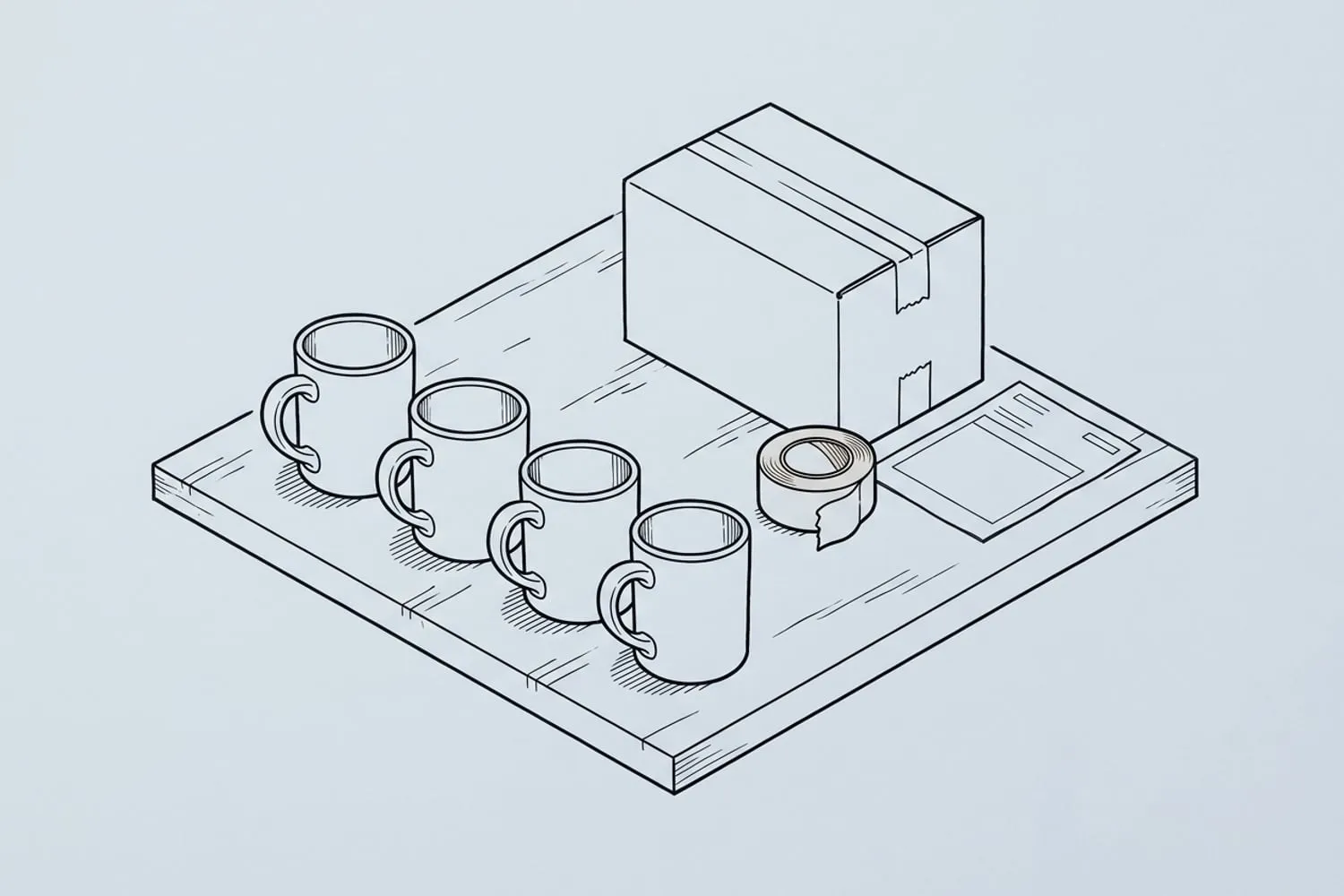
Take one example order: a $40 handmade mug with $8 shipping, a $48 order from a US buyer paying with a standard card. Sales tax is left out to keep the sums plain; both card fees also apply to any sales tax the buyer pays.
Etsy’s Fees & Payments Policy (last updated October 5, 2026) and the US rate in its Payments Policy charge:
- a listing fee of $0.20, paid when you list, again every four months while auto-renew is on, and again after each sale on a listing with more stock;
- a transaction fee of 6.5% of the item price plus shipping and gift wrap;
- payment processing of 3% of the order plus $0.25.
Shopify’s pricing page lists, for Basic in the US (October 2026):
- the plan: $29 a month billed yearly, which is $348 up front, or $39 month to month;
- card processing through Shopify Payments of 2.9% + 30¢ on a standard US card online; international and some other cards cost more, at the rates listed on the page;
- no transaction fee with Shopify Payments. Use another payment provider and Shopify adds 2% on Basic, on top of that provider’s own fee.
Links to Shopify on this page may earn The Idea Mechanic a commission if you sign up, at no cost to you. They don’t change the sums.
| On a $48 order ($40 mug, $8 shipping) | Etsy | Shopify Basic |
|---|---|---|
| Listing fee | $0.20 | $0 |
| Transaction fee | $3.12 | $0 |
| Card processing | $1.69 | $1.69 |
| Fees on this order | $5.01 (10.4%) | $1.69 (3.5%) |
| If an Offsite Ad brought the buyer | $12.21, with the 15% ad fee | No such fee |
| Monthly plan | None required | $29 billed yearly, $39 monthly |
Per order, you keep $3.32 more on Shopify, but the plan has to come out of those savings first. Divide it by what you save on each order: $29 ÷ $3.32 is about 8.7, so it takes nine orders like this one a month before Basic costs less than Etsy, or 12 on monthly billing. And they have to be orders you brought to the store yourself.
Both have extras. On Etsy: Etsy Ads, on a daily budget you set; Etsy Plus, an optional $10 a month; and a one-time fee to open a shop that Etsy may charge, shown during setup. On Shopify: a domain of your own, paid yearly, and any paid themes and apps. Shopify’s pricing page also offers a short free trial and a reduced price for the first months on most plans; offers like that change, so read the terms on the day.
Whichever you pick, put these fees into the price before you list. How to price a product works out the full cost of one sale, fees included, and the Costs part of the Idea Inspection checks how many sales a month cover what the business costs to run.
Where the buyers come from
On Etsy, the buyers are already there, searching. Your listing competes in Etsy’s search with every other seller’s, and Etsy decides who sees it. You can pay for Etsy Ads to show up higher, and Etsy also advertises listings on social networks and search engines: when one of those Offsite Ads brings an order, you pay 15% of it, or 12% once your shop has passed $10,000 in sales over a year (the questions below cover opting out). Either way, on Etsy most of what a buyer costs you is in the percentage.
On Shopify, nobody arrives with the store. A new site gets few visitors from search in its first months, so the buyers come from what you do: an email list, social posts, regulars from a market stall, wholesale accounts, people who already know your work, and ads. Ads are where the sums can turn. As an example of the sum: spend $100 on ads in a month, get five orders from them, and each order cost $20 to win, more than Etsy takes on the same $48 order even when an Offsite Ad brought the buyer.
Tip: before you pay for a store, write down where its first ten buyers will come from, by name or by place. If you can’t fill the list, the store won’t fill either.
How to get your first customers covers that list, the message to send and how to test one channel at a time.
What you own: customers, brand and data
On Etsy, you rent a stall in someone else’s market. The shop’s address is on etsy.com, your reviews live there, and Etsy’s search and policies decide who sees you and what you can list. Etsy sets the fees and reserves the right to change its payment processing fee at any time. The buyers are Etsy’s customers as much as yours: its Seller Policy says buyers’ details may be used only for Etsy-related messages and transactions, and you may not add an Etsy buyer to your mailing list without their consent. In return, Etsy handles one job for you: its Help Center says it collects and remits US sales tax on qualifying orders under the states’ marketplace facilitator laws.
On Shopify, the store is yours to brand. The domain is yours and can move with you, and Shopify lets you export your customer list as a spreadsheet file. What you don’t own is the software: the plan is a monthly bill for as long as the store is open. The jobs Etsy did are yours now, sales tax among them. Where you have to register and collect depends on your state and where your buyers are, so ask an accountant before the store takes its first order.
Side by side
| What decides it | Etsy | Shopify |
|---|---|---|
| What it is | A marketplace with its own buyers | Software for your own store |
| What you can sell | Handmade, your designs, vintage, craft supplies | Most legal goods, within Shopify’s rules |
| Where buyers come from | Etsy’s search and ads, plus your own | Only what you send there |
| Web address | A page on etsy.com | Your own domain |
| Buyers’ emails | For order messages, unless they consent | Your customer list, exportable |
| US sales tax | Etsy collects and remits on qualifying orders | Yours to register for and collect |
| Setup | List and open | Theme, pages, domain, payments, policies |
Which to start on, and when to add the other
Start on Etsy if
- you make, design or collect what you sell, and it fits the Creativity Standards;
- nobody is looking for you yet: no list, no regulars, no following;
- you’re still finding out whether the thing sells. A listing costs $0.20 and the rest is charged only on a sale, so a product nobody buys costs little more than the time it took to list.
This is the honest case for Etsy: the fees are high, but they buy you buyers you didn’t have to find, at a stage when finding them is the hardest part.
Start on Shopify if
- what you sell doesn’t fit Etsy’s standards, such as new stock you buy in to resell;
- you already have buyers who come to you: a mailing list, market regulars, wholesale accounts or a following;
- you can count on about nine orders a month of the size in the example, with what it costs to bring them counted.
If the monthly plan is what stops you, the Toolbox lists cheaper ways to sell from your own site, such as Big Cartel’s free plan and Square’s free online store. Check what each charges per sale before you compare them.
When to add the other
Add a store beside your Etsy shop, rather than moving out, when the numbers say so. Open a month in your Etsy payment account and add up the fees. If they come to more than the Shopify plan plus what it would cost to bring those buyers to your own store, and you have a way to bring them, the store will pay for itself. Reaching $10,000 in Etsy sales is a good moment to run that sum, since Offsite Ads, which you could opt out of until then, become mandatory for good at 12% of each order they bring. Keep the Etsy shop open while it brings orders, and close it only when the store’s own sales cover what you’d lose.
It works the other way too: a Shopify seller whose products fit Etsy’s standards can open an Etsy shop to reach buyers who are already searching, and the 6.5% and the processing fee are the price of those buyers.
More on stores, marketplaces and the checkout is in the Selling guides.
Etsy and Shopify Basic, from their own fee pages (October 2026)
| Pick | Monthly cost | Listing fee | Transaction fee | Card processing (US) | Ad fees | Where to buy |
|---|---|---|---|---|---|---|
| Etsy | None required; Etsy Plus is $10, optional | $0.20 a listing, and $0.20 again at each renewal | 6.5% of the item price, shipping and gift wrap | 3% + $0.25 an order | Offsite Ads: 15% or 12% of the order, capped at $100 | See Etsy’s fee policy |
| Shopify Basic | $29 billed yearly, or $39 month to month | None | None with Shopify Payments; 2% with another provider | 2.9% + 30¢ on a standard card | None; ads you buy elsewhere cost what you spend | See Shopify’s pricing |
Questions
Is Etsy or Shopify cheaper for a small seller?
Per sale, Shopify is: on Basic with Shopify Payments a standard US card costs 2.9% plus 30 cents and there’s no transaction fee, against Etsy’s 20-cent listing fee, 6.5% transaction fee and 3% plus 25 cents for processing. But Shopify also charges $29 a month billed yearly, or $39 month to month, and brings no buyers. On a $48 order, the fees you save cover the plan at about nine orders a month that you found yourself; below that, Etsy costs less, even before you count what finding buyers costs.
Can I sell on Etsy and Shopify at the same time?
Yes. The work is keeping listings and stock in step so a one-of-a-kind piece doesn’t sell twice. Shopify has stopped taking new Etsy connections in its own Marketplace Connect app, so for a new seller that means doing it by hand or with a third-party sync app. Build the store’s mailing list from its own sign-ups: Etsy’s Seller Policy says you can’t add Etsy buyers to your list without their consent.
What are Etsy Offsite Ads, and can I opt out?
They’re ads Etsy buys on other sites, such as social networks and search engines, that can feature your listings. If a buyer clicks one and orders from your shop within 30 days, you pay 15% of the order (item price plus shipping and gift wrap), capped at $100 an order. You can opt out while your shop has sold under $10,000 in the past 365 days; once it reaches $10,000, the ads are mandatory for the life of the shop at 12%, even if sales fall later.
Does a Shopify store bring you customers the way Etsy does?
No. A Shopify store is your own site at your own address, and nobody finds it unless something sends them there: search, social posts, an email list, a market stall, ads or word of mouth. Shopify’s plans include tools for selling on social platforms and marketplaces, but each is another channel to set up and work. Know where the first ten buyers will come from before you pay for the plan.
When should I move from Etsy to my own store?
Add a store rather than move, and do it when two things are true. A month of fees in your Etsy payment account comes to more than the Shopify plan plus what it would cost to bring those buyers to your own store, and you have a way to bring them: a mailing list, regulars or a following. Keep the Etsy shop open while it brings sales, and close it only when the store’s own orders cover what you’d lose.
Sources
- Fees & Payments Policy, Etsy,
- Etsy Payments Policy, Etsy,
- Etsy’s Creativity Standards, Etsy,
- Shopify pricing, Shopify