4-10
Geofencing Marketing Explained: A Complete Guide
Geofencing marketing can reach people near your door with timely offers. See real tactics, costs, and a low-budget test before hiring an agency.
- Written by

- Published
- Updated
- Reading time
- 14 min read
- Sources
- 4 cited
Geofencing marketing uses a virtual boundary around a real location to show ads or send messages to people whose opted-in devices enter or leave the area. It works best with a small, relevant audience, a useful offer timed to the moment, and a clear way to measure visits against campaign costs, while respecting privacy and consent. Start with one location, one offer, and a modest test budget, then expand only if the results justify it.
In this guide
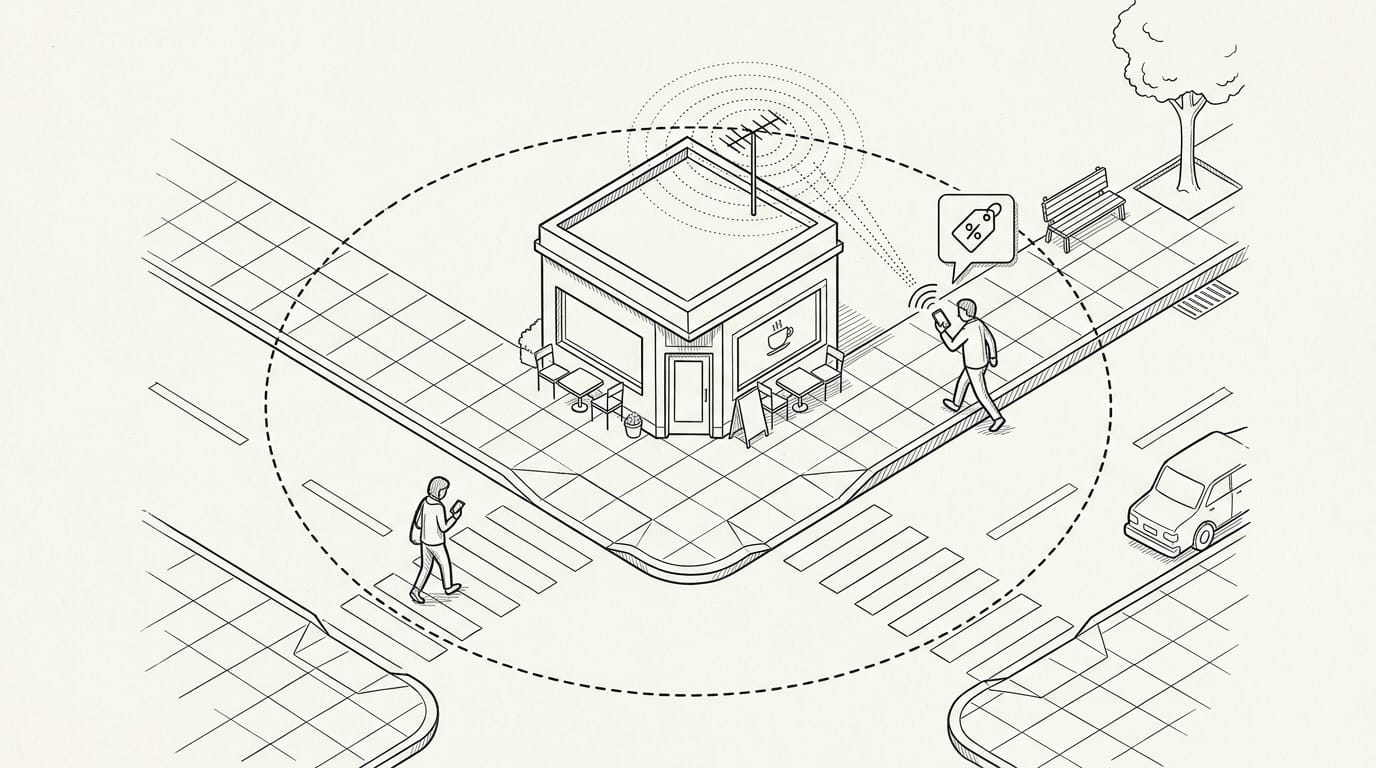
Picture walking past a coffee shop on your way home and getting a text offering a free pastry just as you reach the door.
That’s the idea behind geofencing marketing: a virtual boundary drawn around a real place, like your storefront or a rival’s parking lot, that sends a message to phones crossing it.
This post covers how it works, the tactics you can use, real examples, costs and limits, and how to test it cheaply before you pay an agency. You don’t need a big budget to find out whether it’s worth it.
How Geofencing Marketing Works in Practice
Geofencing sounds technical, but the core idea is simple: draw an invisible line on a map, then react when a device crosses it.
A virtual perimeter drawn around a location
A geofence is an invisible boundary tied to a real place, like a storefront or a market stall. A fence can fire on entry, when a device walks in, or on exit, when it walks out. Entry suits a welcome offer, while exit suits a reminder.
Geofencing is one kind of location-based marketing tool. Picture a side-hustler selling handmade candles at a Saturday farmers market.
She fences the grounds, and shoppers who’ve agreed to share their location get a message about her candle sale as they walk in. The payoff is reaching people already nearby, not strangers across town.
Technologies that power location detection
Several technologies can supply the location signal. Here are the main ones:
- GPS (Global Positioning System) uses satellite signals to place a device on a map.
- WiFi uses nearby wireless networks to estimate where a device is.
- RFID (radio-frequency identification) uses small tags that answer a nearby reader’s signal.
- Cellular data estimates location from the cell towers a phone connects to.
- Beacons and cell towers use fixed hardware: beacons broadcast a short-range signal, and towers are the sites phones connect to.
Set up a fence using maps or code
Most setups come down to these pieces:
- Draw the boundary. Many tools let you sketch the area on Google Maps.
- Latitude and longitude are north-south and east-west numbers that pin a spot on Earth, which is how software places your fence.
- API and app code. For custom builds, an application programming interface (API) lets your app react to location events.
- Radius. For a circle, have the administrator, who manages the account, set the distance from a center point.
Opt-in rules and active versus passive fences
Location data is personal, so permission comes first.
- Opt-in means users agree to share their location before any fence can reach them.
- An active fence needs the customer’s app open on their phone to work.
- A passive fence uses WiFi or cellular data instead, so the app doesn’t have to be open.
Related terms like geotargeting and geolocation
- Geolocation is the broad category of working out where a device is. Geofencing is one use of it.
- Geotargeting chooses content by location, usually at the scale of a city or region, while geofencing works at the scale of a storefront.
- Geo-conquesting targets people near a competitor’s location. A cold-brew cart owner might fence the café across the street to reach its customers.
- Combining all tactics. Layer them: geolocation finds the area, geotargeting narrows the audience, and the geofence fires the message at entry.
Different labels, same question: where is the customer right now?
Tactics and Channels for Your Fences
A fence on its own doesn’t reach anyone. You’ll need a message, a channel, and a reason to act.
Where your messages can actually appear
- Push notifications. Alerts to people who installed your app and allowed notifications.
- Automated text messages. Texts sent on entry, but only to people who agreed to hear from you.
- Pay-per-click (PPC) and search ads. Paid listings that charge per click, shown only to nearby people.
- Social media ads. Paid posts shown to people whose phones place them inside your fence.
- Display and in-app ads. Banner ads on websites and apps people use while they’re close to you.
Choose the channel by who you want to reach, not by what is easiest to set up.
Using geo-conquesting to win rival customers
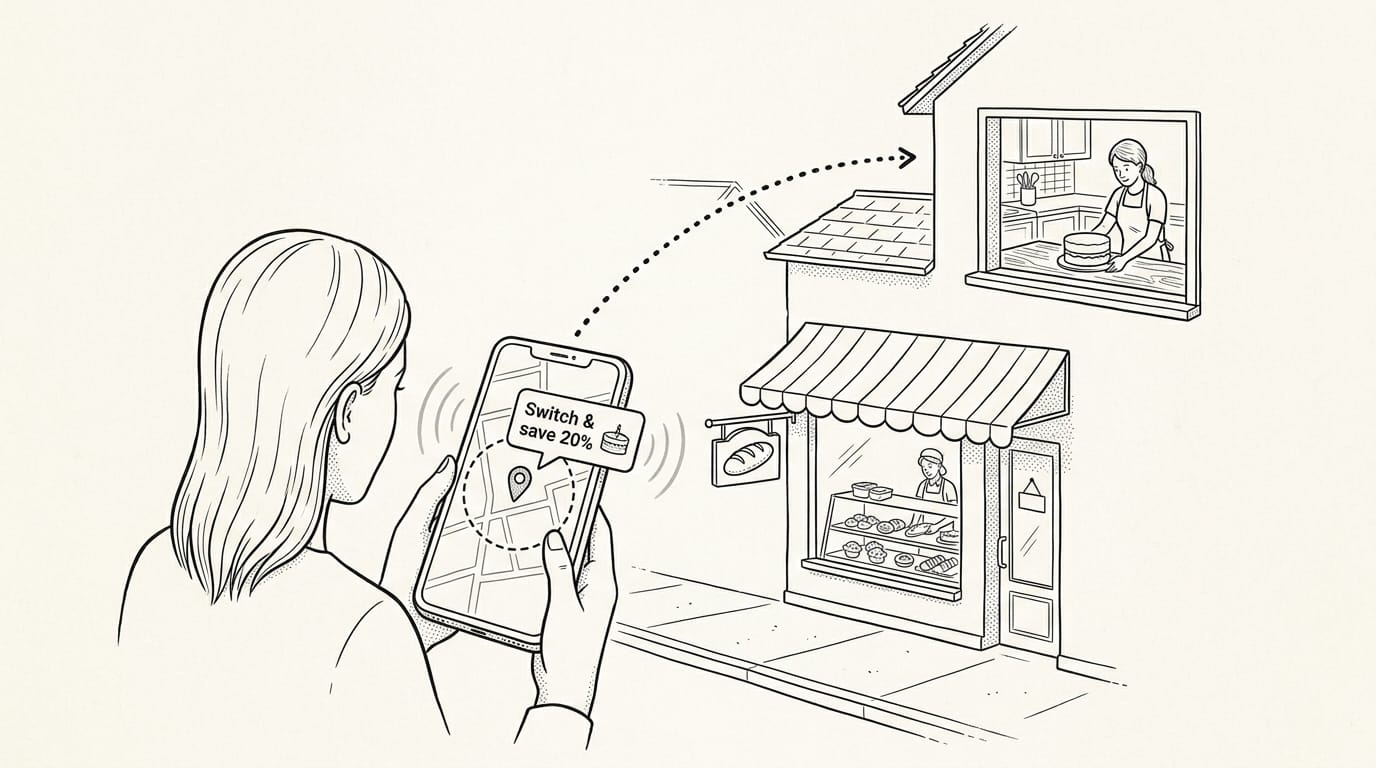
Geo-conquesting means fencing a rival’s location to reach its customers on the spot. Take a home bakery owner who fences a rival bakery across town. A shopper there sees her offer on their phone.
The payoff is a sale from someone already ready to buy a cake.
Three moves make it work:
- Fence around the competitor location. Draw the boundary around the rival’s storefront.
- Prompt a visit. Add a clear next step, like directions to your door.
- Trade-in or discount offers. Reward switching with a first-order discount or a trade-in credit.
Start with one competitor fence. Test the rival your customers mention most.
Choosing where to place your fences
Where you draw a fence decides who sees it:
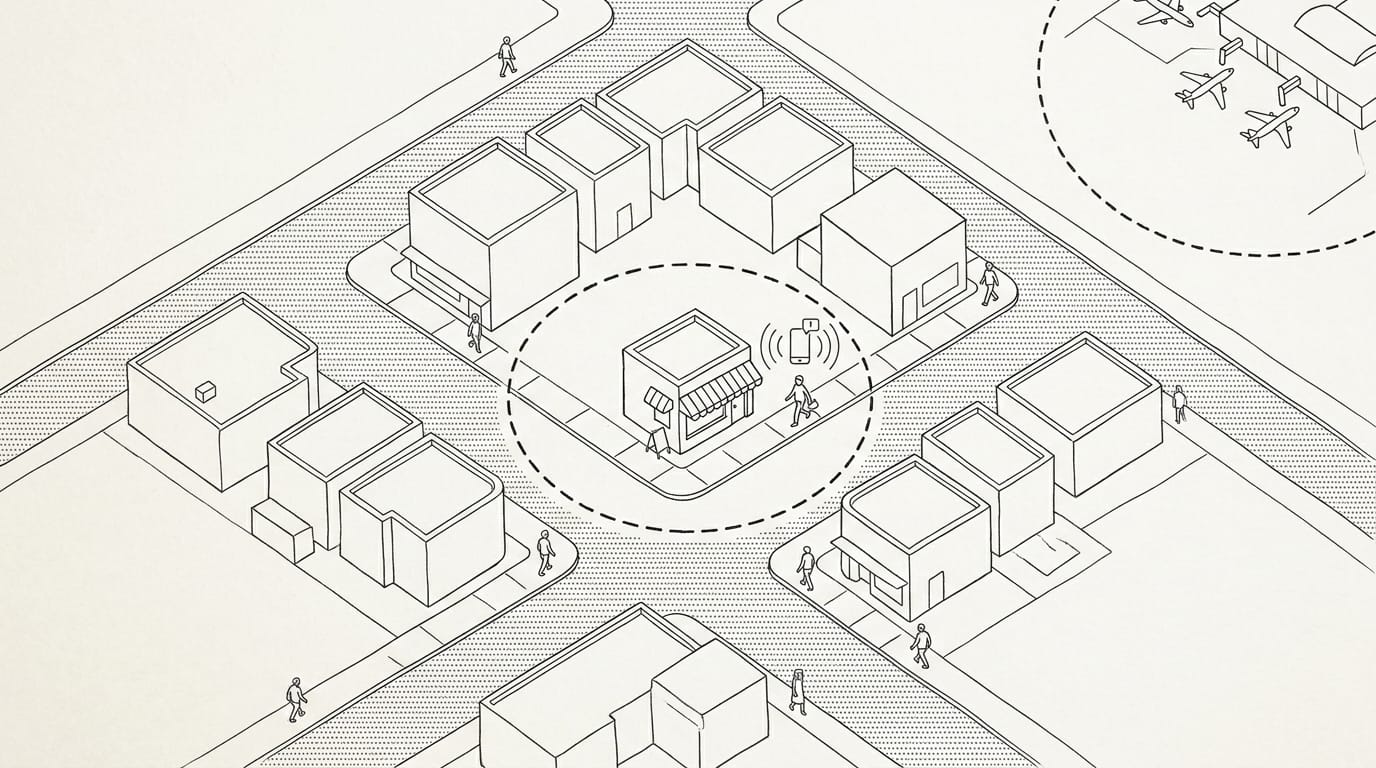
- Your own location. Reach people already nearby and deciding whether to stop in.
- Events and trade shows. Reach attendees while they’re walking the floor.
- Colleges and campuses. Works for products students buy, like tutoring.
- Referral businesses. Fence a partner’s location, such as a gym that sends you clients.
- Households and nearby streets. Reach homes around a finished job, so neighbors who saw your work can book.
Offers that trigger when customers arrive
Offers work best when they’re ready on arrival:
- Coupons on entry. A discount that appears as someone walks in.
- Sale alerts. A notice that a sale is on while the shopper is nearby.
- Personalized app notifications. Messages based on past purchases or browsing, sent through your app.
- Lunchtime specials. Timed deals for the noon rush, suited to food and quick services.
Think of a food truck owner who fences the office park near her truck. At noon, workers stepping outside see a lunch deal and a reason to walk over. The payoff is a lunch order from someone already hungry. Timing does most of the work.
Mixing fences with other targeting methods
A fence shows where someone is. Other methods show what they want.
- Retargeting. Ads for people who already visited your site or app, shown when they’re nearby.
- Dayparting or ad scheduling. Running ads only during set hours, like your opening hours.
- Context and content targeting. Ads placed on pages whose topic matches your offer.
- Keyword PPC in fence. Search ads for your keywords, limited to people inside the fence.
- Customer data segmentation. Grouping customers, like repeat buyers, so each fence carries the right offer.
Start with one method, then layer.
Why Geofencing Marketing Pays Off
Geofencing fires your ad when a phone enters a virtual boundary around a real place, so it’s less about how many people see it and more about who is nearby.
Reaching the right people with timely offers
Geofencing reaches a specific audience, such as shoppers near your shop. Researchers in the Journal of Management Information Systems note that geographic proximity makes location-based coupons more relevant and therefore more effective.
Consider a home baker who sells custom cakes. She targets three nearby office parks at lunchtime, so her small budget reaches people who can order that day. Because the offer arrives in real time, it lands while they’re still deciding.
You also choose when ads run. Regulars who get a useful deal feel remembered, not pitched, which builds brand loyalty and word of mouth.
It isn’t magic. Location accuracy varies, and you can only reach people who’ve opted in to share their location, so your audience is smaller than everyone walking past.
Measuring campaign results and visitor habits
Real-time campaign data shows how an ad performs as it runs, so you can cut what isn’t working. Track two numbers:
- Impressions: how many times your ad was shown.
- Conversion zone visits: people who walked into the area around your business after seeing the ad.
You can optimize campaigns from anywhere, so a quick phone check at lunch can change a schedule or an offer. Customer behavior insights show when people visit, not just that they saw you.
Spend less and keep customers returning
Highly targeted efficiency means paying to reach a smaller crowd that’s more likely to care. Bringing back a customer who already knows you is cheaper than acquiring one from scratch.
Referrals follow from offers that feel useful rather than pushy, the kind people happily forward to friends.
How Real Businesses Use Geofencing Today
Plenty of companies already use geofencing, from coffee chains to the pizza shop down the street.
How big brands put fences to work
A geofence is a virtual boundary around a real place.
- Starbucks: A conference paper on mobile marketing for small and medium enterprises points to its app, which pushes notifications based on distance from a store. The trigger is where a customer is, not who they are.
- Dunkin’: Snapchat filters that put its brand in front of users.
- Uber: Fences around airports and venues. Geofencing has been used to reach people at places like these: a paper on location-based advertising describes check-in services built around arrivals at an airport, a coffee shop, or a bookstore.
- Taco Bell and the History Channel: Two more names in the same playbook.
Hiring staff with location-based ads
Location targeting works for hiring too. Johns Hopkins is one example of this.
If you’re hiring, Facebook and LinkedIn targeting can promote your ad, and a paper on online job ads and non-discrimination law notes that advertisers can show a job ad only to users with certain characteristics.
What it looks like in different industries
- Restaurants and event venues: A fence around the venue can trigger a deal while a crowd is nearby.
- A pizza shop near campus: Think of an owner who fences the blocks around campus and sends a lunch deal at the midday rush, so students already nearby get a reason to walk in.
- Car dealerships, gyms, and hotels: A dealership reaches shoppers driving past, a gym targets people nearby, and a hotel messages guests on arrival.
- Mall clothing retailers: A store alerts shoppers already inside the mall about a sale.
Location gets attention. The offer earns the visit.
Tools, Alerts and Services You Can Use
You don’t need a big tech stack. Most tests run on tools you already have.
Alerts sent when someone enters or exits
A geofence sends a push notification or email when a phone crosses your boundary:
- Entry/exit notifications fire when someone walks in or out.
- Marketing alerts tell nearby past customers you’re open.
- Asset alerts tell you when a van leaves its service area.
A mobile dog groomer fences her two neighborhoods and sends past clients a note when they’re nearby, which can fill an empty Tuesday. The alert keys on where someone is, not who they are, so timing does most of the work.
Platforms that connect to smart devices
A guest WiFi marketing platform greets visitors with a sign-in page and can send an offer to anyone who connects.
Alexa and Google Home routines can trigger from your phone’s location where your app supports it, and iOS Reminders can ping you on arrival or departure.
A bakery owner sets a reminder to post the day’s specials when she reaches the shop, while her WiFi page offers a free coffee to anyone who signs in. Once set up, neither needs her attention.
Hiring an agency to run campaigns
Agencies offer geofencing as one of their campaign services. With expert campaign management, they draw the fences, build the ads, and report results.
A candle maker who sells at two weekend markets could start with a one-week test at each. If the results justify it, she has a case for a bigger budget.
Before you commit, reach out to two or three agencies for a scoped quote, and ask what a small test costs.
How to Plan Fences and Messages Well
A fence in the wrong place wastes money, and a bland message gets ignored. Here’s how to get both right.
Keeping fences small and close by
Tight fences usually suit a small business best, since the people inside can realistically act.
Choose the shape by how people reach you:
- Small compact perimeters. Keep the fence tight around one location.
- Walking distance to store. For foot traffic, cover only what someone can walk on a short break.
- Short drive in some cases. A drive-through may need more room, but keep it to a drive customers would actually make.
Start small, then widen only if needed.
Writing offers that avoid sounding spammy
Think of a freelance bookkeeper who wants clients from a nearby coworking space. “Hire me today” reads like a pitch, but a free tax-season checklist gives people a reason to stop.
Lead with their problem, not your product. Four habits help:
- Know your audience’s needs. Name the one problem nearby customers face.
- Avoid spammy self-serving ads. Messages that only praise you or shout “buy now” get ignored.
- Offer trials before selling. A sample or free first visit lets people try you first.
- Test calls-to-action and copy. A call-to-action is the line telling people what to do next. Change one word at a time and compare.
Reviewing results and handling data responsibly
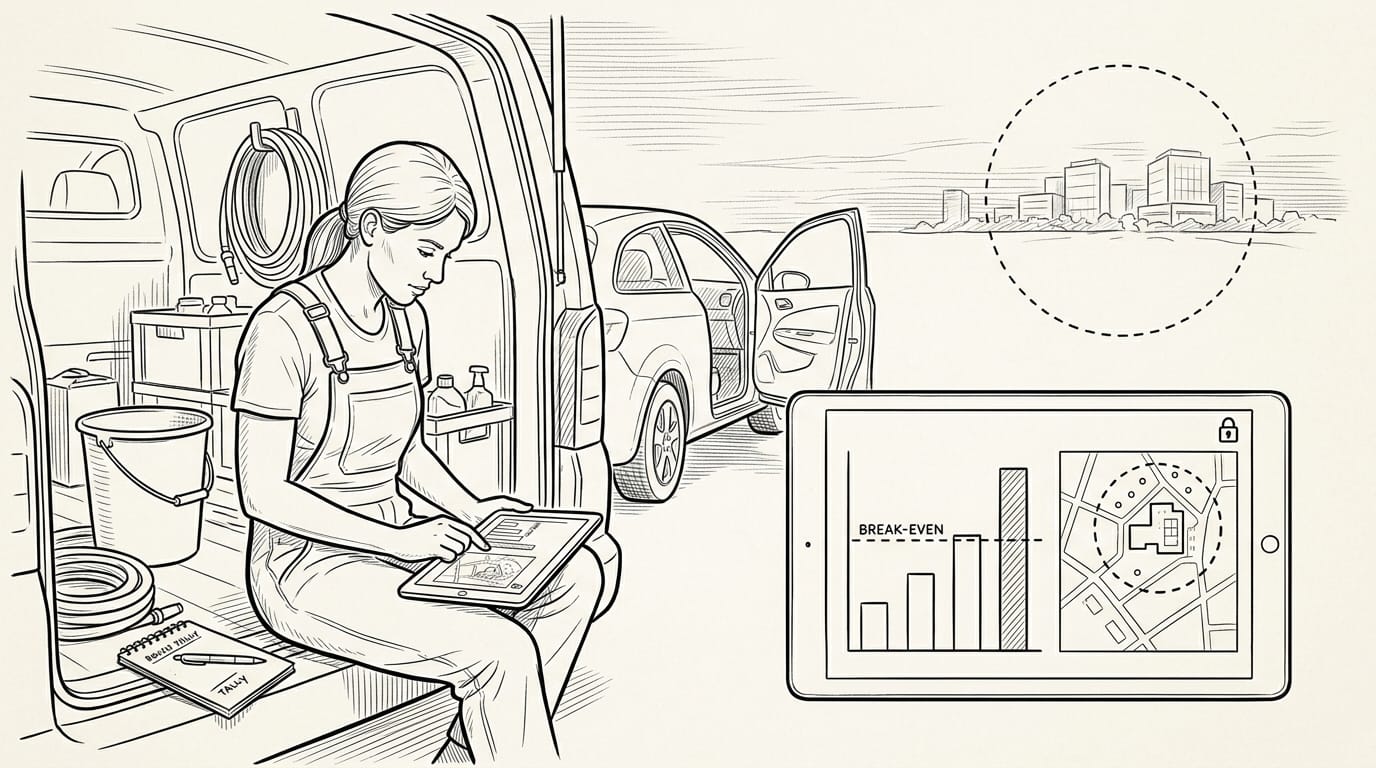
Review results weekly or monthly, not just at the end. A mobile car detailer who checks her numbers each Friday might spot a spike near an office park and shift spend there.
Define your break-even visit count: the visits whose profit covers the campaign’s cost. If that’s more than your area can send, fix the fence or offer first.
Use data ethically: keep only what you need, and say how location is used. Helpful offers earn visits; pushy ones get muted.
Privacy law and consent rules vary by place, so confirm what applies to you. A geofencing firm can review your setup, but ask how it sources data.
Driving website visits, not just store visits
Geofencing can also send people to your website. Online sellers can draw fences around exhibitions, trade shows, and other large events, then link attendees to their shop.
Think of a jewelry maker at a craft fair. A visitor who gets her shop link can buy from home, without stopping at her booth.
How Much Geofencing Campaigns Cost
Geofencing costs vary widely, and the agency quote is only part of the picture. Here’s what to budget for, and how we’d suggest testing it first.
Paying for campaigns and ongoing management
Before you sign, add up these line items:
- Campaign setup: $1,000 to $30,000 to build and launch the fence and ads.
- Ongoing management: $250 to $1,500 per month to monitor and adjust the campaign.
- Extra ad platform fees: Charges from the ad platform itself, on top of the agency’s bill. Ask for them in writing.
A pilot with a small test budget shows whether the fence reaches people who actually buy before you commit to a bigger campaign. Consider a home baker who sells cakes at a Saturday farmers market.
She sets a fence around the market, runs a two-week test, and counts how many visitors buy from her afterward. If the numbers hold, she has a reason to spend more. If not, she’s spent a little to learn a lot.
Can’t justify even a test budget? Run a small self-serve campaign in the ad platform’s own dashboard, with the fence tight around one location you know well.
Bidding against others for ad placement
A fence doesn’t reserve a spot for you. Placement is decided by competitive bidding, where advertisers compete for the same space. Higher bidders bump your ad, so if a competitor bids more for the same location, theirs appears first.
You can also bid on keywords for people inside the fence, so your ad shows when someone nearby searches for what you sell. That’s powerful, but you’re paying for attention rather than sales. Check your bids often. Attention and sales sit at different stages of a marketing funnel.
Other Ways People Use Geofencing
Marketing gets the most attention, but the same zone-and-trigger logic shows up in plenty of other places.
Social filters, check-ins and review requests
Picture a food truck owner who parks in the same downtown lot every Saturday. A geofence around that lot can power an event-specific filter that customers add to their photos, or a check-in prompt that invites them to log their visit.
Review requests depend on timing. Trigger them when a customer leaves the zone, not when they enter it, so the ask lands while the visit is fresh. Timing is the whole trick.
Smart home automation and family alerts
Smart home automation works the same way. When your phone crosses into a zone around the house, the porch light can switch on before you reach the door, and a playlist can start as you pull into the driveway.
Parental location alerts notify a parent when a teen arrives at or leaves school or home. Because this is the most personal use here, talk through what’s shared and why before you switch it on.
Tracking staff hours for accurate payroll
For a small crew, payroll often breaks down over hours nobody wrote down. Automated clock-in and clock-out starts the timer when a worker’s phone enters the job-site zone and stops it when the phone leaves. That’s field employee tracking in practice.
A landscaper with a small crew can skip rebuilding each week’s hours from memory. Every shift is already logged, so you get accurate payroll and fewer disputes on payday.
Staff should know it’s running, and tracking rules vary by location, so check them first.
Tracking equipment, vehicles and monitored people
- Equipment on premises: Tag a ladder or pressure washer, and an alert fires if it leaves the property.
- Telematics vehicle monitoring: Telematics systems report a vehicle’s location and driving data, so a van owner can get an alert when a delivery vehicle leaves its planned route area.
- House arrest ankle bracelets: Court-ordered monitoring uses the same idea, with the home as the zone and an alert when the wearer leaves it.
Whenever someone is the one being tracked, consent and local privacy rules come first.
Geofencing marketing works best when it targets a clear moment: someone close enough to your door to act on the message. Keep your fences tight, your messages useful, and your costs visible so you always know what each visit is worth.
Start small. Pick one location, one offer, and a modest budget, then count how many people actually walk in. If the numbers hold, you’ll have real proof to bring to an agency and a clear picture of what you’re paying for.
Test the fence before you build the whole gate.
References
- Assessing the Influence of Engaging Mobile Marketing Strategies on Micro, Small, and Medium Enterprises (MSMEs) | Proceedings of the 9th International Conference on E-Society, E-Education and E-Technology — dl.acm.org (2026)
- To see, or not to see: Online job advertisement and EU non-discrimination law — doi.org (2023)
- Effectiveness of Location-Based Advertising and the Impact of Interface Design: Journal of Management Information Systems: Vol 37 , No 2 — tandfonline.com (2020)
- A Framework for Location based advertising. — trap.ncirl.ie (2011)
Questions
What is location-based marketing?
Location-based marketing uses a customer’s geographic location to choose or trigger relevant marketing messages. It can use broad targeting, such as a city or region, or a precise geofence around a storefront or event.
What is geofence?
A geofence is an invisible virtual boundary around a real-world location. When a device crosses it, an enabled service can trigger an action, such as sending a notification, provided the user has agreed to share location data.
What is the 3-3-3 rule for marketing?
The 3-3-3 rule is a marketing guideline for making content quickly relevant: capture attention in the first three seconds, communicate the main point in about three lines, and give the audience three clear reasons or takeaways. Its exact wording can vary, so treat it as a practical reminder to keep messages brief and compelling.
What are the 7 types of marketing?
Seven commonly recognized types of marketing are digital, content, social media, influencer, email, search engine, and traditional marketing. These categories can overlap, and businesses often combine several to reach and engage their audiences.
Sources
- Effectiveness of Location-Based Advertising and the Impact of Interface Design: Journal of Management Information Systems: Vol 37 , No 2 - Get Access, tandfonline.com,
- Assessing the Influence of Engaging Mobile Marketing Strategies on Micro, Small, and Medium Enterprises (MSMEs) | Proceedings of the 9th International, dl.acm.org,
- A Framework for Location based advertising., trap.ncirl.ie,
- To see, or not to see: Online job advertisement and EU non-discrimination law, doi.org,