2-2
How to pre-sell a product before you make it
Take real pre-orders before you build: set the pass mark, write an offer with a ship date and refund, and keep within the FTC’s rules on delays and refunds.
- Written by

- Published
- Reading time
- 10 min read
- Sources
- 3 cited
- Time needed
- Two to four weeks
- What it costs
- Card fees on each order, kept on refunds
- Difficulty
- Tools required
- A one-page offer, a payment link and a refund plan Toolbox
Write one offer with the price, a ship date and a full-refund promise, decide before launch how many paid orders would prove demand, and ask the people it’s for to pay. Then keep the promise the FTC’s mail, internet and phone order rule requires: ship by the date you gave (within 30 days if you gave none), get buyers’ consent to any delay, and refund promptly when an order is canceled.
In this guide
A pre-sale takes real money for something you haven’t made yet, and it’s the one test of an idea that counts what people do rather than what they say. To run one, write a single offer with the price, the ship date and a full refund if it doesn’t ship, decide before launch how many paid orders would prove demand, put a payment link in front of the people it’s for, and keep the promise. In the US that promise has rules: under the FTC’s Mail, Internet, or Telephone Order Merchandise Rule you ship by the date you stated (or within 30 days if you stated none), ask before any delay and refund promptly. Run it that way and a pre-sale that misses costs a few refunds, not a garage full of stock.
Why a pre-sale is the test that counts
Conversations tell you whether the problem is real, and a waitlist tells you who is curious. Neither tells you whether anyone will pay, because saying yes costs nothing. A pre-sale closes that gap. It comes at the end of the run of tests in how to validate a business idea, after you’ve talked to people with the problem and said the price out loud, and it answers the last question in the Demand part of the Idea Inspection: has anyone put money down?
Run one when you can describe the product exactly and have a realistic way to make it: a prototype, a supplier’s quote, a batch you know how to produce. Pre-selling something you don’t know how to make isn’t a test; it’s a promise you can’t price.
Set the pass mark before you launch
Decide what result means go before the first order comes in. Afterward, every result looks encouraging: twelve orders feels like plenty when you were hoping for any.
- Count who will see it. List where the offer will go and roughly how many people each place reaches: your email list, the people you interviewed, two local groups.
- Work out the number that pays for the next step. Usually that’s the smallest run your supplier or workshop will make, or the orders that cover the first batch’s costs.
- Set a window. Two to four weeks: long enough for people to see the offer twice, short enough that you can’t keep waiting.
- Write down three results. The number that means go, the number below which you stop, and what you’ll change if it lands in between.
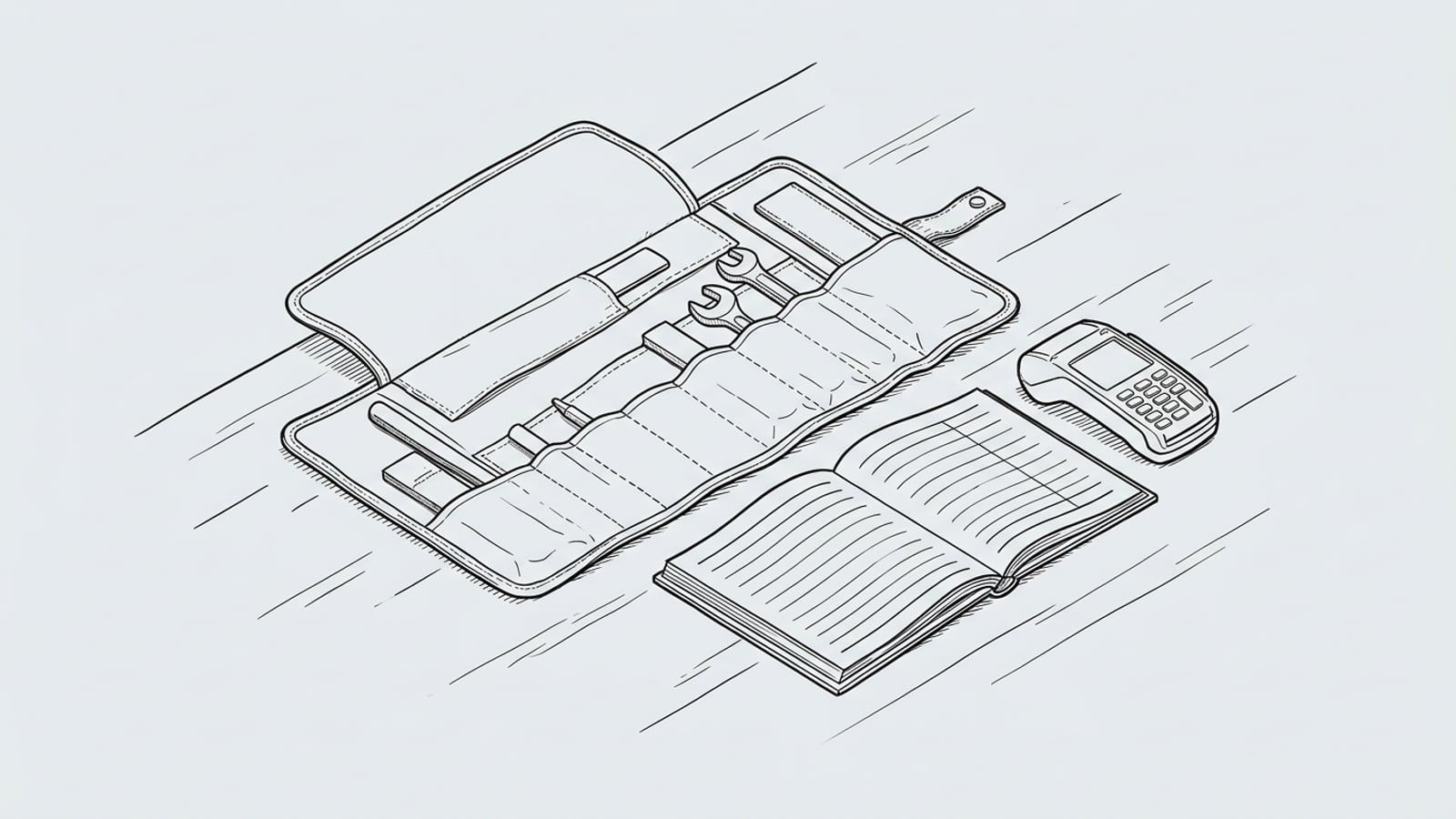
An example, to show the sum: a waxed-canvas tool roll at $45, from a sewing workshop whose smallest run is 30, offered to about 300 people. Go is 30 paid orders in three weeks. Fewer than 10 is a stop. Your numbers will differ; what matters is that they’re on paper before launch day.
Write the offer: what, when, how much, and the refund
The offer is one page, and it answers five questions before anyone pays:
- What it is. Photos or drawings of the prototype, labeled as such, with the size and materials.
- That it’s a pre-order. Say plainly that it isn’t made yet.
- The price, with shipping included or stated right beside it.
- When it ships. A date, not a season: “ships by March 14”, not “spring”. You need a reasonable basis for it, such as a supplier’s lead time or your own timed production.
- The refund. A full refund if the buyer cancels before it ships, a full refund to everyone if the batch doesn’t go ahead, and how to ask for one.
Put the pass mark on the page too: “If we don’t reach 30 orders by November 30, every order is refunded in full by December 9.” That commits you to the refund before you’re tempted to stall.
Tip: put the ship date and the refund promise next to the price and the button, not in the small print. A buyer who has to hunt for when it ships will either email you to ask or not buy.
Full price, deposit or waitlist
There are three ways to take a pre-order, and they don’t prove the same thing.
| Option | What the buyer does | What it proves | Watch out for | Best for |
|---|---|---|---|---|
| Full price | Pays the whole price now | Demand at that price | You hold money you may have to refund | Most products at an everyday price |
| Deposit | Pays part now, the rest before it ships | Serious interest | The test isn’t finished until the balance is paid | Custom or expensive work where paying in stages is normal |
| Waitlist | Leaves an email address | Curiosity | Signing up costs nothing, so it doesn’t predict sales | Building a list before you can name a price or a date |
For a test of demand, full price is the clearest. Take a deposit when paying in stages is normal in your trade, and keep it fully refundable until the order ships; if you ever plan to keep a deposit, ask an attorney about your state’s rules first. A waitlist is a fine first step but not a pre-sale: when you’re ready, send the list the offer and count who pays.
Build the page and take the money
A pre-sale needs one page and a way to take payment, not a store.
- The page. A one-page site, or a page on the site you have, with the offer and one button. The Toolbox lists page builders, form tools that take payments and store builders, with their prices.
- The payment. The simplest is a payment link: a checkout page the payment provider hosts, made without code. Stripe’s Payment Links can be capped at a set number of purchases, which suits a first run of 30, and refunds go out from the dashboard.
- The order details. Collect a name, an email and a shipping address at checkout: under the FTC rule, the shipping clock starts when you have the payment plus everything you need to ship.
- The record. Keep a sheet of each order’s date, amount and promised ship date, so you know whom to tell about a delay. Keep the money in a separate business account, and don’t spend what you might have to refund.
Card fees come out of every payment, and Stripe, for one, keeps its processing fee when you refund. At its standard 2.9% plus 30¢ for a domestic card, each $45 pre-order you refund costs about $1.61: twelve refunds, $19.32. Count that as the price of the test.
Put it in front of your group
A pre-sale page nobody sees proves nothing, so the offer has to reach the people you counted.
- Start with the people you interviewed and anyone who asked to hear when it’s ready: a short personal message each, with the link.
- Then go where your group already gathers: a trade forum, a local group, a market, a newsletter that covers them. How to get your first customers has the list to make and the message to send.
- Follow up once, a few days before the window closes, and count paid orders only. Likes and “I’ll definitely get one” don’t go in the tally.
Leave out the pressure: no invented countdowns, no “only three left” when nothing has been made. False claims in an ad are what the FTC’s rules on deceptive marketing exist for, and they spoil the test: you want to know whether people buy the product, not whether they react to a clock.
The rules on shipping dates, delays and refunds
In the US, taking money for goods ordered online, by mail or by phone brings in the FTC’s Mail, Internet, or Telephone Order Merchandise Rule (16 CFR Part 435), however the customer pays. The FTC’s business guide to the rule is plain reading and worth the half hour; these are the parts a pre-sale runs into.
The ship date
- Ship within the time you state, and have a reasonable basis for stating it.
- If you state no time, you need a reasonable basis for shipping within 30 days. A pre-order page with no date is promising 30 days whether you meant to or not.
- “Shipped” means handed to the carrier, not delivered.
Delays
- If you can’t ship on time, tell buyers promptly and before the promised date passes. The notice gives a new date (or says you can’t give one) and offers the choice to wait or cancel for a full refund, with a way to cancel at your expense, such as a reply email.
- If the new date is no more than 30 days past the original, a buyer who doesn’t answer can be treated as agreeing to wait. If it’s later, or you can’t give a date, the notice must say the order will be canceled automatically unless the buyer agrees to wait.
- If you miss the new date too, silence no longer counts: without the buyer’s express consent to a further delay, you cancel and refund.
Refunds
- Refund everything the buyer paid on a canceled order, shipping included, and not as store credit.
- Card, cash, check and money order payments are refunded within seven working days of the cancellation; credit you extended yourself, within one billing cycle.
Advertising before you’ve decided to make it
The FTC’s guide describes an advisory opinion that allowed “dry testing” a product the seller hadn’t decided to make, on strict conditions: no suggestion that it will ship, a plain statement that it may never ship, prompt notice and refunds if it’s dropped, and no substitutes. Miss any of those and the rule applies in full. For most small pre-sales, a real offer with a real date and a full refund is simpler.
The rule covers merchandise. Services fall outside it, as do C.O.D. orders and the few other exceptions the guide lists, and your state can add requirements of its own. This is a summary, not legal advice: if the pre-sale is large, runs for months or involves custom work, have a small-business attorney read the offer before it goes live.
If it misses: change the offer, or refund and walk away
When the window closes, read the result against the marks you wrote down, not against how you feel about it.
- It hit the mark. Order the batch, ship by the date and keep buyers posted. These are your first customers; look after them.
- It landed in between. Ask the people who looked and didn’t buy what stopped them, and change one thing: the group, the offer or the price. If it was the price, how to price a product shows whether a lower one can still pay. Run it again against the same pass mark, refunding or carrying over the first orders as you promised.
- It missed. Refund everyone in full and on time, with a short note saying why. A few weeks and some card fees to learn that this offer, to this group, doesn’t run is the cheapest the lesson will ever be.
Then go back to the Validation guides and pick the next test: a different group with the same problem, a different product for the same group, or a different idea.
Questions
Is it legal to take pre-orders for a product that doesn’t exist yet?
Yes, in the US, as long as you follow the FTC’s Mail, Internet, or Telephone Order Merchandise Rule: have a reasonable basis for the ship date you give (or for 30 days if you give none), get buyers’ consent to delays, and refund promptly when an order is canceled. If you only want to gauge interest in something you haven’t decided to make, the FTC’s guide sets out stricter dry-testing conditions, including saying plainly that it may never ship. State consumer laws can add their own requirements, so have an attorney read a large or unusual pre-sale.
Should I charge full price or a deposit for pre-orders?
Full price proves the most, because the buyer has done exactly what a customer does, and it’s the simplest to refund. A deposit suits expensive or custom work where paying in stages is normal, but the test isn’t finished until the balance is paid. Either way, write the refund terms down before you take any money.
How many pre-orders prove there’s demand?
There’s no standard number, so set yours before launch from your own sums: usually the orders that pay for the first batch, or the smallest run your supplier will make, checked against how many people the offer will reach. In the example in this guide, 30 paid orders from about 300 people in three weeks is a pass and fewer than 10 is a stop. What matters is that the number is written down before the first order comes in.
What happens if I take pre-orders and can’t deliver?
Under the FTC rule, you tell buyers before the promised date passes, give a new date or say you can’t, and let them cancel for a full refund; a second delay needs their express agreement. If you can’t deliver at all, cancel the orders and refund everything paid, within seven working days for card, cash and check payments. Keeping the money isn’t one of the options.
Can I pre-sell a service?
Yes: booking deposits, a paid place in a first class and early-client rates are all pre-sales. The FTC’s mail order rule covers merchandise, not services, but that doesn’t mean no rules apply: the FTC Act’s ban on deceptive practices and your state’s consumer protection laws still do. Write down what’s included, the start date and the refund terms before you take money.
Sources
- Business Guide to the FTC’s Mail, Internet, or Telephone Order Merchandise Rule, Federal Trade Commission
- 16 CFR 435.1, Definitions (Mail, Internet, or Telephone Order Merchandise), Legal Information Institute, Cornell Law School
- Refund and cancel payments, Stripe