6-10
Examples of Inventory in Product and Service Businesses
Examples of inventory include raw materials, work in progress, finished goods, and service supplies. See how each stage can quietly tie up cash.
- Written by

- Published
- Updated
- Reading time
- 10 min read
Inventory is everything a business holds to sell or use later, including raw materials, partly made products, finished goods, operating supplies, and, for service businesses, available capacity. Examples range from a bakery’s flour and dough to a maker’s completed items, packing materials, and supplies; tracking stock, planning orders, and adjusting storage to demand help prevent shortages and excess. Because inventory is money spent before it earns revenue, keeping it moving protects cash and helps meet customer demand.
In this guide
Picture a bakery that buys flour by the fifty-pound sack and keeps unsold rolls on the shelf until closing. Both are inventory: the goods and materials a business holds to sell or use later.
Even half-finished dough counts, since it sits at a different stage but still carries cost.
Product businesses hold stock at every production stage, and service businesses keep their own version, like the supplies a salon keeps on hand.
In this post, we’ll cover each type with concrete examples, show which ones apply to your side hustle, and explain how stock you’ve already paid for can quietly tie up your cash.
Examples of Inventory at Each Production Stage
Inventory is everything a business holds in stock, from materials waiting to be used to products waiting to be sold. In accounting, it’s usually split into three types:
- raw materials
- work-in-progress (WIP)
- finished goods
Here’s how each one shows up in real production.
Raw materials that production starts with
Raw materials are the basic inputs to production, the things you start with. A furniture maker buys wood, a bakery buys flour, a metal shop buys steel, and a clothing maker buys fabric.
Some are direct materials that become part of the product, like the wood in a table. Others are indirect materials, like sandpaper, that support the work but don’t end up in the product.
Some raw materials are recognizable in the finished item, like wood grain or steel. Others are unrecognizable, like yeast in bread or dye in fabric, changing the product without standing out.
Work-in-progress goods still being made
Work-in-progress is inventory that’s partly built but not yet finished, like table legs cut and sanded but still waiting for the top. It includes labor and overhead costs, meaning your time and shop expenses.
So a pile of half-built pieces holds more of your money than the wood alone.
WIP also shows where production gets stuck. When parts pile up before one step, such as sanding, that step is probably a bottleneck.
Finished goods ready for sale
Finished goods are complete products ready to sell, like a packaged loaf of bread or an assembled table. This stage connects directly to revenue. Until a customer pays, it’s just stock on a shelf; once it sells, it becomes merchandise.
Side hustlers see this stage in two ways:
- Etsy shops often hold finished items, like candles or prints, on hand until an order comes in.
- Print-on-demand sellers may keep little or no stock, since the item is made only after an order.
MRO supplies that keep operations running
Maintenance, repair, and operations (MRO) supplies keep a business running without becoming part of what it sells. That includes tools, safety gear like gloves, cleaning supplies, and office and janitorial supplies like paper and mops.
MRO supports production, not the product itself: a sander never ends up in the table, but you can’t finish the legs without one.
How each stage feeds the next
Each stage hands off to the next:
- Raw materials move into WIP as soon as you start cutting, mixing, or sewing them.
- WIP becomes finished goods when the last step is done.
- Finished goods become revenue when a customer buys them.
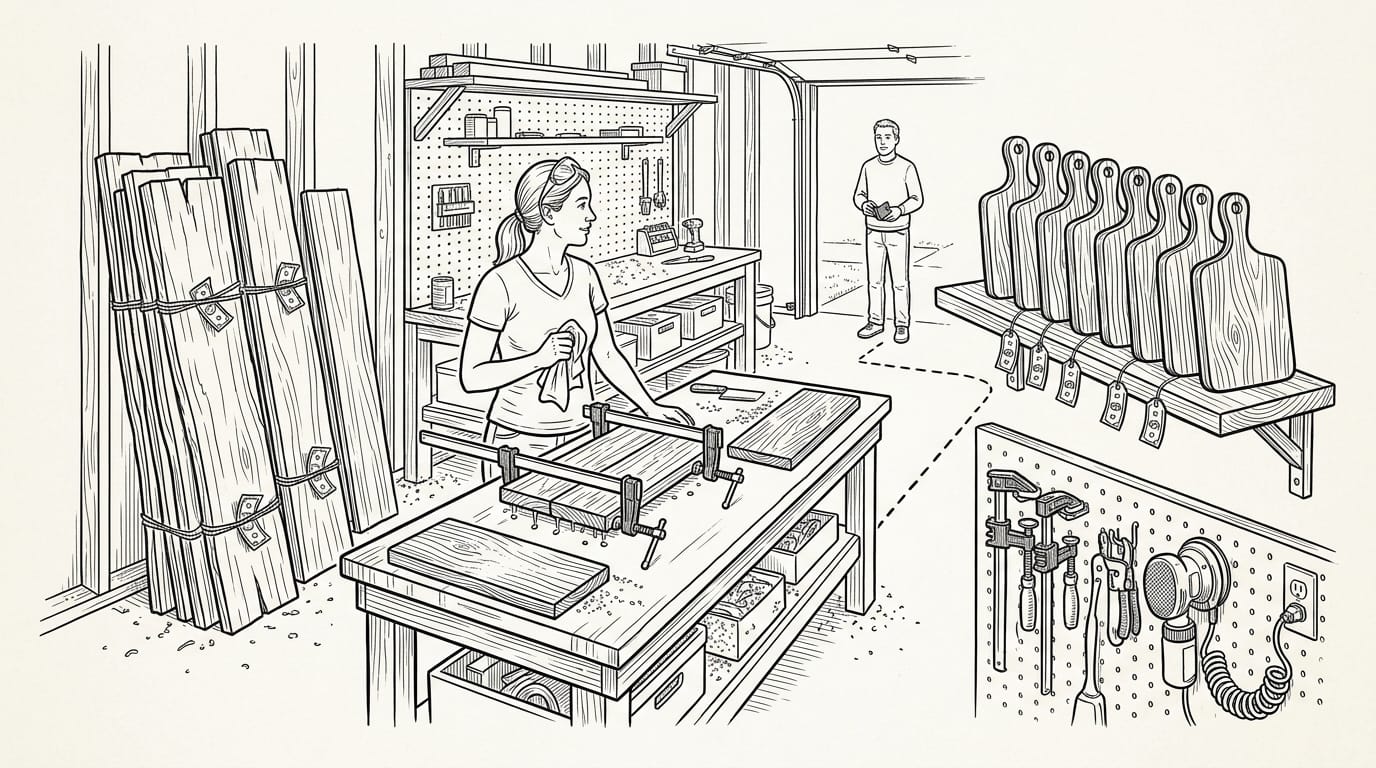
MRO supports every one of those handoffs. Consider a side hustler making walnut cutting boards in her garage.
The walnut and glue are her raw materials, the glued blanks on her bench are WIP, the oiled boards waiting for buyers are finished goods, and her sander and clamps are MRO. Stock is money you’ve already spent, waiting to come back. Getting it back with more than you paid is the profit motive at work.
That’s how inventory ties up cash: you pay long before a customer does.
Why Managing Inventory Well Matters
Inventory is stock you hold to sell, and managing it well decides how much cash sits on a shelf.
Ways good stock control helps your business
Here’s how it pays off:
- Saves money. Less unsold stock means lower storage costs and fewer damaged goods.
- Improves cash flow. Stock you sell turns back into cash for your next order.
- Satisfies customers. Having what buyers want keeps them coming back.
- Prevents stockouts and overstock. A stockout is running out of stock customers want, and overstock is holding more than you can sell.
- Stock ties up limited cash. Unsold units are money you’ve spent, not earned.
A one-person cleaning business that buys a year’s worth of solvent has its cash sitting on the shelf.
Is inventory an expense or asset?
Stock you expect to sell within a year is a current asset on your balance sheet, which lists what you own and owe. It’s an asset until it sells. When it sells, its cost becomes an expense called cost of goods sold (COGS).
Work in progress (WIP), partly made items, sits on the balance sheet until finished.
Valuation puts a dollar figure on remaining stock using one of three methods:
- FIFO (first in, first out): oldest stock sells first.
- LIFO (last in, first out): newest stock sells first.
- Weighted average: each unit gets the average cost.
A perpetual system updates counts with every sale, while a periodic system counts at set intervals.
How inventory and stock management differ
Inventory is what you own and haven’t sold, while stock management is the daily work of moving it. Accountants ask what it’s worth, but sales and operations ask where it is. That movement is logistics, the path from supplier to storage to customer.
Methods and Tools for Managing Inventory
Once you know what you’re holding, the real question is how to keep it moving. Stock is cash on a shelf.
Methods for keeping stock under control
- Just-in-time (JIT): order materials as orders arrive, not months early. A coffee roaster who buys beans per order keeps far less cash tied up.
- ABC analysis: rank products by value, watching your A items closely and your C items loosely.
- Economic order quantity (EOQ): the order size that balances ordering costs against holding costs.
- FSN analysis (fast-, slow-, and non-moving): sort products into those three groups to see what’s earning its shelf space.
- FIFO and FEFO rotation: first in, first out (FIFO) sells the oldest stock first, and first expired, first out (FEFO) follows expiry date, not arrival date.
There are two main types of control system. A perpetual system updates your count after every sale; a periodic system counts at set intervals, leaving you guessing between counts.
Count, track, and audit your stock
Cycle counting checks a small slice of stock on a rolling schedule, so you never shut down for one big count. Batch or lot tracking labels items made or bought together, so you can pull just one bad run.
Real-time tracking updates your numbers the moment something sells. Regular audits compare records against the shelf to catch gaps early. A candle maker who logs every jar sold finds her gaps in a monthly audit, not at tax time.
Software and systems for clear stock visibility
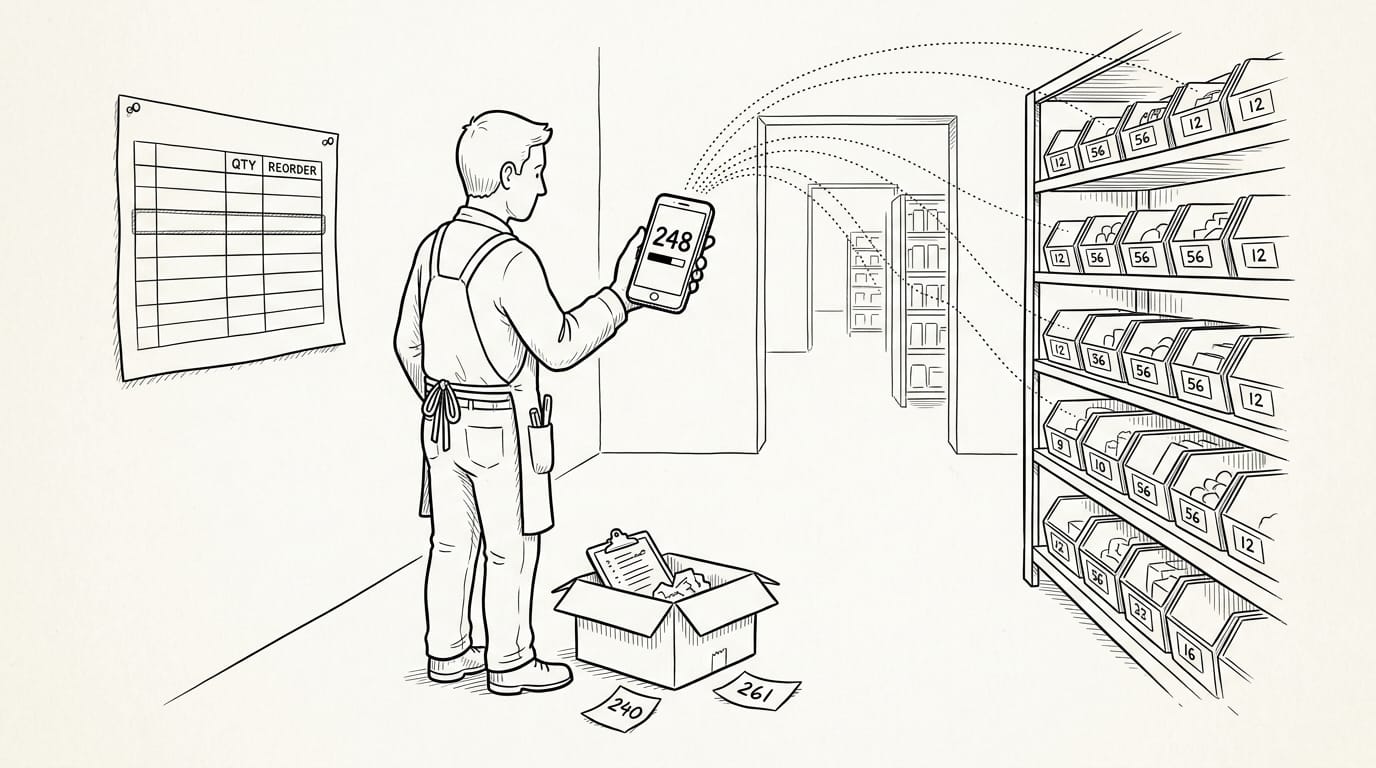
Cloud-based inventory software lets you check quantities from your phone. That’s real-time stock visibility: one current number, not three conflicting ones. A spreadsheet is the minimum: one sheet listing each item, its quantity, and its reorder level.
Once stock sits in more than one place, multi-warehouse management keeps each count separate while showing the total.
Forecast demand and keep a safety buffer
Demand forecasting estimates next month’s sales from past sales and seasonal patterns. Maintain buffer stock, the extra units you hold so a late delivery doesn’t leave you empty. Predictive ordering triggers reorders before you hit zero, not after.
Monthly performance reports show what sold, what sat, and how close your forecast came. A freelance baker checks her monthly report before ordering holiday flour, so she isn’t paying for flour that sits unused.
Less Common Types of Inventory
Not all inventory sits on a shelf waiting for a buyer. Here’s how we break down the less obvious types.
Backup and planning stock for busy seasons
Safety stock is extra inventory for demand jumps or late suppliers. If a soap shipment runs late, those spare bars keep orders moving. Anticipation stock is built ahead of a predictable peak.
Safety stock guards against what you didn’t plan for, while anticipation stock readies you for what you did.
Decoupling inventory sits between two stages so one doesn’t stall the next. Pour candles Monday but pack orders Thursday, and the cured candles in between mean pouring never waits on packing.
A vet clinic stocks flea treatments before spring, when calls spike. A side-hustle florist buys ribbon in May so she isn’t paying rush shipping before June weddings. Buy ahead only for seasons you can count on.
Packing materials, from inner to outer layers
Packing materials are inventory too, and they come in three layers:
- Primary packaging touches the product, like a jar or seed packet.
- Secondary packaging groups those units, like a retail box.
- Tertiary packaging is the shipping carton for a full order.
Think of a seed company: each packet is primary, a box of packets is secondary, and a case of boxes is tertiary. A shortage at any layer stalls the order, even with seeds on hand.
Goods in transit and service capacity
Pipeline stock is bought or made but not yet in your hands or your customer’s, like a pallet on a truck. You’ve already paid for it, so it ties up cash before you can sell it.
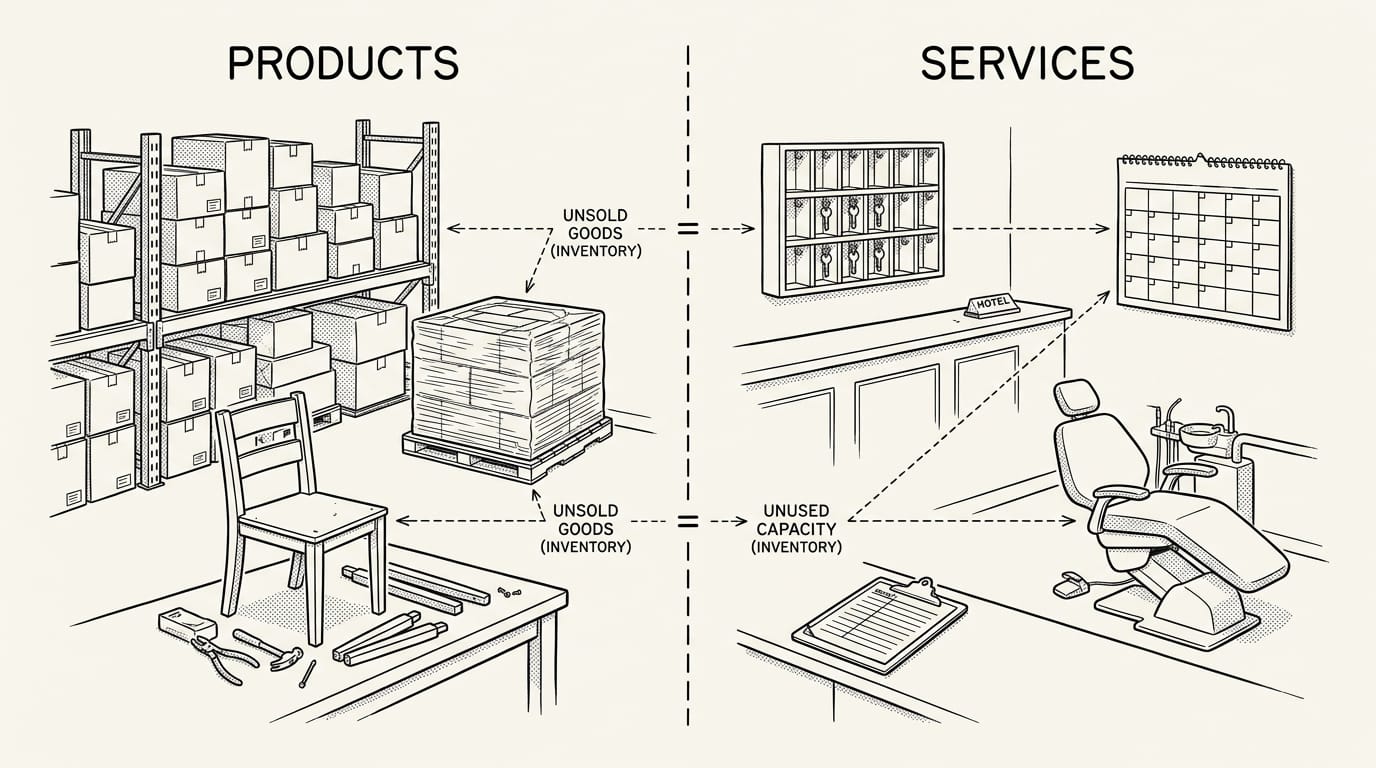
Service inventory works differently because a service business can’t shelve its product. Their inventory is capacity, not shelf stock: open slots and empty seats. At a cafe, an empty lunch table is unsold stock.
Once that hour passes, the capacity is gone for good.
Unsellable stock and how to clear it
Unsellable stock is inventory you can’t sell at full price or at all, like damaged, expired, or discontinued goods. It still costs you in shelf space and in the sales it crowds out.
Picture the shampoo Olympics: leftover bottles from scents you’ve stopped making, hogging the shelf a fast seller should have. To clear it, discount or bundle with a bestseller so customers see a bonus, not a markdown. Dead stock is cash you can’t spend.
Problems That Make Inventory Harder to Manage
Most inventory trouble builds from small gaps. Here’s where they start and what each one costs you.
Where tracking and processes break down
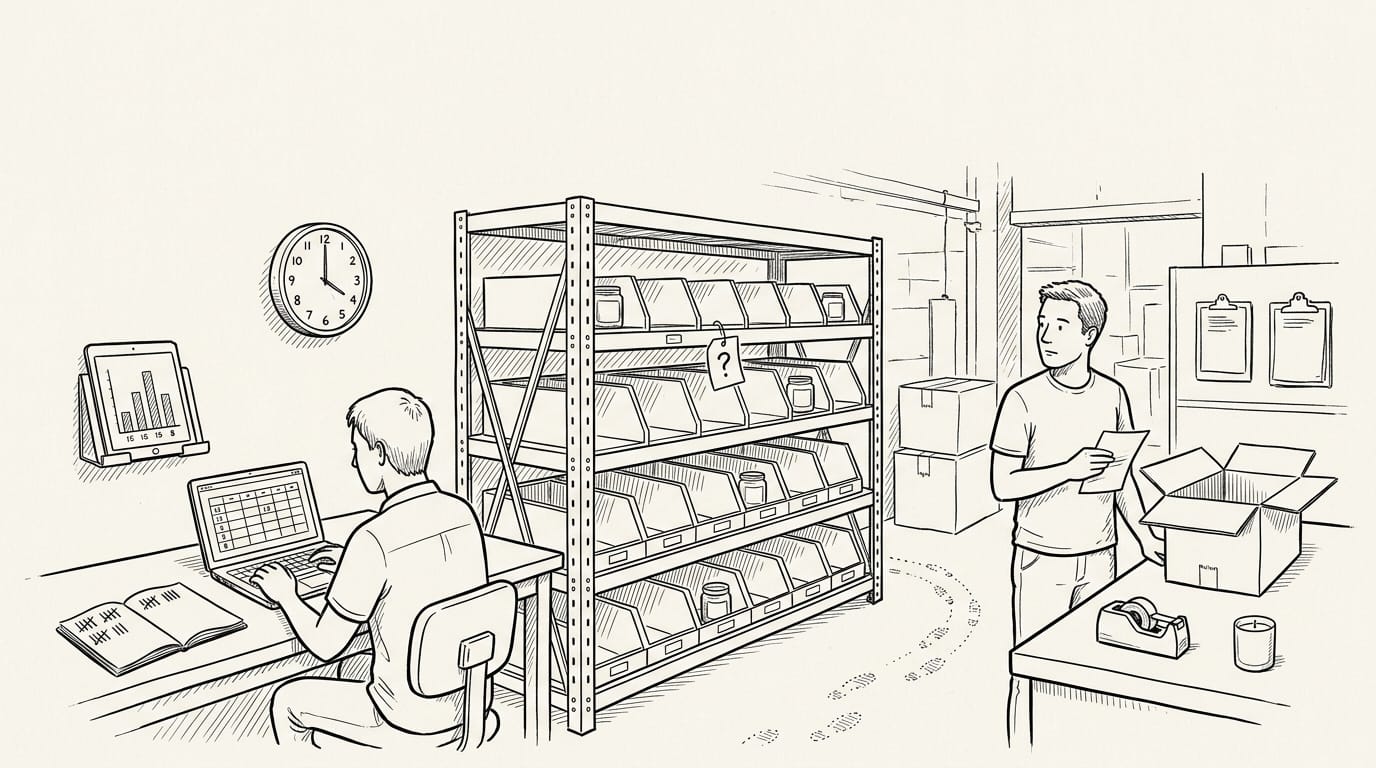
- Inconsistent stock tracking. Counts live in a notebook, a spreadsheet, and a dashboard, and they rarely match. A candle maker who updates her sheet on Sunday but sells three jars on Tuesday ends up promising stock she no longer has.
- Manual outdated processes. Hand-typed counts add a chance for error every time someone touches them.
- Warehouse location difficulty. If you can’t say where an item lives, you’ll waste time hunting while the order waits.
- Inefficient fulfillment. Scattered items slow packing, and every extra minute is unpaid time.
When suppliers and plans let you down
Unreliable suppliers break plans first. A leather wallet maker whose supplier ships two weeks late before the holiday rush sends her best orders out late and pushes back the rent money she counted on.
Unforeseen disruptions, like a shipping delay, arrive without warning, so keep a small buffer. Poor product planning means ordering what you hope will sell rather than what actually sold, and those boxes can sit for months.
Shifting customer demand means last spring’s bestseller may barely move this fall. Stock sitting still is cash sitting still.
Keeping your team on the same page
Poor information sharing is where small gaps get costly. If only you know the count, a helper restocking from memory will guess, and guesses cost money. Connected team systems fix this.
A shared sheet or inventory app everyone updates keeps the crew on one number. One shared number beats three private guesses.
Storage Options That Flex with Demand
Where you keep your stock matters almost as much as how much you buy. The right setup lets your space grow and shrink along with your orders.
Places to keep your stock
Four options cover most side hustles:
- In-house warehousing. You keep stock in a room, garage, or closet you control. It’s easy to reach, but it fills fast.
- Shared warehouse space. You rent a share of a larger warehouse and pay only for the area you use.
- On-site container rental. A shipping container sits near your property as a lockable storeroom.
- Self-storage bays. You rent a secure unit in a storage facility, sized to what you carry.
Add space for peaks without long leases
Seasonal demand makes storage tricky. A gift seller might move most of her orders in the weeks before the holidays, so her space needs spike, then drop. Plan around that sales calendar first.
Short-term expansion means renting extra room for a set window, then giving it back.
Consider a side hustler who sells candles from a spare bedroom. That room covers the slow months. When the holiday rush hits, she rents a self-storage bay, moves extra stock in, and hands it back once orders slow.
She pays for the peak without carrying that space all year.
Long leases can trap you in space you don’t need when sales slow. Shorter terms keep your options open, but flexibility has a price, so compare the monthly rate against a longer lease.
You’re paying for flexibility rather than commitment. Space follows sales.
Inventory isn’t just a row of boxes in a storeroom. It’s flour, dough, finished goods, and supplies, and each one is a decision about how much cash to commit and when.
Knowing which types apply to your business is the first step toward keeping that cash working for you.
Start by counting what you’re holding right now, then ask which items are moving and which are just waiting. Stock that sits too long is money you’ve already spent with nothing to show for it. Every item on your shelf should earn its spot.