6-4
How to Calculate Break-Even Point Step by Step
How to calculate break even point for a weekend bakery: find the loaves needed to cover costs, then factor in your hours and mixer payback target.
- Written by

- Published
- Updated
- Reading time
- 9 min read
The break-even point is the sales level where revenue exactly covers all costs, leaving no profit or loss. To calculate it, separate fixed costs from per-sale variable costs, then divide fixed costs by the contribution margin, which is price minus variable cost; count your time and any startup costs as well. The result shows the units or revenue needed to cover spending, helps test prices and sales targets, and should be updated when costs or prices change.
In this guide
Say you bake sourdough on weekends and sell loaves at the farmers market. Before you buy a second mixer, you want to know how many loaves you must sell before the money covers what you spent.
That number is your break-even point, the sales level where revenue exactly matches costs.
In this post, we’ll cover the formulas, worked examples, common pitfalls, and how to fold in your own hours and a payback target.
How to Calculate Break Even Point
Before you spend another evening on your idea, you need one number: the point where it stops costing you money and starts paying you back. Here’s how we’ll find it.
What the break-even point really means
The break-even point is the moment your revenue equals your total costs. Below it, you’re losing money. Above it, you’re making money. It’s the tipping point between the two, and it’s the first number worth knowing about any side hustle.
You can measure it in units, like how many candles or invoices you need to sell, or in money, meaning how much revenue you need to bring in.
You can also measure it in hours: how many hours a week the idea must take before it covers its costs, and whether you can actually keep that schedule.
Don’t leave your own time out. Think of a freelance designer who never counts her evenings. Her projects look profitable until she puts a fair value on her hours and sees they don’t pay her at all.
That’s when she raises her rate or drops the lowest-paying clients. Your time counts.
Why it pays to run the numbers
Running the numbers helps you in a few key ways:
- Setting prices. Your break-even shows the lowest price that still covers costs, so you aren’t guessing.
- Developing budgets. Knowing what you need to sell tells you how much cash to set aside each month.
- Deciding whether to raise prices or cut costs. If you’re short of break-even, the numbers show which lever to pull first.
- Setting sales targets. A break-even figure turns a vague goal into a specific weekly number of sales or hours.
- Reaching break-even before funds run out. Compare your savings with how long it’ll take to get there, and you’ll spot a shortfall while there’s still time to fix it.
Telling Fixed Costs from Variable Costs
Before you find your break-even point, sort every cost into one of two buckets. The test: does this bill change when sales change?
Costs that stay flat as sales change
Fixed costs show up whether you sell one unit or a hundred. Take a side hustler who sells candles from her spare room: her $200 monthly rent is due whether she ships one candle or fifty. Common fixed costs include:
- Rent and premises
- Salaried payroll and on-costs (the employer taxes and benefits on top of wages)
- Utilities on fixed contracts
- Insurance and loan repayments
- Depreciation of equipment, the cost of a machine spread over its useful life
Itemize every line on a spreadsheet, monthly and annually. Annual bills are easy to forget, so give each one its own row and divide it by twelve for the monthly view. Miss one and your break-even is off.
Costs that rise and fall with output
Variable costs move with every sale, so their total climbs as you sell more:
- Raw materials, like the $3 of wax and wicks in each candle
- Commission-based wages and contractors, paid per sale or per job
- Marketing spend you increase as sales grow
- Distribution costs, such as shipping and packaging for each order
- Volume discounts complicate per-unit cost. A bulk discount lowers your cost per candle as you grow, so plan with the price you’ll actually pay at your expected volume.
A semi-variable cost has a base fee plus a per-unit charge, like a phone plan with a monthly minimum. A stepped cost stays flat until you cross a threshold, then jumps, like a second helper once orders outrun one person.
Split semi-variable costs into fixed and variable parts, and note where stepped costs jump. Sort them first.
The Formulas and the Variables Behind Them
The break-even point (BEP) is the sales level where income covers every cost and profit is still zero.
Working out the units you must sell
Divide fixed costs by what each sale leaves over:
Units to break even = fixed costs / (price - variable cost)
The result is units to sell. Keep periods consistent: monthly costs give monthly units. Count startup costs as fixed too.
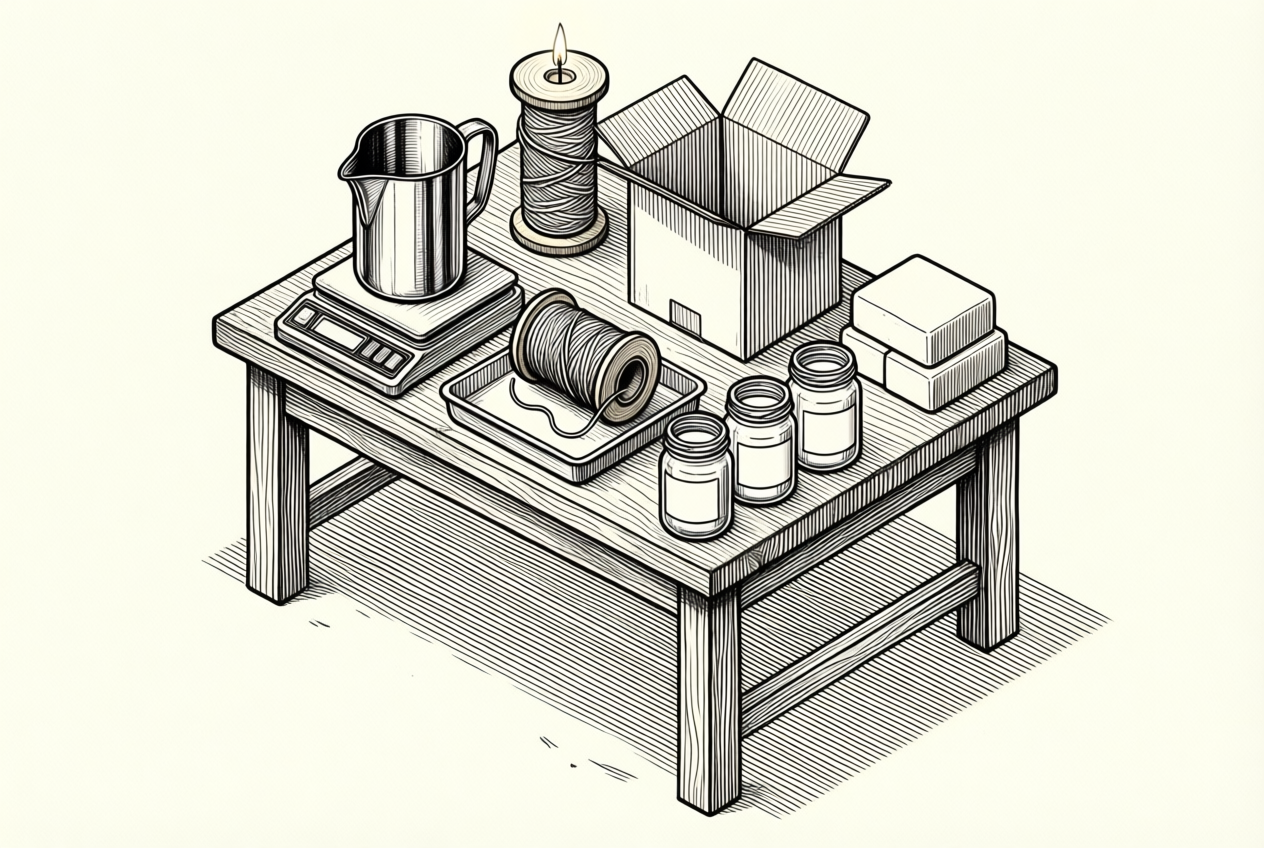
Say you run a candle side hustle. Each candle sells for $25 and costs $10, leaving $15. With $600 in monthly fixed costs, you’ll need 40 candles a month ($600 / $15). Candle 41 is your first dollar of profit.
For break-even time (months to payback), divide your upfront investment by the monthly profit you keep past break-even. At $1,200 upfront and $200 monthly profit, payback takes six months.
What is the formula for break-even sales?
Break-even sales is the break-even point in dollars. Run the units step first, then multiply by price:
Break-even sales = break-even units x price
Check it: fixed costs + (variable cost x units) should equal that revenue: $600 + ($10 x 40) = $1,000.
What each key number means
Each plays a role:
- Fixed costs. Costs that stay the same whatever you sell, like a booth fee.
- Variable costs. Costs that rise with every sale, like materials.
- Sales price per unit. What the customer pays for one unit.
- Contribution margin. What each sale contributes toward fixed costs: price minus variable cost.
So contribution margin isn’t the money you keep. It’s what pays down fixed costs first.
Divide margin by price for the contribution margin ratio: $15 / $25 = 60%, or 60 cents of every sales dollar.
Skip the units step with fixed costs / ratio: $600 / 0.60 = $1,000. Same answer, one step shorter.
Walk Through Worked Calculations
Let’s run the numbers on two very different businesses, then see what happens past the line.
A factory and a car valeting example
Every calculation uses the same three inputs:
- Fixed costs: bills due whether you sell or not, like rent or insurance.
- Price: what the customer pays per unit.
- Variable costs: costs that rise with each sale, like materials and fuel.
A manufacturer with $50,000 a year in fixed costs sells units for $25 and spends $15 per unit on materials. Divide the fixed costs by the profit on each unit:
$50,000 ÷ ($25 − $15) = 5,000 units
Multiply 5,000 units by $25 and you have $125,000 in revenue.
Now picture a weekend car valeter working from a driveway. Fixed costs are $600 a month for van insurance, a booking app, and a pitch fee. Each valet sells for $60 and costs $15 in products, water, and fuel:
$600 ÷ ($60 − $15) = 13.3 valets. Thirteen would leave you $15 short, so you need 14.
How profit builds past break-even
Break-even isn’t where you start making money. It’s where you stop losing it. Past that point, three things change:
- Units above break-even: every valet after the 14th adds to profit. Twenty valets puts you six units above the line.
- Profit per unit equals price minus variable cost: $60 − $15 = $45 per valet.
- Fixed costs already covered: the first 14 valets paid the $600, so the full $45 is profit.
Twenty valets earn $900 after variable costs, leaving $300 once fixed costs come out. That’s the whole trick.
Selling more than one service? Use a weighted margin: multiply each product’s margin by its share of sales, then add them up.
If seven in ten valets are basic at $45 and three in ten are premium at $70, the blend is $52.50 per sale, and $600 ÷ $52.50 rounds up to 12 valets.
Running What-if Scenarios on Your Numbers
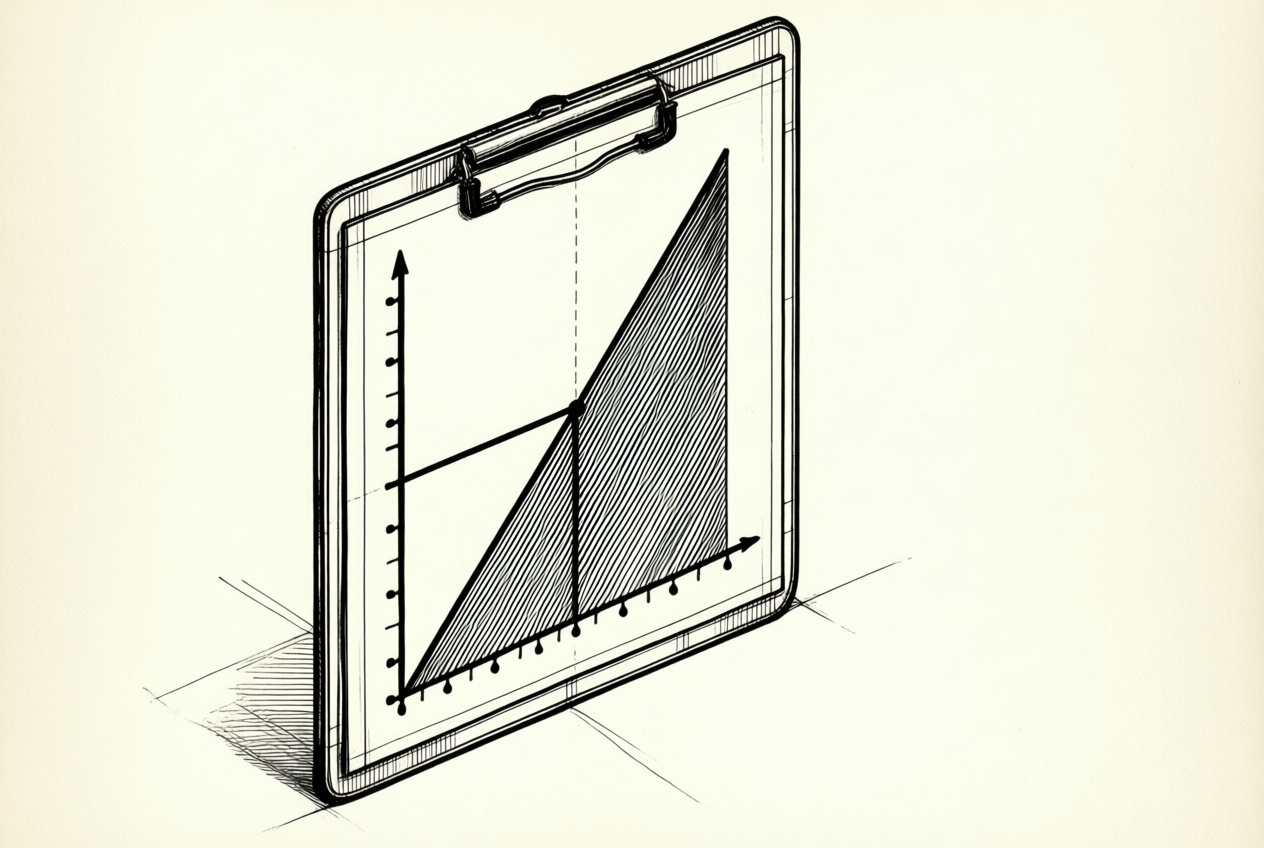
Change one input and your break-even moves, so test each change on paper first.
How changing your price shifts break-even
A higher price lowers your break-even, since each sale covers more fixed costs. A lower price raises it, so you’ll need more sales to stay even.
Take a woodworker who sells cutting boards for $60, with $25 in materials and $1,000 a month in fixed costs. Each board leaves $35, so she breaks even at 29. At $50, each leaves $25, and she needs 40.
Your margin of safety is the gap between expected sales and break-even. At 35 boards, she has six boards to spare. For target profit of $1,500 a month, she’d divide $2,500 (costs plus profit) by $35: about 72 boards.
Cutting costs to lower your break-even
Two cost types move it:
- Variable costs rise with every sale. Trimming materials from $25 to $20 leaves $40 per board and drops break-even to 25.
- Fixed costs are due even if nothing sells, so cutting them lowers the bar on every sale.
Cheaper materials and bulk buying only pay off if customers still buy. She renegotiates her shop lease with her landlord. Knocking $100 off the rent brings break-even to 26.
Side by side:
| Scenario | Materials | Fixed costs | Break-even |
|---|---|---|---|
| Today | $25 | $1,000 | 29 boards |
| Both cuts | $20 | $900 | 23 boards |
Whether your marketing spend pays off
Ads are a fixed cost too: $200 a month at $35 a board means six extra boards just to cover them.
Return on investment (ROI) measures what a spend brings back. Ten extra boards net $150 after ads, a positive 75 percent. Four net a $60 loss, a negative 30 percent.
Spend only what sales can cover.
Where Break-even Fits and Common Questions
The break-even point is the sales level where what you bring in covers what you spend, with nothing left over. Accountants and investors use the same idea, so seeing where it fits makes your numbers easier to trust.
Where accountants and investors use it
Three places it shows up:
- Accounting. Production costs equal revenue, so the business isn’t gaining or losing on what it makes.
- Investment. The market price equals the original cost, so the investor gets back exactly what they put in.
- Start-up planning and sales forecasts. Founders use break-even to find how many sales they need before the business pays its own way, then test that against a realistic forecast.
Think of a freelance photographer weighing a new lens. She checks how many weekend shoots it takes to cover the payment. If that’s more weekends than she has, she changes the plan before spending a dime.
Questions people ask about break-even
Why bother with the math? Because break-even marks the smallest result that doesn’t lose money. Without it, a busy month can feel like progress when it isn’t.
A lower break-even means fewer sales to cover costs, so there’s less risk and a faster path to profit. A higher one means more sales before any profit, so the idea needs more demand or leaner costs.
Lower isn’t always better, though, if a bare-bones setup caps growth.
Save your calculation. It becomes a benchmark for future planning, so rerun it whenever prices or costs change. A candle seller who raises her wax prices can see how many more candles she now needs to sell to break even.
Keep the number current. That habit keeps your plan honest.
Once you know your break-even point, the guesswork fades. You can see how many units to move, how much revenue to aim for, and when the idea starts paying its own way.
Plug in your real costs and the hours you’ll actually put in, and you’ll decide from numbers instead of hope.
Revisit the math whenever your prices or costs shift, and check it against the payback target you set. Know your break-even number, and you’ll always know what it takes to turn a side hustle into a paying one.
Questions
What is the difference between fixed and variable costs?
Fixed costs stay the same as sales or output change, such as rent or insurance. Variable costs rise or fall with the number of units sold, such as materials or per-order shipping.
What is contribution margin?
Contribution margin is the amount from each sale left after subtracting its variable cost. It goes toward covering fixed costs; once those are covered, additional contribution becomes profit.
What is the BEP formula?
Break-even point in units = fixed costs ÷ (sales price per unit − variable cost per unit). In dollars, break-even sales = fixed costs ÷ contribution margin ratio.
What is BEP in units?
Break-even point in units is the number of units you must sell for revenue to equal total costs, leaving no profit or loss. Calculate it as fixed costs divided by the per-unit contribution margin, then round up to a whole unit when needed.
What is the economic definition of the break-even point?
In economics, the break-even point is the level of output or sales at which total revenue equals total cost. Economic profit is zero at this point, so the business neither makes a profit nor incurs a loss.
How to calculate break-even point time?
To estimate payback time in months, divide the upfront investment by the monthly profit earned after break-even. For example, a $1,200 investment repaid from $200 of monthly profit takes six months.
How to calculate the breaking point?
If by “breaking point” you mean the break-even point, divide fixed costs by the difference between the selling price and variable cost per unit. The result is the sales volume needed for revenue to cover all costs; round up if it is fractional.