4-6
How to Advertise Your Business Step by Step
How to advertise your business: compare channel costs, test promotion cheaply, and measure results to choose the first channel worth funding.
- Written by

- Published
- Updated
- Reading time
- 12 min read
- Sources
- 1 cited
Advertising your business means putting a clear offer in front of people most likely to buy, through channels they already use. Start with a trustworthy website and local listing, keep your message consistent, and choose a channel you can afford to test and measure. Track inquiries and sales, not just clicks or likes, then invest more in what brings paying customers.
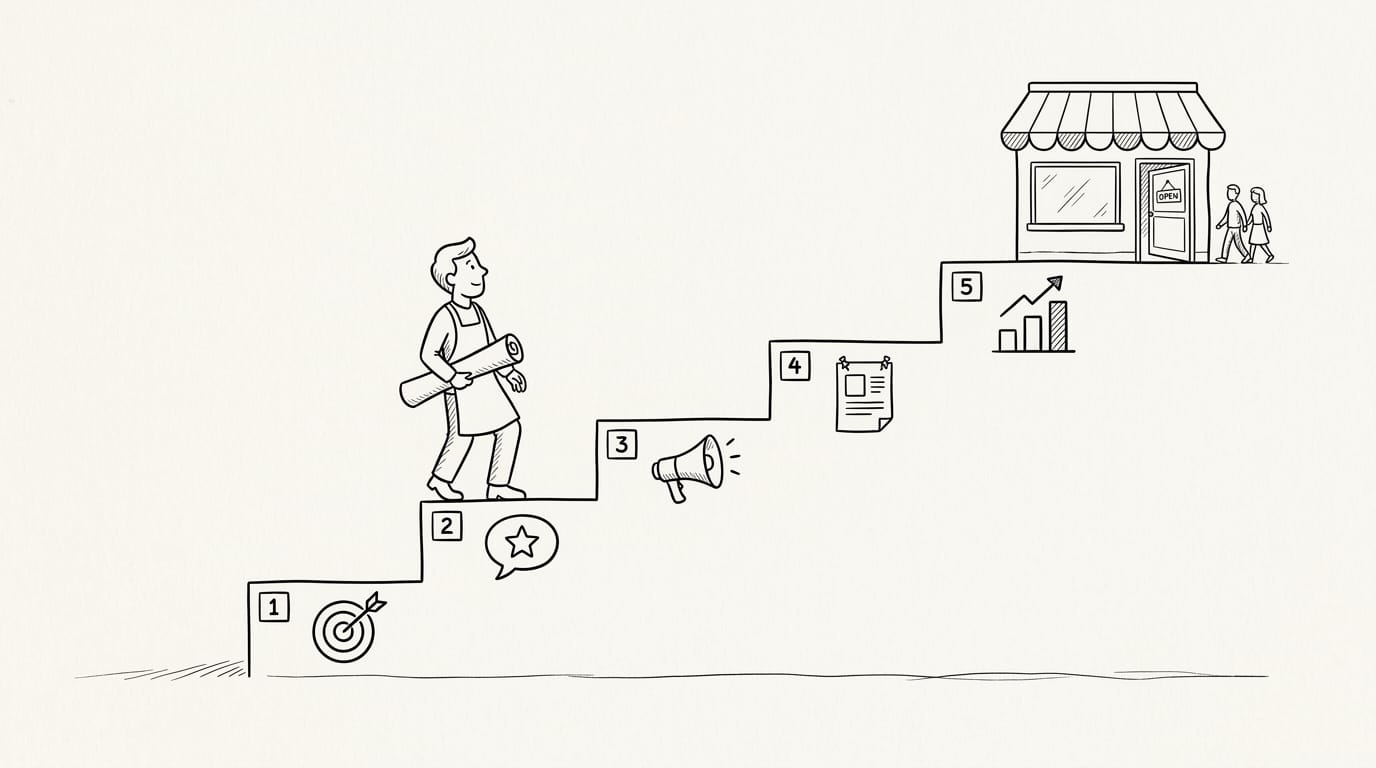
In this guide
Think of advertising like a yard sale sign. A good one tells people what you’re selling, where you are, and when to show up, and it’s cheap to make. Plenty of side hustlers skip the sign and hope buyers stumble across them. That rarely works.
Advertising a business comes down to a few channels worked in a sensible order. This guide walks through the options, what each one tends to cost, and how to measure results. You’ll also learn how to test cheaply and pick the first channel worth funding.
Planning How to Advertise Your Business
Before any ad runs, settle who you’re talking to, what you can test, and how your brand sounds. Guides count steps differently, so follow the order.
Find out who your customers are
Your target audience is the group most likely to buy, like remote workers who want a cold brew to carry.
Use market research (short surveys, chats with past buyers) to sort your audience into demographics (age, location, income) and psychographics (values, habits, worries).
Keyword and forum research shows the words your audience actually uses. It’s less about what they want and more about where they go to look.
A side hustler selling soy candles assumed buyers searched for “scented candles,” but forum threads asked for clean-burning options. She rewrote her listing in their words and sold more.
Plan your strategy, budget and metrics
There’s no universal strategy, so build yours around your own customers. Set a budget and schedule, run a quick competitor analysis of rivals’ ads and prices, and decide your success metrics before you spend.
Cost per customer is what ads cost to win one buyer. Set it against your price: if winning a buyer costs more than they pay, you lose money on each sale.
Avoid betting everything on one channel: test one on a small budget, then widen. Where do you advertise? Use this channel chooser: go where your customers already look, test only what you can afford to lose, and pick somewhere you can track results.
Make your brand look and sound consistent
Fix your logo, colors and typography: one logo, a small palette, one or two fonts. Keep your brand voice steady, since people remember how you sound, not just what you sell.
Carry it across every touchpoint, from listings to invoices. Consistency builds trust.
Your Website and How Locals Find You
Before you spend a dollar on ads, make sure people who look you up find something solid. Your website and local listing come first.
Build a website people trust
Start with a tailored, user-friendly website that explains what you do in seconds. Think of a home baker who takes custom cake orders: her homepage shows three cake styles, a price range, and a button to request a quote.
Add an online store only once you have products ready to ship. Until then, make your contact info easy to find and show reviews where buyers see them.
Free website builders can get a basic page live so you can test demand before you pay for a site.
Claim your free Google Business Profile
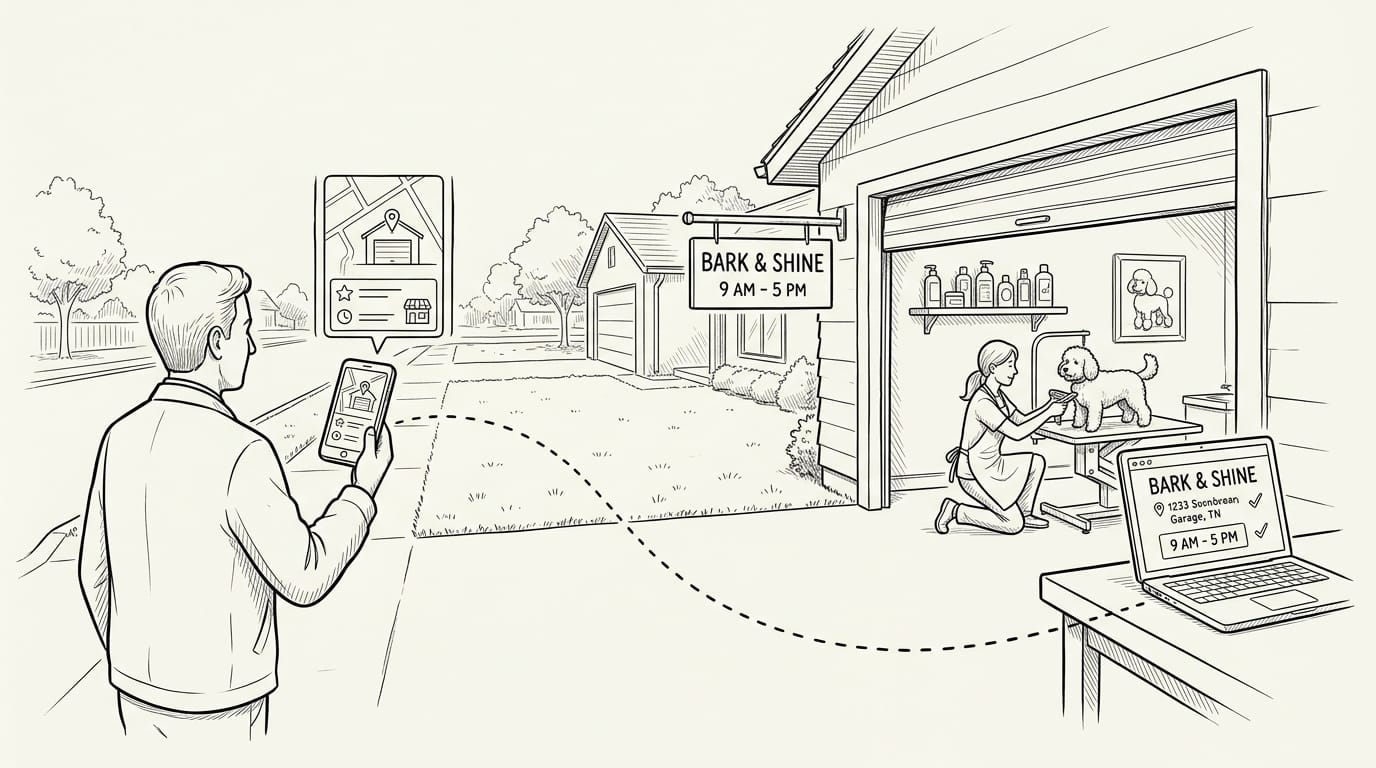
Your Google Business Profile is a free listing that shows where you are, when you’re open, and what you offer. Claim it so a neighbor who’s never heard of you has a place to check you out.
Complete your profile to show up in local results. A dog groomer working out of her garage, for example, lists her service area, hours, and photos of her work, so neighbors have a reason to call.
Verify your listing information, then match it to your website. Same name, same address, same hours. Mismatched details make people wonder which version is right. Boring, and that’s the point.
Local SEO (local search engine optimization, or helping search engines connect your business with nearby searchers) ties it together. The goal isn’t to be seen by everyone online. It’s to be found by nearby customers who can actually buy from you.
Using Social Media to Promote Your Business
Social media reaches people for free, but only if you show up consistently on the right platforms.
Choose platforms, post often and reply
Start with the one or two platforms your customers already use, since Facebook, Instagram, and LinkedIn each draw different crowds. The 3-3-3 rule is a simple posting rhythm that replaces daily guesswork with a fixed plan.
Post regular updates with visuals, like a product photo or short clip, and reply to every comment. Consider a side hustler selling candles from her kitchen.
She films a pouring clip each week and answers scent questions the same day, and those replies often turn into repeat orders.
Tactics that work on each platform
Same idea, different format. Match each post to its app:
- YouTube video tutorials. Show people how to use what you sell.
- Instagram Shopping. Tag products so viewers can click from a photo straight to the item.
- TikTok for younger audiences. If your buyers skew young, quick casual clips often fit better than polished ads.
- LinkedIn company page. Set one up to give your business its own presence.
Running giveaways and working with influencers
Giveaways and creator partnerships can widen your reach. Fit beats follower count.
- Competitions and giveaways. Ask followers to enter with something simple, like a comment.
- Reward followers. A free sample or discount goes a long way.
- Influencer collaborations. Partner with a creator whose audience overlaps with yours.
- Match the audience. Check whether a creator’s commenters look like your buyers.
Paying to promote on social platforms
Paid posts reach people who don’t follow you yet, so start small and test.
- Targeting. Choose viewers by demographics and interests. Focus on who sees the ad, not how many.
- Set budget and metrics. Fix a spending limit and one number to judge the ad by, such as cost per inquiry (what each person who reaches out costs you).
- Combine with organic activity. Keep sharing regular posts, so anyone who clicks finds an active feed.
Say you run a bike repair shop. You set a weekly limit, target nearby riders, and track how many book a tune-up. You learn before you spend big.
Creating Content and Ranking in Search
Publish content that helps before it sells, then get it found through search engine optimization (SEO), the practice of making your pages show up in search.
Publish helpful content that builds trust
Blog posts and how-tos are the easiest place to start. Picture a side hustler selling handmade leather wallets who publishes “How to Care for Leather Wallets.” Buyers type that question into Google, so the post brings in people who might buy.
Videos, webinars (online seminars), and infographics (visual data summaries) work the same way.
E-books and whitepapers (in-depth reports on a problem) suit serious shoppers. Case studies and testimonials let customers vouch for you, which builds trust and authority.
The goal is content that’s helpful rather than promotional.
Core SEO basics to get right
Five basics cover most of the work:
- Keyword research. Find the words customers actually type into search.
- On-page optimization. Use your main keyword in each page’s title and opening paragraph.
- Quality content, no stuffing. Write for people. Repeating keywords over and over (keyword stuffing) reads awkwardly.
- Backlinks. Links from other sites to yours, earned by publishing something worth citing.
- Page speed and images. Compress large photos so pages load fast, and add alt text (a short written description of each image).
Timelines for SEO and getting outside help
SEO is a long-term investment. Search Engine Land’s SEO timeline guide says it typically takes three to six months to produce measurable results, and can take six to 12 months to see significant impact in competitive industries. Results take time.
If the technical work overwhelms you, hire an agency or consultant, or take free online courses. Learn the basics first so you know what to ask for.

Reaching Customers by Email
Your email list is the one channel you own outright, so set it up before you spend a dollar on ads.
Build a list and send short newsletters
A lead magnet is a free offer, like a checklist or short guide, that people get in exchange for their email address. Consider a side hustler who sells hand-poured candles and offers a free scent-pairing guide.
Those sign-ups already want candles, so your emails land with readers, not strangers.
Next, segment your list, which means splitting it into groups based on what people have bought or clicked. Then personalize. A note mentioning the scent a customer bought last month feels like a friend’s recommendation, not a mass blast.
Who you write to matters more than how many people you reach.
Keep each newsletter short: one main idea, one clear link, and a few plain sentences. Shorter wins.
Make promotions targeted. A discount on wedding cakes should go only to people who’ve shown interest in wedding orders. Blast every coupon to everyone, and readers learn to wait for the next one.
Check two numbers after every send:
- Open rate: the share of people who opened the email. A low number often means the subject line needs work.
- Click rate: the share who clicked a link. If people open but don’t click, the content isn’t giving them a reason to act.
Finally, clean your list regularly. Remove addresses that bounce (couldn’t be delivered) and people who haven’t opened anything in a long while.
A smaller, active list protects your deliverability, meaning how often your emails reach inboxes, and gives you cleaner numbers to judge.
Paid Online Ads That Bring in Buyers
Paid ads come in several types, and each charges differently. Here’s how to write one that works, then what the formats and prices mean.
How do I write a business ad?
Start with Google Ads and Bing Ads, which use pay per click pricing: you pay only when someone clicks.
Build your ad around keywords, the phrases buyers type. If someone searches ‘emergency plumber near me,’ your headline should echo that. Check your landing page quality too: the page should deliver what the ad promised.
Set a cost-per-click budget, a daily spending cap. A freelance dog walker, for example, watches which phrases bring in people who book, then stops paying for clicks from people who only want a free quote.
Finally, run a small test budget first. Spend a little, see which ad brings in buyers, and only then raise it. Prove it before you scale it.
Banner, remarketing and native ad formats
The main types you’ll meet are:
- Search ads: text shown when someone searches a phrase you bid on.
- Banner ads: image or text boxes on other websites.
- Remarketing ads: shown again to people who visited your site.
- Contextual and site-placed ads: beside related content or on sites you pick.
- Google Display Network: Google’s partner websites where your ads can run.
- Native ads: designed to blend into the page around them.
Pricing comes in three models:
- Cost per click (CPC): you pay each time someone clicks.
- Cost per thousand impressions (CPM): you pay for every thousand times your ad appears.
- Cost per acquisition (CPA): you pay only when a visit becomes a sale or sign-up.
CPC pays for clicks, CPM for views, and CPA for results. Know what each dollar buys.
Offline Promotion Through Community and Relationships
Offline promotion works because people trust people they’ve met. Here’s how to earn that trust.
Join local events, sponsorships and trade shows
- Local events and market stalls. Think of a home baker who spends a few Saturdays at a farmers’ market and collects names for her next batch.
- Sponsorships and charity. Sponsor a youth team or school fundraiser to reach local families. Pick causes your customers care about.
- Workshops and presentations. Teach a free class at the library. Treat it as teaching rather than pitching, and people often ask about your work.
- Trade shows and business groups. Both put you among people who buy from or refer services like yours. Set one goal before you go.

Press releases and classic local ads
- Press releases to local news. A short release can earn coverage when it has a local angle, like a new shop run by a neighbor.
- Radio and newspaper ads. They reach a broad audience but are hard to track, so ask new customers how they heard of you.
- Flyers and billboards. Flyers are cheap and work on community boards. Billboards need a few words a driver can read at a glance.
- Benefit-focused call to action. Lead with what it does for them, not what you sell. “Book your first session this week” beats “We’re a new studio.”
Partner with businesses that complement yours
Think of a dog walker who leaves cards at a grooming salon, whose clients often need midday walks. Both gain customers without buying ads.
Look for a complementary business: one that serves the same customer with a different need. Avoid direct competitors, since you’d just split the same clients with another dog walker.
Networking with small businesses works the same way: get to know the shop owners on your street and refer them when you can. Trust does the selling.
Get referrals and reviews from happy customers
- Ask for referrals. Time it right after a good experience: “Know anyone else who could use this?”
- Reward referrers. A small thank-you, like a discount on the next order, shows you notice.
- Reviews on Trustpilot and Google. Send happy customers a direct link to your review page so they can finish in one tap.
- Respond to negative reviews. Reply calmly and specifically, then offer to fix things offline.
Measure Results and When to Hire Help
Advertising without tracking is guesswork. Here’s what to watch, and when to bring in help.
Track the numbers that matter most
- Traffic and bounce rates. Traffic counts visits to your site. Bounce rate is the share who leave without viewing another page.
- Conversion rates. The share of visitors who take the action you want, such as buying.
- Engagement rates. How people respond to your posts and ads through likes, comments, and shares.
- Email open and click rates. Open rate is the share who open your email. Click rate is the share who click a link in it.
- Return on investment (ROI) of paid ads. What a campaign earns compared with what it cost. If it costs more than it earns, it’s losing money.
- Google Analytics. Google’s tool for seeing where visitors come from and what they do on your site.
Say you sell candles on the side and one ad’s visitors leave within seconds. Those quick exits point to the landing page. Fix the page, not the ad.
Hiring agencies to turn leads into sales
Once ads bring in interest, following up is the hard part. A lead is someone who has shown interest, like filling out a form.
Specialist agencies focus on one channel, like email or paid search. Hire one once a channel works and you can’t keep up.
The real test is whether leads turn into revenue, not just more leads.
Lead nurturing means following up over time until someone is ready to buy. Qualification means checking a lead is a good fit first. Not every lead is worth your time.
A bookkeeper whose website form fills faster than she can answer it can hand follow-ups to a specialist, freeing her evenings for paying clients.
You don’t need to do everything at once. Start with a clear offer, choose the channel where your customers already spend their time, and test it on a small budget. Track what brings in actual buyers, not just clicks or likes.
Once one channel earns its keep, put more money behind it and let the rest wait. That’s how a side hustle grows without swallowing your savings.
Fund what sells, and let everything else earn its way in.
References
- How long does SEO take to work? SEO timeline & results explained — searchengineland.com (2025)
Questions
What is the #1 reason small businesses fail?
Cash-flow problems are often cited as the leading reason small businesses fail, especially when expenses exceed revenue or the business runs out of working capital. Poor financial planning and insufficient demand can contribute to the problem.
What is the 3-3-3 rule for social media?
The 3-3-3 rule is a social media posting framework, but its exact meaning varies: some versions call for three types of content, three posts per week, and three engagement activities. Use it as a consistent, manageable rhythm rather than a universal standard.
What are the 7 steps of advertising?
Advertising steps vary by framework, but a practical sequence is: define your goal, identify your audience, choose a message and offer, select a channel, set a budget, create and launch the ad, then measure results and optimize.
What are the 5 main advertising techniques?
Five common advertising techniques are emotional appeal, bandwagon appeal, endorsements or testimonials, repetition, and facts or product demonstrations. The best choice depends on the audience, offer, and channel.
What are the 7 types of online advertising?
Seven common types of online advertising are search ads, display or banner ads, social media ads, video ads, native ads, remarketing ads, and email advertising. These formats can overlap, and businesses should choose based on where their customers spend time and what they can measure.
How to write a business ad?
Write a business ad by identifying the customer and the benefit you offer, then use a clear headline, concise supporting details, and a specific call to action. Match the ad to the audience’s search terms and make sure the landing page delivers what the ad promises. Test it with a small budget and track whether it brings in customers.
Where do I advertise my business?
Advertise where your likely customers already look and where you can track results. Options include your website and Google Business Profile, social media, search ads, email, local events, community flyers, local media, and partnerships with complementary businesses. Start with one affordable channel, measure its results, and expand what works.
Sources
- How long does SEO take to work? SEO timeline & results explained, searchengineland.com,