2-5
Ecommerce Business Basics: Models, Costs, and Startup Steps
An ecommerce business can sell through a website or marketplace. Test demand, pricing, and margins before spending money on your online store.
- Written by

- Published
- Updated
- Reading time
- 7 min read
- Sources
- 7 cited
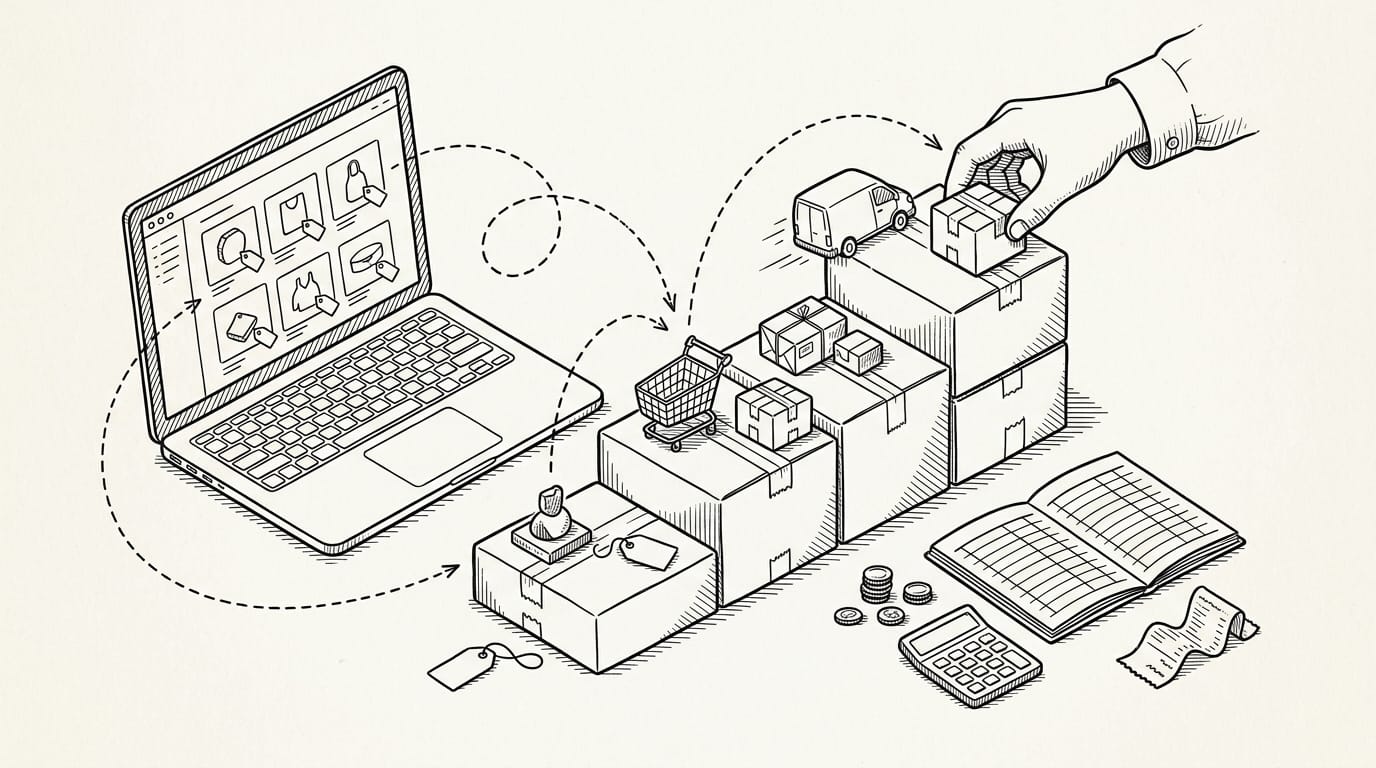
An ecommerce business sells products or services online through its own website, a marketplace, or both. To build one sustainably, test demand and pricing before investing, calculate margins after product, shipping, fees, and marketing, and make shopping simple with clear product details, mobile-friendly pages, and an easy checkout. Starting small and learning from real orders helps limit risk and shows whether the business can earn enough to grow.
In this guide
Picture a card table at a weekend flea market: a few things you made, a handwritten price sign, and a cash box. An online store works the same way, except the table is a website and the crowd is anyone with a phone.
An ecommerce business sells products or services online, through its own website or a marketplace.
This post covers the main models, startup costs, and whether it’s still worth starting, then lays out a path to test demand, pricing, and margins before money goes in.
Is an Ecommerce Business Still Worth It?
Yes, in 2026 an online store can still be worth it, but only if you test demand before you spend, not after.
Digital-first moves to beat competitors
Digital-first priorities mean your website and messages come first. A weeknight leather wallet maker, for example, fixes her product pages and shipping dates, so fewer buyers email the same questions. To stand out, give shoppers a reason to pick you.
Digital tools also cut routine costs, freeing time to grow. Shoppers now expect fast replies and clear delivery dates. Miss either, and they leave.
Choosing between online and physical stores
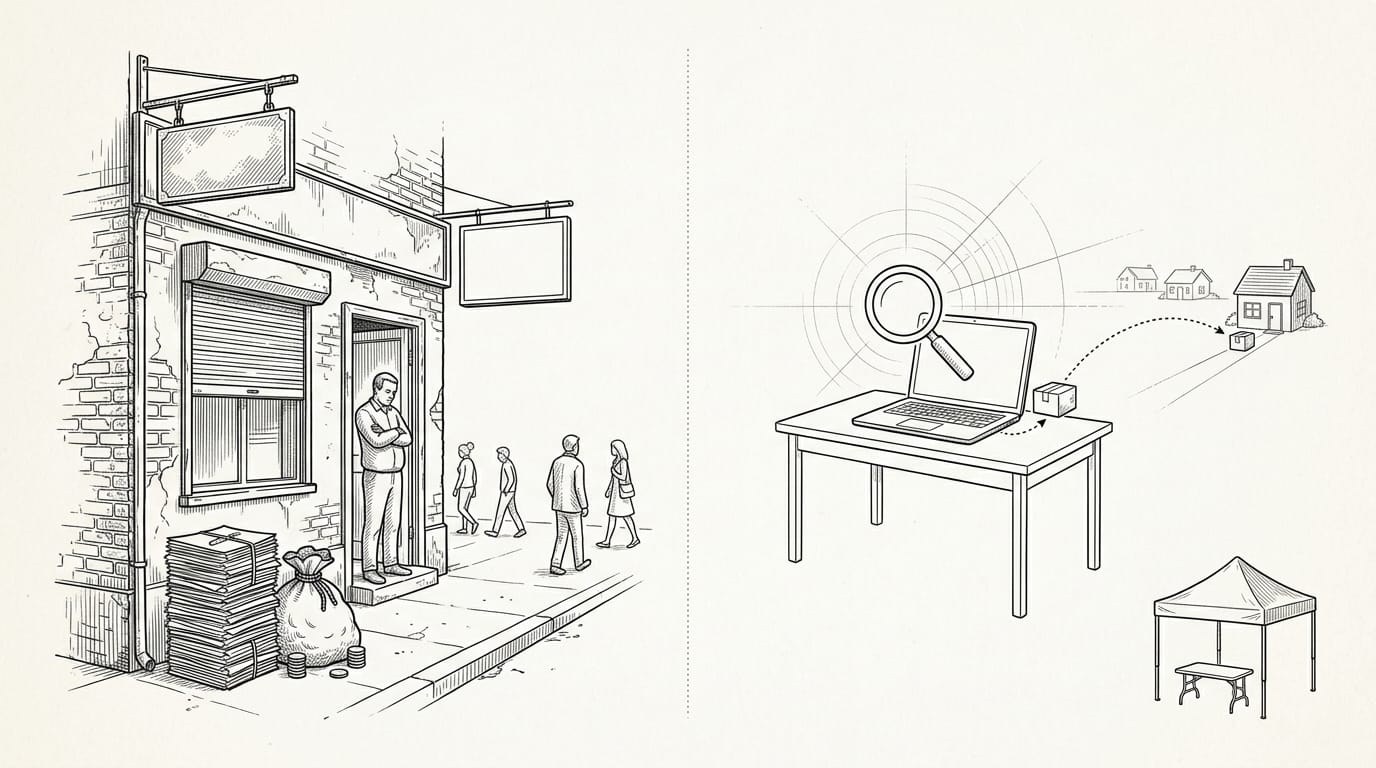
Online shops can carry less overhead (fixed costs like rent). A study by Grandon and Pearson (2004) found ecommerce businesses can save up to 30% on overhead compared to brick-and-mortar stores.
Online also widens your reach: physical shops wait for passersby, while online shops reach people who are searching.
Start where your customers already shop, then add a pop-up once demand is proven. Don’t count on shopping centre traffic: visits fell 0.5% year on year in August, per the British Retail Consortium (BRC).
Dropshipping, where a supplier ships each order, keeps inventory costs low. Is dropshipping still profitable? It can be, but only if your price, minus the supplier’s cost, ads, fees, and returns, leaves a real margin. Run the numbers first.
Selling worldwide and on big marketplaces
The largest ecommerce markets include China and the United States.
The U.S. retail market, estimated at $1.2 trillion in 2025 by the U.S. Census Bureau, makes up about 22% of global e-commerce sales, per a report on China’s e-commerce exports and U.S. de minimis policies.
Going global adds shipping and duties, so start with one country. Amazon’s business tools offer a built-in audience, but you share that customer and pay for access.
Launching Your Own Online Store
An e-commerce business sells products or services online, through its own site, a marketplace, or both.
Compare your store setup and platform options
Your own site gives control but needs traffic. A marketplace brings shoppers but less brand control. A hosted platform like Shopify is a leading choice, handling hosting and checkout for you.
Adding a store is a second revenue stream: a candle maker at weekend markets can catch weeknight orders.
In dropshipping, you list products and a supplier ships each order straight to the customer, so you never hold stock, though margins run thinner. To start dropshipping, you’ll need:
- A store platform
- A supplier that ships to customers
- A payment processor for card payments
- A domain name, your web address
- A marketing budget for first visitors
Plan a researched launch instead of rushing
Rushing spends money before you know what sells. Start with pre-sales: take orders before you buy stock to test demand and price at once. Aim for proof, not a big launch day.
Tie plans to market research, like what similar products sell for. Reuse past key performance indicators (KPIs), the figures that track results, as targets. Build excitement with a waiting list before launch.
Protect your store legally and against attacks
Register your business, plan how you’ll collect sales tax, and publish a privacy policy. A local lawyer can confirm your area’s rules.
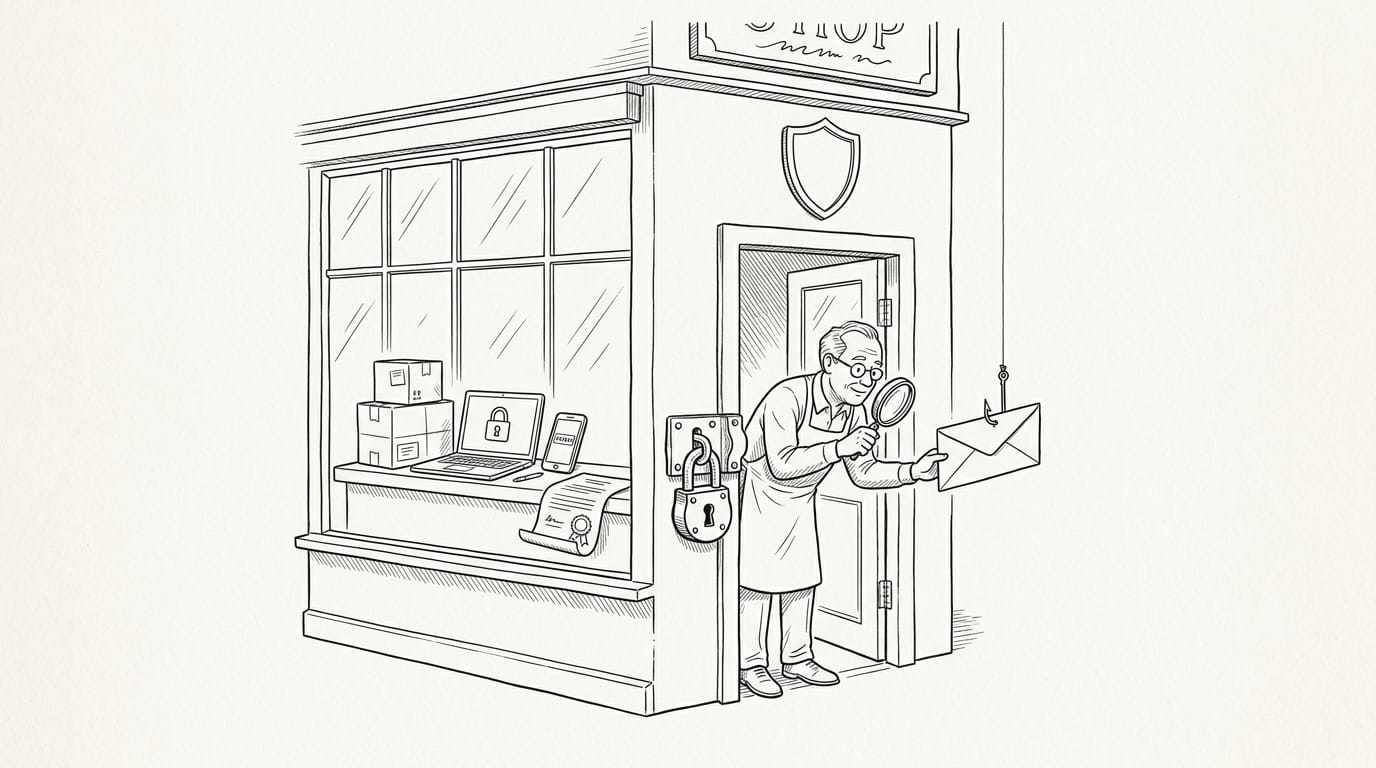
Security is about prevention, not cleanup. Use strong passwords, two-factor login (a second step, like a phone code), and updated software. Lock it down early.
Pick a platform with secure sockets layer (SSL) encryption, which scrambles data between shopper and site.
Watch for phishing, fake emails posing as your supplier or payment provider. Check senders before you pay.
Website Design That Makes Shopping Easier
Shoppers don’t want to work hard to buy, so your site shouldn’t make them.
Keep designs simple and check your analytics
Simpler designs usually work better. Picture a first-time seller of hand-poured candles with a cluttered homepage. She cut the menu to three links, and the path from photo to cart became obvious.
Before you publish, check these:
- Clear communication. Show price, what’s included, and shipping time near the top.
- Website analytics. These reports show where visitors arrive and leave. Traffic shows who came, but analytics reveal where they stopped.
- Better user experience. Test your store as a first-time visitor and fix what slows you down.
Stop shoppers from leaving at checkout
A shopper with a full cart is close to buying. Every extra step is a chance to back out. That’s cart abandonment, when someone fills a cart and leaves without paying.
Ask only for what the order needs, offer a guest option, and show shipping costs early. Take a freelance bookkeeper who sells invoice templates. Her checkout asked for too much, so she trimmed it to name, email, and payment. Buying now takes one screen.
One-click purchasing simplifies checkout by letting customers order with a single click. A study of mobile shopping, Minimizing friction in M-Commerce, notes that a single tap fits the constraints and expectations of mobile devices.
Make shopping easy on phones
Plenty of shoppers will be on a phone, so design for that screen first. Mobile-friendly sites use big tap-friendly buttons, readable text without zooming, and menus that fold away.
Consider a side hustler who sells leather keychains. On her phone, the buy button sat off-screen, so she moved it up. Now buyers can purchase without scrolling.
Drawing Visitors and Turning Them into Buyers
A shop nobody finds makes no sales, and one nobody buys from doesn’t either. Let’s tackle both.
Grow search traffic with helpful content
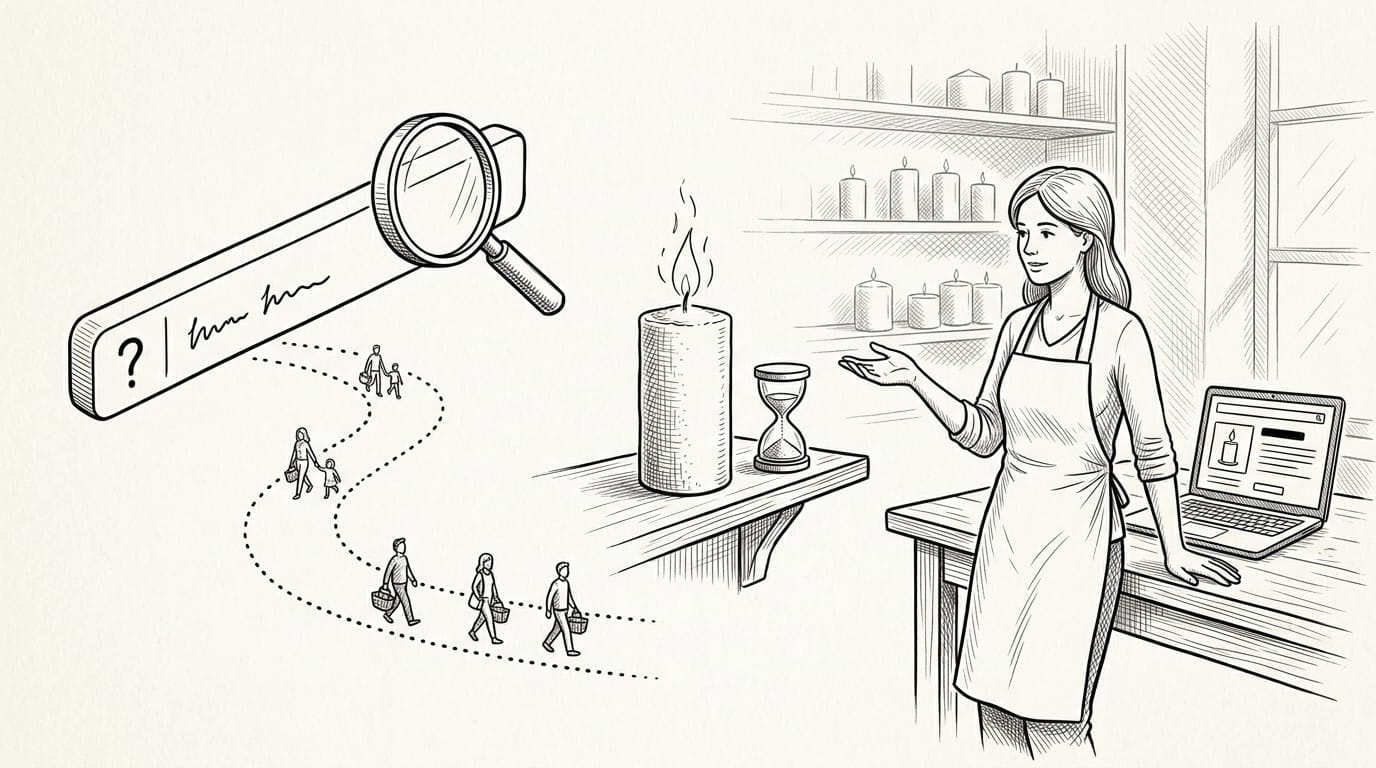
Search is one of the cheapest ways to reach buyers. Keyword research shows the words shoppers type. Then write for people rather than search engines, answering the questions buyers ask.
Page optimization makes those answers easy to find with clear titles and descriptive headings. Organic traffic (visitors from unpaid results) grows slowly, but a good page keeps working after you publish it.
A candle maker’s product page answers burn-time questions, so buyers find her without paying for ads.
Recover carts with email and social media
Reminder emails can bring shoppers back to carts they abandoned. A 2021 study on triggered email marketing by Marcel Goic, Andrea Rojas, and Ignacio Saavedra found that browse abandonment emails increased online revenue.
Track which message made each sale to see what to cut. Give each channel a job:
- Search engine optimization (SEO): steady visitors already looking for what you sell.
- Email: a second chance with people already interested.
- Social media: new eyes on your products.
Plan early for holiday and seasonal sales
Holiday shopping starts early, so set your product mix and promotions weeks ahead. During the pandemic, according to a BCTV report on the Annual Retail Trade Survey, e-commerce sales jumped 43% in 2020, from $571.2 billion in 2019 to $815.4 billion.
A surge is a bonus, not a plan. Think past the next sale: pick the channel to grow first, then build a steady plan, not a burst of effort.
How pricing affects your margins and fees
Dynamic pricing changes prices based on timing, demand, or the shopper. A study in BMC Psychology makes the point that it can affect consumer purchasing behavior, so keep price changes predictable and explained.
Unit economics is the math on one sale. It comes down to three numbers:
- Margin: what’s left after product, packaging, and shipping.
- Fees: what your marketplace or payment processor takes.
- Customer acquisition cost (CAC): what you spend on marketing to win one paying customer.
A weekend seller whose ads cost more than each sale earns her shifts effort to email reminders and repeat buyers. Price it right.
Whether an ecommerce business is worth starting depends on what you learn before you spend. Demand, pricing, and margins decide most of the outcome, and a handful of test sales can show you all three long before you build a full storefront.
Every answer you collect is one less guess in your launch plan. Test first, keep your savings intact, and let the results tell you whether to go all in.
References
- Minimizing friction in M-Commerce: A Study of One clink Checkout efficacy — doi.org (2025)
- Role of Ecommerce in Reducing Operational Cost — doi.org (2025)
- The impact of differential pricing subject on consumer behavior | BMC Psychology — link.springer.com
- China’s E-Commerce Exports and U.S. De Minimis Policies — everycrsreport.com
- The Effectiveness of Triggered Email Marketing in Addressing Browse Abandonments — journals.sagepub.com (2021)
- BRC stresses “retailers don’t need warm words, they need lower costs” after August footfall dip — retailgazette.co.uk (2026)
- The Impact of Online Shopping on Retail Sales During COVID-19 Pandemic — bctv.mystagingwebsite.com
Questions
What is e-commerce as a business?
An e-commerce business sells products or services online through its own website, a marketplace, or both. It can serve customers without a physical storefront and may have lower fixed costs than a brick-and-mortar business.
What is the best business to start with $5000?
With $5,000, a low-overhead business you can test before committing the full budget is often a sensible choice, such as a small online store or a service business. Research demand, test prices with pre-sales or a small launch, and reserve money for essential costs rather than spending it all upfront.
What is the 80/20 rule in ecommerce?
The 80/20 rule, also called the Pareto principle, is the idea that a small share of inputs often accounts for a large share of results. In ecommerce, for example, a small number of products or marketing channels may generate most sales, so track performance and focus on what works.
What is the dropshipping business model?
In dropshipping, a seller lists products online and a supplier ships each order directly to the customer. The seller does not hold inventory, which lowers upfront stock costs, but supplier costs, advertising, fees, and returns can leave thinner margins.
Is ecommerce still worth it in 2026?
Yes, ecommerce can still be worth starting in 2026, especially if you test demand, pricing, and margins before investing heavily. Online stores can have lower overhead and reach shoppers beyond a local area, but success depends on giving customers a clear reason to buy and managing costs.
Can I drop ship for free?
You may be able to begin with free trials or low-cost tools, but running a dropshipping business entirely for free is difficult. You generally need a storefront, a supplier, payment processing, a domain, and some way to attract customers, and many of these involve fees or ongoing costs.
Is drop shipping still profitable?
Dropshipping can still be profitable, but it is not guaranteed. Profit depends on whether the selling price leaves enough after supplier costs, advertising, platform and payment fees, shipping, and returns.
What all do I need to start dropshipping?
To start dropshipping, you need a store platform, a supplier that ships orders directly to customers, a payment processor, a domain name, and a marketing budget to attract your first visitors. You should also research demand and calculate your margins before committing money.
Sources
- The Impact of Online Shopping on Retail Sales During COVID-19 Pandemic - BCTV, bctv.mystagingwebsite.com
- The impact of differential pricing subject on consumer behavior | BMC Psychology | Springer Nature Link, link.springer.com
- China’s E-Commerce Exports and U.S. De Minimis Policies - EveryCRSReport.com, everycrsreport.com
- BRC stresses "retailers don’t need warm words, they need lower costs" after August footfall dip - Retail Gazette, retailgazette.co.uk,
- The Effectiveness of Triggered Email Marketing in Addressing Browse Abandonments - Marcel Goic, Andrea Rojas, Ignacio Saavedra, 2021, journals.sagepub.com,
- Minimizing friction in M-Commerce: A Study of One clink Checkout efficacy, doi.org,
- Role of Ecommerce in Reducing Operational Cost, doi.org,