2-4
Market Research Surveys Explained: Types and Testing
Market research surveys help you test an idea before spending a dollar. Get practical steps for choosing a sample, preventing fraud, and analyzing results.
- Written by

- Published
- Updated
- Reading time
- 13 min read
- Sources
- 3 cited
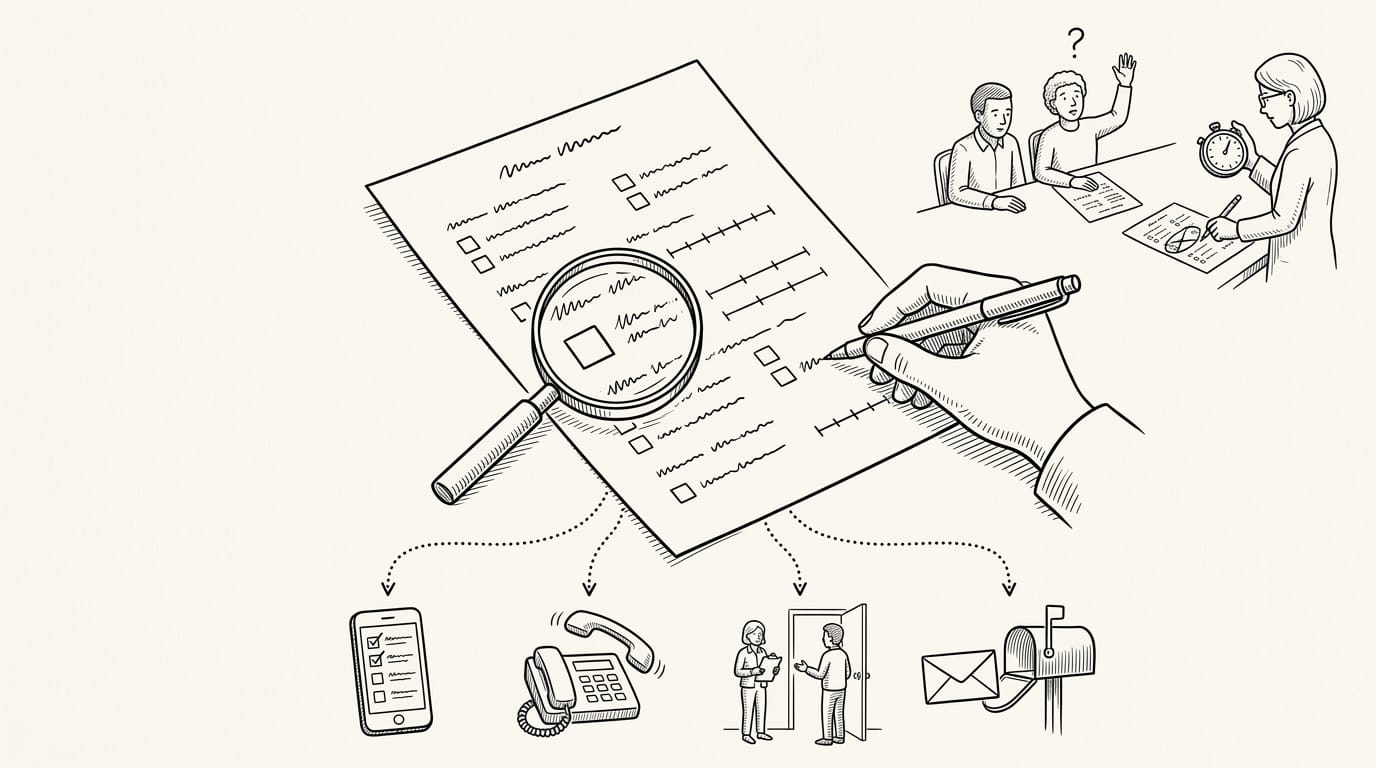
Market research surveys are purposeful questions asked of people in a target audience to learn what they need, how they behave, and what they may buy. Choose a survey method that fits your question, ask clear and neutral questions, recruit representative respondents, and check answers for quality before analyzing them. Surveys can guide decisions on products, pricing, and demand, but stated interest is not proof of purchase, so test willingness to pay before committing resources.
In this guide
Think about the last time you asked a friend, ‘Would you actually buy that?’ Their answer shaped your next move, even if it was just a polite shrug.
A market research survey is that same question, asked on purpose, of enough strangers that you can trust the answer.
In this post, we’ll cover survey types, sampling, question design, fraud control, and analysis, then show you how to run a cheap survey to test your idea before you spend a dollar on it.
Market Research Surveys and Their Core Types
Different surveys answer different questions, so know what you need to learn first.
What market research is for
Market research is how you collect information about the people you want to sell to. It serves three purposes:
- Gathering market needs information: what problems people have and how they solve them today.
- Understanding target audience behavior: how your audience shops and where they get stuck.
- Informing strategic decisions: evidence for pricing, features, and whether to move forward.
A freelance bookkeeper plans a monthly cleanup package. She asks a few owners what worries them most. If most name missed tax deadlines, she builds around deadline reminders instead of a guess.
Your own data versus existing sources
Primary research is data you collect yourself, through surveys, interviews, or early sales. Secondary research, often called desktop research, is information someone else already published.
Your own data costs time and often money. Existing data is usually cheaper, but what matters is how well it fits your question.
Start with desktop research, then fill the gaps with your own survey. Use both, in that order.
When to use numbers or deeper insight
Numerical data is measurable, like how many people pick an option on a rating scale. Non-numerical data is open-ended, like the reasons behind their choices. Numbers tell you how many; words tell you why.
Scale shows patterns across many responses. Depth shows the reasoning behind a few longer conversations. Choose by what you need to know.
The strongest projects combine both. A candle maker might count buyers who want unscented options, but only open-ended answers reveal why, like buying gifts for someone sensitive to scent. Start wide, then go deep.
Research types built for specific goals
Different goals call for different research:
- Brand research: how people perceive your name, look, and promises.
- Customer satisfaction and loyalty: whether customers are happy and would buy again.
- Competitor SWOT analysis: a look at a rival’s strengths, weaknesses, opportunities, and threats (the four words SWOT stands for).
- Product feature testing: which features people will pay for before you build them.
- Audience segmentation: splitting your audience into groups with different needs.
Match the type to your biggest open question. A home baker testing a new cookie flavor needs product feature testing, not a brand survey.
Surveys for exploring, describing, or testing causes
Surveys also differ by how much you already know:
- Exploratory surveys: for when you’re still defining the problem, using loose, open-ended questions.
- Descriptive surveys: for measuring what’s happening now, like how often people buy.
- Causal surveys: for testing whether one thing drives another, like whether a price change sells more. They need careful design, since what people say they’d do isn’t always what they do.
Why and When Surveys Work Best
Before you spend money on a survey, know what it can and can’t tell you. Here’s when surveys work best.
Asking people why, not just tracking actions
Passive data, like sales records, shows the what. Surveys reveal the why.
Surveys also test your hypotheses, the guesses you make about customers. Suspect busy parents would pay for weekly meal kits? Ask them before you build anything. Their answers either support the idea or send you back to the drawing board.
Picture a side hustler who bakes dog treats on weekends. One flavor sells out every Saturday, but her sales records can’t say why. A quick survey asking buyers what drew them in tells her which flavor to bake more of next month.

Where surveys shine in first-hand research
First-hand research means collecting data yourself, straight from your audience, and surveys fit it well for a few reasons:
- Flexible, remote participation. People can answer from anywhere, on their phones during a lunch break.
- Automated answer collection. Responses drop into a spreadsheet as they arrive.
- Needs audience segmentation and lists. You need the right people on a list, split into groups like new buyers and repeat ones, so you can compare answers.
Survey goals at each product stage
Your survey goal should shift as your idea matures:
- Idea validation. Confirm people have the problem before you build.
- Brand perception. See how people describe your business.
- Customer satisfaction. Ask buyers what they liked and what they’d change.
- Market demand. Gauge how many people want it and what they’d pay.
- Audience segmentation. Learn which groups respond most, so you know who to target.
- Survey, then pre-sale to confirm. Find interested people, then ask a few to pay upfront for a product that doesn’t exist yet.
A survey tells you what people say. A pre-sale tells you what they’ll pay.
How to Run Surveys and Pick Samples
Two decisions matter most: how you collect answers and who you’ll ask.
Main ways to collect survey data
- Online surveys: Sent by link or email. Fast and cheap, but limited to people who are online.
- Telephone surveys: A person reads questions aloud. Slower, but it reaches people who skip web forms.
- Face-to-face interviews: In-person meetings give the richest answers at the highest cost.
- Intercept surveys: Interviewers stop people at a spot like a farmers market for quick questions.
- Panel surveys: The same recruited group answers over time, which reveals change but can skew results.
Focus groups and other qualitative methods
Qualitative methods reveal why; surveys count how many.
- Focus groups: A moderator leads a small group through a shared discussion.
- One-to-one interviews: One respondent and one moderator, useful for personal topics.
- Research communities: Invited members discuss ideas online over time.
- Observational research: Watching people use a product, instead of asking what they’d do.
- Group and researcher bias: Louder voices steer groups, and leading questions steer answers.
Choosing who to include in your sample
Your sample should represent the people you hope to sell to, not the easiest to reach.
- Probability sampling types: Everyone has a known chance of selection. Types:
- simple random
- stratified (by segment)
- cluster (by group)
- systematic.
- Non-probability sampling: People are chosen by convenience or referral, so representativeness is hard to measure.
- Quota sampling: Set targets per group, like a fixed count per age band. Faster, but non-random.
- River sampling: Respondents arrive continuously from ads or links. Quick, but check quality.
- Incidence rate: The share of people screened who qualify. A low rate raises your cost per completed response.
- Sample size for small audiences: Niche markets may yield small samples, so treat results as directional.
Specialized designs for pricing and features
- Van Westendorp and Gabor-Granger pricing: Van Westendorp maps an acceptable price range. Gabor-Granger asks whether they’d buy at each price.
- Conjoint analysis: Respondents pick between bundles of features and prices, revealing trade-offs.
- MaxDiff: Short for maximum difference scaling. People pick the most and least important features from small sets.
- Diary studies and mobile ethnography: Participants log behavior over days or record real moments on their phones.
- Concept test designs: Show a description or mockup, then ask how interested people are.
Matching the method to your goal
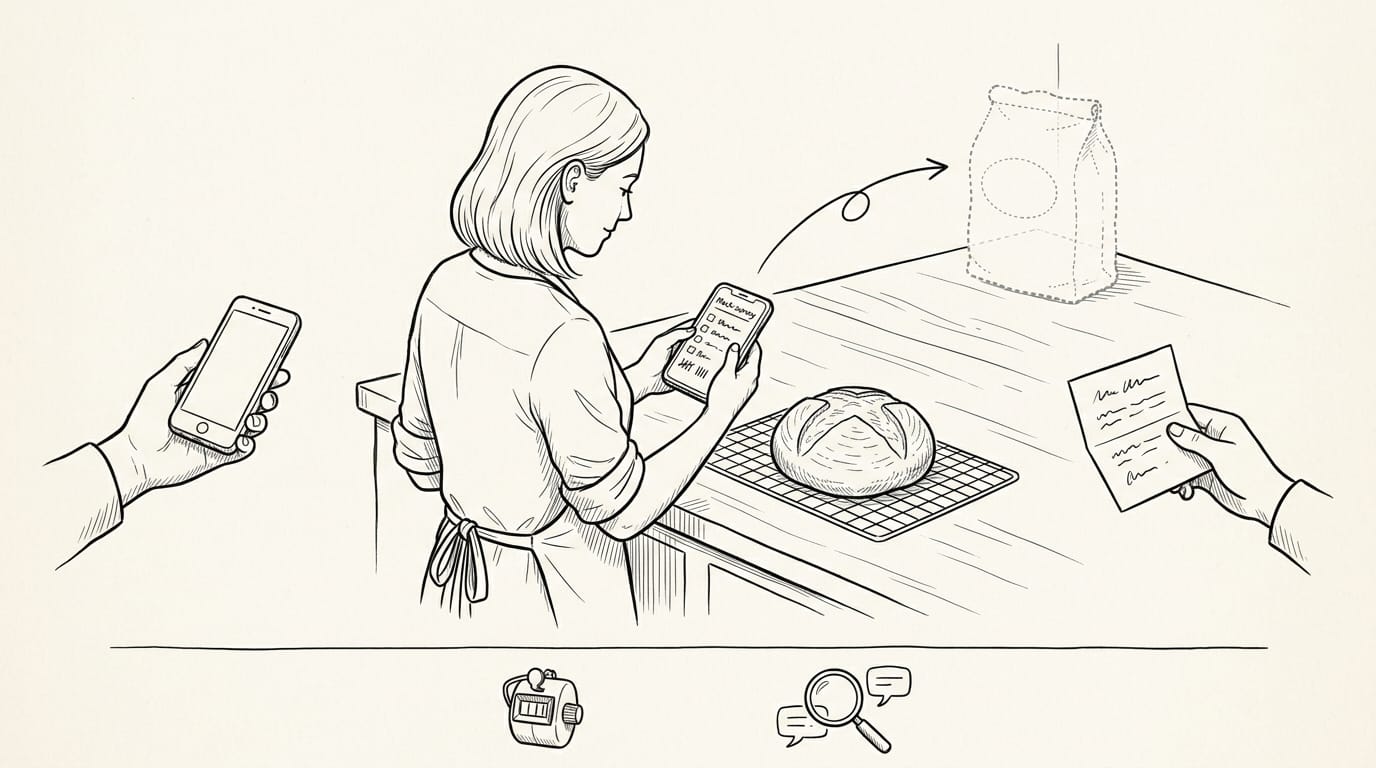
Say you bake sourdough on weekends and want to test a Saturday pickup subscription. A short online survey in two neighborhood groups shows whether anyone would sign up before you buy flour in bulk. Test first, buy second.
- Match method to objective: Need a count? Use a survey. Need the why? Go qualitative.
- Speed, cost, sample, depth trade-offs: Online and river methods are fast, cheap, and reach big samples, but stay shallow. Interviews go deeper at a higher cost.
- Typical scope and timelines: Online surveys can run in days. Focus groups and research communities often take weeks.
- When not to use each: Don’t use focus groups to size a market. Skip conjoint until you know which features matter.
Running a Market Research Survey Well
A survey is only as good as its questions, its respondents, and how you read the answers.
How to study the market before starting a business?
Studying the market before you launch means knowing what to learn first. A home baker testing weekly bread subscriptions works through five steps:
- Define objectives. Decide the one question the survey must answer, like whether neighbors would subscribe.
- Choose methodology. Pick a format that fits, like a short online form or a quick phone call.
- Identify target audience. Describe who should answer, like nearby households that already buy bread.
- Field and monitor. Launch the survey and watch responses so you can catch problems early.
- Analyze and act. Look for patterns, then decide what to change, like the price or the delivery day.
Strong interest gives her a starting point. Lukewarm answers save her from buying flour she won’t use.
Writing questions that avoid bias
Keep questions clear and neutral. Ask “How often do you buy lunch out?” rather than “Wouldn’t you agree eating out is wasteful?”
Mix closed questions (easy to count) with open-ended questions (people explain in their own words). Run a pilot test with a few friends to catch confusing wording before launch.
Watch for three traps:
- Social desirability bias: giving the answer that sounds best, like claiming you’d eat healthier lunches.
- Satisficing: rushing and clicking the quickest answer that works.
- Straightlining: picking the same option all the way down a grid.
Stated intent, what people say they’ll buy, isn’t the same as buying. Ask about what people did, not what they’d do.
Rewarding respondents for their time
Rewards can be cash, gift cards, or donations. Match the reward to the effort: short polls need smaller rewards than long interviews.
Incentives help. A Survey Practice study on incentive amounts suggests monetary incentives boost response rates more than lotteries do, and paying the reward up front can be especially useful. They also improve data quality.
Finding people to take your survey
Try these routes:
- Existing panels: paid groups of people who already agree to take surveys.
- Social media outreach: post where your target audience already spends time.
- Recruiting agencies: firms that find and screen respondents for a fee.
- Screeners and verification: a few opening questions confirm each person fits and is real, not a bot.
- Free recruiting: ask local groups, online communities, and your own network.
Keeping Survey Data Clean and Honest
Before you trust a survey, make sure the answers came from real, attentive people.
How widespread survey fraud has become
Survey fraud isn’t a rare glitch. A study in Ethics & Behavior notes that fraudulent responders have only increased in psychology research since bot reports began in the early 2010s.
Bots and fraud driven by artificial intelligence (AI) have risen since the pandemic. According to CloudResearch, an estimated 30–40% of online survey responses are fraudulent or unusable.
Picture a side hustler who pays for 300 responses to pick her next candle scent. If 30 to 40 percent are junk, she could launch a scent a bot picked. Bad answers hide well.
Checks that catch bad responses
No single check catches everything, so layer several. It’s about protecting your results, not punishing cheaters. The main checks:
- Attention and trap checks. A question with one right answer, like ‘select agree,’ shows who’s reading.
- Speeding and straight-lining detection. Flags impossibly fast responses and straight-lining, where someone picks one answer down an entire grid.
- Deduplication and fingerprinting. Removes repeat entries, and fingerprinting reads device and browser signals to catch sneaky repeats.
- Open-end review. Reading written answers catches copy-pasted text and gibberish.
- Identity verification. Confirms each respondent is real and fits your target group.
Vetting where panel respondents come from
A panel is a pool of people signed up to take surveys.
- Owned first-party panels. Respondents recruited directly by the company running the research, so you know how they joined.
- Third-party panel providers. Outside companies that sell you access to respondents, so you rely on their checks.
- Trust quality scoring. Panelists earn a score from past answers, and weak scorers get filtered out.
- Member evaluation periods. New members are watched closely for a set stretch before they’re fully trusted.

Analyzing, Reporting, and Choosing Tools
Raw answers only help once they’re cleaned and compared. Here’s how to turn them into a decision.
Cleaning, weighting, and core analysis methods
Cleaning removes duplicate and rushed answers. Weighting adjusts each response so respondents match the customers you actually want. If a candle seller mostly hears from friends, weighting keeps that circle from deciding everything.
- Cross-tabs split answers by group, and significance testing shows whether a gap is real or just noise.
- Open-end coding sorts comments into themes.
- Segmentation groups people by shared traits, and key driver analysis shows which factors most move satisfaction.
- TURF (Total Unduplicated Reach and Frequency) finds the combination of options that reaches the most people, so that candle seller can pick launch scents.
Comparing survey and research platforms
- General-purpose survey tools. Simple forms for quick, one-off questions.
- Enterprise platforms. Large suites with advanced features, often for established companies.
- In-product feedback tools. Short prompts that appear while people use your product.
- Community platforms. Forums or groups where engaged members talk through ideas over time.
- Insights visualization tools. Software that turns results into charts others can read fast.
- Free survey tools for tiny budgets. Fine for early tests, but check response caps first.
One recent trend is continuous feedback, where in-product and community tools keep listening after launch instead of running a one-time survey.
Presenting findings so teams act on them
Lead with the answer, not the method. A stakeholder-ready presentation answers the question first, and a short executive summary states the finding and your confidence. Pair operational data (sales, refunds) with experience data (comments) to find causes.
Each finding needs an actionable recommendation. A few “yes” answers hint at a direction, but validation comes from paying, not saying. Paying beats praising.
Hiring Outside Firms for Research
Running your own survey is affordable, but it can eat your evenings. Here’s when to bring in help and what your options look like.
Knowing when to hand research off
Watch for three situations:
- Survey programming (building the survey in software, including its skip logic) takes time, and one misplaced rule can derail your results.
- Access to specialized expertise matters when you need a sample that truly represents your customers.
- The 30-minute delegation guideline is a quick check: if a task takes more than 30 minutes to do well and your time is better spent selling, hand it off.
A candle-maker who sells on weekends could spend Sunday nights learning survey software or pouring wax. The 30-minute check points her toward the wax.
Agencies that handle the whole project
A full-service agency covers research design (what to ask and who to ask), fieldwork (collecting responses), and reporting (a summary you can act on).
Look for a dedicated project specialist, one person who manages the work so you don’t re-explain your idea at every step.
Support can be qualitative (small, open interviews that reveal why people think as they do) or quantitative (larger surveys that produce comparable numbers).
Mid-priced agencies sit between do-it-yourself tools and large firms. A bookkeeper testing a landscaping package could hand off the survey and spend her time on contractor calls.
Premium consultancies for brand and creative testing
Premium consultancies offer high-touch, hands-on engagements at a higher price point, so save them for costly decisions.
They specialize in brand, media, and creative testing, helping you learn which version works best rather than whether people like the idea.
Smaller budgets have options too. An omnibus survey is a shared survey where you add a few questions alongside other companies’ questions. A research community is a group of people who agree to give ongoing feedback.
Buying ready-made reports and free data
Industry research reports cover a market’s size, main players, and direction, and many carry a fee. Reports by category and country narrow the focus, which often makes them more useful than a broad overview.
Free government market data is the place to start. Many governments publish statistics at no cost. Check those first. Then pay only for the gaps.
A good survey won’t give you certainty, but it will show you who your customers are, what they need, and what they’ll pay, before you commit your savings or your evenings.
Match the survey type to your question, write plain questions, sample the people you actually want to sell to, and clean your data before you trust it.
Start small. A short, cheap survey sent to the right people can teach you more than months of guessing. Let the answers decide, not your hopes.
References
- Bots, scammers, and fraudulent responders: a year of disrupted data collection: Ethics & Behavior: Vol 36 , No 3 — tandfonline.com (2025)
- Effects of Incentive Amount and Type of Web Survey Response Rates — surveypractice.org
- AI, Bots, and the Real Threat to Online Research Data Quality — cloudresearch.com (2026)
Questions
What is the best way to market a new business?
The best way to market a new business is to identify the people most likely to buy, understand their needs, and choose channels they already use. Test your offer and messaging with a small survey or early sales, then use what customers actually do to refine your approach.
How to study the market before starting a business?
Start by defining what you need to learn, then review existing market reports and free government data. Identify your target customers and gather first-hand information through surveys or interviews; analyze the responses and use the results to adjust your product, pricing, or launch plans.
Which is a recent trend in marketing research?
A recent marketing research trend is continuous feedback: using in-product prompts and online communities to gather customer input over time rather than relying only on one-time surveys.
Sources
- AI, Bots, and the Real Threat to Online Research Data Quality | CloudResearch, cloudresearch.com,
- Bots, scammers, and fraudulent responders: a year of disrupted data collection: Ethics & Behavior: Vol 36 , No 3 - Get Access, tandfonline.com,
- Effects of Incentive Amount and Type of Web Survey Response Rates | Published in Survey Practice, surveypractice.org