3-6
How to Start an LLC in Missouri, From Name to EIN
How to start an LLC in Missouri: follow the steps from choosing a name and filing Articles to getting an EIN, handling taxes, and staying compliant.
- Written by

- Published
- Updated
- Reading time
- 21 min read
- Sources
- 5 cited
A Missouri LLC is a legal business structure that separates the company from its owners and can help protect personal assets from business debts, though personal guarantees and an owner’s own negligence can still create risk. To form one, check and name the business, appoint a Missouri registered agent, file Articles of Organization, write an operating agreement, and get an EIN; then handle taxes, licenses, separate finances, and ongoing state requirements. Test your business idea and budget first, because forming an LLC creates paperwork and costs but does not replace permits or good

In this guide
Picture selling candles out of your kitchen. Orders come in, the money lands in your personal checking account, and if something goes wrong, your own name is on the line.
A limited liability company (LLC) is a legal structure that sets your business apart as its own entity, which can help protect your personal assets.
Forming one in Missouri means filing paperwork with the state.
This guide walks you through the whole path: choosing a name, naming a registered agent, filing, getting an EIN (employer identification number), handling taxes, and deciding whether and when to make it official.
Why Start an LLC in Missouri
A limited liability company (LLC) keeps your personal and business finances apart. Here’s what it gets you in Missouri and when it’s worth it for a side hustle.
How an LLC shields your personal assets
The biggest draw is liability protection. An LLC is a separate legal entity, so its debts belong to the business, and its members are generally shielded from them. Management is flexible: you can run it yourself or appoint managers.
A registered LLC also signals to customers that you’re running a real business.
Good protection isn’t perfect protection. Say a freelance photographer signs a studio lease in her LLC’s name. If the business falls behind, that debt generally stays with the company.
But if she signed a personal guarantee (a personal promise to pay), her savings are exposed. The shield also won’t cover your own negligence.
Taxed once, on your personal return
By default, an LLC is a pass-through entity, meaning profits show up on your personal return instead of the company’s. That avoids corporate double taxation, where profits get taxed at the corporate level and again as dividends to shareholders.
Take a web designer who nets a solid profit: she’s taxed once, on her personal return.
How an LLC compares to other setups
Here’s how it stacks up:
- Versus a sole proprietorship: A sole proprietorship has no legal separation from you, so business debts are your personal debts.
- Versus a partnership: Partners generally share personal responsibility for the business, while LLC members are generally shielded.
- Versus a corporation: Similar protection, but corporations usually carry heavier formalities and can face double taxation.
- Fewer formalities and record-keeping: You generally don’t need board meetings or formal minutes, so your paperwork stays light.
Downsides to weigh before you file
Every structure has trade-offs:
- Self-employment tax. Your profits usually count as self-employment income, which adds Social Security and Medicare tax on top of income tax.
- No stock options for investors. An LLC doesn’t issue stock, so you can’t offer investors stock options the way a corporation can.
- Registered agent and fees required. You’ll need a registered agent (the person or company that receives legal papers for your business), plus state filing fees.
- Must keep finances separate. Open a business bank account and pay business costs from it. Start separate from day one.
Can I start an LLC on my own?
Yes. A single-member LLC has one owner, and you don’t need a partner to form it.
- Age: You must be 18 or older.
- Residency: Missouri has no residency requirement for forming an LLC.
- Missouri’s industries: The structure works the same whether you sell handmade goods, consult, or build software.
- Innovation hubs and resources: If you have one nearby, a hub or small-business program can help you pressure-test your idea before filing.
Before you file, check your employer’s side-work restrictions. An LLC doesn’t override them.
Ways to Form and the Full Process
Forming a limited liability company (LLC) is a short series of decisions. Before you file, test the idea with a few paying customers. The paperwork is the easy part.
Going solo, a service, or an attorney
Three routes, each trading cost for help:
- Going solo: You file it yourself, and the only cost is the state fee.
- Using a service: A formation service guides you through each form and helps you avoid errors, for a price above the state fee.
- Hiring an attorney: Best for complex LLCs with tricky ownership or structure. Fees run $1,000 to $3,000.
Think of a freelance photographer with a side print shop. Going solo keeps her costs to the state fee. If she later adds partners who split profits unevenly, that’s when an attorney’s $1,000 to $3,000 starts to make sense.
The real question isn’t whether you can do it yourself. It’s what a mistake would cost you.
Steps to start an LLC in Missouri
Here’s the process in five steps:
- Choose and check a name. Pick one you’ll be happy to see on invoices, then confirm it’s available. Time: quick, since it’s mostly searching.
- Name a registered agent. This person or company receives legal papers for your LLC. Time: quick once you’ve decided who.
- File your formation paperwork. Submit it and pay the state fee. Time: depends on current state processing, so check before you set a launch date.
- Write an operating agreement. It spells out who owns what and how decisions get made. Time: takes the most thought, since the real decisions live here.
- Get an Employer Identification Number (EIN). This federal tax ID is how your business is identified for taxes. Time: quick once the LLC is on file.
Work through them in order, since each builds on the last.
Picking and Holding Your LLC Name
Pick a name that passes the rules, confirm it’s open, and hold it while you finish filing.
Naming rules your LLC name must follow
Every name has to pass these tests:
- LLC designator. Your name must include one, such as “LLC.”
- Distinguishable from existing entities. It can’t match or closely resemble a business already on file.
- Restricted and prohibited words. Some words are off-limits, so check first.
- No government affiliation. Your name can’t suggest a link to a government agency.
- Character restrictions. Stick to plain letters and numbers to be safe.
For example, a freelance photographer who wants “Harbor Light Photography” might find it already on file. Checking takes minutes; finding out after you’ve printed business cards takes far longer.
Searching state records for a free name
Search the Secretary of State’s business records, keeping two habits in mind:
- Ignore suffixes, articles, and plurals. Treat “The Harbor Lights” as “Harbor Light” when you search.
- Omit the designator. Search “Harbor Light Photography,” not the version with “LLC” attached.
You’re checking the core of your name, not the exact wording you typed.
Reserve the name for 60 days
You can hold an open name with a name reservation. According to Starting a Business, the reserving party gets exclusive right to the name for business entity purposes for 60 days.
The reservation runs on Form BE-1 and carries a $25 fee for LLCs. A weekend baker who finds her name open can reserve it and spend the next 60 days on her product list, not on worrying that someone files first.
Need more time? According to Starting a Business, the reservation can be renewed for two more 60-day periods, up to 180 days total.

Matching domains, handles and brand checks
Check these before you commit:
- Matching domain. Confirm the matching web address is available, since customers will type it into a browser.
- Social media handles. Check that the same handle is open on the platforms your customers use.
- Brand protection. Search your market for similar businesses and products. A state filing covers your entity, not your brand.
- Name generator tips. Brainstorm with a generator, then run every option through these checks before you get attached.
Who Accepts Legal Papers for Your LLC
Every LLC has to name a registered agent, the person or business that receives the company’s official mail. Here’s what that involves, who qualifies, and what happens if it lapses.
Why every LLC needs an agent
Think of your agent as the company’s official mailbox. Legal and tax documents go there, including service of process, the formal delivery of lawsuits and court papers.
If someone sues your business, a missed envelope can mean a deadline you never knew about. Someone has to be watching it.
Foreign LLCs, meaning ones formed in another state that operate in Missouri, need an agent here too.
Who qualifies and how to stay reachable
Your agent has to meet a few basic conditions:
- Missouri ties. The agent must be a Missouri resident or a business authorized to do business in Missouri.
- A physical street address. A P.O. box won’t work, though you can still use one for everyday mail.
- Availability during business hours. Someone has to be at that address during the workday to accept papers.
- Consent. The person or business has to agree to the role first.
Acting as your own agent or hiring one
You can name yourself if you meet those conditions, but your home address then becomes public on the state’s business records. Consider a woodworker who runs his shop from his garage.
Once he lists his home as the agent address, anyone searching those records can find his house. A commercial service lists its own business address instead, forwards his legal notices, and keeps his home private.
Compare the annual fee, what’s included, and how fast providers forward documents. Some formation services bundle an agent into their filing package. That’s convenient, but check what renewal costs.
The real choice is about privacy and convenience, not whether you need an agent at all.
Risks of letting your agent lapse
Any change in your agent is something the state needs to hear about. If you switch providers or your provider drops you, don’t assume the paperwork took care of itself.
The bigger danger is administrative dissolution. If your LLC has no valid agent on file, that can lead to the state formally ending the company’s legal existence, which can cause real trouble with contracts, banks, and clients.
Keeping an agent on file is a small task. Losing your LLC is not.
Filing the Articles That Create Your LLC
Once you’ve picked a name and a registered agent, the next step is filing your articles of organization, the document that legally creates your LLC.
This is where your plan becomes a real company on paper, so it’s worth getting the details right the first time.
What the articles must include
Your articles need to cover these core details:
- LLC name and purpose. State the name you’ve chosen and a short description of what the business does.
- Registered agent details. Name the person or company that accepts official mail and legal papers for the LLC.
- Organizer name and address. List the person filing the articles and their address.
- Management structure. Say whether members run the business or you appoint managers to run it.
- Duration. Most owners choose perpetual duration, meaning the LLC has no set end date.
- Optional effective date or series language. You can set a future start date or add series language, which we’ll cover below.
Consider a weekend baker who signs a supplier contract starting next month. She can set a future effective date so her LLC officially begins the same day her contract does.
Online or by mail to Jefferson City
Your articles go to the Corporations Division in Jefferson City, and you have two ways to send them. You can use the online business filing portal, or you can mail a paper Form LLC-1.
Both routes reach the same office, so the real question is how you file, not where.
- Online business filing portal. Enter your details in the state’s online business filing portal.
- Mail with Form LLC-1. Complete the paper form and mail it in.
What you’ll pay online versus by mail
Fees are the first thing to compare. According to LLC Missouri’s filing-fee guide, paper articles cost $105 while online filing costs $50. For a side hustler watching every dollar, that $55 gap matters.
Online filing may also carry a convenience fee on top of the state fee, so compare the total you’ll pay, not just the listed fee. Check the checkout total before you submit.
Approval times and keeping your copy
Online filings are often approved right away. Mail can take weeks, so plan your launch around when your articles are approved, not when you sent them.
Once approved, keep a copy of the approved articles with your business records. It’s the document that shows your LLC exists, and you’ll want it handy as you set up everything else. Don’t lose it.
Registering an out-of-state LLC in Missouri
Say you formed your LLC in another state and then land your first client in Missouri. To do business here, you’ll need to register your out-of-state LLC with Missouri.
Registration requires four things:
- Form LLC-4. The Missouri form for registering an out-of-state LLC.
- Certificate of good standing. Proof that your LLC is in good standing in the state where it was formed.
- Missouri registered agent. A registered agent in Missouri to accept legal papers for you in the state.
- $105 fee. Plan for it in your budget.
Don’t skip any of them.
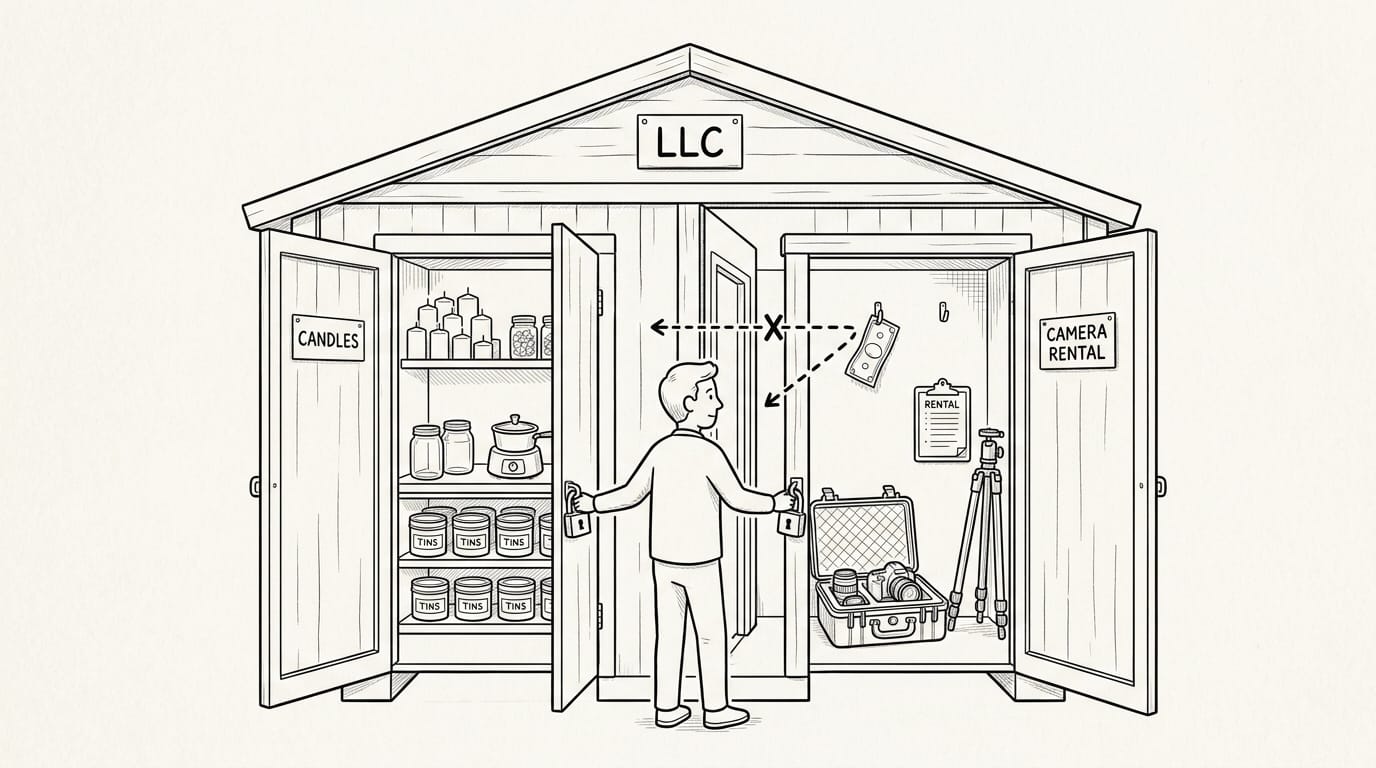
Keeping assets separate in a series LLC
A series LLC is an optional structure that adds series language to your articles, creating separate series within one LLC. The goal is separate assets and liabilities, not one shared pool.
Each series keeps its own, so one part of the business stays apart from the rest.
Think of a side hustler who sells candles and also rents out a camera kit. In a series setup, the camera rental’s gear and debts could stay apart from the candle inventory.
The setup is more complex than a standard LLC, so you’ll want a clear reason before adding series language. Start simple.
Writing Your Operating Agreement
An operating agreement is the internal rulebook for your LLC: who owns what, who decides what, and how the money gets split. Here’s what goes in it and why we think it matters.
Required by law but never filed
Missouri law requires your LLC to have an operating agreement, but you won’t file it with the state. It’s a document you keep, not one you file. Store it with your other business records. Then it’s there when you need it.
What the agreement covers and why
A solid agreement covers three core areas:
- Ownership and voting rights. Who owns what share of the business and who gets a say in major decisions.
- Profit and loss allocation. How profits and losses get divided among the owners.
- Dispute resolution. How you’ll settle a disagreement before it turns into a fight.
Say you and a friend run a candle business out of a spare room. Without a written agreement, you’ll each be guessing who has the final say on a new supplier or how the profits get split.
With one, you already know, and the conversation stays on the candles. The point isn’t to plan for a fight. It’s to decide how you’ll handle one before anyone is upset.
The agreement also supports the liability protection your LLC is meant to give you. And if you’re the only owner, you still need one. A single-member LLC needs an operating agreement too, even when there’s no partner to negotiate with.
Free templates give you a head start, so you won’t be staring at a blank page. Just be sure the version you pick matches how your business actually runs.
Getting Your EIN from the IRS
Once your LLC is official, it needs its own tax ID. Here’s what that number is, when you’ll need it, and how to get one without paying a cent.
When you need a nine-digit IRS number
Your Employer Identification Number (EIN) is a nine-digit number the IRS assigns to your business, so it works like a tax ID for your LLC. You’ll need one when you hire employees, apply for a business loan, or open a business bank account.
If your LLC has one owner and no employees, an EIN is optional. It’s still worth getting, though, because it protects your Social Security number. Take a freelance photographer who runs her studio from a spare room.
She has no staff, but when a client’s contract asks for a tax ID, she hands over her EIN and keeps her Social Security number off the page.
Applying for free through the IRS
The IRS issues EINs at no cost, and you can apply directly through its website. Approval is instant online, so you can finish in one sitting. Apply after Missouri approves your LLC, not before.
Plenty of third-party services will offer to get your EIN for you, and they may charge fees for a task you can finish yourself online. Skip the fee.
Taxes and Registrations You’ll Handle
Forming your limited liability company (LLC) is only half the job. Once it exists, you’ll decide how the Internal Revenue Service (IRS) taxes it and register with the state for the accounts you’ll need.
How the IRS classifies your LLC
By default, a single-owner LLC is a disregarded entity, so its profit flows to your personal return. A multi-member LLC is taxed as a partnership.
Under either default, owners who work in the business generally owe self-employment tax on their share of the profit. You can also elect S corporation or C corporation treatment:
- S corporation. Owners take a reasonable salary and the rest as distributions, which skip self-employment tax. It tends to pay off once profit is well above that salary, so check the math with a tax pro.
- C corporation. The business is taxed on its own income, separate from its owners.
Missouri income tax and corporate rates
RemoteLaws’ Missouri income tax guide notes that Missouri imposes an individual income tax under Chapter 143 of the Missouri Revised Statutes. A pass-through LLC is taxed on your personal return, and it owes no franchise tax in Missouri.
If you elect C corporation status, KCUR reports that Missouri’s corporate income tax is a flat 4% on income earned in the state. The real question is who pays: you as a pass-through, or the business as a C corporation.
Getting a sales tax license from Revenue
If you sell taxable goods, you need a sales tax license before you collect tax. Picture a side hustler selling handmade candles at weekend markets. Once she’s licensed, she charges the right tax at every table. Until then, she’s guessing.
Apply with Form 2643 through the MyTax portal. Missouri imposes a state sales tax rate on taxable sales, and the state’s sales tax rate cards list the rates. Rates change at the start of a quarter, never in the middle.
The state may also require a bond, so be ready for that.
Payroll taxes and coverage once you hire
Hiring adds three obligations:
- State withholding. Take Missouri income tax out of each paycheck.
- Unemployment insurance tax. Pay it on employee wages.
- Workers’ compensation. Carry coverage for employees hurt on the job.
Say your candle business hires a part-time packer for the holiday rush. Those obligations start with her first shift, so budget for them before the rush hits.
Licenses and Permits You May Need
Before your first sale, you’ll want to know which licenses and permits apply to your work. The answer depends on what you do and where you do it.
Which state licenses apply to you
Missouri’s state rules don’t work like one blanket permit. The rule depends on what you sell, not on the fact that you formed an LLC. Check three areas:
- No general state license. Most businesses don’t need a blanket state license, so forming your LLC doesn’t by itself authorize every kind of work.
- Professional licensing boards. If your work requires a professional license, a state board sets the standards and rules for it.
- Industry-specific permits. Some activities need a permit tied to the industry, separate from any professional license.
Local rules in cities like Kansas City
Cities and counties can add their own requirements on top of state rules, so the same work can need a permit in one place and not another. Kansas City and St. Louis each set their own rules.
Take a side hustler in Kansas City who runs a weekend handyman business. She checks the city’s rules before her first job, learns which permit applies, and builds the fee into her launch budget so it doesn’t catch her off guard.
Fees vary by location, so check the rate for wherever you operate before you set your prices.
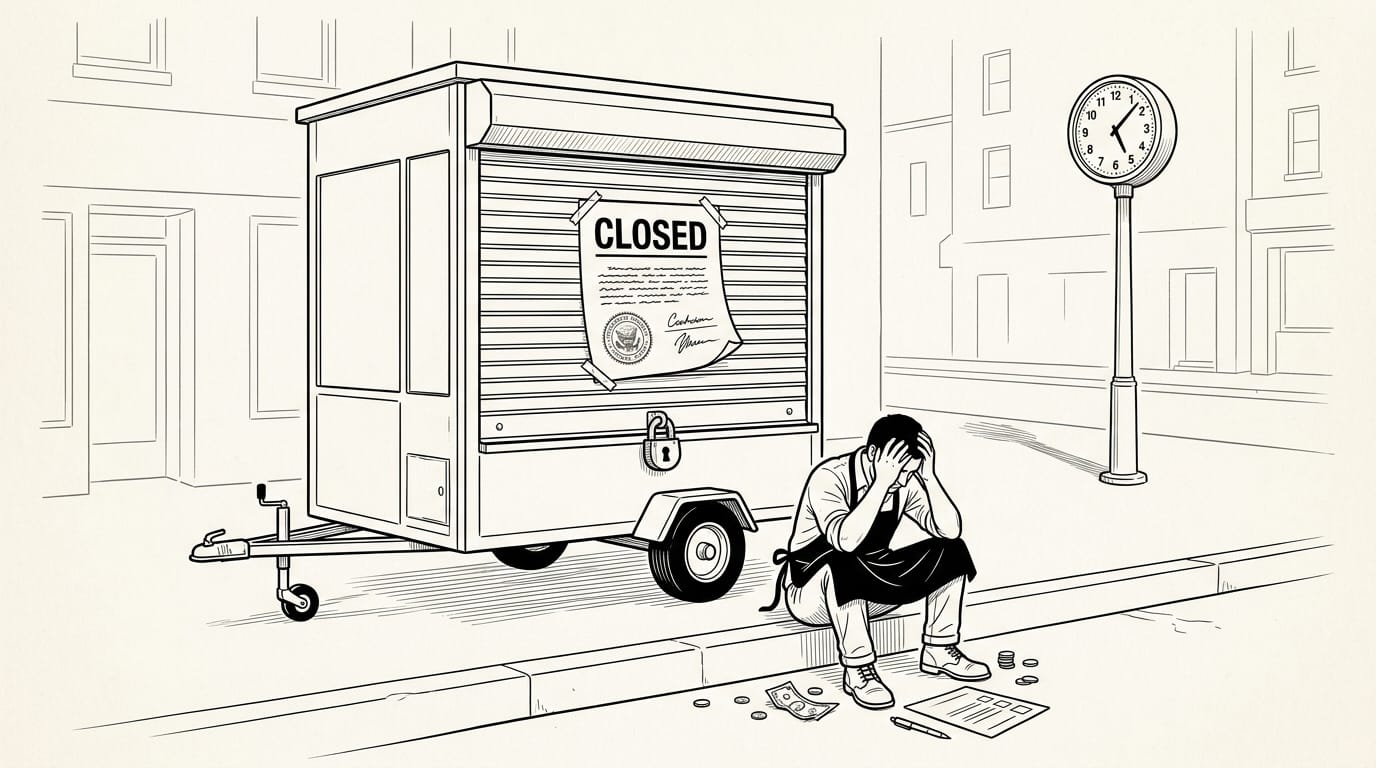
What happens if you skip a license
Skipping a required license can cost you in two main ways:
- Fines. Penalties can be assessed for operating without a required license or permit.
- Closure orders. An official order can require you to stop work until you’re properly licensed.
A closure order can wipe out the income you were counting on. Checking first is the cheap part.
What It Costs to Start an LLC
Forming a Missouri LLC comes with a few separate costs, so here’s what each one covers.
What does the state charge to file?
The Articles of Organization fee is the filing that officially creates your LLC. It’s the fixed part of the bill, so confirm the current amount with the state before you budget.
- Name reservation: $25 to hold a business name while you finish your plan.
- Online vs. mail filing: The fee can differ by method, so check both before you choose.
The $800 LLC fee you may see quoted is California’s, not Missouri’s, so leave it out of your budget.
Extras that can add to the bill
Unlike that fixed fee, these costs vary with how you run the business:
- Registered agent: The service that receives official legal and state mail for your LLC.
- Formation service or attorney: Optional paperwork help, billed on top of the state fee.
- Licenses and permits: These depend on what you sell and where you work.
- Domain and website: Your web address and the hosting that keeps it live.
- Business insurance: Coverage that protects you, so get a quote early.
A home baker taking custom cake orders prices her domain and site alongside any licenses, so she knows her real starting cost before she files.
Adding up your first-year budget
| Line item | What to enter |
|---|---|
| Articles of Organization fee | Current state fee |
| Name reservation | $25, if you reserve a name |
| Registered agent | Quote from the service |
| Formation service or attorney | Optional, so get a quote |
| Licenses and permits | Varies by business and location |
| Domain and website | Domain plus hosting |
| Business insurance | Quoted premium |
A typical first-year total falls between $50 and $400, so treat that as a range to test, not a promise.
To build a cost calculator, copy this table into a spreadsheet and total your column. Run the numbers before you file.
Staying Compliant After You Form
Forming your limited liability company (LLC) is the start, not the finish. The habits you build now decide whether compliance is a quick yearly task or a scramble, and we’d rather you learn that early.
Open a business account on day one
Keep your money separate from your personal money from the first sale. To open the account, you’ll usually need your employer identification number (EIN) and your filed Articles of Organization.
An operating agreement, the internal rulebook for how the LLC runs, is often required too. With multiple members, you may also need a written resolution authorizing the account.
Dana, a freelance photographer, runs client payments through her personal checking. Tax season means a weekend sorting groceries from invoices.
Her friend opened a business account before her first booking, so every statement shows what each job brought in.
Annual reports and filing updates
Missouri requires an annual report every year. There’s no recurring state fee, so the cost is your time, which is exactly why it’s easy to overlook. Don’t. When details on your public record change, file a Statement of Change.
Keeping your LLC in good standing
Good standing is less about filing once and more about staying current. Four habits keep you there:
- Keep your agent current. Your registered agent receives legal papers for the LLC, so update your records if it changes.
- Get a certificate of good standing when you need one. It confirms your LLC is active and current, and a bank or client may ask for it.
- Build a recordkeeping system. Keep the operating agreement, resolutions, receipts, and filings in one place. A simple system you use beats a complex one you don’t.
- Know your labor law duties. Hiring brings wage and payroll rules into play, so check federal and Missouri requirements before your first hire.
Insurance, accounting and marketing next steps
Round out your setup with:
- Business insurance. An LLC isn’t a substitute for coverage, so ask an insurance agent what your work requires.
- Accounting software. Track income and expenses from the first sale. Monthly upkeep beats rebuilding a year of transactions in April.
- Website and marketing plan. Use your legal business name on your site and invoices, and write down how you’ll find your first customers.
Changes, DBA names and closing the LLC
A few situations need extra care:
- Fictitious name registration. Operating under a name other than your LLC’s legal name? You’ll likely need to register that name, which is often called a DBA (doing business as).
- Changing your name or adding a member. A name change usually requires a state filing, and adding a member means updating your operating agreement to match.
- Dissolving an LLC. Settle debts, close accounts, file the required paperwork, and keep your records. Simply stopping work doesn’t close the LLC.
- Reporting beneficial ownership. This is a separate federal question from your state filings, so confirm whether it applies to you before you assume either way.
Mistakes to Avoid and Helpful Resources
Most trouble with a new limited liability company (LLC) comes from a few predictable slip-ups. Here’s what to dodge, and where to get help.
Mistakes that trip up new LLC owners
- Wrong filing state. Confirm you’re filing with the Missouri Secretary of State, not another state’s office, before you pay anything.
- Skipping the name check. Search state business records before you file. Finding a conflict after you’ve printed business cards is a bigger headache.
- Using your Social Security number for the business. Use an employer identification number (EIN) from the Internal Revenue Service (IRS) instead. It identifies the business itself, which keeps your personal number off business paperwork.
- Commingling finances. Mixing personal and business money blurs the line your LLC is meant to draw. Picture a home baker who runs flour and cake sales through one checking account, then guesses at tax time which costs were business. Open a separate account. It’s about keeping records as you go, not reconstructing them later.
- No operating agreement. An operating agreement is the internal rulebook for ownership and decisions. Write one even if you’re flying solo.
- Missing licenses. Your LLC filing doesn’t cover every permit your work needs. Check city, county, and state rules before your first sale. Easy to check now, harder to fix later.
Where to find state and federal help
- Secretary of State. Handles business filings, including your LLC formation and name searches.
- Department of Revenue. Covers state tax questions and the tax accounts your business may need.
- Small Business Development Centers (SBDCs). Local advisors who can review your plan before you commit more money or time.
- Small Business Administration (SBA) and IRS. The SBA offers business guidance, while the IRS handles federal taxes and issues your EIN.
Forming an LLC in Missouri comes down to a clear sequence: name, registered agent, articles, operating agreement, EIN, then taxes and compliance. Each step is manageable on its own, and together they turn a side project into a real business.
Take it one step at a time, and let your numbers guide when you make it official. Get the structure right, and you’ll be free to spend your time on what actually earns the money.
References
- Starting a Business — web.mst.edu
- Sales Tax Rate Cards — mytax.mo.gov
- Missouri LLC Filing Fee (2026): $50 Online, $105 Paper Articles of Organization — llcmissouri.org (2026)
- Missouri is filled with Amendment 5 ads, but some claims on the income tax vote are misleading | KCUR — kcur.org (2026)
- Missouri Income Tax Rates & Brackets (Tax Year 2025 — remotelaws.com (2026)
Questions
What is the $800 LLC fee?
The $800 LLC fee is California’s annual franchise tax, not a Missouri LLC filing fee. Missouri’s filing costs depend on how you file, so check the current state fee before submitting your Articles of Organization.
What is the downside of starting LLC?
Common downsides include self-employment taxes on business profits, required registered-agent costs and state fees, and the need to keep business and personal finances separate. An LLC also cannot issue stock options, and its liability protection does not cover personal guarantees or your own negligence.
What are common LLC mistakes to avoid?
Avoid mixing personal and business money, which can weaken the separation between you and the LLC. Also check that your name is available, keep a valid registered agent on file, complete your operating agreement, and obtain any required licenses or permits.
Can I start an LLC with just myself?
Yes. You can form a single-member LLC as its only owner, and you do not need a partner. In Missouri, you must be at least 18, and you still need an operating agreement and a registered agent.
Sources
- Starting a Business, web.mst.edu
- Missouri LLC Filing Fee (2026): $50 Online, $105 Paper Articles of Organization, llcmissouri.org,
- Missouri is filled with Amendment 5 ads, but some claims on the income tax vote are misleading | KCUR - Kansas City news and NPR, kcur.org,
- Sales Tax Rate Cards, mytax.mo.gov
- Missouri Income Tax Rates & Brackets (Tax Year 2025 – Filed 2026), remotelaws.com,