3-5
How to Get a Business License and Whether I Need One
How do I get a business license? Start with your business structure, then check local, state, and federal permits, costs, and renewal rules.
- Written by

- Published
- Updated
- Reading time
- 10 min read
- Sources
- 3 cited
A business license is official permission from a state, county, or city to operate, and the licenses you need depend on your location and the work you do. First choose and register your business structure, then check industry-specific, local, state, and any applicable federal requirements, gather the requested details, and apply through the correct office. Confirm requirements before selling, since an LLC or tax ID alone does not authorize you to operate, and track fees and renewal dates.
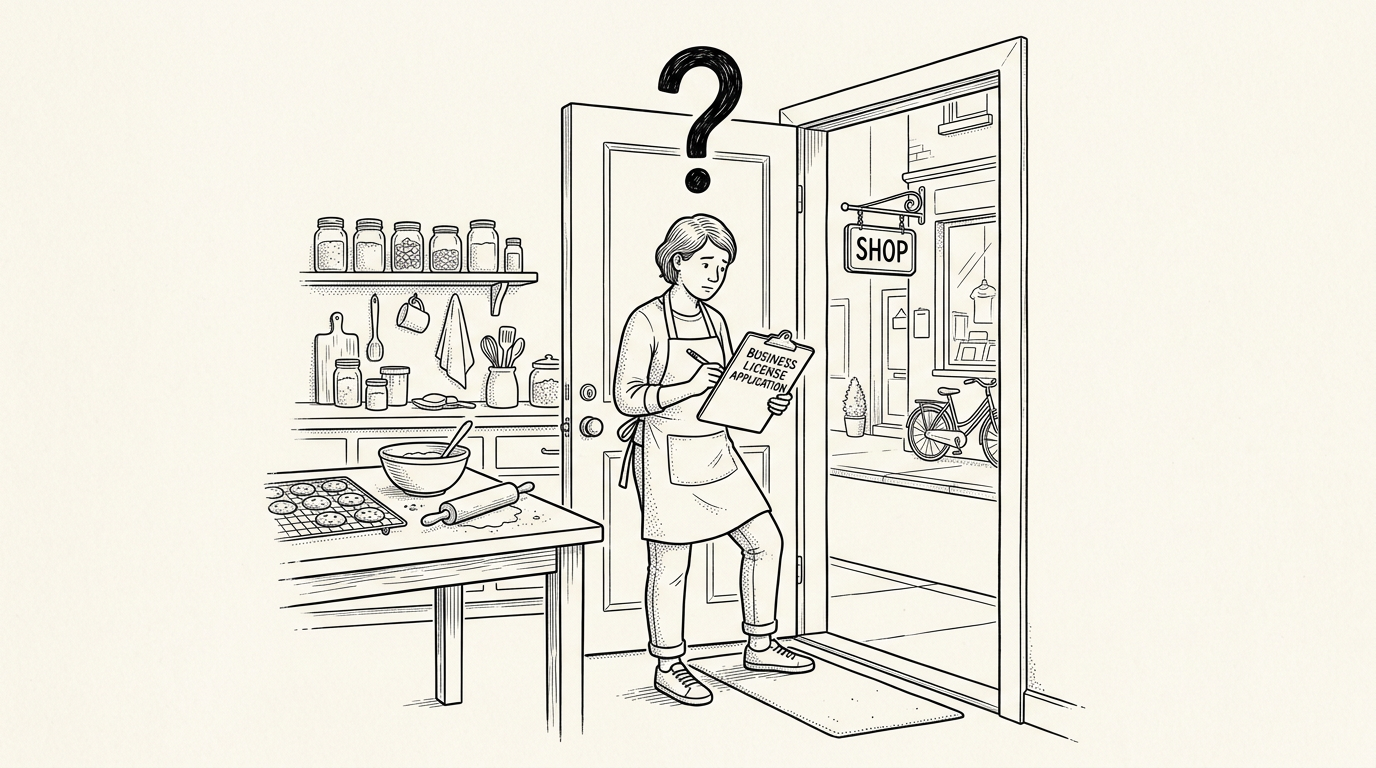
In this guide
Think of a business license as the guest list at a busy club. Your name has to be on it before you’re allowed through the door.
A business license is the official permission a city, county, or state gives you to run a business in its area. The rules vary by location and by what you sell, so there’s no single form that works everywhere.
In this guide, we’ll walk through state, local, and federal licenses in the order you’d usually tackle them, plus what to do first when you’re testing a side hustle.
Do You Need a Business License to Start?
The short answer depends on where you operate and what you sell, so check the rules at each level before you launch.
How state licensing rules differ
Rules vary by state, so the same side hustle might be fine in one state and need paperwork in another. Nevada issues a state business license, while California and Texas have no general one.
Many trades and professions also need an occupation-specific state license tied to the work itself. To get a business license in Illinois, the approach is the same: find the state agency that covers your activity, then check your city or county.
What your city or county requires
Start with your city or county government. If you live in an unincorporated area, outside any city limits, the county is your local authority. Home-based businesses are included, so the spare room where you pack orders counts.
Each separate location may need its own license, and some business types need local permits.
Consider a candle maker selling from her spare room. Twenty minutes on her city or county website can show whether home zoning allows it and which license applies before she buys a single wick. Check home zoning before launching.
What a business license actually covers
A business license is an umbrella term for the licenses, permits, and certifications you need to operate. They’re issued by federal, state, and local agencies, and which ones apply depends on your location and activity:
- Federal agencies
- State agencies
- Local agencies, such as your city or county
Forming a limited liability company, or LLC, is a separate step, so filing one doesn’t replace any license. Can you sell things without being a business? Licensing depends on what you’re doing and where, not on whether you call yourself a business.
Occasional sales may fall under different rules, so ask your city or county where the line sits.
Set up Your Business Structure First
Licenses attach to a business, so your structure comes first.
Form an LLC or corporation first
Form your entity before applying for any license. A limited liability company (LLC) or corporation is a registered business, and it needs to exist before licenses are issued.
File the paperwork with your state’s Secretary of State, and choose a name that meets your state’s naming rules.
Limited liability protection means that if the business owes money or gets sued, your personal assets are generally shielded.
Using your own name or a DBA
You can run a side hustle under your own name with no registration. For a different name, file a fictitious or assumed name, usually called a DBA (short for “doing business as”), with the county clerk. Fees are small.
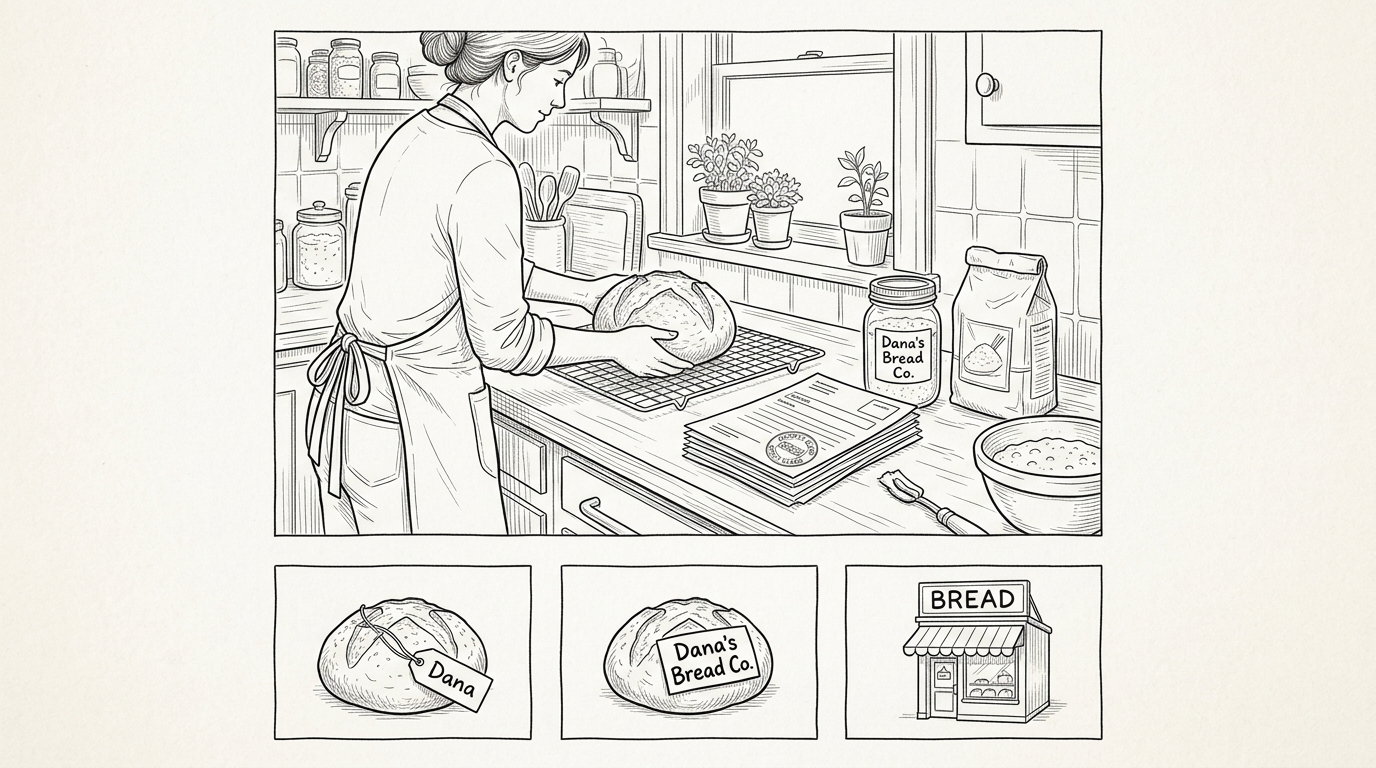
Take Dana, who bakes sourdough for neighbors on weekends. She sells under her own name until she wants “Dana’s Bread Co.” on her labels, then files a DBA for a modest fee.
It’s common for side hustles to start as a sole proprietorship, one owner with no separate entity, and move to an LLC later. Dana can make that move once her weekend orders are steady enough to justify it.
Can I have an LLC without doing business?
Yes. Forming an LLC doesn’t require you to be operating yet, but it doesn’t give you permission to operate either. An LLC is a structure, not a permission slip, so you’ll still need the licenses your activity calls for.
Two features make it useful: pass-through taxation, where profit or loss flows onto your personal tax return, and its status as a separate legal entity, a business that exists apart from you.
Some people hold an LLC inactive until they launch, but check your state’s rules first, since requirements vary. Forming is the easy part. Operating legally is the rest, and we’ll cover it next.
Licenses for Your Industry or Profession
Before you take your first booking or send your first invoice, check whether your work is regulated. The real question isn’t whether rules apply, but who sets them.
Professions that need a license
Some work requires a professional license, including:
- Medical professionals
- Lawyers and accountants
- Contractors and builders
- Cosmetologists and barbers
- Architects and engineers
- Real estate agents and investigators
A side hustler who cuts hair in clients’ homes calls her state’s cosmetology board before buying clippers. That one call tells her whether she needs a license, so she finds out before her first booking instead of after.
Check with state boards and commissions
Start with your state’s boards and commissions. You may need to deal with:
- Professional licensing boards: the offices overseeing the professions above.
- Gaming and transportation authorities: if your idea involves games of chance or moving goods or people.
- Insurance and financial divisions: if you sell policies or handle other people’s money.
- Air quality permits: if your work creates fumes, dust, or smoke.
This list isn’t complete. Requirements vary by state and city, so confirm with the agency that governs your work. Each agency has its own forms, fees, and deadlines, so it’s easy to miss a step. Call first.
Other permits you may also need
These may still apply even if you’re not licensed:
- Seller’s or sales tax permit: if you sell taxable goods or services.
- Building permits: for construction or renovation, including a garage or basement workshop.
- Health department permits: if you prepare or serve food, even from home.
- Home occupation permits: for running a business out of your house.
- Training and certification: some work also requires coursework or a certificate.
Keep a running list of each permit, its issuing office, and its renewal date. You’ll thank yourself at renewal time.
Federal Licenses and Tax ID Numbers
Federal requirements are narrower than most people expect, but a few can stop a launch cold. Here’s what to check, then how your taxes fit in.
Activities the federal government regulates
There’s no general federal business license, but there are plenty of specific federal rules for certain industries. Think of a home brewer who wants to sell at a local market.
Selling beer or cider falls under federal alcohol rules, so that’s the first thing to check.
The main areas to know:
- Alcohol, firearms, and aviation: each has its own federal rules.
- Broadcasting: regulated through the Federal Communications Commission (FCC).
- Agriculture, mining, and nuclear energy: all overseen at the federal level.
If your idea touches any of these, contact the relevant agency before you buy inventory or equipment. Check first, spend second.

Your EIN and how you are taxed
Your Employer Identification Number (EIN) is a federal tax ID issued by the IRS. Think of a candle maker selling at weekend markets.
Her state sales tax permit covers the tax she collects at the table, and her EIN keeps her business filings separate from her personal ones.
- EIN from the IRS: your federal tax ID for federal filings.
- State sales tax permit: the state registration that lets you collect sales tax.
- Texas tax ID vs. EIN: if you’re in Texas, the state tax ID and your EIN are separate numbers, so check which one each form asks for.
- S Corp or C Corp election: a choice about how your business is taxed, not whether it’s taxed.
- Estimated and payroll taxes: estimated taxes are paid during the year, so set money aside from every sale. Payroll taxes come in once you hire someone.
Set it aside as you go.
How to Get a Business License
Work through it in this order: find out what you need, gather your details, then file.
Find out which licenses you need
Start with the state. The Nevada New Business Checklist and CalGold for California list state requirements, and the SBA licenses and permits tool from the U.S. Small Business Administration gives you a federal starting point.
If you’re in Texas, add the Texas Department of Licensing and Regulation (TDLR) to your list.
Local rules are a second layer, not a footnote. Take a freelance photographer in Washoe County who sells prints from her spare room. The state checklist covers the state side, but her county page covers the local side.
Checking both before her first sale saves her a second trip to the office.
Submit your application online or by mail
Online applications are common, so start there. In Texas, check the Texas eSystems portal first. No online option? Ask whether a paper form is available and mail it in.
Each city, county, and town may have its own contacts and process, so confirm the jurisdiction-specific contact before you send anything. Mailing to the wrong office just costs you time.
Before paying anyone to file for you, check whether the official office accepts the filing yourself. Some filing services charge a steep markup for paperwork you can submit on your own, and that money is better spent on your first supply order.
What to have ready before you apply
Gather these before you start, not halfway through the form. You’ll need:
- Social Security number (SSN) or Employer Identification Number (EIN). Whichever one your application asks for.
- Business name and DBA (doing business as). Your legal name and any trade name you’ll operate under.
- North American Industry Classification System (NAICS) code. The number that describes your industry.
- Address and owner contacts. Where you operate, plus every owner’s name and contact info.
- Employees and expected sales. How many people will work for you and a realistic sales estimate.
- Professional certifications. Any credentials your work requires.
Prep now, file once.
Which offices issue each license
Licenses don’t all come from one place. A city licensing office, a county clerk, or a town office might issue yours, so ask who issues each one, not just what it’s called.
If you’re in Washoe or Clark County, start with those county pages and check them against your state list.

Costs, Renewals, and Checking Licenses
Here’s what fees, filings, and renewals typically run, and how to confirm a license is real before you rely on it.
What license fees typically run
License fees typically start at $15 and climb from there. Some places use revenue-based fees instead of a flat rate, so your bill can rise as sales grow. Small business exemptions can apply in some places, so check yours.
Vice-related businesses tend to cost the most. A study of Ibarra, Ecuador’s municipal business license tax describes the same patterns, though your own city’s schedule is what counts.
What forming an entity costs
Forming a limited liability company (LLC) adds its own costs. According to management.org’s California LLC cost guide, the main filing fee is $70 online and $85 by mail, so a side hustler who files online saves $15.
The filing fee is the start of the bill, not the whole thing. An annual LLC tax comes on top, and you may face a Statement of Information fee too. Budget for both.
Texas starts higher. According to LLCTexas.org’s Texas filing-fee guide, filing a certificate of formation (Form 205) with the Texas Secretary of State costs $300. A tax ID costs nothing.
Renewing and displaying your license
Some licenses renew yearly, others every few years, so calendar the date once you’re approved. Renew with the agency that issued your license. Once approved, the physical license typically arrives within weeks, so apply before you need it.
If your business is public-facing, post the license where customers can see it. Think of a home-based dog groomer whose clients drop by. She posts her license by the door and sets a phone reminder, so renewal never slips.
Look up licenses to verify them
Before you rely on anyone’s license, check the record yourself. Start with these:
- TDLR license search. Run it through the Texas Department of Licensing and Regulation (TDLR).
- Contractor license check. Confirm a contractor’s license is current before any work begins.
- Secretary of State business search. Confirm a business is registered with the state.
- Sales taxpayer search. Check whether a business is registered to collect sales tax.
Run the same check on your own license. Operating without one you need can bring penalties in California and elsewhere. The specifics depend on local rules, so confirm with the issuing agency.
Getting a business license comes down to doing things in sequence: settle your structure, check your industry rules, then work through federal and tax ID numbers before you start selling. Each step is mostly paperwork, not a mystery.
Once you know what to ask for and where to ask, the process gets a lot less intimidating.
Keep the renewals on your calendar, too. Fees and deadlines are easy to forget when you’re busy with customers, so set a reminder the day you’re approved.
The license gets you in the door. Your customers decide whether you stay.
References
- Valoración y ponderación de las actividades económicas para el cobro del impuesto de patente municipal en la ciudad de Ibarra para el año 2009 — hdl.handle.net (2009)
- How Much Does an LLC Cost in California? — management.org
- Texas LLC Filing Fee (2026): $300 Certificate of Formation, Form 205 — llctexas.org
Questions
How to get a business license in Illinois?
To get a business license in Illinois, identify the state agency that regulates your activity, then check your city or county for local licenses and permits. Requirements depend on what you do and where you operate, so confirm them with the relevant agencies before launching.
How much does it cost to get a business license in the US?
There is no single cost for a business license in the US. Fees vary by location and business activity; they often start around $15, but some are higher or based on revenue, and industry-specific licenses and permits can add costs.
Can I sell things without being a business?
Yes, occasional sales may be allowed without formally registering as a business, but rules depend on what you sell and where you sell it. Licensing and tax requirements can still apply, so check with your city or county before selling regularly.
Do you need a state business license in California?
California does not have a general state business license. You may still need local city or county licenses, state professional or industry licenses, and permits such as a seller’s permit, depending on your activity.
Do I need a business permit in Texas?
Texas does not have a general state business license, but you may need local permits and licenses, state occupational licenses, or specific tax registrations. Check with your city or county and the Texas Department of Licensing and Regulation for requirements tied to your business.
Can I have an LLC without doing business?
Yes. You can form an LLC before starting operations, but the LLC does not authorize you to conduct regulated activities without any required licenses or permits. Check your state’s ongoing filing, tax, and other requirements while it is inactive.
What license is best for a small business?
There is no single best license for every small business. The right licenses depend on your location and activity, and may include a local business license, an occupational license, or permits for sales tax, food service, or home-based work.
Do you have to pay the $800 California LLC fee every year?
Generally, yes. California LLCs owe an annual $800 franchise tax, though exceptions and temporary exemptions may apply, so confirm your LLC’s status and current obligations with the California Franchise Tax Board.