6-6
Business Savings Accounts: A Complete Guide
Business savings gives your funds a buffer for slow months and supplier bills. Compare it with checking, choose an account, and build a lasting reserve.
- Written by

- Published
- Updated
- Reading time
- 10 min read
- Sources
- 4 cited
Business savings is money kept in a separate account for a company’s reserves, where it can earn interest while staying apart from everyday spending. Use it to build emergency, tax, and growth funds, and pair it with checking so bills remain accessible while savings is less tempting to spend. Compare fees, balance rules, withdrawal access, and the rate you’ll actually earn, then add affordable automatic transfers to grow a cushion steadily.
In this guide
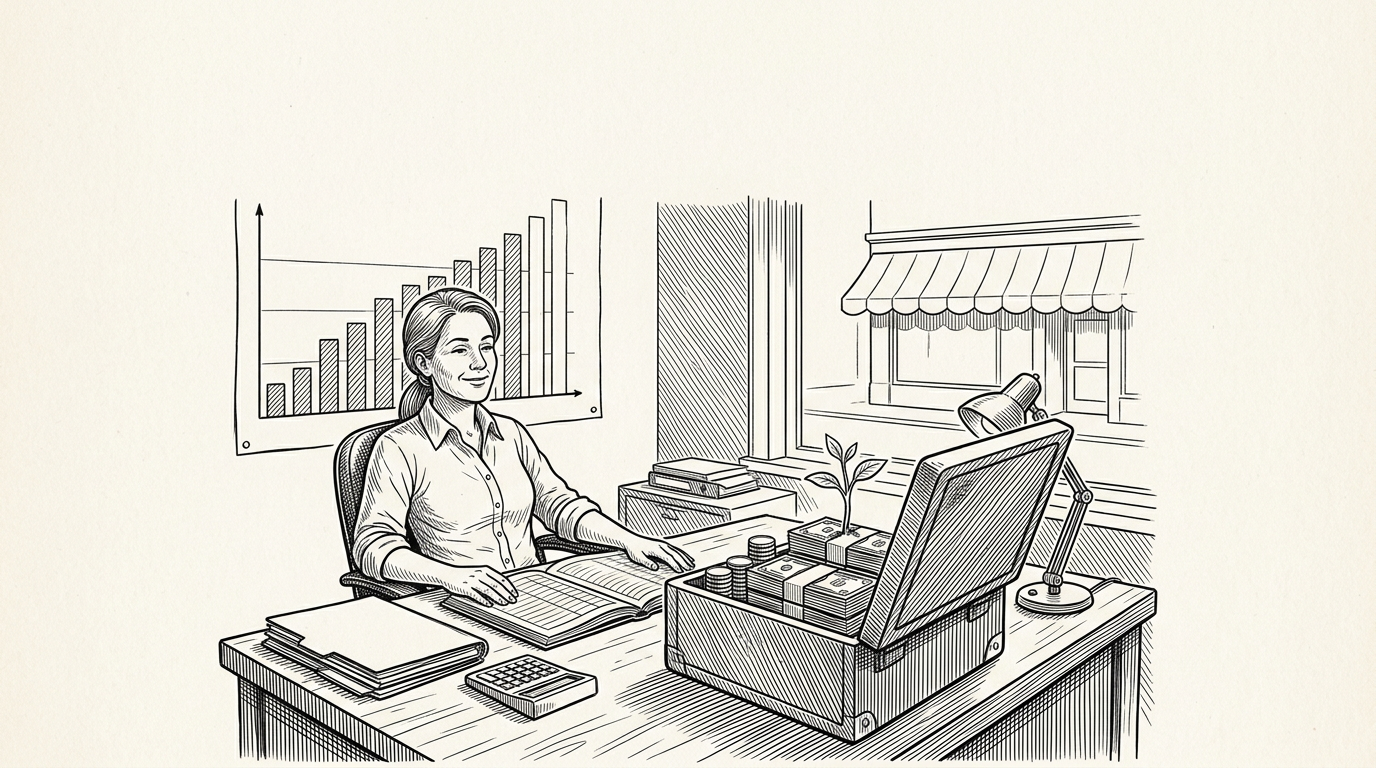
Think of a business savings account as the spare tire in your trunk. You hope you never need it, but when a slow month or an early supplier bill hits, you’ll be glad it’s there.
For a side hustle, that separation also keeps business money away from rent and groceries.
It’s a separate bank account for your business funds, and those funds can earn interest while they wait. We’ll cover how it differs from checking, how to choose and open one, and how to build a reserve you can actually keep.
Why You Need a Business Savings Account
A business savings account gives your reserve cash a home apart from daily spending.
What a high-yield account is
A high-yield savings account is a deposit account for cash you won’t need this week. It pays a higher annual percentage yield (APY), the yearly return that includes compounding, than checking does.
Some come as a money market savings variant with its own terms. Rates vary by balance, so check the rate at the amount you’ll actually keep there. It’s less about earning the most and more about keeping the money where you won’t spend it.
Whether your business needs one
No law requires one, so it’s your call. It depends on your business type and stage, and most businesses find it beneficial. Nonprofits and agencies can open one too.
If you’re testing an idea on the side, open one when it starts bringing in money you’d rather not spend on groceries. Think of a freelance photographer who deposits the payment from her first paid shoot into a separate account.
When her camera lens breaks, she pays from that reserve, not from rent money.
Common ways businesses use these accounts
Businesses commonly use these accounts for:
- Earn interest on idle cash. Money that would sit in checking can work instead.
- Build an emergency fund cushion. Cover a slow month or a surprise repair without borrowing.
- Save for tax and equipment. Set money aside for the tax bill or your next tool.
- Fund expansion and renovations. Grow a project one deposit at a time.
- Separate reserves from operating funds. Keep your reserve apart from the operating cash that pays the bills.
- Offset inflation. Rising prices shrink what cash can buy, and a savings rate can help cushion that loss.
How much to keep in savings
A common guideline is three to six months of expenses in reserve.
The right number shifts with your stage, and a study of small and medium-sized enterprises (SMEs) during COVID-19 predicts that smaller and younger businesses will hold more cash to protect themselves against bad market conditions.
For a number built around your costs, talk to a financial professional.
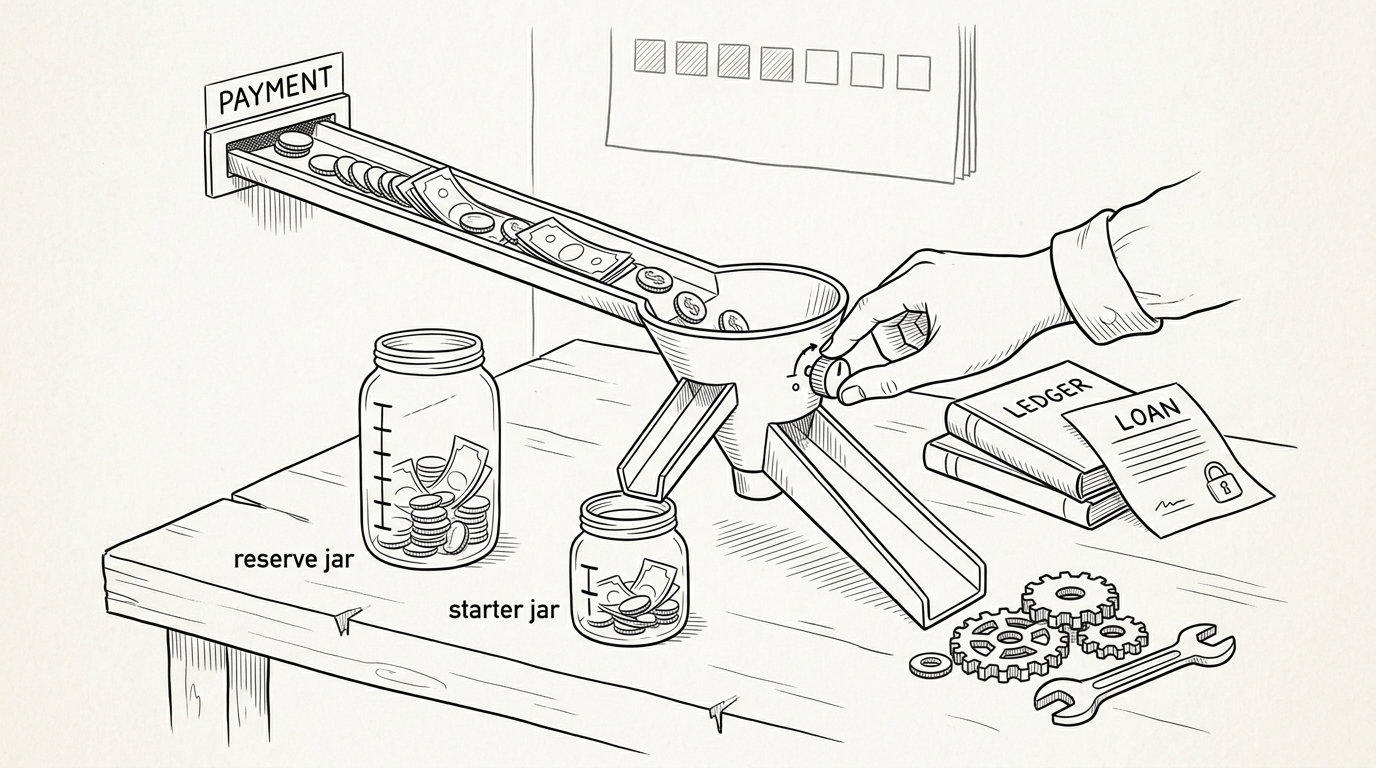
If your income is irregular, a starter reserve gives you a smaller first goal to hit. Build it from revenue by moving a set share of each payment into savings as it lands.
Every dollar in reserve is a dollar not paying down debt or reinvesting in the business. Cover the basics first, then decide where the next one goes.
Business Savings Compared with Checking
Most side hustles end up with two accounts, each with its own job. We’ll look at how they compare and how they work together.
What each account is built for
A business checking account is the one you spend from. It covers daily costs like software, supplies, and supplier payments. Take a freelance photographer who pays her editing software straight out of checking every month.
A business savings account is built for holding money, not spending it. Its main draw is interest. Checking earns little interest, so savings is where your reserve can grow while it waits.
The trade-off is access. Savings has withdrawal limits, so you can’t pull money out whenever you like. That’s a feature for a reserve: it keeps your cushion from getting spent on impulse.
How to run both accounts together
Used together, the two accounts do more than either one alone:
- Linked accounts. Connect savings to checking so money can move between them.
- Easy transfers. Set up a recurring transfer so a fixed amount moves to savings on payday without you having to remember.
- Overdraft protection. If checking runs short, savings can cover the shortfall so a gap doesn’t stall the business.
- Clearer budgeting. Separate accounts show what the business spends and what it sets aside, which makes the numbers easier to analyze.
Take a side hustler who sells handmade candles on weekends. After each batch sells, a set share moves to savings, so the cushion grows without her thinking about it.
When a slow month leaves checking short before a supplier payment, the linked savings covers the gap and her candle business keeps running.
Keeping what you spend apart from what you save is what makes the whole picture easy to read.
Picking the Right Business Savings Account
The interest rate gets the headlines, but it’s rarely the whole story. Here’s what else to weigh.
Comparing interest rates and APY
Start with the annual percentage yield (APY), the yearly rate you earn once compounding is counted. Many banks use tiers, paying different rates for different balance ranges, and many reserve their best APY for large balances.
Check the tier your money actually sits in, not the headline number. Rate isn’t the only factor.
Watching fees and minimum balances
Watch for a monthly maintenance fee, the charge some banks take just for keeping the account open. Also check the minimum opening deposit to start and the minimum balance for top rate, which you must hold to earn the best APY.
A fee waiver can cancel the monthly charge, but only if you meet its condition, such as keeping a set balance.
Fees hurt most when your income is small, not steady. Picture a freelance web designer whose client payments arrive in lumps.
A fee she barely notices in a busy month becomes a leak in a slow one, so she picks an account with no monthly fee and keeps every dollar in her reserve.
How easily you can reach your money
You want your money reachable, not tempting. Check the monthly withdrawal limits, which cap outgoing transfers each month, and automated teller machine (ATM) access for cash.
Then look at online and mobile banking for managing balances from your phone, and at how fast quick fund transfers move money to your checking account.
Support and service from your bank
Rates and fees are the numbers. Service decides how it feels when something goes wrong. Ask about these before you commit:
- Customer support. Can you reach a real person, and how quickly?
- Community bank personalization. Smaller banks may know your name and your business.
- Treasury and cash management. Tools for handling payments and balances as your volume grows.
- Accounting integrations. Connections to your bookkeeping software that save retyping.
- Dedicated business banker. One contact who knows your account.
That’s the part you won’t notice until you need it.

Sample Accounts and What They Include
Not every business savings account is built the same, so we’ll compare the features that matter most.
Top picks for different needs
- Best for high APY: Compare the annual percentage yield (APY), which includes compounding, not just the base rate.
- Best for unlimited transactions: Many savings accounts cap transfers, so look for one that doesn’t.
- Best for branch access: Check for a nearby branch or whether the bank is online-only.
- Best for low fees: Read the full fee schedule and note which charges you can avoid.
- Best for no minimum deposit: Some accounts open with little or nothing, but check ongoing balance rules.
Savings products from specific banks
The question is less about which bank has the flashiest rate and more about how you’ll use the money. Three products worth comparing are:
- the 1st National money market account
- FVCbank First Business Savings
- Wells Fargo Platinum Savings
Check current rates and fees before you decide.
Some accounts also use tiered rates, so the top rate you see may apply only to a larger balance.
How fees, withdrawals, and interest work
- Monthly service fee waivers: Some banks waive the monthly fee if you meet a condition, such as a minimum balance.
- Six free withdrawals monthly: Some accounts allow six free withdrawals a month, and business accounts can differ in their withdrawal limits and crediting schedules, according to the research paper The Deposit Business at Large vs. Small Banks.
- Daily compounding: Interest is calculated every day, so you earn interest on interest.
- Monthly or quarterly crediting: This sets how often earned interest is added to your balance.
Think of a side hustler who sells candles on weekends and pays her wax supplier from savings. Six payments in one month use up her free withdrawals, so she combines orders into two bigger payments and stays within the limit.
CDs as another option
The trade-off is access versus commitment. Savings accounts have no fixed term, while a certificate of deposit (CD) locks in a rate for a set term. That rate stays fixed even if market rates move.
According to LegalClarity’s guide to time deposits, early withdrawals from a CD may incur a penalty under Regulation D, the federal rule governing these deposits. Know the exit cost before you lock anything in.
Setting up Your Account Step by Step
Opening the account is mostly paperwork and a first deposit, so here’s what to prepare.
Paperwork you’ll need on hand
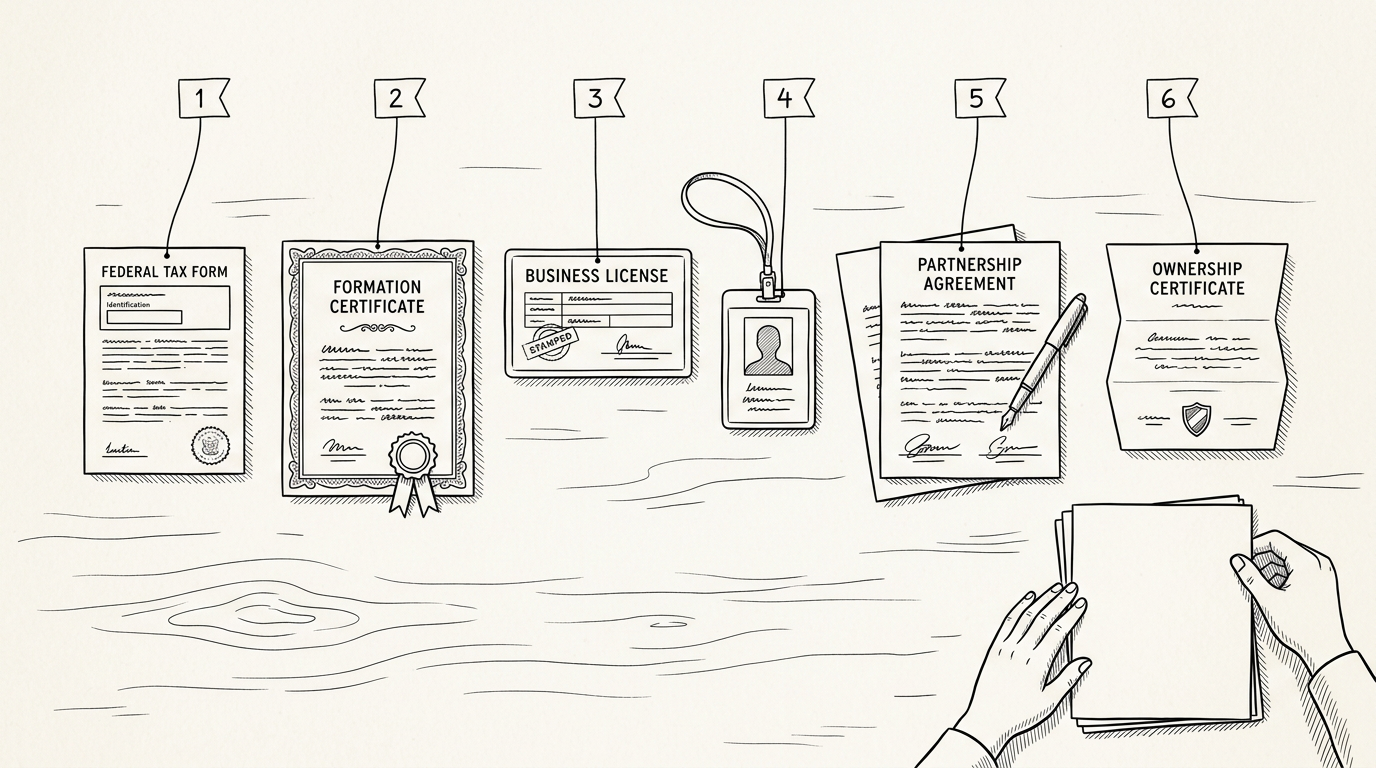
Banks need to confirm who you are and that the business is real. Have these ready:
- EIN or Social Security number. An Employer Identification Number (EIN) is the federal tax ID for your business. Banks may ask for one or the other, depending on your setup.
- Business formation documents. Papers proving the business is a legal entity, like articles of organization for a limited liability company (LLC).
- Business licenses. Any state or local licenses your business needs.
- Personal identification. A current government-issued ID for each person on the account.
- Ownership agreements. If you have a partner, the document spelling out who owns what.
- Ownership verification. Proof of your ownership, so the bank can confirm you’re authorized to open the account.
How much to deposit at first
Minimum deposits vary by bank, and some accounts require none at all, which is handy while you’re still testing an idea. Steady growth comes from automatic transfers. Set one up from your checking account for each payday, even if the amount is small.
Consider a freelance graphic designer who schedules a transfer the day after each client payment. Saving happens without her having to decide.
Applying online or at a branch
You can usually apply in one of three ways:
- Apply online. Fill out the form from home and upload your documents. It’s quickest if your paperwork is already scanned.
- Visit a local branch. A banker can walk you through the forms face to face.
- Book an in-person appointment. Sit down with a banker and review the application together.
Online is faster, but in person is often easier if you have a partner or several licenses to explain.
Safety, Liability, and Taxes to Know
Where your money sits matters as much as how much you save. Here’s what we’d check first: how it’s protected, what it means for taxes, and why rates shift.
How FDIC insurance protects your deposits
Eligible deposits are protected by FDIC insurance, which the Federal Deposit Insurance Corporation (FDIC) provides. According to Bankrate’s guide to FDIC insurance, coverage goes up to $250,000 per depositor, per FDIC-insured bank, per ownership category.
That’s a cap, not a blank check. Money above the limit at one bank isn’t covered, so where you keep it matters too.
Take a freelance photographer who keeps client payments in a business savings account. She checks the limit before each big deposit, so she knows exactly what’s protected.
How liability and taxes affect your savings
A business savings account keeps business money separate from personal money, so your business finances don’t blur into your own. It can also help you qualify for other business products.
Interest you earn is taxable income, so plan for it before you spend it. You’ll also want to set aside self-employment tax money, the tax you owe on income from your own work.
A graphic designer who moves part of every client payment into a tax bucket on arrival never gets caught short at tax time.
Split your savings into three buckets:
- Tax money for what you’ll owe.
- Emergency money for slow months or surprise repairs.
- Growth money for your next step.
Why rates can change over time
Rates change without notice, and fees may reduce earnings. A candle maker with a modest balance could watch a flashy rate shrink once a monthly fee comes out.
Before you open an account, compare net earnings (what you keep after fees) rather than the advertised rate. The headline rate is only half the story.
A business savings account gives your side hustle a dedicated cushion and a clearer view of what it actually earns. Keep that money separate, pick an account that fits how you work, and add to the reserve on a schedule you can stick to.
Start with whatever your budget allows, since a small reserve that grows steadily beats a big one you planned to fund someday. Build the cushion first, and your idea gets room to breathe.
References
- The Deposit Business at Large vs. Small Banks — doi.org (2023)
- Did you save some cash for a rainy COVID-19 day? The crisis and SMEs — pmc.ncbi.nlm.nih.gov (2020)
- Time Deposits: Definition and Federal Rules — legalclarity.org (2026)
- FDIC Insurance: What It Is, How It Works and Limits — bankrate.com
Sources
- Did you save some cash for a rainy COVID-19 day? The crisis and SMEs, pmc.ncbi.nlm.nih.gov,
- The Deposit Business at Large vs. Small Banks, doi.org,
- FDIC Insurance: What It Is, How It Works and Limits | Bankrate, bankrate.com
- Time Deposits: Definition and Federal Rules - LegalClarity, legalclarity.org,