6-7
Business Startup Expenses: What They Are and How to Budget
Business startup expenses include more than major purchases. See where launch money goes, how to budget for overlooked costs, and what may affect your taxes.
- Written by

- Published
- Updated
- Reading time
- 7 min read
- Sources
- 4 cited
Business startup expenses are the costs of preparing a profit-seeking business to operate, from research and licenses to equipment, inventory, rent, and marketing. List one-time, recurring, and variable costs, keep records, estimate a cash runway, and stage spending as demand becomes clearer; tax treatment depends on when the business becomes active and which costs qualify. Start with the minimum needed to win a paying customer, then use sales to guide what you spend next.
In this guide
When you plan a kitchen remodel, you probably focus on the cabinets and countertops. Then the small stuff piles up: drop cloths, a hardware store run, the part you didn’t know you’d need. Starting a business works the same way.
The big purchases get the attention, but the small costs often drain the budget.
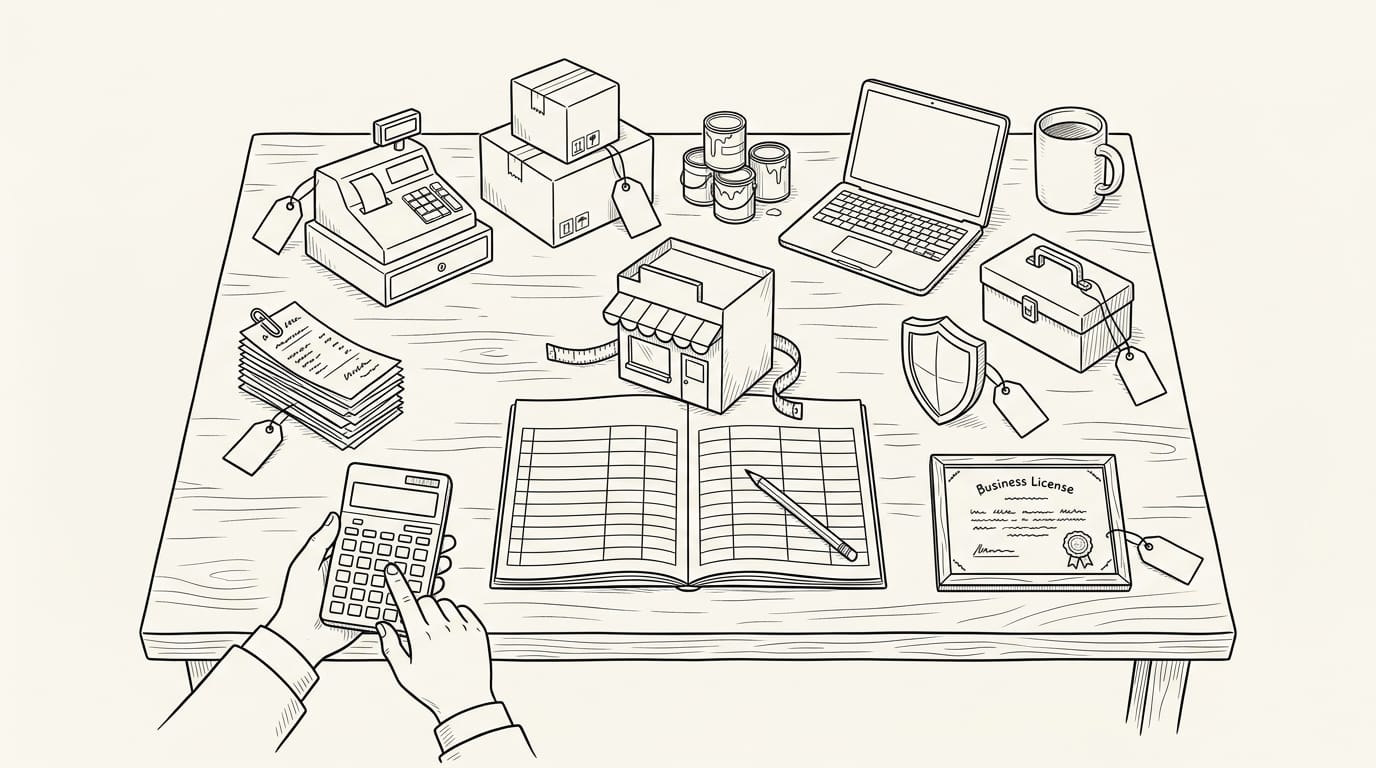
Business startup expenses are what you spend to get an idea running before it earns its first dollar: equipment, licenses, software, and early inventory.
Here, we’ll cover what counts, where the money goes, how to size a first budget, and how these costs affect your taxes.
What Counts as Business Startup Expenses
Before you build a budget, you need to know which costs belong on it.
Spending before your business earns a profit
Startup expenses are costs you pay before your business is up and running and earning a profit:
- Investigating or creating the business. Market research, a name, a website, and test batches.
- Preparing for active operations. Licenses, registrations, and anything else needed to open.
- Intent to earn profit. You’re building something you genuinely plan to earn money from.
Take a side hustler selling handmade candles on weekends. She buys test batches, a domain name, and a business license before her first sale. Those costs still count, even though the business hasn’t earned a dime.
Costs you pay once versus every month
It’s less about how much you spend and more about how often you spend it. A one-time cost is something you pay once, like legal setup or a label printer. A recurring cost like rent or utilities comes due monthly, whether you sell anything or not.
Variable costs, such as marketing and inventory, rise and fall with sales.
Consider a weekend woodworker selling cutting boards from her garage. She pays once for a table saw, pays monthly for storage, and buys more wood with each batch. Her monthly costs set the minimum she must earn to stay open.
What drives how much you spend
Four factors shape your number:
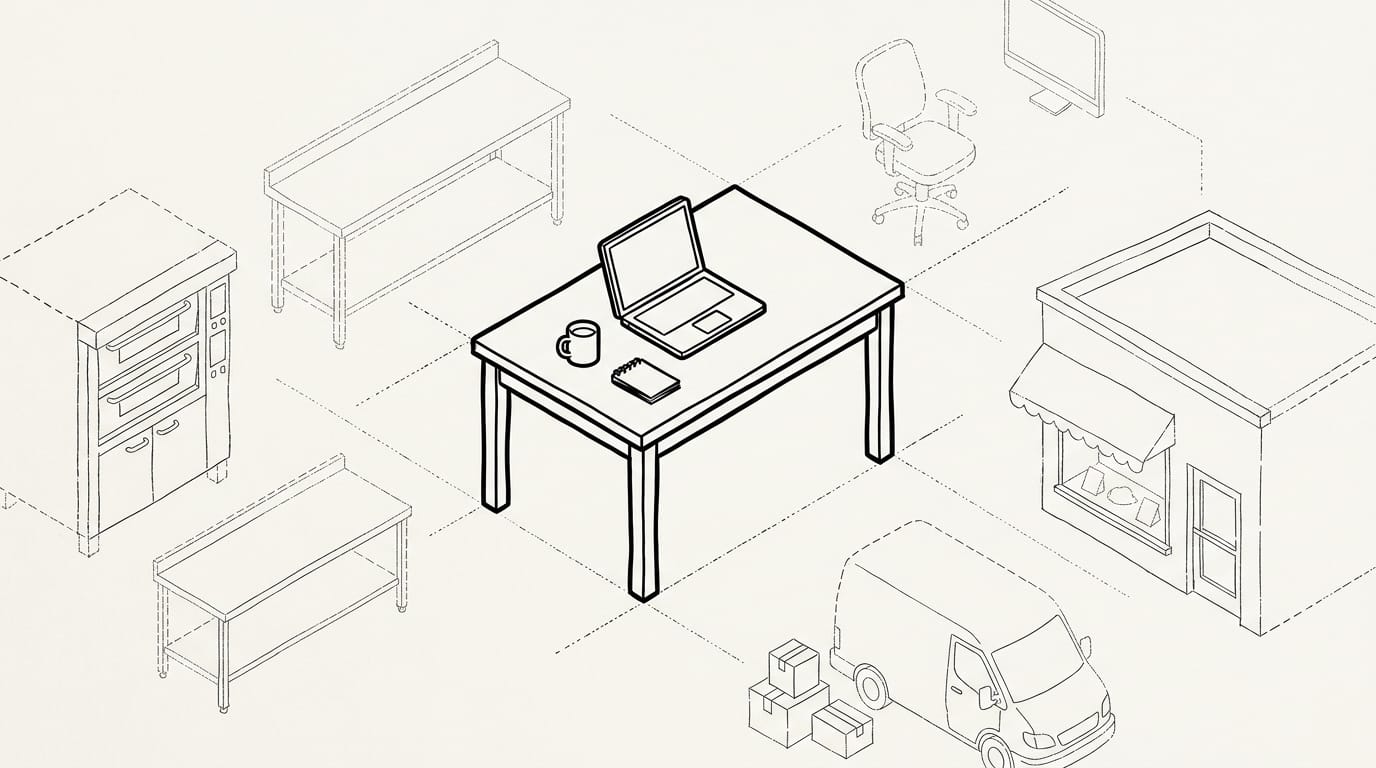
- Type of business. A consulting practice can start with a laptop, while a bakery needs kitchen space.
- Location. Space and services vary widely from one city to the next.
- Size and scope. A few local clients cost far less to serve than a nationwide product line.
- Start lean. Use what you already own, like your laptop or kitchen table, and buy only what you can’t work without. Upgrades can wait.
Where Most Startup Money Goes
Before your first sale, money tends to leave your account in a few predictable places. We’ll walk through the main categories so you can see which ones your idea needs.
Registration, licenses and professional fees
Making your side hustle official starts with business registration, which puts your name on record with the government. Some businesses also need a business license.
Registration and licensing can carry filing fees: the state or federal charge for processing paperwork. Lawyer and accountant fees add to the total, and if you form a corporation, incorporation brings its own legal fees.
Meet a side hustler who sells tote bags from her kitchen table. She files her own paperwork, then pays an accountant once to check it. Her payoff is a clean start before her first order.
Renting space, buying equipment and stock
- Office space and rent. A place outside your home means rent, an ongoing bill. You can also start in a spare room.
- Furniture and equipment. The desk, computer, or machine your work requires.
- Inventory and supplies. Products bought before you can sell them, plus packaging for each order.
- Utilities. Power, water, and internet, which can climb when you work from home more.
Your business type sets the shape of the budget. A freelance copywriter might spend mostly on a laptop and software.
Consider a candle maker: once she counts the jars, labels, and wax she needs before her first order, she sees her cash is tied up before anyone buys. Her payoff is a plan to buy in smaller batches, so she can restock without touching her rent money.
Spreading the word about your brand
Building a brand costs money before anyone sees it. A website shows buyers what you sell and takes time or money to build. Social media is where you can start, but paid ads are optional until you’re ready to spend.
A trademark protects the name or logo that identifies your business, so registering one is a separate cost. Trade shows add:
- booth fees
- travel
- display materials
all before a single sale.
Insurance, payroll, R&D and loan costs
Business insurance protects you if a customer is hurt or a product fails. Salaries and benefits come next: one part-time helper adds paychecks, and possibly benefits, to your budget. Picture a side hustler who pays a teen two hours a week to pack orders.
Over a year, that wage shows whether her orders can cover it. Research and development means spending to test a product or prototype before launch.
If you borrow to start, loan interest and fees sit on top of the amount you borrowed. Borrowing is never free.

Researching your market and hiring advisors
Start with market analysis: who buys this kind of product, how often, and what they’d pay. Product analysis checks whether the product works and what each unit really costs. Consulting fees cover paid advice from an outside expert.
Learning before you spend is usually the cheapest move you’ll make.
How to Plan and Budget Your Launch
Your launch budget covers every cost before the first sale, and your records keep it organized for the Internal Revenue Service (IRS).
Build a budget for every expense
- List every expense. Include small items, track them in a spreadsheet or financial software, and update it as prices change.
- Don’t underestimate. Guessing low drains the savings you’re counting on, so guess high, then trim.
- Test demand before big spending. The question is less about how much you spend and more about when. The 50/100/500 rule stages spending in three tiers, and you earn each tier with evidence, like a paid order, before committing more.
Consider a candle seller who lists wax, jars, and shipping on one sheet. She spots shipping costs she forgot and prices her candles to cover them.
Next, size your runway: the months your savings can cover costs before the business pays for itself. Divide your cash reserve by monthly costs to find it.
What are the IRS record retention rules?
Keep clear documentation: label each receipt with its business purpose.
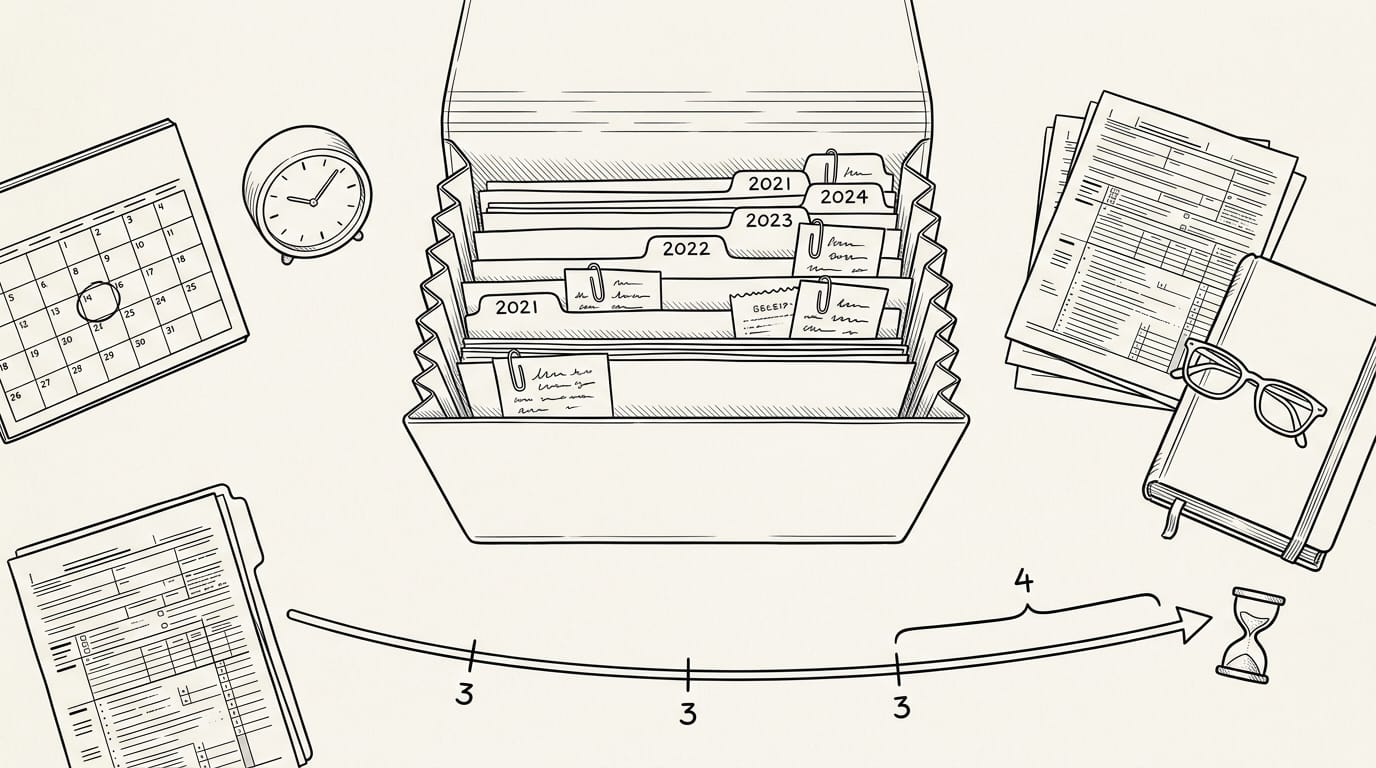
A guide from Remote Financial Services explains the baseline: keep any record supporting income, a deduction, or a credit until the period of limitations (the IRS review window) closes.
That window is generally three years after filing and at least four years for employment tax (payroll) records, and periods vary by record type and circumstances.
- Work with a certified public accountant (CPA). A CPA can review your records before you file.
- File elections correctly and on time. Some tax choices, called elections, have filing deadlines, so calendar them.
- Keep a clean chart of accounts. Use the same bookkeeping categories consistently every month.
How Business Startup Expenses Affect Taxes
Spending before your first sale can still affect your taxes. Here’s how the rules work.
How much startup costs you can deduct
Startup costs can generally be deducted up to $5,000 when your business begins, according to a paper on how Section 195 treats startup expenditures.
- Organizational costs. They get a separate deduction, up to $5,000.
- Reduction. The $5,000 limit shrinks once total startup costs top $50,000.
- Amortization. Startup costs you don’t deduct can generally be amortized (spread out) over 180 months, starting when the business actually begins, per Plowing through the facts, a farming taxation paper.
A freelance photographer who spends $3,200 on a website and booking tool before her first shoot can generally deduct all of it, since that’s under $5,000.
The $2,500 expense rule is a separate tax shortcut, the de minimis safe harbor, letting you deduct tangible property (physical items like a laptop) costing up to $2,500 per item right away, as BEG explains.
Only active businesses seeking profit qualify
- Timing. Nothing is deductible before the business is active.
- Readiness. It must be ready to generate revenue.
- Involvement. You need regular, active involvement in running it.
- Profit motive. It must aim to make money, not be a hobby.
The question is intent, not income: are you trying to make money?
Company formation costs that qualify
- Formation. Costs of forming a corporation or partnership.
- Professional help. Legal and accounting fees for organizing the business.
- Filing fees. The state fee for incorporation paperwork.
- Future test. It qualifies only if it would be deductible once the business is running.
Acceptable business expenses include the formation, legal, accounting, and filing costs above, and each must pass the future test. Save those receipts.
Startup expenses are the costs of getting an idea ready to earn, and knowing which ones to budget for keeps surprises from landing on your kitchen table. Track them from day one, since they shape your taxes as well as your cash.
Build your first budget around the lowest spend that can land a paying customer, not the perfect launch you’ve pictured. Keep it lean, and let your first paying customer, not your spending, decide what comes next.
References
- Section 195 (Revisiting the Taxation of Startup Expenditures) — papers.ssrn.com (2019)
- Plowing through the facts : farming taxation — cardinalscholar.bsu.edu (2013)
- De Minimis Safe Harbor: Expense Purchases Up to $2,500 — beghr.com (2026)
- Business Record Retention: What the IRS Requires You to Keep — remotefinancialservices.com (2026)
Questions
What is the 50/100/500 rule startup?
The 50/100/500 rule is a staged startup-spending approach: commit to an initial $50, then $100, then $500 only as evidence of demand justifies each step. The figures are spending tiers, not a tax rule; use paid orders or other concrete customer evidence before moving to the next tier.
What is the $2500 expense rule?
The $2,500 expense rule usually refers to the IRS de minimis safe harbor. A qualifying business may elect to deduct the cost of tangible property up to $2,500 per item or invoice in the year it is purchased, subject to recordkeeping and other eligibility requirements. Businesses with an applicable financial statement may generally use a $5,000 threshold.
What is the 70/20/10 rule money?
The 70/20/10 rule is a budgeting method that assigns 70% of income to needs and regular spending, 20% to savings or debt repayment, and 10% to wants or giving. It is a flexible guideline, not a requirement, and the categories can be adjusted to fit your priorities.
What are the IRS record retention guidelines for businesses?
Generally, keep records supporting income, deductions, and credits until the IRS period of limitations expires. That is usually three years after filing, but it can be longer in some circumstances; keep employment tax records for at least four years after the tax becomes due or is paid, whichever is later. Retain property records until the limitations period expires for the year you dispose of the property.
What are acceptable business expenses?
Acceptable business expenses are ordinary and necessary costs of operating a business, such as supplies, rent, utilities, insurance, advertising, and professional fees. Startup formation, legal, accounting, and filing costs may also qualify if they would be deductible once the business is operating. Keep receipts and document each expense’s business purpose.
What are considered startup costs for a business?
Startup costs are expenses paid to investigate, create, or prepare a business before it begins active operations and earns income, provided there is an intent to make a profit. Examples include market research, licenses, professional fees, equipment, software, initial inventory, a website, and prelaunch advertising. Tax treatment depends on the type of expense and when the business becomes active.
How to budget $10,000 per month?
Start by listing fixed and variable costs, then divide $10,000 among essential operating expenses, taxes, savings or debt payments, and discretionary spending. For example, a 70/20/10 personal-budget framework would allocate $7,000 to needs, $2,000 to savings or debt repayment, and $1,000 to wants. For a business, base the budget on actual costs and reserve enough cash for taxes and unexpected expenses.
How to write a business plan?
A business plan typically explains what the business sells, who its customers are, how it will reach them, and how it will operate and make money. Include market research, competitors, pricing, startup costs, financial forecasts, and funding needs. Set clear goals, use realistic assumptions, and update the plan as you learn from customers and actual costs.
Sources
- Section 195 (Revisiting the Taxation of Startup Expenditures), papers.ssrn.com,
- Plowing through the facts : farming taxation, cardinalscholar.bsu.edu,
- De Minimis Safe Harbor: Expense Purchases Up to $2,500 | BEG, beghr.com,
- Business Record Retention: What the IRS Requires You to Keep | RFS Blog, remotefinancialservices.com,