7-2
EIN Number for Business Explained, From Start to Finish
An EIN number for business helps you check whether you need one, apply free through the IRS, and find it again if your company changes or closes.
- Written by

- Published
- Updated
- Reading time
- 12 min read
- Sources
- 2 cited
An EIN, or Employer Identification Number, is a nine-digit federal tax ID the IRS assigns to identify a business for tax purposes, separate from its owner’s Social Security number. Businesses with employees, certain legal structures, or specific tax and retirement obligations need one; many solo owners can also use one to open a business bank account and keep their SSN off routine paperwork. The IRS issues EINs for free, and keeping the number and related records current helps make tax, payroll, and business administration easier.
In this guide
Think of an EIN as a Social Security number for your business. An Employer Identification Number (EIN) is the tax ID the Internal Revenue Service (IRS) assigns to a company, and you can get one from the IRS for free.
Not every side hustle needs one, but plenty do, so it’s worth checking before you open a business bank account or hire your first helper.
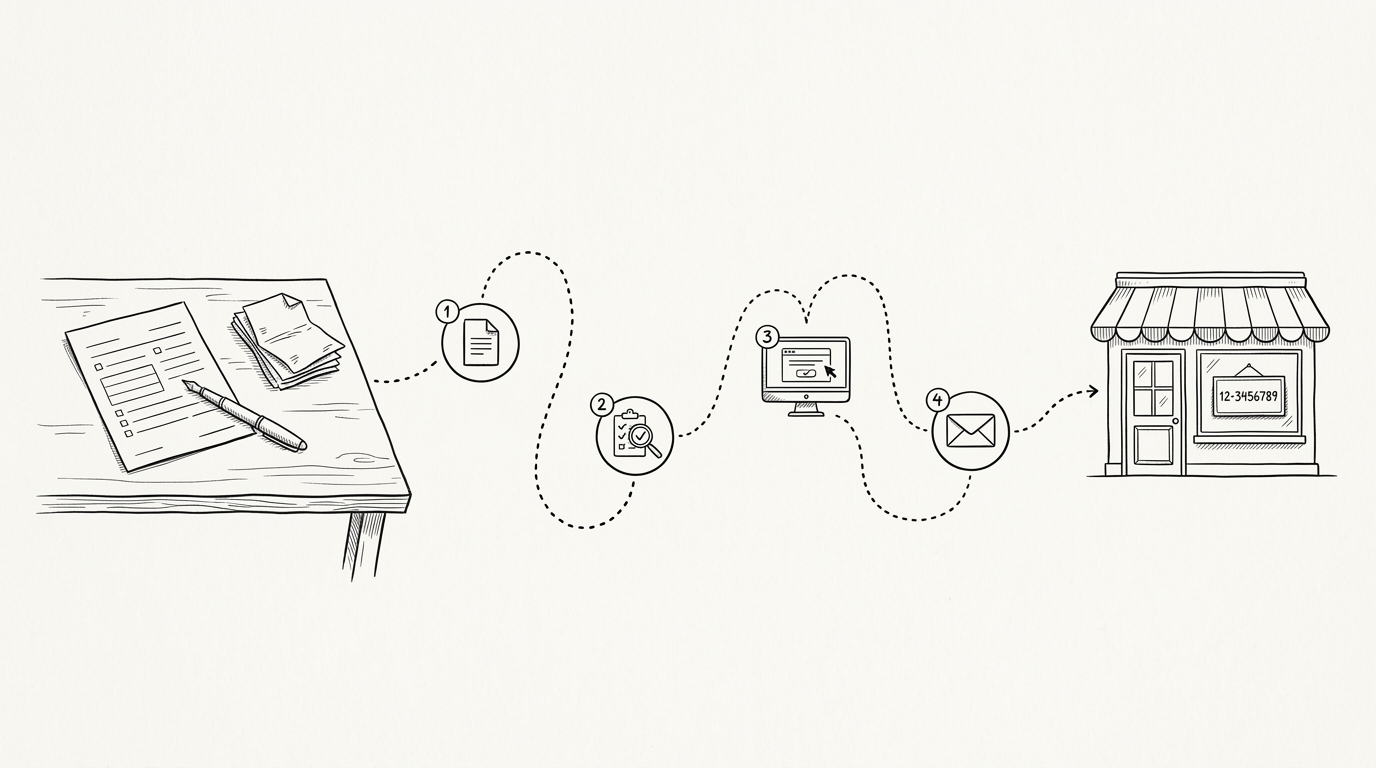
Here’s what’s ahead: who needs one, why it helps even when it’s optional, how to apply, how to find an existing EIN, and what to do when your business changes or closes.
What Is an EIN Number for Business?
In the US, an Employer Identification Number (EIN) is a nine-digit number the Internal Revenue Service (IRS) issues to identify a business for tax purposes.
What the nine-digit number looks like
Your EIN is nine digits in the format XX-XXXXXXX, with a dash after the first two. It’s also called a federal tax ID or Federal Employer Identification Number (FEIN), and all three names point to the same number.
Its job is identifying the business for taxes. Is a FEIN confidential? Not quite a secret, but it’s a sensitive tax identifier, so share it only when there’s a real tax or business reason.
Is my EIN linked to my SSN?
No. Your EIN is separate from your Social Security number (SSN), though both are types of Taxpayer Identification Number (TIN). The SSN identifies you as an individual, while the EIN identifies the business.
Consider a side hustler who sells handmade candles. When her bank asks for a tax ID for the candle business, she gives her EIN, while her SSN stays tied to her personal identity. Two numbers, two jobs.
If you’re a taxpayer who isn’t eligible for an SSN, you’d use an Individual Taxpayer Identification Number (ITIN) instead.
A state tax ID is separate again, and you may also see the adoption taxpayer identification number (ATIN) and preparer tax identification number (PTIN), which are variants for narrower roles.
How long an EIN stays active
EINs never expire, and the IRS never reassigns one to another business. The one wrinkle is that the IRS can deactivate an EIN, but it can’t cancel one. Same number, every filing.
Which Businesses Need an EIN
Not every side hustle needs an Employer Identification Number (EIN), the federal tax ID the IRS (Internal Revenue Service) issues. The question is less about whether you count as a business and more about how you’re set up.
Situations that require an EIN
You’ll need one if your business:
- Has employees
- Is a corporation or partnership
- Is a multi-member LLC (limited liability company)
- Owes employment, excise, or ATF (Bureau of Alcohol, Tobacco, Firearms and Explosives) taxes
- Withholds tax on nonresident aliens (people who aren’t U.S. tax residents)
- Sets up a Keogh (a retirement plan for self-employed people)
Solo owners and when they need one
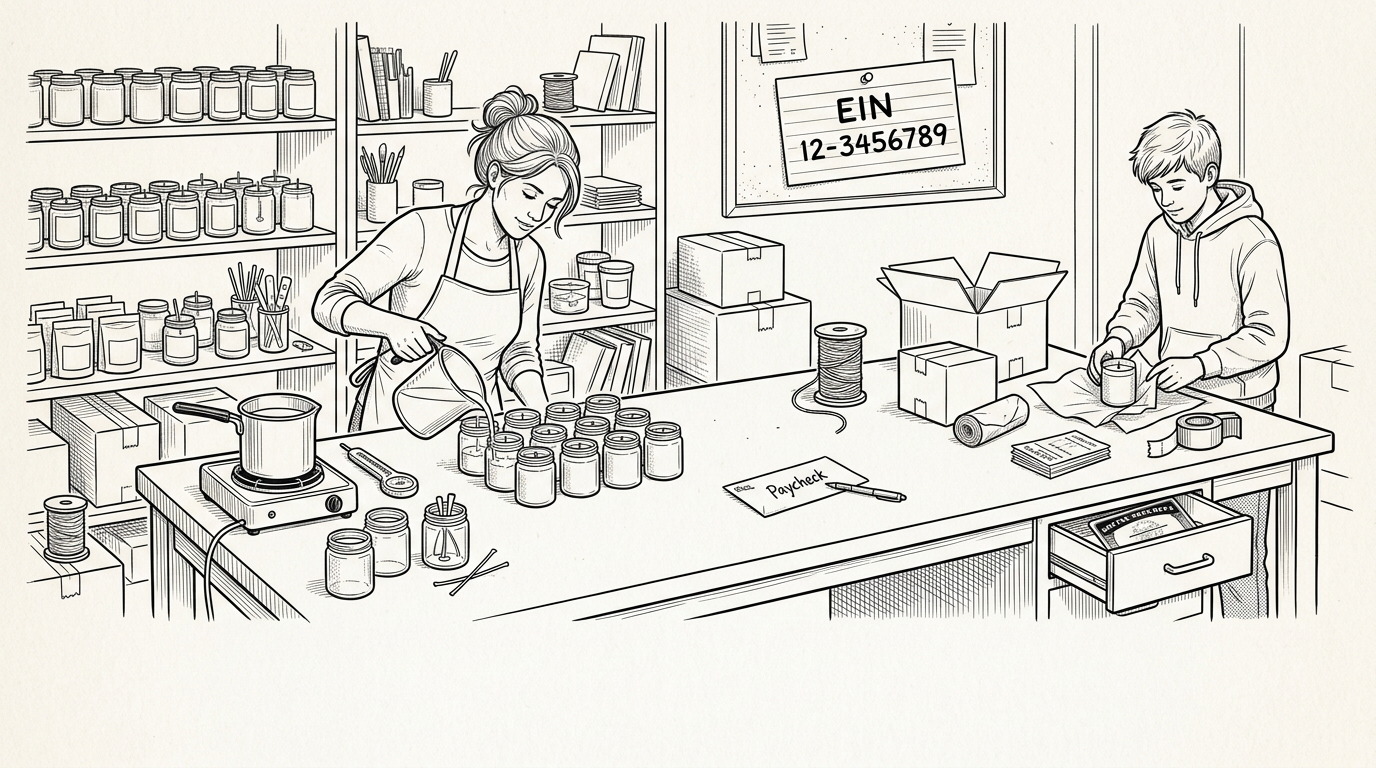
Many solo owners can use their Social Security number (SSN) at first, and an EIN is optional but recommended. Hiring is what makes one mandatory. Say you sell candles from your spare room and pay a neighbor’s teen to pack orders.
That first paycheck means you need an EIN.
Freelancers often use one to keep their SSN off client paperwork. A wedding photographer, for instance, can give clients a business number instead of her SSN.
Here’s a quick decision checklist. Answer yes to any of these, and you need an EIN:
- Will you hire anyone, even part-time?
- Is it a corporation, partnership, or multi-member LLC?
- Are you setting up a retirement plan or filing for bankruptcy?
If all three are no, your SSN may be enough for now.
Nonprofits, trusts, and other entities
Nonprofits need an EIN, and trusts and estates usually do too. The exception is a revocable trust (one its creator can change or cancel), which can generally use the creator’s SSN. Nonprofit chapters need their own EIN.
Why Getting an EIN Helps Your Business
Once you have your Employer Identification Number (EIN), the number the Internal Revenue Service (IRS) assigns to identify your business, a lot of everyday tasks get simpler.
Opening a bank account and taking loans
Banks ask for an EIN when you open a business account, and even a small side hustle account keeps that money apart from your own.
That’s the point: you see what the business earns and spends, not what your checking account happens to hold.
Lenders often ask for the same number on a loan application, and on-time payments help build business credit, a track record separate from your personal credit score. Consider a weekend baker who runs every cake order through her own account.
When she applies for a loan for a better oven, the lender sees what the bakery actually brings in.
Running payroll and hiring employees
You need an EIN to run payroll, which covers paying employees and their taxes. Withhold payroll taxes from each paycheck and send them to the IRS under your business number.
You’ll also issue each worker a W-2, the annual wage and tax statement, and file employment tax returns under that same EIN.
Think of a side hustler who brings on a part-time helper for weekend markets. Her EIN is already in place, so the first paycheck is routine, not a scramble.
Staying current on taxes and licenses
Depending on your business structure, certain federal returns and most IRS notices about them reference your EIN, so one consistent number keeps everything matching.
Cities and states often ask for it on license applications, and state tax registration usually does too. Late or mismatched filings can draw penalties, and penalties add up fast. It’s easier to prevent a penalty than to untangle one.
Protecting your SSN and building vendor trust
Your Social Security number (SSN) is one of the most sensitive numbers you own, so keep it off documents. Give your EIN to banks, clients, and suppliers instead.
When a client or supplier asks for a W-9, the form that requests your taxpayer identification number, put your EIN on it. It also builds vendor trust: a business number signals you’re running a real operation.
Keeping paperwork under that number reinforces the corporate veil, the legal line between you and your business. How strong that line is depends on your setup, so confirm it with an accountant or attorney.
Setting up payments and accounting software
Using your EIN across payment and bookkeeping tools keeps your records matching:
- Shopify Payments setup. Platforms like Shopify Payments typically ask for a tax identification number during setup, so enter your EIN, not your SSN.
- Form 1099-K reporting. Form 1099-K reports your payment transactions to the IRS, so the name and number on your account should match your records.
- Accounting software connection. Link your EIN to your accounting software so invoices and reports match your tax filings.
How to Apply for an EIN
Getting an employer identification number (EIN) doesn’t have to cost you a thing. The Internal Revenue Service (IRS) offers four ways to apply, all free. Here’s how each one works, what to gather first, and where people slip up.
Four free ways to apply
All four routes are free through the IRS. Pick based on how fast you need the number:
- Online. Instant, and covered in the next section.
- Fax. Send Form SS-4, the IRS’s EIN application form.
- Mail. Send the same Form SS-4 by post.
- Phone. Apply over the phone, which is also instant.
Applying online and what to expect
The online form has a few rules to know before you start:
- Issued immediately. Submit the form and your EIN is issued right away.
- Needs U.S. presence. Online is for businesses with a U.S. presence. Outside the country? Skip ahead to the international section below.
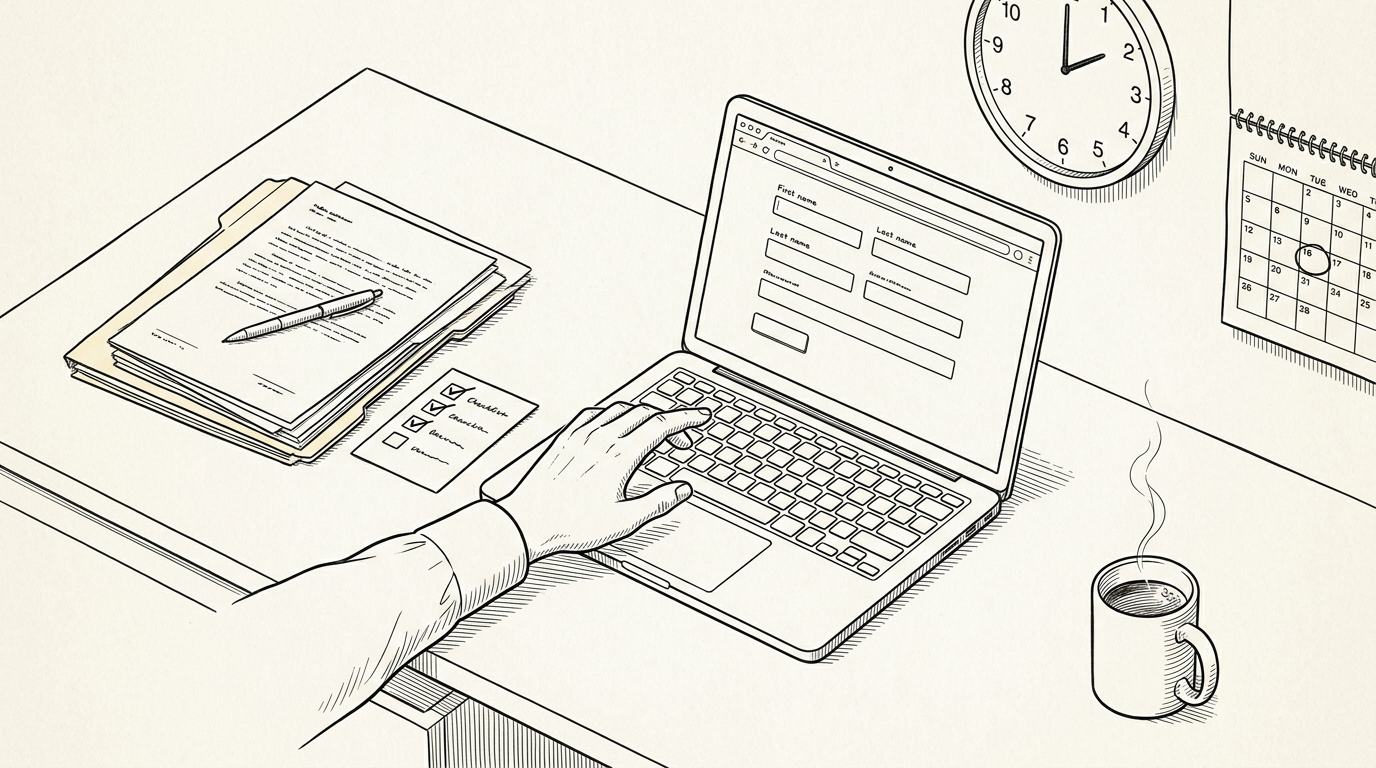
- One session required. You have to finish in one sitting, so gather everything before you start.
- One EIN per party daily. The system issues only one EIN per responsible party each day, so don’t plan on launching several businesses in one sitting.
- Operating hours limits. The online form only runs during set hours, so check them before you sit down.
These rules are easy to overlook until you’re mid-form. Prepare first.
Applying from outside the United States
If your principal place of business is outside the U.S., the good news is what you don’t need: no Social Security number (SSN) or individual taxpayer identification number (ITIN).
According to the IRS, international applicants can call 267-941-1099 to apply by phone, Monday through Friday, 6 a.m. to 11 p.m. Eastern time. Want to skip the phone? Submit Form SS-4 by fax to 304-707-9471 or by mail, and write “Foreign” on line 7b.
How long each application method takes
- Online and phone: instant.
- Fax: about four days. The IRS instructions for Form SS-4 say the fax route generally delivers your EIN within four business days.
- Mail: about four weeks.
Once you have your number, wait two weeks before you e-file under it. If you need the number today, go online or by phone. If you can wait, mail is still free.
Details you’ll need before applying
Have these ready before you open the form:
- Entity type. Know the legal structure your business is organized under.
- Responsible party details. Have the full information for the person in charge, covered below.
- Reason for applying. Be ready to say why you’re applying, such as starting a new business.
- Formation date and industry. Know when your business was formed and what industry it’s in.
- Register your state entity first. If you formed a state-registered business, like an LLC, register it with your state before you apply.
Get these right, and the form is mostly typing.
Who can be the responsible party
Think of a candle maker whose bookkeeper walks her through the paperwork. The bookkeeper is a big help, but the rule isn’t about who helps with the form. It’s about who runs the business.
So the candle maker lists herself, and the EIN stays tied to the person actually in charge.
- Must be an individual. The responsible party has to be a person, not a company.
- Needs actual authority. That person should have real control over the business, not just a name on paper.
- No service providers. Your accountant, bookkeeper, or filing service can’t fill this role.
- Linked permanently to EIN. That person stays linked to the EIN for good, so choose deliberately.
Paying a service to file for you
Some people hand the whole application to a filing service such as LegalZoom, which files it for you for a $79 service fee. You’re paying for the filing, not the number, since the IRS doesn’t charge for the EIN itself.
The service offers an accuracy guarantee, so ask what it covers before you pay. The free DIY route through the IRS gets you the same number.
Watch out for EIN scams and lookalike sites too. Some use official-sounding names and charge fees for a number the IRS gives away. Any site that asks you to pay for the EIN itself is a red flag, so start at irs.gov.
Avoid these common application mistakes
- Multiple unnecessary EINs. Get one EIN for each business that needs one. Applying for several “just in case” only adds paperwork.
- Name and address typos. Check the legal name and address line by line before you submit. A small typo is easy to miss.
- Wrong responsible party. Since that person stays linked to the EIN, a wrong pick is hard to undo.
Double-check, then submit.
Finding Your EIN or Someone Else’s
Your Employer Identification Number (EIN) is probably sitting in paperwork you already have, which makes it the fastest place to look. If it’s not there, call the Internal Revenue Service (IRS).
Documents that show your EIN
Look here first:
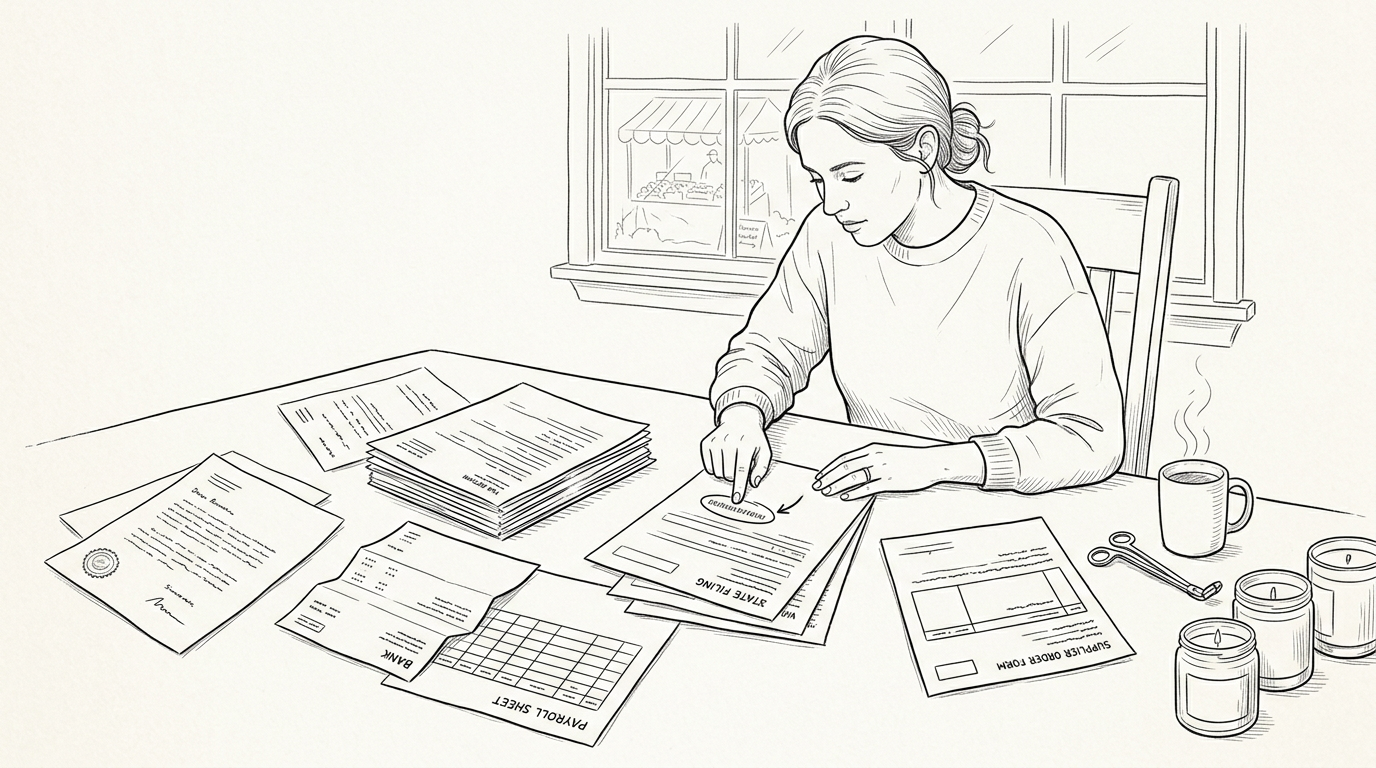
- EIN confirmation letter: the letter the IRS sent when your number was issued.
- Previous tax returns: your business tax returns show the number.
- Bank documents: account paperwork from your business bank.
- W-2s and payroll records: if you’ve run payroll, these list your EIN.
- State filings: registrations with your state can include it too.
Take a side hustler who sells candles on weekends. She lost her letter but finds her EIN on an old state filing, so she can fill out a supplier form without a phone call.
Calling the IRS to find your EIN
If the paperwork is gone, the Internal Revenue Service says to call its Business & Specialty Tax Line at 800-829-4933, Monday to Friday, 7 a.m. to 7 p.m. local time.
- Must be an authorized person: the caller needs to be authorized for the business.
- Identity verification required: confirm who you are before the agent shares anything.
How to look up another business’s EIN
For someone else’s number, the business is your best source, not the IRS. A freelance photographer setting up a client’s vendor form simply emails the client for the EIN. Just ask.
- Public companies: if the business is publicly traded, search EDGAR, the public filing database of the Securities and Exchange Commission (SEC).
- Private lookup services: these exist, but they’re third parties, so confirm what they show with the business itself.
- The IRS won’t disclose to others: a call to the IRS won’t get you a client’s number.
When Your Business Changes or Closes
Not every change means a new employer identification number (EIN), but the Internal Revenue Service (IRS) should hear about all of them.
Changes that call for a new EIN
The question is whether the legal entity behind the business changes. These situations call for a new number:
- Structure change. A new legal structure calls for a new EIN.
- Sole proprietor incorporates. The corporation is a separate entity with its own number.
- Mergers and subsidiaries. The resulting entity needs an EIN of its own.
- New corporate charter. A new charter means a new legal entity and a new number.
- Bankruptcy. It can also call for a new number, so don’t assume your old one carries over.
Take a freelance photographer who incorporates her sole proprietorship. The corporation is a separate entity with its own EIN from day one.
Changes that keep the same EIN
Most everyday changes are about what your business is called or where it operates, and neither one touches the number.
- Business name change. Renaming your business doesn’t require a new EIN.
- Address change. Your number stays, but you still need to tell the IRS.
- New location. Opening one doesn’t change the number.
- Tax election change. Choosing a different tax election leaves your EIN as it is.
Think of a candle maker who moves from her spare bedroom to a downtown shop. Her EIN stays the same, so her records stay consistent through the move. Same business, same number.
Whether one EIN can cover several businesses
If you’re a sole proprietor, you can share one EIN across more than one business you run. Separate entities need their own. What matters is whether each business is a separate entity, not how many you operate.
Consider a consultant who runs a bookkeeping service and an online course as a sole proprietor. Both fit under one EIN, so he tracks one number across both.
Closing out your EIN with the IRS
When the business closes, work through these steps:
- Write a letter to the IRS. Tell the agency in writing that you’re closing.
- Include your legal name and EIN. Put both on the letter so the IRS can match it to your account.
- File your final returns. Submit the last tax returns the business must file.
- Pay outstanding taxes. Settle anything you still owe before you close out.
Each step is simple. Don’t skip any of them.
Keeping your IRS records up to date
Your records only help if they match what’s happening in the business, so we’d update them after every change.
- Notify the IRS of changes. Report every change above so the agency’s records match yours.
- Update your responsible party. Keep the person the IRS has on file for the EIN current.
- Avoid EIN misuse. Don’t use the number for a separate entity it wasn’t issued to, or share it with anyone who doesn’t need it.
An EIN is one of the simplest ways to give your side hustle a real business identity. Check whether your setup needs one, apply through the IRS for free, and keep the number somewhere you can easily find it.
When your business changes or closes, update your records to match so your paperwork keeps pace with reality. A little housekeeping now saves you a scramble later.
Give your business its own identity from day one, and spend your energy on the customers who are actually paying you.
References
- Employer identification number — irs.gov (2026)
- Instructions for Form SS-4 (12/2025) — irs.gov (2026)
Questions
What is an EIN number in the US?
An EIN, or Employer Identification Number, is a nine-digit number the IRS assigns to identify a business for federal tax purposes. It is also called a federal tax ID or FEIN.
How do I figure out my EIN for my business?
Check your IRS EIN confirmation letter, prior business tax returns, business bank documents, payroll records, or state filings. If you cannot find it, call the IRS Business & Specialty Tax Line at 800-829-4933; you must be authorized to receive the number and verify your identity.
Is my EIN linked to my SSN?
No. An EIN identifies your business, while your Social Security number identifies you as an individual. Both are taxpayer identification numbers, but they are separate.
Is a FEIN confidential?
A FEIN is not secret, but it is a sensitive tax identifier. Share it only when there is a legitimate tax or business reason, such as with a bank, client, or supplier that needs it.