3-7
Business Address for LLC: Options, Rules, and Privacy
A business address for an LLC can be home, virtual, coworking, or office. Compare which qualify and how to keep your home address private.
- Written by

- Published
- Updated
- Reading time
- 11 min read
A business address for an LLC is a real street location where the company can receive mail and be reached; it does not have to be your home. Choose an address your state accepts, keep the registered agent’s legal-notice address separate, and weigh cost, privacy, mail services, and credibility when comparing home, virtual, coworking, or office options. The cheapest compliant choice is often enough to start, and you can change it as your business grows.

In this guide
Choosing a business address for your limited liability company (LLC) is a lot like picking a mailbox for a new side project. It has to be reliable, it has to look legitimate, and you probably don’t want strangers showing up at your front door.
The short answer is that your LLC needs a real address where it can receive mail, and that address doesn’t have to be your home. Home, virtual, coworking, and office options each work differently.
We’ll cover what counts, how the options compare, and how to keep your home private.
Business Address Requirements for Your LLC
Your limited liability company (LLC) needs a street address on file. Here’s what counts and what doesn’t.
Your LLC needs a real street address
A street address is a physical location where your business can be reached and official mail is kept secure. The same rule covers corporations and limited partnerships (LPs).
The question is less about where your mail goes and more about where you can be found.
Take a side hustler who sells candles from her spare bedroom. She lists a post office box to keep her home off the filing, and the state rejects it. Once she switches to a street address she can actually use, the filing goes through.
Your registered agent needs an address too.
Why PO boxes won’t work for formation
A post office (PO) box is a locked box you rent at the post office. Filing offices won’t accept one for formation. Nor is a United States Postal Service (USPS) street address from a mail service, since it isn’t meant for legal filings.
Couriers refuse PO boxes too, so overnight documents can’t reach you there. A PO box is also a security risk, since a box checked once a week can hide a time-sensitive notice. Keep the box for personal mail.
Can I use a virtual address for my LLC?
Sometimes, but it depends on where you file. A virtual address is a rented business address that receives and forwards your mail.
Some states reject virtual addresses, and city rules can differ too, so start with your Secretary of State. Before you sign up, confirm:
- The Secretary of State’s answer for your state
- Any city rules that apply to the address
- Whether the provider forwards official mail quickly
If the answer is no, a street address is the safer path.
Your registered agent is a separate requirement
A registered agent is the person or service the state lists to receive legal papers for your LLC. It’s a separate requirement, and a virtual address doesn’t replace one. The agent’s address handles legal documents, not everyday mail.
Many mail and formation services offer registered agent service as an add-on. It can be a convenient shortcut, so compare the price before you buy.
LLC Basics to Know Before Forming
Before you file anything, it helps to know what a limited liability company (LLC) does for you and what it costs in return.
How an LLC protects your personal assets
The main draw is limited liability: a lawsuit against the business generally stops there. Say a customer sues your weekend candle business over a defect. Your savings and home are generally out of reach, but only if business and personal money stay apart.
Mixing the two weakens that shield. Keep them separate.
An LLC also offers pass-through tax treatment: profits generally flow onto your personal tax return by default.
An LLC isn’t a corporation and usually has fewer formalities. Fewer doesn’t mean none, so keep records.
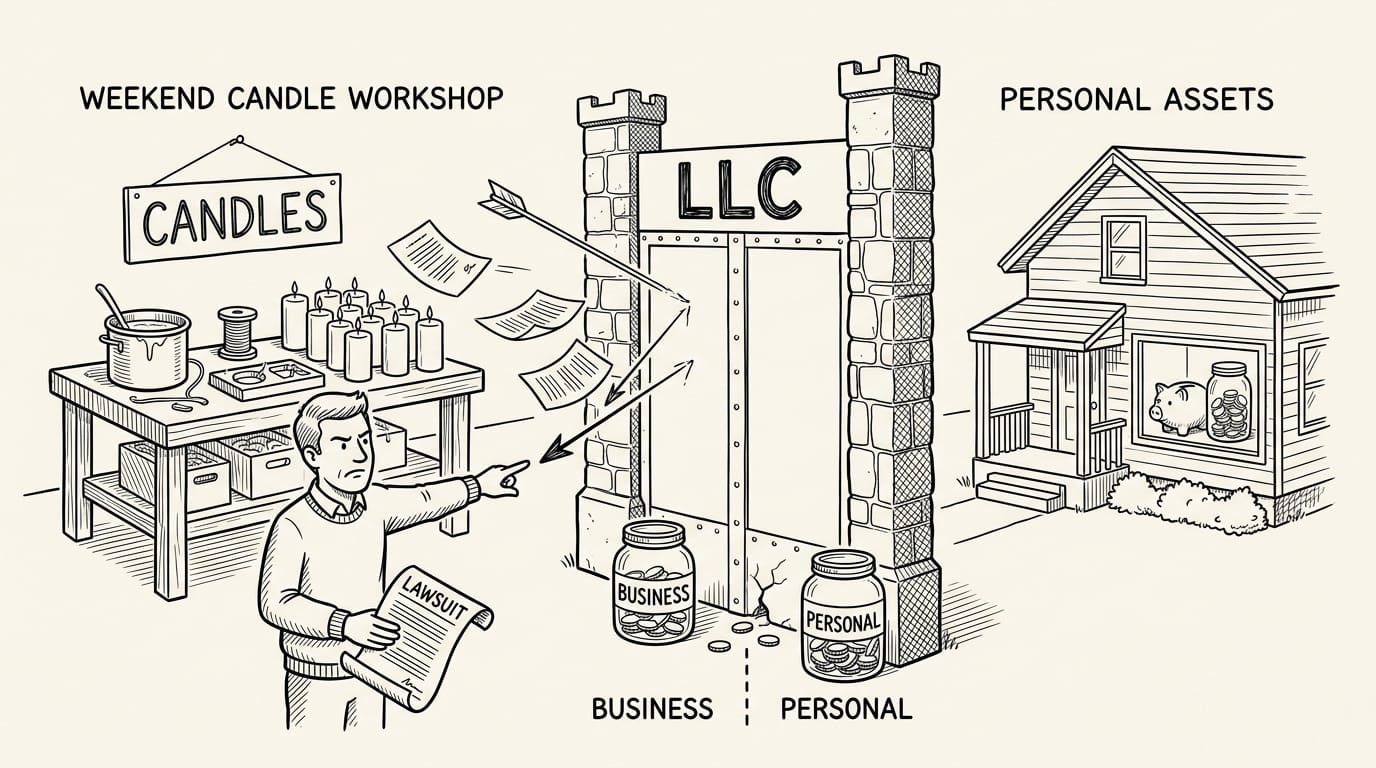
The upsides and downsides of an LLC
You get real protection in exchange for some ongoing upkeep:
- Asset and brand protection. Your personal property stays separate, and the business name belongs to the LLC.
- Easy maintenance and flexibility. Upkeep is light, and an operating agreement (a private rulebook for owners) lets you set the rules.
- Annual reports required. Many states require a yearly report and fee. Miss it and your LLC can fall out of good standing.
- Harder ownership transfer. Adding a partner or selling usually means updating paperwork.
- State restrictions vary. Fees and filing rules differ by state, so check yours.
How a DBA differs from an LLC
A DBA (doing business as) is a trade name: the public name you operate under. A DBA gives you a name, not a shield. It offers no legal protection, so a lawsuit can still reach your personal assets.
The two can work together: many owners form an LLC, then register a DBA for a friendlier public name. A DBA is simpler to register than an LLC, but it won’t protect you.
Should You Use Your Home Address?
Should you put your address on your limited liability company (LLC)? You can, and for many side hustlers it’s the simplest place to start. Before you do, weigh the privacy, lease, and credibility trade-offs below.
Home addresses are legal and cost nothing
Using your home address is legally permitted, and it doesn’t add a cent to your startup costs. This applies to sole proprietors, too, so it’s not just an LLC question.
The real question isn’t if you can, but whether you’re comfortable with what comes with it.
Privacy risks of a public home address
When you file, your address typically becomes part of the public record, so anyone can look it up. Consider a freelance illustrator who files with her apartment address.
Soon she’s getting sales pitches meant for her business, plus a visit from someone she never expected. She didn’t do anything wrong.
The risks add up:
- Spreads to listings and directories. Business databases and online directories copy filing details, so your address can show up where you never put it.
- Hard to undo. Changing your address doesn’t erase old copies already sitting in archives and third-party databases.
- Solicitations and unwanted visitors. Your mailbox and inbox fill with sales pitches, and some people may show up at your door.
You can start at home and switch addresses later. Many side hustlers do, moving to a separate address as the business grows, but expect some old listings to linger.
Lease, HOA, and zoning rules to check
Before you list your home, read your lease and any homeowners association (HOA) rules. Some restrict business activity at the property, and local zoning rules can limit home-based work too.
Business packages and mail can also pile up at your door, which gets messy fast.
A home address can hurt credibility
A home address can make your business look less established, and customers often weigh risk before they commit. Keep personal and business affairs separate, with their own bank account and mail. Blurring the line carries legal risk, too.
If a court decides your LLC is really just you, it can pierce the corporate veil, leaving your personal assets exposed to business debts.
Address Types You Can Choose From
Your limited liability company (LLC) needs a business address, and each option trades cost against privacy and polish. A business mailing address is where your mail arrives, and it doesn’t have to match the formation address on your registration papers.
What a virtual office address includes
A virtual office gives you a real street address plus the services around it. Take Maya, who sells candles from her spare room and wants her home off every document. Typical inclusions:
- Real street address for filings and mail.
- Mail scanning and forwarding, so you see envelopes online and choose what gets sent on.
- Receptionist and meeting rooms for occasional in-person visits.
- Choose any location, even a city you don’t live in.
- Phone and fax add-ons, which cost extra on top of the base plan.
The cost of a virtual mailing address depends on provider, location, and add-ons, so there’s no single going rate to quote. Compare the same package across providers and look at totals, not headline prices.
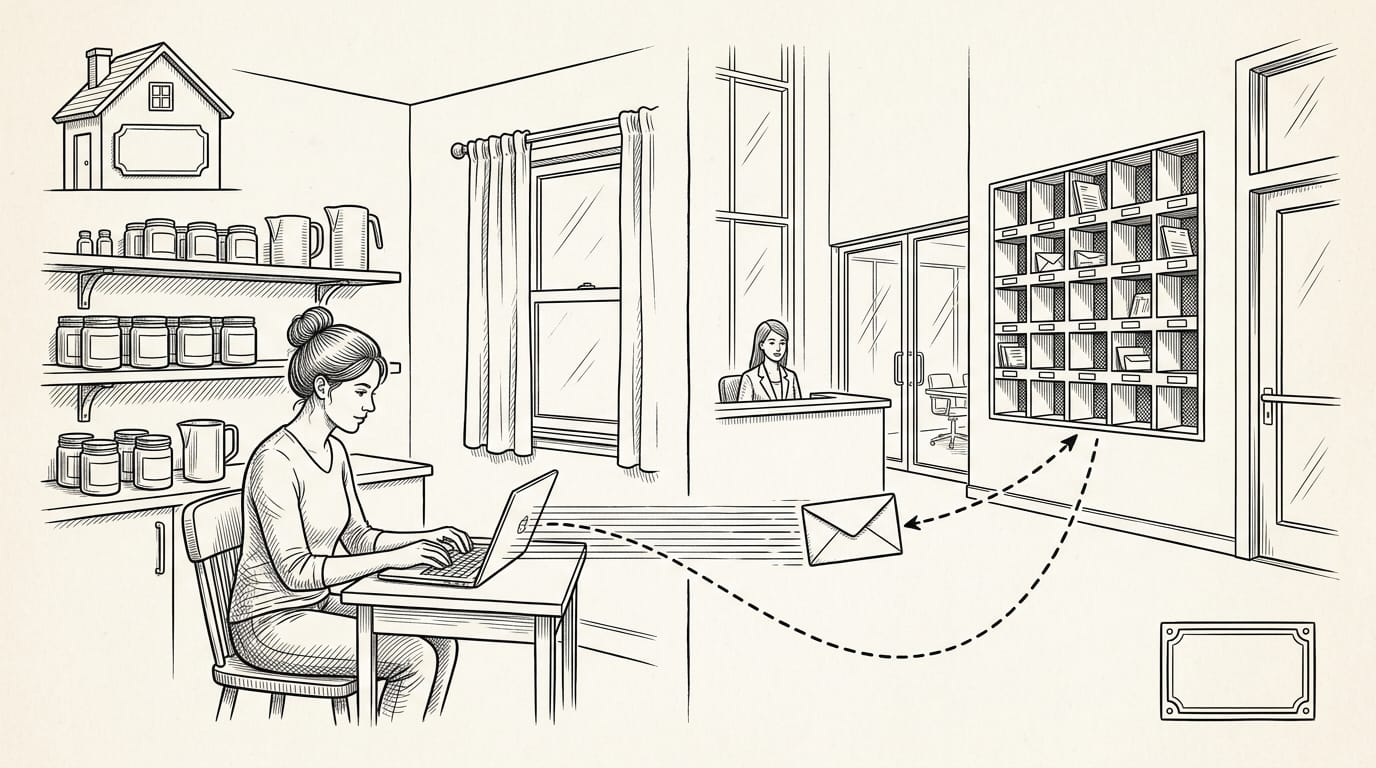
Renting a desk in a coworking space
A coworking space lets you rent a desk or private office in a shared building. It’s usually cheaper than your own office, and amenities are typically included in the rent. Some states may reject a coworking address, so confirm your state accepts it first.
A traditional office is strong but pricey
A traditional office is a brick-and-mortar location you lease yourself. It offers strong compliance and professionalism, and it buys you credibility, but it’s expensive for a startup. Rent comes due whether or not the sales do.
Matching an address to budget and needs
The right fit depends on your state, your budget, and your needs, and the cheapest option isn’t always the right one. List what you actually need, such as:
- mail forwarding
- a meeting room
- just a street address for filings
Then compare providers and prices for those services side by side, and match the services to your needs rather than paying for extras you won’t use.
For a side hustle, start with the cheapest compliant option that covers those needs. You can switch later as the business grows, so there’s no reason to overbuy now. Cheap only counts if it’s compliant.
Why a Separate Business Address Helps
A business address does more than give your mail somewhere to land. It shapes how private, credible, and findable your side hustle looks to the outside world.
Keep your home private and look credible
A separate address keeps your home off the paperwork customers and vendors see. It’s less about hiding and more about separating your business life from your personal one.
A professional address also makes you look established to customers and investors, especially when it sits among other established companies. Your home stays yours.
For example, a freelance photographer who shoots weddings on weekends puts a business address on her contracts, so clients never see the street where she lives.
How packages and mail get handled
Your business address also changes how mail and packages get handled. The real question is where your mail lands, not just whether you have a mailbox:
- Staff sign for packages. Someone at the front desk signs for deliveries, so you don’t have to wait at home for a courier.
- Digital mailbox management. Many services scan your mail so you can review or forward it from your phone.
- The address stays if you move. It doesn’t change when you do, so customers, banks, and filings keep one contact point.
- Prevent mail theft. Checks and tax forms stop sitting in the mailbox at your front door, where anyone passing by could grab them.
Boosting local search with a consistent address
A physical address helps your business show up in local search results.
Use the exact same address on your website, invoices, business cards, and directory listings, since small differences can confuse customers and search engines. One address, everywhere.
Getting and Setting up Your Mailing Address
Your business needs a place to receive mail, and that address shows up on more paperwork than you’d expect. Here’s how we’d pick one, verify it, and get it onto your records.
Choose a real commercial address and provider
Start with the market. Choose the area where your clients are, not the place with the cheapest rent. Think of a freelance designer whose clients are mostly in one city. She picks an address there, so her business sits where her clients expect it.
Then confirm the address is a commercial address, meaning a real business location where mail can be received. Skip retail mailbox stores, even if the box looks official. Finally, select a mail plan that fits how much mail you expect.

Verifying your identity with USPS Form 1583
To have a provider receive mail for you, you’ll complete the United States Postal Service (USPS) Form 1583, which verifies your identity. Get these ready:
- Two forms of ID. Have two forms of identification ready.
- Notarization or a witness. The form must be notarized or witnessed.
- Online notarization. Check whether it’s an option if a notary is hard to reach.
Where to update your new address
Once you have the address, update it in these places:
- State filing. Update your limited liability company (LLC) address with the Secretary of State.
- Tax, license, and bank accounts. Update the Internal Revenue Service (IRS), any business licenses, and your bank.
- Website, invoices, and listings. Show the new address there too, so customers don’t write to the old one.
- Old home address. Remove it from every listing and form that still shows it.
Where a virtual address falls short
A virtual address keeps your mail off your kitchen table, but it has real limits. Know them before you rely on one.
It’s a mailing address, not a residence. The Department of Motor Vehicles (DMV) still needs your residential address, and a virtual address can’t replace it.
A virtual address won’t update your accounts for you. Every account, form, and listing still has to be changed by hand.
Working from home also raises home office tax questions a virtual address won’t answer, so check with a tax professional.
Questions for Multiple States or Businesses
Wondering whether to form in another state, or share one address across ventures?
Forming out of state adds extra paperwork
Your LLC is a domestic LLC in the state where you form it and a foreign LLC everywhere else you operate. Say you form in Wyoming but run a photography business from your apartment in Ohio.
You’d likely need to register in Ohio as a foreign LLC too, and each state brings its own forms and fees. Every LLC also needs a registered agent, a person or service with a physical address in the state where it’s registered to receive legal notices.
Forming in your home state is usually easiest because it skips that second registration.
States known for privacy and low fees
Delaware, Nevada, New Mexico, and Wyoming often come up when people shop for privacy and low fees. Those draws can be appealing, but a low filing fee doesn’t cancel out a second registration at home. The cheapest filing isn’t always the cheapest LLC.
Compare the total bill, including any foreign registration, not just the headline fee.
Sharing an address across several LLCs
An umbrella LLC holds several business lines under one company, so a lawsuit against one can reach the assets of all of them. That’s why many owners opt for separate LLCs, one per venture.
Multiple LLCs can usually share one address, so you don’t need an office for each. Think of a freelance writer who runs a newsletter and a bookkeeping service from her spare room. She can set up two LLCs, both listing her home address.
Two companies, one address. Trouble in one doesn’t automatically spill into the other.
The right address comes down to one question: does it make your business look credible while keeping your home private? Pick the option that fits your stage, and remember you can switch as you grow.
Treat your address as a setting you can revisit, not a permanent decision. Check what your state requires, keep your records current, and update your address whenever your situation changes.
A good address protects your home today and gives your business room to grow tomorrow.
Questions
What is a business mailing address?
A business mailing address is the location where your business receives mail. It can be different from the formation address on your LLC registration, and may be a home, office, coworking, or virtual address.
How much does a virtual mailing address cost?
There is no single standard price for a virtual mailing address. Costs vary by provider, location, and services such as mail scanning, forwarding, meeting rooms, or phone service, so compare the full price for the services you need.
Should you put your address on your LLC?
You can use your home address for your LLC, and it costs nothing, but it may become public and lead to unwanted solicitations or visitors. Check your lease, HOA, and local zoning rules, and consider a separate address if you want more privacy or a more professional appearance.
Can I use a virtual address for my LLC?
Sometimes. A virtual address is a rented business address that receives and forwards mail, but state and city rules vary, so confirm that your filing office accepts it. It also does not replace your LLC’s registered agent.