7-4
Doing Business As Explained: Names, Banks, and Filing
Doing business as puts your brand on sales while your legal name stays behind the scenes. Check names, file, and compare a DBA with an LLC.
- Written by

- Published
- Updated
- Reading time
- 9 min read
- Sources
- 3 cited
A doing business as (DBA) name lets a person or existing business operate under a public-facing name that differs from its legal name, without creating a separate legal entity. Choose a clear name, check it with state and online searches, follow local filing and renewal rules, and use it consistently on bank accounts, invoices, and contracts. A DBA can make a business easier to recognize and its records clearer, but it does not provide liability protection or exclusive rights to the name.
In this guide
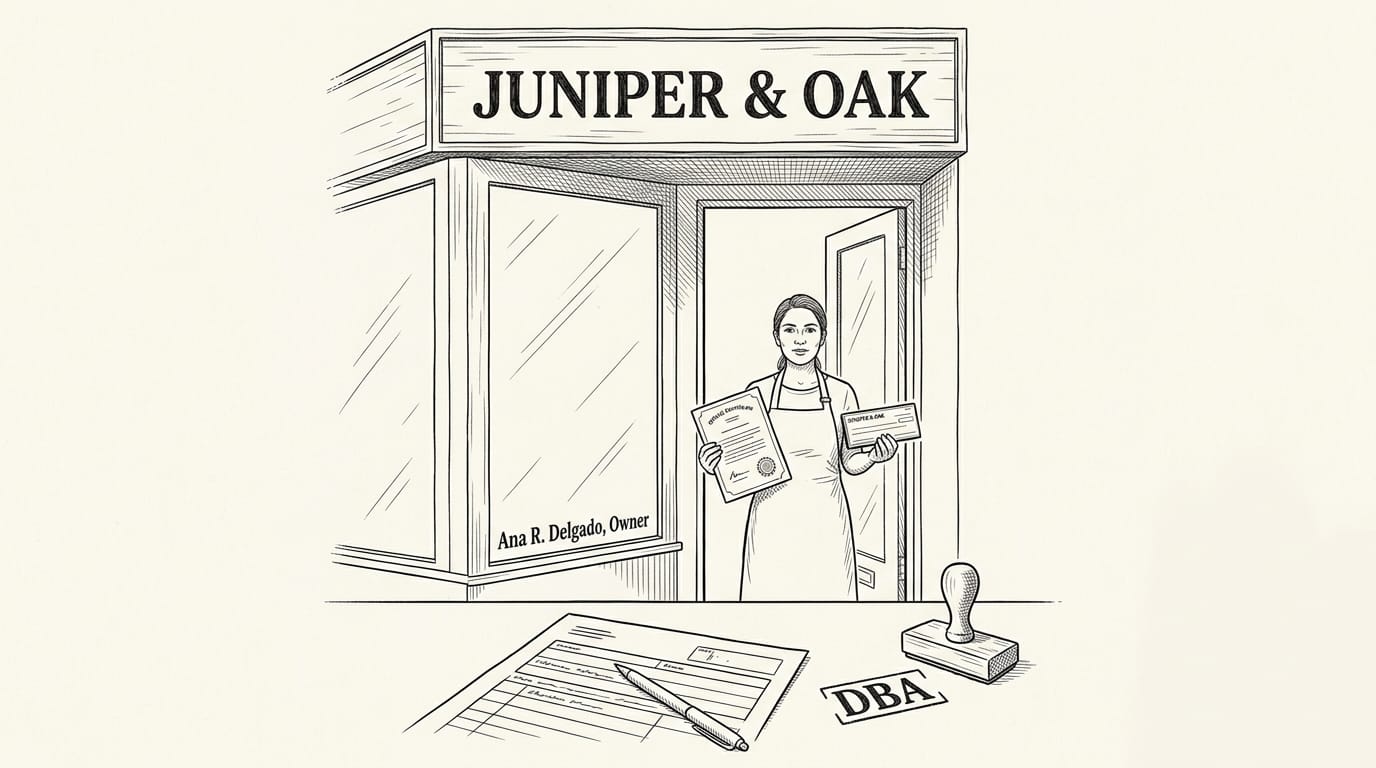
Say you sell hand-poured candles from your kitchen and call the business Hearth & Wick. Your bank account still carries your legal name, but customers only see the candle brand. A doing business as (DBA) registration closes that gap.
Here, we’ll cover what a DBA does, how to pick and check a name, how filing works, and how to use it with banks and online selling platforms.
We’ll also compare it with a limited liability company (LLC), so you can choose the right setup before you quit your job.
What Does Doing Business as Do for You?
A DBA, or “doing business as” name, lets you run your business under a name other than your legal name. It’s less about who you are on paper and more about what customers call you.
Names you’ll see for a DBA
You’ll see a few labels for the same idea: assumed name, trade name, fictitious name, or simply an alias. Each one means a business name that differs from your legal name.
On official paperwork, the d/b/a notation ties that name back to its owner, as in “Jane Smith d/b/a Jane’s Candles.”
When a DBA makes sense
A DBA tends to fit a few situations:
- Sole proprietors who want to trade under a business name instead of their own
- Rebranding an existing limited liability company (LLC) or corporation without changing its legal name
- Franchise operations, where the business runs under the franchisor’s brand
- An easier-to-market name that customers remember better than yours
- Personal privacy, keeping your personal name out of public view
Think of a weekend furniture refinisher who sells at a local market and online. Under her own name, every listing and receipt reads like a side favor.
Under a DBA like Second Grain Woodworks, she gets one clear brand on her sign, receipts, and listings. Same person, different name.
Whether you need one depends on your business entity and your locale. If you still have a day job, check your employer’s side-work rules first.
Real businesses using a DBA
Real businesses use one in all kinds of settings, including:
- Amy’s Decoration Shop
- the Lexus of Westminster case
- a Burger King franchisee
- John’s Lawn Care as it expanded
Each one trades under a name other than its owner’s legal name, which is the same basic move you’d make.
Pick a Name and Check It First
Your DBA name shows up on invoices, receipts, and your website, so get it right before you file. Confirm it’s free, then run it through a few simple rules.
Check whether the name is taken
Start with a name search through your state’s Secretary of State office. According to the Colorado Secretary of State’s name availability guidance, “When doing a name availability search, enter exactly the name you intend to use.”
Search exactly that name, not a shorter or reworded version, and search within the jurisdiction where you’ll file.
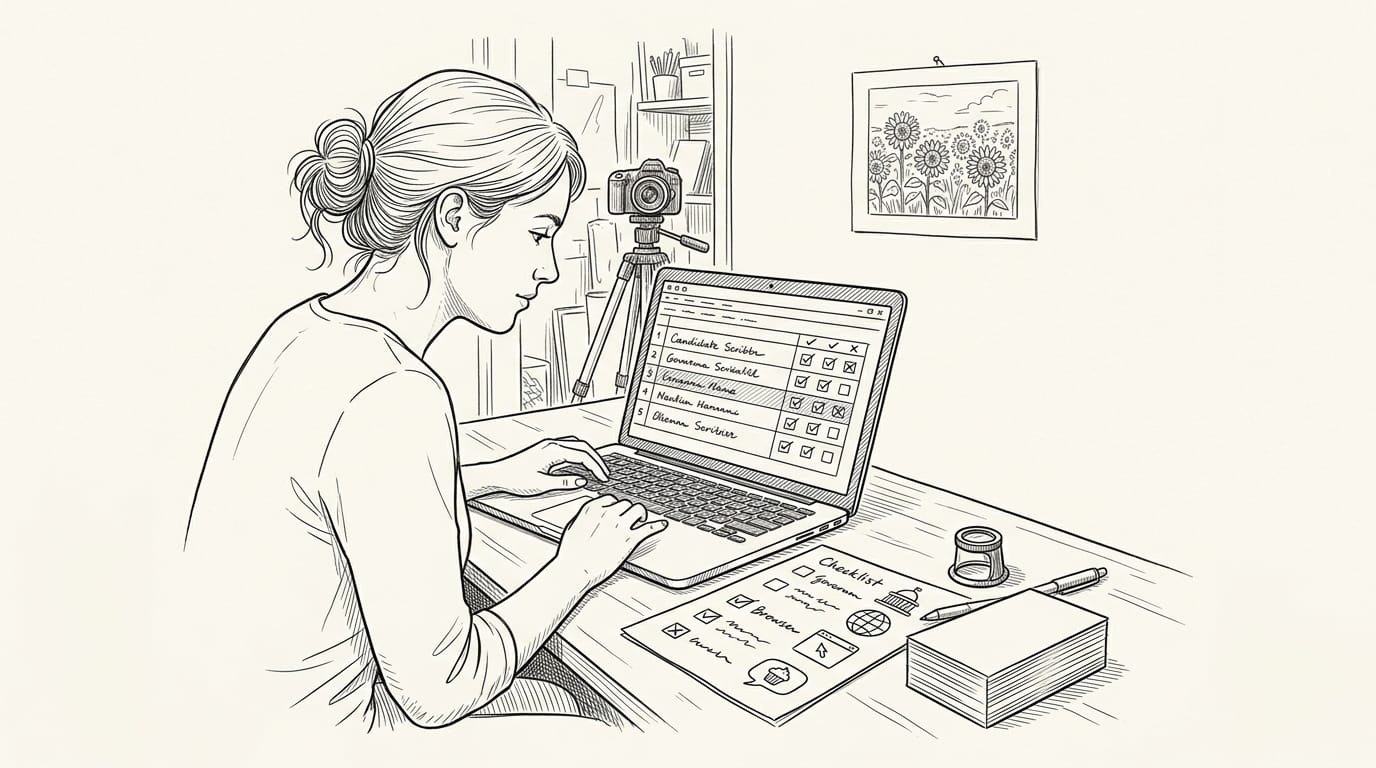
Next, check the places customers will look. A trademark search, a look at the domain you want, and a check on social media handles show whether people can find you online.
Aim for a domain that matches your brand name, so people can type what they heard and land on you.
Think of a freelance photographer who clears the state search but finds her domain taken and her social handle claimed by a bakery. Checking early means changing a name on a spreadsheet, not on printed business cards.
Name rules and common mistakes to avoid
- Skip the business endings. Leave off Inc. (incorporated), LLC (limited liability company), and Corp. (corporation), since those signal a formal entity and a DBA isn’t one.
- Keep banking and government terms out. Words like “bank” or “federal” can make your side hustle look like something it isn’t.
- Check the spelling. Picture a home baker who names her business “Sweet Crumbz.” Friends searching for “Sweet Crumbs” land on someone else’s page. Spelling counts.
- Make it easy to say. Choose a name you can say out loud, not just spell. If customers can’t repeat it to a friend, they won’t.
Filing and Registering Your DBA
Once you’ve picked a name, it’s time to make it official. Your DBA (doing business as) is also called an assumed name in some states.
Where you file, by state and city
Filing rules vary by state and city. You might file with the county clerk or with the state. It’s less about whether you file and more about where.
Take a candle maker who ships statewide. Before she orders labels, she checks her city and state requirements, so she doesn’t print a name she can’t use yet.
South Carolina is a useful case. According to LegalClarity, “Most businesses in South Carolina do not need to register a DBA with the state,” though you may still need a local business license from your city.
If you operate as a limited partnership (LP) or a foreign corporation (one formed in another state), your assumed name may follow different filing rules.
What filing costs and public notice
The U.S. Chamber of Commerce says, “Expect filing fees to range from $10 to $100.” Some states also require a public notice, which means printing your new name in a local newspaper.
For a side hustler, that makes filing a cheap way to test a brand name before it lands on your website and business cards. Small price. Big signal.
Other registrations you may need
Your DBA filing is often just the first step. A few more registrations come up:
- State tax account. List your DBA on your state tax account so income and sales tax land under the right name.
- IRS trade name. When you apply for an Employer Identification Number (EIN), the federal tax ID the IRS issues, you can list your DBA as a trade name.
- Every jurisdiction. Register in each jurisdiction where you operate, not just your home base.
Using Your DBA with Banks and Contracts
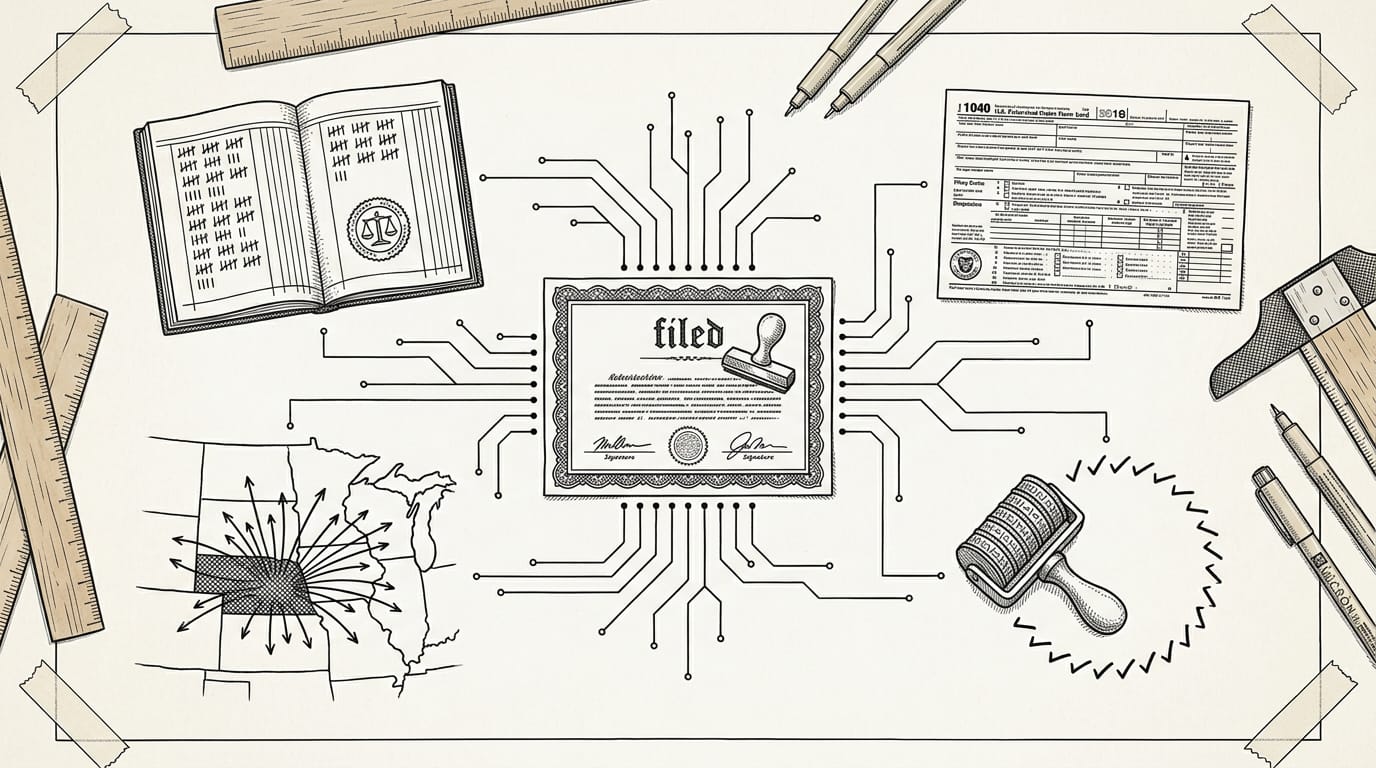
Once your DBA (doing business as) is filed, it has to work in the real world. Banks, contracts, and invoices all need to show the same name.
Opening a bank account for your DBA
Register your DBA before opening the account, since banks require proof of it first. Bring these:
- Proof of DBA: your state filing confirmation
- Government ID: a current photo ID
- SSN or EIN: your Social Security number (SSN) or Employer Identification Number (EIN), the federal tax ID for businesses
- Formation documents: if a limited liability company (LLC) or other entity sits behind the DBA, bring its formation papers
Take a freelance photographer who sells prints on weekends. She brings her filing, ID, and EIN to the bank, opens a business checking account, and routes every sale through it.
At month’s end, her side income sits in one place, not mixed with her paycheck.
Mixed money hides the answer you really want: is this side hustle paying off? Keep the two apart.
Where a DBA shows up legally
The filing also works as a consumer protection statement: it lets customers and partners see who stands behind a brand name.
Contracts, invoices, and legal documents often show your legal name followed by “d/b/a,” the legal shorthand for DBA: “Jordan Lee d/b/a Lee Woodworks.” A DBA changes the name customers see more than the name on the contract.
The brand can sit on the sign while your legal name stays behind it on every agreement.
Use the DBA on invoices and payment accounts so customers recognize who they’re paying, and keep it consistent with your bank account so the money trail matches the brand.
Keeping Your DBA up to Date
Filing your DBA is only the start. Here’s how to correct or change it, and how to keep track of when it needs renewing.
Changing or correcting your DBA
If you made a mistake on the original filing, you can fix it with a certificate of correction. Think of a side hustler who misspelled her own name on her registration. The certificate puts the right information on the record.
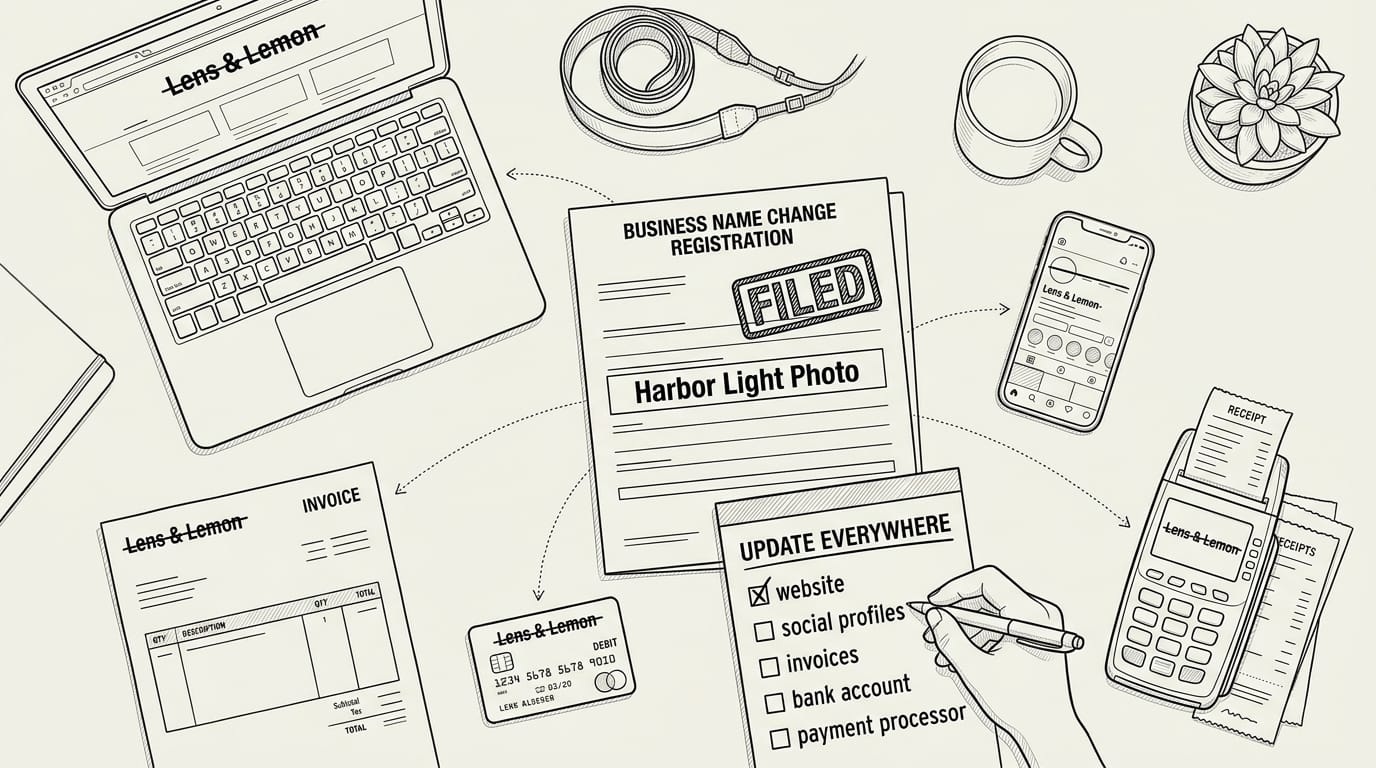
If you want a new name, you’ll need an amendment. Say a freelance photographer switches from Lens & Lemon to Harbor Light Photo. Once it’s filed, the name on file matches what her clients see.
First, the owners (or LLC members) must approve the change. Then notify the agencies and customers who know your old name.
Filing the change is the quick part; matching it everywhere is what people forget. Update your:
- website
- social profiles
- invoices
- bank account
- payment processor
so each one shows the same name.
How long a DBA stays valid
A U.S. Chamber of Commerce guide puts the average DBA renewal period at five years. Renewal depends on where you filed. In New York, your DBA has no expiration date, so no renewal is necessary. Check the rule. Don’t guess.
If other information on your registration changes, you’ll usually need a new filing. Because details vary, ask the clerk’s office for specifics before you assume anything.
Picture a side hustler who files, gets busy with her day job, and forgets the renewal date. Put it on your calendar when you file, and renewal becomes routine instead of a surprise.
How a DBA Compares to Other Options
A DBA (doing business as) lets you run under another name. Here’s how it compares.
A DBA compared with an LLC
A DBA isn’t a legal entity. It gives you a name, not a separate identity, so you and the business are legally one. A limited liability company (LLC) is a separate entity.
The biggest gap is liability protection. A DBA offers none, so a lawsuit or unpaid bill can reach your personal savings. An LLC is built to shield you from business debts.
Do you pay taxes on a DBA? Yes, on the income your side hustle earns. The name adds no tax break or separate tax bill.
An LLC is more complex and costly to set up. You can also use both: an LLC can file a DBA for its brand name.
Early on, a candle maker selling from her kitchen can start with a DBA. Once she signs a wholesale deal, an LLC’s protection starts to earn its cost. Start light, then add protection.
What a trademark adds beyond a DBA
A DBA gives you no exclusive rights to your name. A trademark adds federal protection for your brand through the United States Patent and Trademark Office (USPTO).
Many owners use both: the DBA handles daily work, and the trademark guards the name. Your growth goals decide which you need. Staying small? A DBA may be enough. Building a brand to sell? Consider a trademark.
Risks that come with a DBA
- Personal liability remains. You’re still personally on the hook for debts.
- Others may use the same name. A DBA won’t stop them.
- Name lost if you form an entity. Forming an LLC under a different name can leave your DBA name behind.
A DBA won’t make your side hustle profitable on its own, but it gives your idea a real name, a separate place in your banking, and cleaner records. Pick a name, check it, file it, and keep it current as your idea grows.
Once customers see one consistent brand, you can test whether they’ll pay for it. Get the name right, then go find out whether anyone wants what you’re selling.
References
- Name Availability Search — coloradosos.gov
- Doing Business As: What It Means to Register a DBA — uschamber.com (2026)
- Do I Need to Register a DBA in South Carolina? — legalclarity.org (2026)
Questions
What is the difference between LLC and DBA?
A DBA is a registered name a person or business uses that differs from its legal name; it does not create a separate legal entity. An LLC is a separate legal entity that can provide liability protection, while a DBA only changes the name customers see.
What is an example of a DBA?
A sole proprietor named Jane Smith might register “Jane’s Candles” as a DBA and operate as Jane Smith d/b/a Jane’s Candles. The DBA connects the brand name to its legal owner.
What does it mean to be doing business as?
“Doing business as” means operating under a name other than your own legal name or your business entity’s legal name. The DBA name identifies the business to customers but does not create a separate entity.
Is a DBA or LLC better?
Neither is universally better: a DBA is a simpler way to use a business name, while an LLC can provide protection from business debts and lawsuits. A business can also form an LLC and register a DBA for its brand name.
Do you pay taxes on a DBA?
Yes. You pay taxes on the income the business earns, even when it operates under a DBA. A DBA does not create a separate tax bill or provide a tax break by itself.
What does a DBA do for a business?
A DBA, or “doing business as” name, lets a business operate under a name different from its legal name. It can help present a customer-facing brand, but it does not create a separate legal entity or provide liability protection.
Sources
- Doing Business As: What It Means to Register a DBA, uschamber.com,
- Do I Need to Register a DBA in South Carolina? - LegalClarity, legalclarity.org,
- Name Availability Search, coloradosos.gov