3-8
Change Your Business Address: IRS, State & Beyond
Change your business address with IRS Form 8822-B, then update state, local, and business records so tax notices follow you, even across state lines.
- Written by

- Published
- Updated
- Reading time
- 9 min read
- Sources
- 3 cited
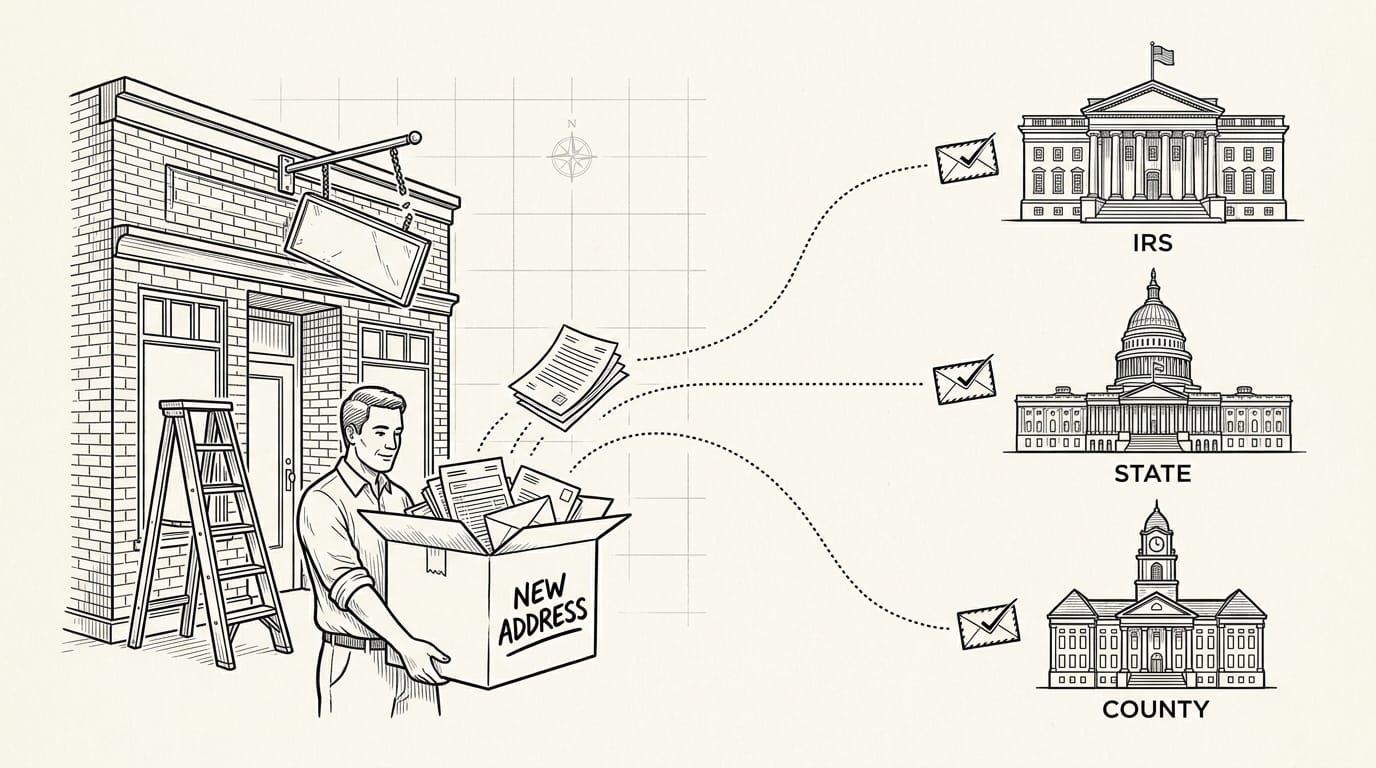
Changing a business address means updating the records held by the IRS, state and local agencies, and the people and services that send mail, payments, or customers your way. Make each update separately: use IRS Form 8822-B for an EIN-holding business, amend state filings when needed, and notify banks, insurers, clients, vendors, and online listings. A complete checklist helps prevent missed notices, delayed business, and private mail reaching the wrong person.
In this guide
Picture moving apartments and forgetting to file a change of address. Your mail keeps landing at the old place, and bills and notices pile up before anyone notices.
An outdated business address does the same thing, except the missing letter might be a tax notice.
The short answer: update your address with the IRS, your state, and everyone else who keeps records on you.
In this post, we’ll cover each step, from IRS Form 8822-B to moving across state lines, then finish with a checklist for home-based owners and sole proprietors.
Change Your Business Address with the IRS
Moved your home office or changed where your business gets its mail? You can update the IRS’s records with one form, Form 8822-B, and this section walks you through it from who files to what happens afterward.
Who files Form 8822-B and why
Form 8822-B is for businesses with an employer identification number (EIN), the number the IRS assigns to your business. You use it to:
- Update your mailing address and business location
- Change your responsible party
- Keep your IRS records accurate
Think of a freelance bookkeeper who runs her side business from a spare bedroom and moves across town. Her new address needs to be on file, or business mail keeps going to the old place.
How soon you must report changes
Reporting a new address is voluntary, but reporting a new responsible party is mandatory. According to the IRS’s guidance on Form 8822-B, changes in responsible parties must be reported within 60 days.
Put that deadline on your calendar as soon as the change happens.
Other update methods exist, but they’re less secure than the form, so the form is the safer route.
Who qualifies as responsible party
The person you name needs to:
- Control the business’s daily operations
- Have access to company funds
- Have a valid taxpayer identification number (TIN), the number used to identify them for tax purposes
Formation-only agents don’t count. Say a side hustler paid an online service to file her startup paperwork. That service handled formation and doesn’t run her business, so it can’t be her responsible party.
The person who runs the business day to day is the one to name.
Filling out the form line by line
Work through the form from top to bottom, keeping these four parts in mind:
- Lines 1 through 3: these select the scope of your change, so mark what you’re updating.
- Old and new addresses: enter the address the IRS has on file, then your current one.
- Responsible party details: complete these for the person who meets the criteria above.
- Authorized signer and date: the signer must be authorized to act for the business, and you’ll date the form when you sign it.
Where to mail your completed form
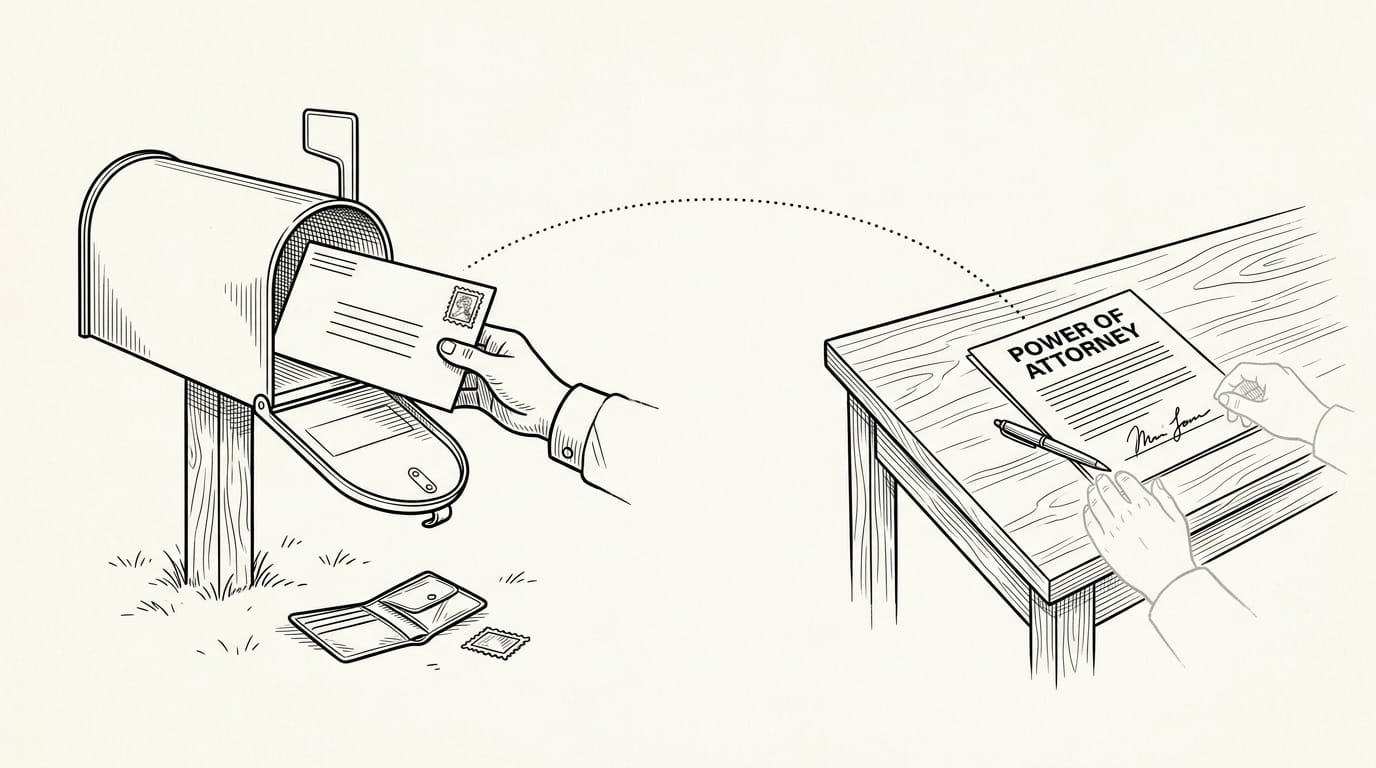
Mail the form to the IRS address listed for your state in the Where to File section. There’s no filing fee, so the only cost is getting it into the mail. If a representative signs for you, you’ll need a power of attorney.
What to expect after filing
After you file, the IRS sends a confirmation letter in 30 to 60 days. Processing takes time: the IRS notes that a change of address request can generally take four to six weeks after receipt to fully process.
Our bookkeeper from earlier mails her form, then sets a reminder for week six. If the update still isn’t showing by then, she calls the IRS instead of guessing. Calling beats guessing.
If you need to follow up, your options are:
- Resubmit it: send the form again as a Second Request.
- Check status: call the IRS to see where your filing stands.
- Get verification: request EIN Verification Letter 147C if you need written verification of your EIN.
Why an Outdated Address Causes Trouble
Your business address is where the government, your lenders, and your customers expect to find you. When it’s out of date, the trouble often shows up late and costs more than the move did.
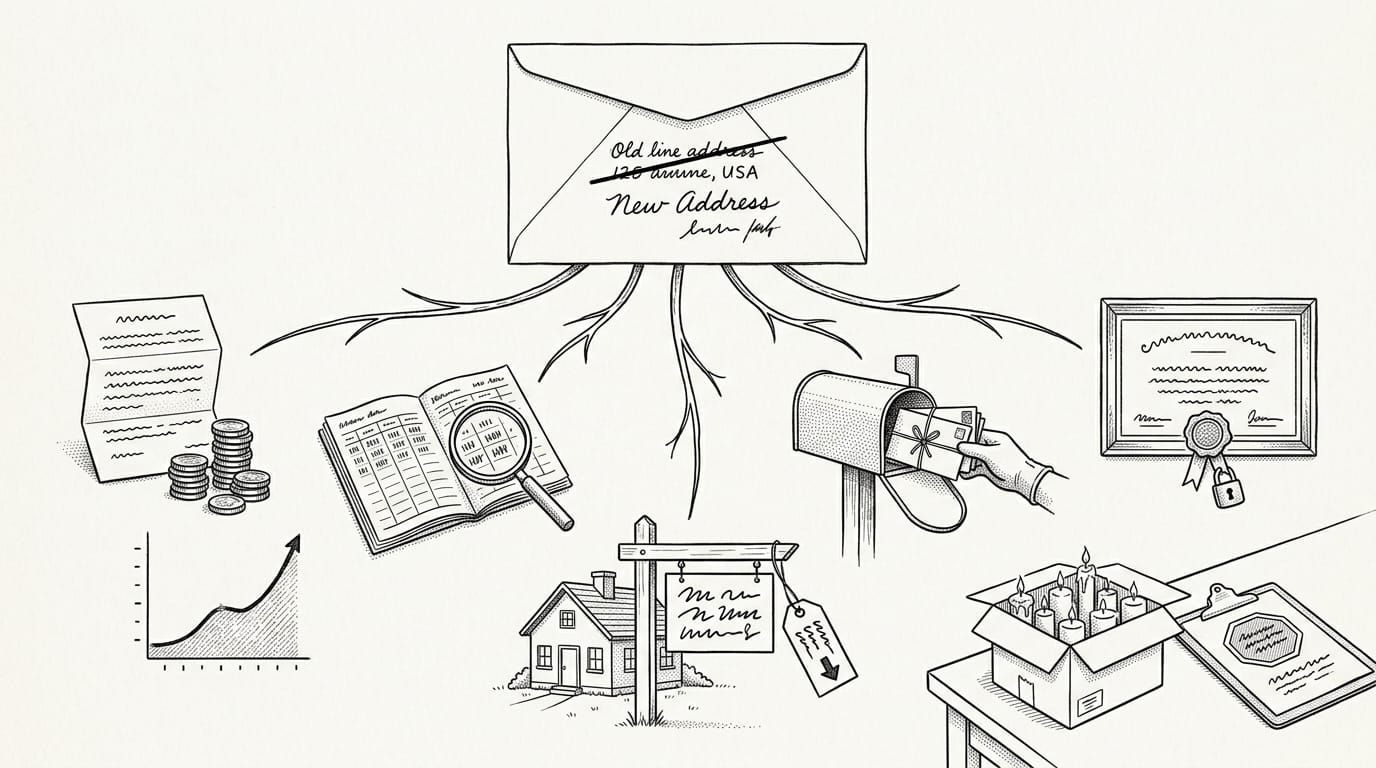
Important IRS letters you might miss
The Internal Revenue Service (IRS) sends its letters to the address on file, not the one you actually use. Three kinds of letters are most at risk:
- Notices sent to the old address: Routine letters can land at a place you no longer check and sit unopened.
- Missed deficiency or demand notices: A deficiency notice says you owe more tax, and a demand notice asks for payment already due. Miss either, and deadlines can pass unnoticed.
- Lost refunds and audit correspondence: A refund can go astray, and an audit letter you never see leaves you unable to respond in time.
The financial and legal fallout
Think of a side-hustler who sells handmade candles from her spare room and forgets to update her state filing after a move. When a wholesale buyer asks for proof of current registration, the mismatch can stall the order.
Updating the filing is easy. The lost order is not.
The risks go well beyond a missed letter:
- Penalties and interest charges: Unanswered notices can lead to penalties, and interest keeps building on what you owe.
- Possible audit trigger: Mismatched records can raise questions and invite a closer look.
- Delayed deals, lower valuations: Buyers and lenders check your paperwork, and mismatches can slow a sale or lower the price.
- Fraud and identity theft risk: Mail left at an old address can fall into the wrong hands.
- Loss of license to operate: If a state or city can’t reach you, it can suspend the license you need to operate.
Keep State and Local Records Current
Your state, the Internal Revenue Service (IRS), and your city or county each keep their own record of your address, so one move means several updates.
Filing changes with the Secretary of State
If you formed a limited liability company (LLC) or corporation, your address sits in your articles of organization. You’re updating that existing record, not forming a new company, so you’ll file an amendment.
Each state has its own form and filing fee, so check your Secretary of State’s website before you submit.
Update your registered agent too, the person or service that receives legal papers for the business, if you’ve switched or their address has changed.
Home, virtual, and agent addresses do different jobs. A home address may land on public records, while a virtual office or agent address can keep it out of view.
Tax agencies and licenses you update separately
Your state filing doesn’t reach the IRS, so you’ll file Form 8822-B on its own. Notify each agency separately, and don’t assume one update covers the rest.
Sole proprietors don’t have articles to amend, but any DBA (doing business as, the name you trade under) may need updating with the office that issued it.
Update business licenses with each city or county office that issued them. If you work from home, check local zoning rules before you move in, since they can limit client visits, signs, and employees.
Think of a side hustler who sells handmade soap from her spare room and moves across town.
She updates her state filing, but her IRS record, city license, and DBA still show the old house, so tax letters keep landing at the old door. Every office needs its own update.
Who Else Needs Your New Address
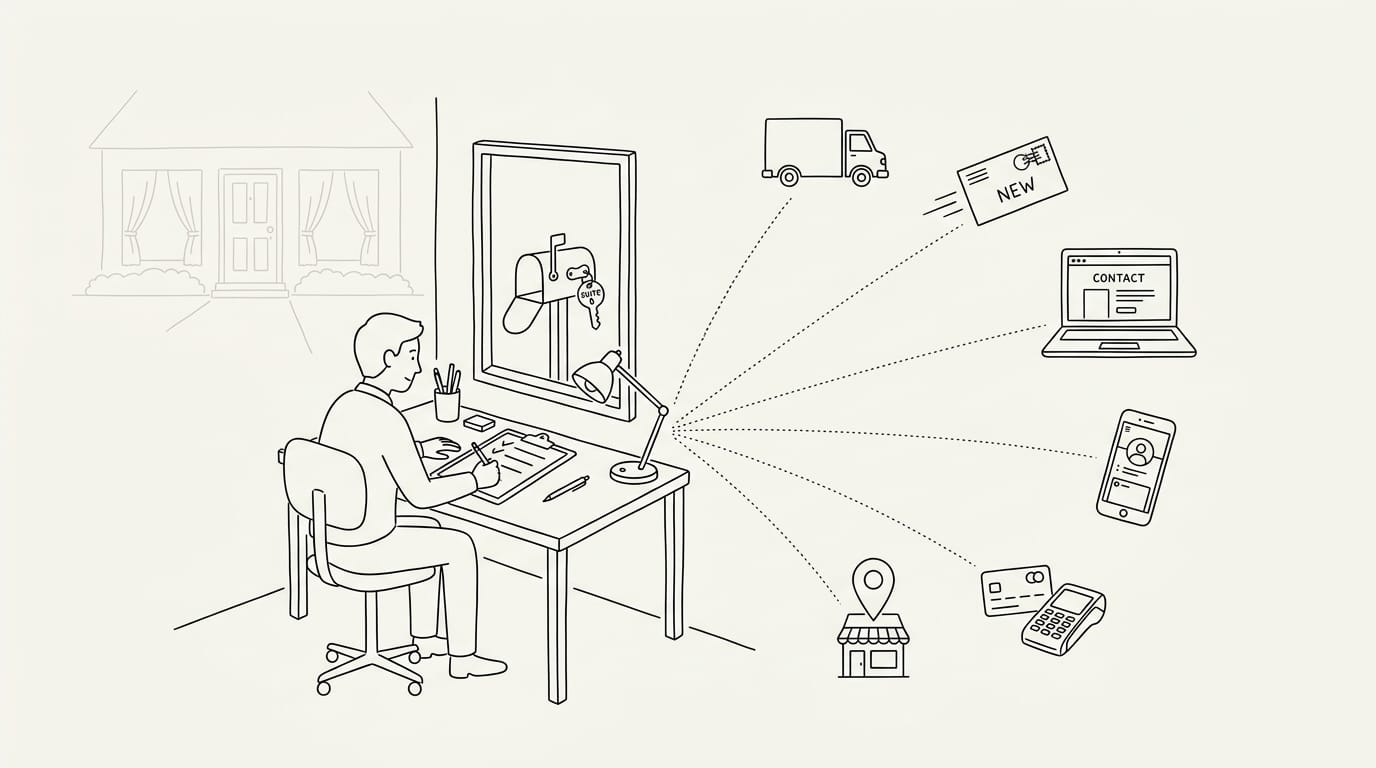
Once the filings are done, the people who pay you, insure you, and find you online still need your new address. Make a master checklist before you start, then work through it in order: mail first, money second, customers and listings last.
Post office, banks, and insurance agencies
Start with the mail. File a change of address with the United States Postal Service (USPS) so letters and packages follow you to the new place.
Next, update your banks and credit card issuers, since statements and new cards go to the address on file. Your insurance agency needs the change too. Think of a home baker who moves her kitchen business across town.
She updates her bank and insurance agent first, so the next statement and policy renewal reach her, not the house she left.
Vendors, clients, and your online presence
Vendors and suppliers need your new address for invoices and deliveries. Clients need it too, so send a short letter or email with the new address and the date it takes effect.
Update the contact page on your website and any addresses in your social media profiles so they all match. Mismatched details make customers wonder which one is current.
Google Business and Yelp listings can display your address publicly. Where a listing asks for a street address, consider a mailing address instead, so your home stays off public records.
That’s the goal: be findable, not traceable back to your living room.
Payment processors and online marketplaces keep your address on file too, so add them to the list and keep those details accurate. Keep that list. You’ll need it again.
Relocating Your Business to a New State
Moving an LLC (limited liability company) to a new state is more than a new mailing address. The route you pick decides your paperwork, your costs, and whether you close your current company.
Ways to move an LLC out of state
There are three main routes:
- Register as a foreign LLC. Your LLC stays formed at home and registers in the new state as an out-of-state (foreign) LLC. You’re adding a state, not replacing the company.
- Dissolve the existing LLC. To dissolve means to formally close it. You then form a new LLC in the new state, so you’re starting fresh on paper.
- Domesticate the LLC. It converts your existing company into one formed under the new state’s law, so it’s the same company under new rules.
What closing the old LLC requires
Closing the original company takes more than a form:
- Member vote required. The members must approve closing the LLC.
- Settle outstanding debts. Pay what you owe before the company closes.
- File final tax returns. The old company still needs its final tax returns filed.
- Follow your operating agreement. It sets your LLC’s internal rules, including its closing steps.
Take Dana, whose bookkeeping side business is a two-member LLC. To close it, she and her co-owner, Luis, must vote, pay off the software and supplies she put on her card, and file the final return. It’s a checklist, not a shortcut.
Upsides and downsides of domesticating
Domesticating keeps what you’ve built, but it takes time and money:
- Keeps your bank accounts and tax ID. It’s the same company, so your accounts and your employer identification number (EIN) stay put.
- Possible tax benefits. Some states may offer better tax treatment, so compare.
- Time-consuming and costly. Filings, fees, and hours add up fast.
- Client location considerations. Some clients or contracts may care where your company is registered.
Costs, taxes, and when to call a pro
Moving also brings costs beyond the filing itself:
- Taxes and licensing. A move can bring new tax filings and business licenses in the new state, so check what applies.
- Operational costs. Budget for filing fees, new permits, and time spent updating invoices and contracts.
- Consult a formation expert. If you have several members, debts, or a complicated operating agreement, it’s worth asking an accountant or formation expert for help.
Changing your business address is mostly paperwork, but it’s paperwork that keeps tax notices, state correspondence, and customer payments heading to the right place.
Start with the IRS, update your state and local records, then notify everyone who relies on your address. Relocating to another state? Add those filings to the list and work through them one at a time.
Watch your mail for a few months after the switch in case something slipped through. Update your address once and update it completely, and the letters that matter will always find you.
References
- About Form 8822-B, Change of Address or Responsible Party - Business — irs.gov
- f8822b — irs.gov
- Address changes — irs.gov