6-12
Examples of Diversification and How Each One Works
Examples of diversification show how a bakery can add coffee, wholesale bread, or a flour mill, then test costs, pricing, and hours before committing.
- Written by

- Published
- Updated
- Reading time
- 10 min read
- Sources
- 3 cited
Diversification means adding products, services, customers, or markets so your income does not depend on one offer. Examples include a baker adding coffee, a photographer selling prints, or a freelancer serving more clients; the strongest moves build on existing skills, customers, or resources, while unrelated ventures carry more risk. Test demand, price, costs, and time on a small scale before committing, so a new income stream strengthens your business without spreading you too thin.

In this guide
Say you run a small bakery and your weekend cake orders keep growing. You could add coffee, start selling bread wholesale to a local café, or buy the flour mill that supplies you.
Each move spreads your business across something new, and that’s the core idea behind diversification.
Diversification means adding a new product, service, or market to what you already do so your income doesn’t rest on one thing. It sounds like a big-company strategy, but side hustlers use it too.
In this post, we’ll walk through the four main types, show a simple example of each, and explain how to test a move on price, costs, and hours before you commit.
Examples of Diversification and Where It Fits
Diversification means adding new products or services so your income doesn’t rest on one offer. Here’s what the strategy aims for and where its best-known framework came from.
What the strategy means and aims for
Diversification is a growth strategy aimed at profitability, not just bigger numbers. It’s less about selling more and more about keeping more of what you earn.
Its biggest appeal is spreading risk across offerings. Take a freelance photographer who sells prints on the side. If she adds greeting cards made from the same photos, a slow print month won’t mean a slow month for cash.
The strategy works at two levels. Business-level diversification happens when one company adds an offering of its own. Corporate-level diversification happens when a parent company owns several separate businesses.
It also adds variety and flavor, keeping the work fresh and giving existing customers another reason to buy.
Where the Ansoff Matrix came from
The Ansoff Matrix is a simple grid for picking a growth path. Igor Ansoff first described it in a 1957 Harvard Business Review article titled ‘Strategies for Diversification.’
The grid has four growth strategies:
- Market penetration: sell more of your current product to current customers.
- Market development: take your current product to new customers.
- Product development: create new products for current customers.
- Diversification: launch new products for new customers.
Diversification sits in the final corner and is the riskiest of the four. You’re learning about a new product and a new customer at once, so every assumption needs checking. Risky, but manageable with testing.
That’s why it pays to test a move on price, costs, and hours before you commit.
Why Companies Branch Out
Companies rarely add new products or markets on a whim. The reasons come down to a few goals that matter for side hustles too.
Cushioning risk and keeping things steady
Spreading across several lines mitigates industry downturn risk, and strong lines can offset struggling ones. Think of a weekend candle maker who sells at craft fairs.
When fair season winds down, a soap line sold to the same shoppers keeps income from falling off. The aim is steady income, not big wins. That spread builds resilience against market fluctuations and acts as a shield against economic declines.
Growing sales and profits
Diversification can help companies grow sales and profits, and the research agrees.
According to the study Firm Diversification and Performance: An Empirical Examination, more unrelated diversification is significantly associated with a 0.65 percent performance improvement, and related diversification with a 0.98 percent increase.
The numbers aren’t huge, but they point the same way.
A new line can replace declining core revenue when your main product slows. Companies can use surplus cash flows to fund a new line instead of letting cash sit idle. Expanding can also boost brand image.

Guarding against rivals and finding synergies
Diversifying can also protect against competitors. If a rival undercuts your main product, a second offer means that cut hits only part of your sales. The best moves also explore potential synergies, where existing resources do double duty.
Think of a bakery that adds coffee: the same counter, customers, and morning rush now bring in two kinds of sales. That’s the payoff. Look for synergies that use what you already have instead of starting over.
What Are the Main Types of Diversification?
Diversification means adding new products or markets so your business isn’t tied to one offer. The four main types differ in how far they move from what you already sell, which shapes both cost and risk:
Adding related products, concentric style
Concentric diversification adds similar related products. A computer maker adding laptops is a classic case, and so is a soft drink brand sold through restaurants. It helps when core revenue is slipping, since the new product can offset the decline.
Think of a side hustler who sells handmade candles and adds a matching reed diffuser. If it sells well, she’s added income without starting over.
Horizontal expansion for loyal customers
Horizontal diversification means new products for existing customers. A notebook maker entering pens is one example, and Disney’s move from animation to resorts shows how far a loyal audience can stretch.
Where concentric moves stay close to what you sell, horizontal moves stay close to who buys it.
It relies on customer loyalty. Trust does the heavy lifting. Picture a freelance bookkeeper with a steady client list who adds a monthly review for the same people. She doesn’t need new clients to earn more.
Conglomerate moves into unrelated markets
Conglomerate diversification moves into unrelated products and new markets. General Electric is the textbook case, with segments spanning very different industries and subsidiaries that operate independently. It carries the highest cost and failure risk.
Stepping into an unfamiliar market means learning new customers, suppliers, and pricing all at once. Risk climbs fast.
Choosing related or unrelated moves
Diversification falls into two main types: related diversification and unrelated diversification. Related moves stay connected to your existing business, like Apple’s related product lineup, so you can often share resources and best practices.
Unrelated moves reach into markets with little connection to what you already do.
Amazon moved from books into groceries. According to EBSCO’s Research Starters entry on Amazon, the company took a major step in June 2017 when it acquired the high-end grocery store chain Whole Foods in a reported $13.4 billion deal.
Moves like these often happen through mergers or acquisitions.
Whichever type you’re weighing, test it on price, costs, and hours before you commit.
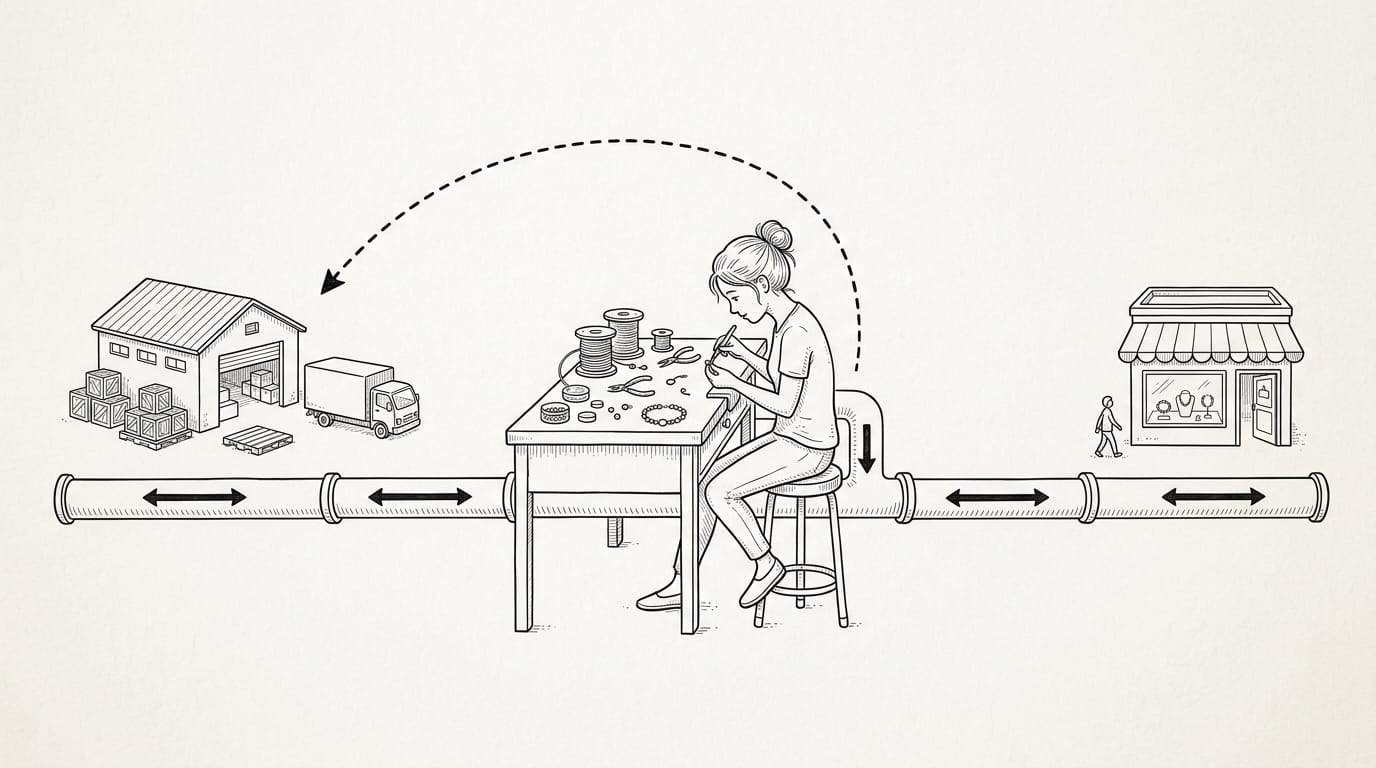
Moving up or down the supply chain
Vertical diversification moves along your supply chain (the path from suppliers to customers) in either direction. Backward integration means making a step you now buy, which can cut costs.
Forward integration means moving closer to the customer, such as opening your own retail store.
Consider a side hustler who makes jewelry and starts crafting her own clasps instead of buying them. That’s backward integration, and the money she’d have paid a supplier stays in her pocket.
Netflix’s move from rental to streaming is another example of reshaping how a business delivers its product. Balanced integration, where you strengthen both directions at once, is rare.
How Small Businesses Can Diversify in Practice
Diversifying can mean changing what you sell (product diversification), who you sell to (market diversification), or where your income comes from (income diversification).
Test each move on a small scale, because the goal is to spread your risk, not spread yourself thin.
Finding new markets and customers
Start by researching new markets that already spend money on something close to what you offer. Then identify the decision makers who approve a purchase and reach out to them directly. Check your current customer base for patterns too.
This is about new customers, not more of the same.
Customer diversification spreads sales across several clients, which helps you avoid one-client income dependence. Think of a freelance bookkeeper whose largest client makes up most of her billing. When that client pauses, her income drops fast.
A few smaller clients from a neighboring industry keep money coming in when one account goes quiet.
Launching new products and services
Match each offer to customers’ needs and demographics, such as age and income. A pet store’s customers already spend on their animals, so adding pet jewelry and clothing fits what they buy.
Partner with complementary businesses (ones that serve your customers without competing) to add offers without building them all yourself. Adding unrelated services is a bigger leap, so go slowly. Consulting turns expertise into a paid offer.
Test every new offer with presales, meaning orders taken before the product or service exists. Check three things first:
- Price: Will customers pay what you need to charge?
- Costs: What will materials, fees, and delivery run you?
- Hours: How many hours a week will it take?
Test first. Build later.
Turning existing assets into new income
Assets you already own can earn money too. Affiliate links pay a commission when someone buys through your link, and ads can add income once you have an audience. Wholesale to retail stores means selling in bulk to shops that resell your products.
Renting out an unused room or shelf can bring in steady income, and offering more ways to pay, like PayPal, keeps sales from slipping away. Test each one the same way.
Expanding into new places and channels
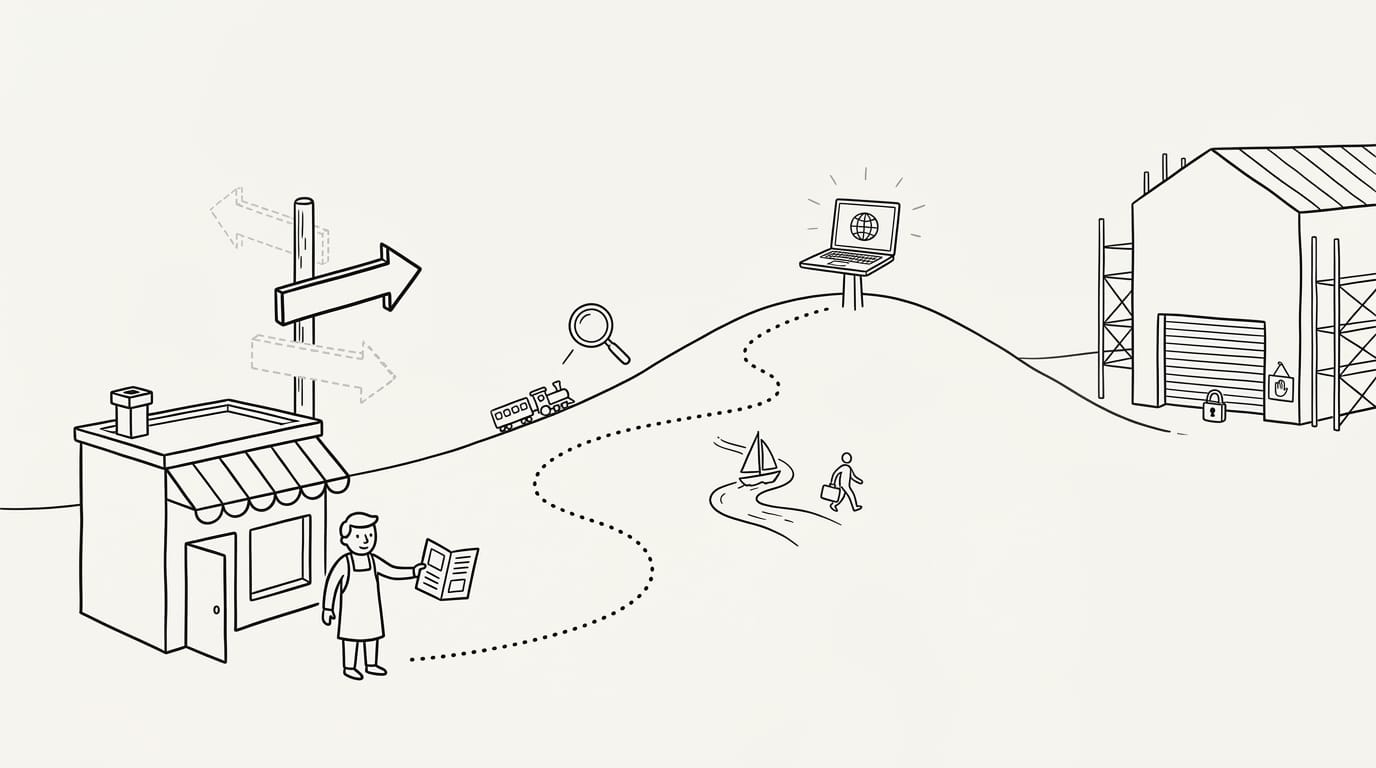
Going international or online reaches buyers beyond your area. Online is often the lower-risk first step, while a new office or warehouse is a bigger commitment, so wait until demand is proven.
Content marketing means publishing useful articles or guides that bring people to you, like a blog. Social media and search engine optimization (SEO), which helps your pages rank in search results, can help people find it. Pick one channel first.
Spreading investments across asset classes
The same logic applies to your savings. An asset class is a broad category of investment, such as stocks, bonds, or mutual funds. Holding a mix can reduce your risk, but asset classes sometimes behave similarly when markets move.
Variety on paper isn’t always protection.
Famous Companies That Diversified Well
Big names make diversification look effortless, but each of these companies grew by adding pieces that connected to what it already did. Here’s how five well-known examples made it work, and what a side hustler can borrow.
How famous companies made it work
- General Electric. Ran many separate business segments under one name, so a slow area didn’t have to sink the whole company.
- Walt Disney. Took the characters and stories from its films into theme parks and cruise ships, giving fans new places to spend time and money.
- Amazon. Expanded from its original online store into a much wider range of products and services, building on the customers it already had.
- Apple. Built a product ecosystem where devices work well together, so one purchase makes the next one more likely.
- Netflix. Shifted its core service to streaming, changing how customers got their shows and how the company earned from them.
The pattern matters more than the size. Each move connected to something the company already did well, so the new piece had a head start. The lesson is about how the pieces connect, not how many pieces you add.
Think of a freelance photographer who adds printed photos to her portfolio work. Before she commits, she tests the new product on price, costs, and hours: what customers will pay, what paper and printing actually cost her, and how long each print takes.
If the prints earn more per hour than her editing gigs, she keeps going. If they don’t, she’s learned it cheaply. Test first. Commit second.
Weighing the Risks Before You Diversify
Adding a new product or service can open fresh income, but it can also drain your cash and time.
When diversifying is worth the risk
Unknown markets raise your risk, since you won’t yet know the buyers. Diversifying makes most sense when your core business has stopped growing, not just slowed down for a week.
New offers also bring higher research and development (R&D) and advertising costs. Take a freelance photographer adding printed wall art: she must design, print, package, and promote it, so the line pays off only once each sale covers those costs.
Buyers rarely find an unfamiliar product on their own, so it needs strong marketing. Check the hours first: a product that looks profitable can still leave you earning less per hour than your current work.
Watch your margin, what you keep from each sale after direct costs.
Three tests that show if it works
- Attractiveness test: Use Porter’s Five Forces to check competition, buyer and supplier power, and threats from newcomers or substitutes. A crowded market with squeezed prices is a warning sign.
- Cost-of-entry test: Add up startup costs like materials, equipment, and ads, then work out how many sales reach break-even. If that number feels out of reach, start smaller.
- Better-off test: Look for synergy, meaning the new offer works better with what you already do. Do current customers want it? Can you reuse your site, customer list, or process? If not, you’re starting from scratch.
Failed attempts usually skip these checks. Picture a candle maker who adds skincare without asking if her buyers want it. Liking her candles didn’t mean they’d buy her skincare. Test first, then scale.
A diversification move only earns its place if the numbers hold up. Before you add that new product or service, price it, cost it out, and count the hours it will really take.
Test it small with a handful of paying customers, and let the results decide whether you go further. Start with the move that builds on what you already know, and you’ll have a much better shot at a second income that actually pays.
The best new line is the one you can prove, one sale at a time.
References
- The Ansoff Matrix — link.springer.com
- Amazon (company) | Business and Management | Research Starters — ebsco.com (2026)
- Firm Diversification and Performance: An Empirical Examination — doi.org (2020)
Questions
What are two types of diversification?
The two main types are related diversification and unrelated diversification. Related diversification connects to a company’s existing products, markets, or resources; unrelated diversification enters a market with little connection to the current business.
What are some examples of business diversification strategies?
Examples include adding related products, such as a candle maker selling reed diffusers; offering new products to existing customers, such as a notebook maker selling pens; and entering unrelated markets, such as a company expanding into a different industry. Businesses can also diversify vertically by moving into supplying or selling their products directly.
What is a related diversification example?
A candle maker who adds matching reed diffusers is an example of related diversification. The new product connects to the existing business and can use its customers, brand, and sales channels.