5-6
Client vs Customer Explained: Key Differences
Client vs customer comes down to ongoing service versus a one-time purchase. See how the difference shapes pricing, promises, and repeat business.
- Written by

- Published
- Updated
- Reading time
- 9 min read
A customer buys a product or standardized service, usually through a short transaction; a client hires a professional for tailored work and an ongoing relationship. Customers expect consistent products, clear information, and reliable support, while clients expect personal advice, regular communication, and solutions that adapt to their needs. Use the term that matches what you provide, then align your pricing, agreements, marketing, and support with that relationship.
In this guide
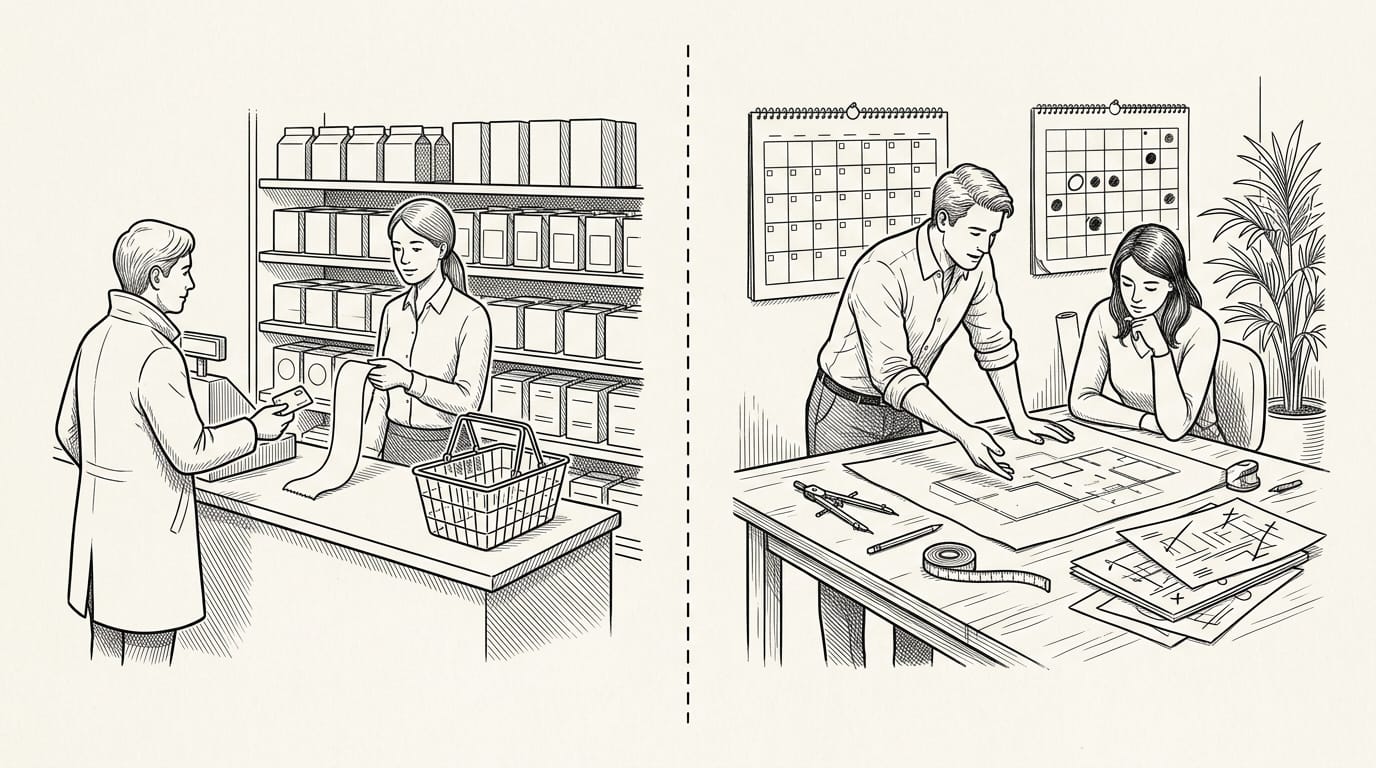
Think about your stylist and the cashier at the grocery store. Your stylist knows how you like your bangs, while the cashier rings up your milk and never sees you again. Both serve you, but the relationships couldn’t be more different.
In plain terms, a customer buys a product or a one-time transaction, while a client hires you for a service and an ongoing relationship. Knowing which one you’re serving shapes your pricing, your promises, and how you keep people coming back.
Defining Client vs Customer in Plain Terms
Clients and customers both pay you, but the relationship behind each word differs.
What makes someone a client
A client is someone in an ongoing professional relationship with you. They come for advice and tailored solutions, so you deliver personalized service, and they engage more deeply with your work. Clients often get a dedicated account manager.
The focus is the relationship, not the sale.
Take a freelance bookkeeper who meets each small-bakery owner monthly to review their books. Those owners are her clients. Since the work keeps going, she can plan ahead instead of chasing a new sale.
Who counts as a customer
A customer makes a transactional purchase of a standardized product or service. The interaction is shorter and less personal, and buyers are nonexclusive, shopping around for one-time or repeat purchases. Customers come and go.
Consider a candle maker who sells one standard candle online. Each buyer gets the same product, checks out in a few clicks, and may never order again. A repeat buyer is a welcome bonus, not a promise.
You’ll also hear guest, mostly in hospitality. A guest is hosted for one visit, and the relationship ends when the visit does. That makes a guest closer to a customer than to a client, who keeps coming back for ongoing advice.
Businesses that serve clients or customers
Most businesses lean one way, and some sit in between:
- Client-based: consultants, law firms, advisors, and personal trainers, who tailor a plan for each person.
- Customer-based: supermarkets, online stores, restaurants, and software-as-a-service (SaaS) tools on standard plans.
- Both: insurance, where a policyholder might buy a standard policy or a tailored one with an advisor.
How Clients and Customers Really Differ
The two words sound alike, but they describe different relationships and different ways of earning money.
How relationships and engagement differ
A client relationship is long-term. You work with the same person for months or years, and trust grows through personal connection. A customer relationship is usually transactional: one purchase, then maybe a return visit.
Clients get frequent check-ins, like a monthly call, and proactive support that catches problems first. Customers meet you at the point of sale and get immediate help when they ask.
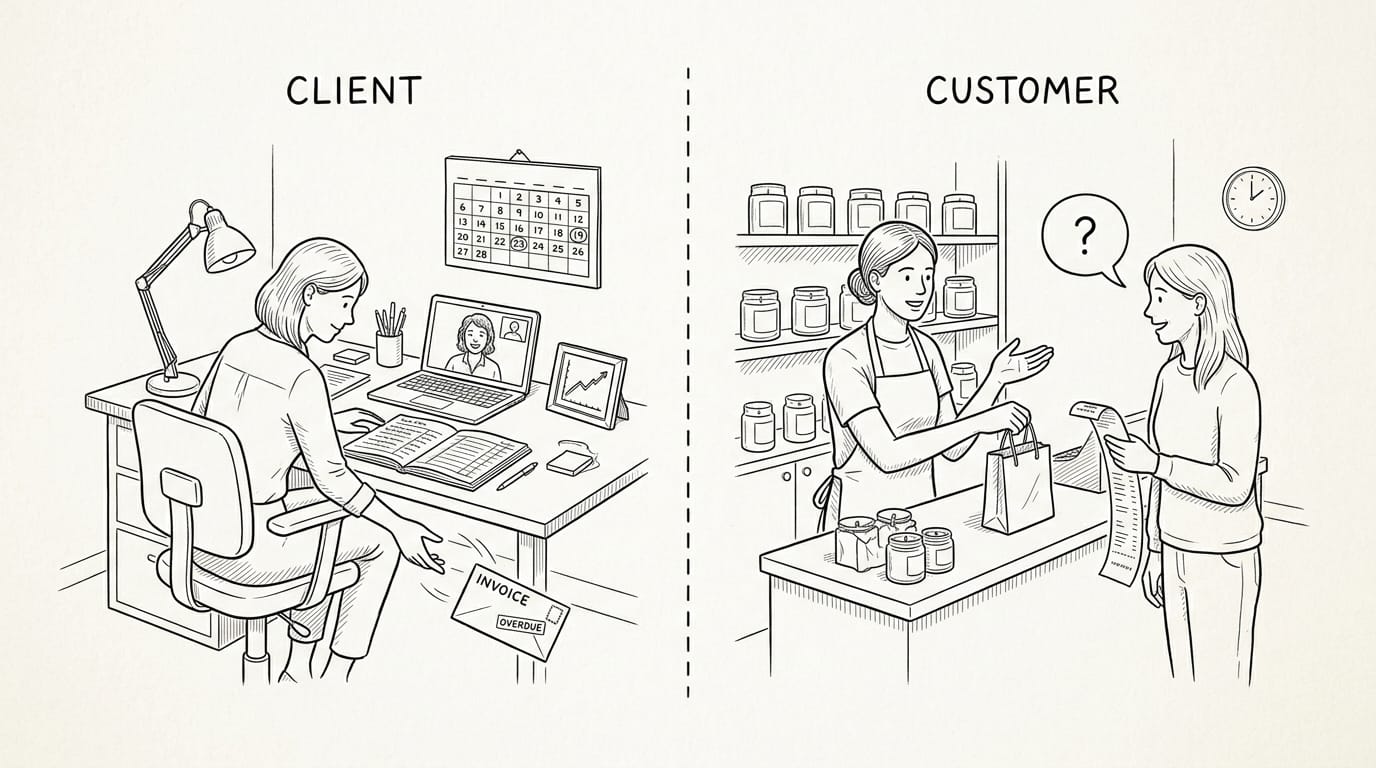
Take a freelance bookkeeper: she can flag a client’s missed invoice before it becomes a cash-flow problem. A candle seller can’t do that for every buyer, so she gets each order right and answers questions fast.
How client service differs from customer service
The question is what separates client service from customer service. Client service is bespoke: you tailor an offer and adjust it as needs change.
Customer service runs on a standardized offer with consistent, reliable basics: the same product and process every time.
Price sensitivity differs too. Customers often compare you with the next option, while clients weigh whether the work fits their goals.
A web designer who customizes a site for one dental office keeps that client for years. A template shop sells the same design to anyone at a flat price and has to win each sale again.
How pricing, contracts, and winning them differ
Clients usually add up to a few high-revenue relationships, while customers add up to a high-volume base. Losing one client hurts far more than losing one customer, so retention matters more than replacement.
You win clients through targeted outreach, while customers come through generalized marketing.
Contracts follow the split. Clients often sign an agreement covering scope and sometimes exclusivity, which means you won’t take on a direct competitor. Customers usually buy without one.
Clients pay a project fee for defined work, while customers pay a unit price per sale. Same business, different math.
A quick side-by-side summary
| Client | Customer | |
|---|---|---|
| Purpose | Ongoing results | One solved need |
| Engagement | Frequent, proactive check-ins | Point-of-sale, immediate help |
| Offerings | Customized, adjusted over time | Standardized, consistent |
| Business volume | A few high-revenue relationships | A high-volume base |
| Acquisition | Targeted outreach | Generalized marketing |
| Experience | Personal, built on trust | Efficient, built on reliability |
| Journey | Long relationship | Short path to checkout |
| Exclusivity | Often contracted, sometimes exclusive | Usually no contract |
Should You Say Client or Customer?
Use client when you deliver an ongoing service shaped around one person’s needs, and customer when you sell a product people buy. Your offer makes the call, and once you’ve picked the word, it shapes everything else.
Tailoring marketing and sales to each group
Tailor your messaging to each group. Relationship-focused campaigns lean on trust and check-ins, while promotion-focused campaigns lean on launches and offers.
Consider a freelance bookkeeper who wins work through referrals and signs small shops to monthly retainers, a set fee for ongoing work. Her repeat business is built into every contract.
Her neighbor sells hand-poured candles at markets, and each repeat buyer is usually cheaper to keep than a new one is to win, so every return visit helps her margin.
Match the word to what you deliver, not to how impressive it sounds. A fixed-scope project calls for client, and an off-the-shelf product calls for customer. Clarity beats cleverness.
Matching support to what each expects
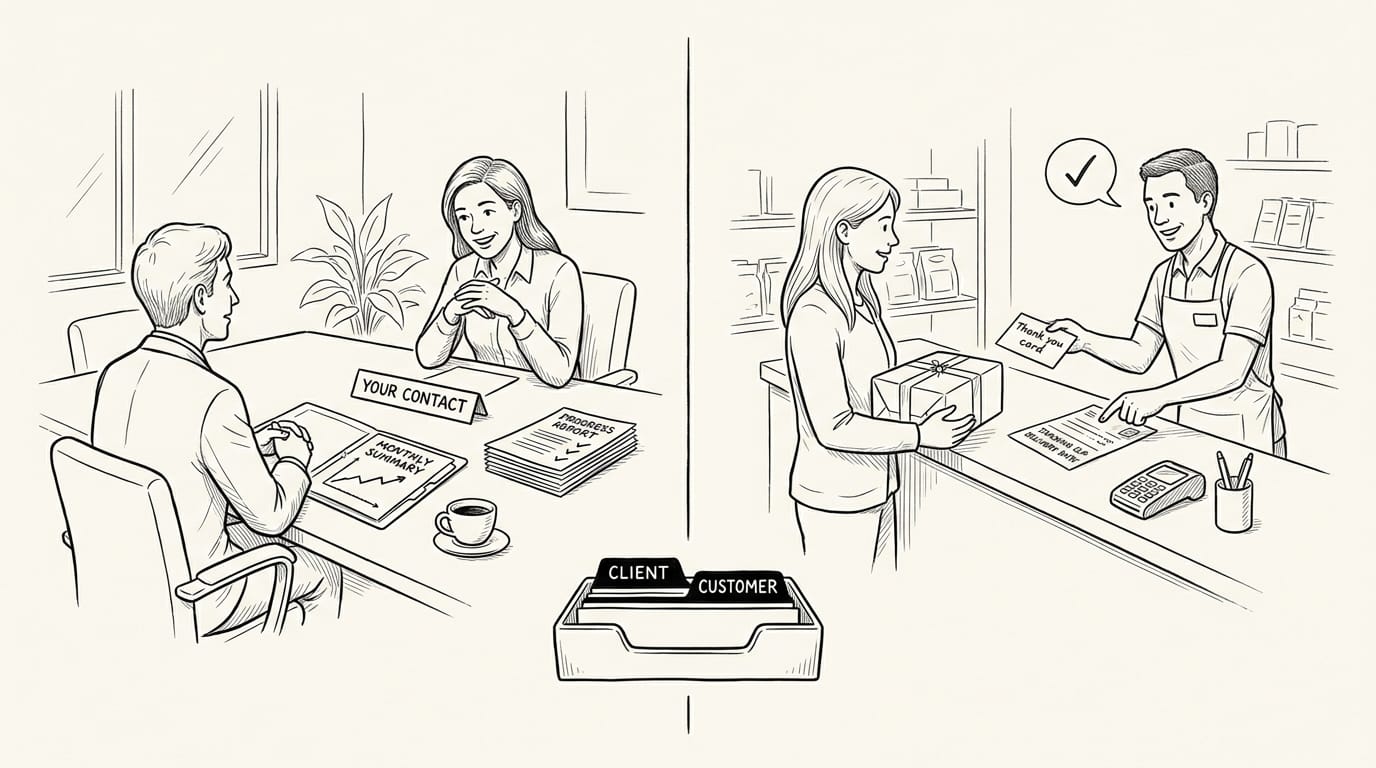
Clients expect a named contact and regular progress updates. Customers expect clear shipping details and a fast answer to a question. Meet those expectations and people feel looked after, not handled.
A short check-in after delivery gives a customer a reason to return, and a monthly summary does the same for a client on retainer.
Your word also signals your brand. Client sounds tailored and professional, while customer sounds friendly and open. Pick the one that fits the brand and the goal you’re chasing, whether that’s retained work or steady sales.
If you serve both groups, tag them separately in customer relationship management (CRM) software, the tool that tracks contacts and their history. Then send clients project updates, and send customers order confirmations and new-product news.
Where Industries Mix Clients and Customers
Some industries treat clients and customers as separate roles, and others use the words interchangeably.
Consulting, retail, and banking side by side
In consulting, the person paying you is usually a client: you’re hired for a defined project or an ongoing monthly fee. In retail, the buyer is a customer who grabs a product, pays, and leaves.
Real estate is the hybrid case. An agent’s client is the buyer or seller the agent represents and owes loyalty. A customer is someone the agent works with but doesn’t represent.
So one agent can have a client on one listing and a customer at the next open house.
Mortgage lending adds a third word, borrower, for the person taking out the loan. Whether a lender says customer or client often depends on how it markets itself.
Ecommerce can go either way. A shop selling candles to strangers creates customers, but one with monthly subscribers starts to look like a client relationship.
Banks use both words. A bank customer uses everyday products like checking or savings, while a wealth client gets a dedicated advisor for investments, which is where the legal duties below apply. Same bank, different relationship.
Legal duties are where the words matter most. A client relationship in advice-based work can create a fiduciary duty, a legal obligation to act in the client’s best interest.
A customer sale usually involves a simpler contract and fewer ongoing obligations.
Say you set up home networks on the side. A neighbor who books one setup is a customer, and a receipt covers it. A homeowner who signs up for monthly upkeep is a client, and that calls for a written service agreement.
How the Experience Unfolds for Each
Clients and customers take different paths from first contact, and here’s how each one unfolds.
Client steps from first contact to onboarding
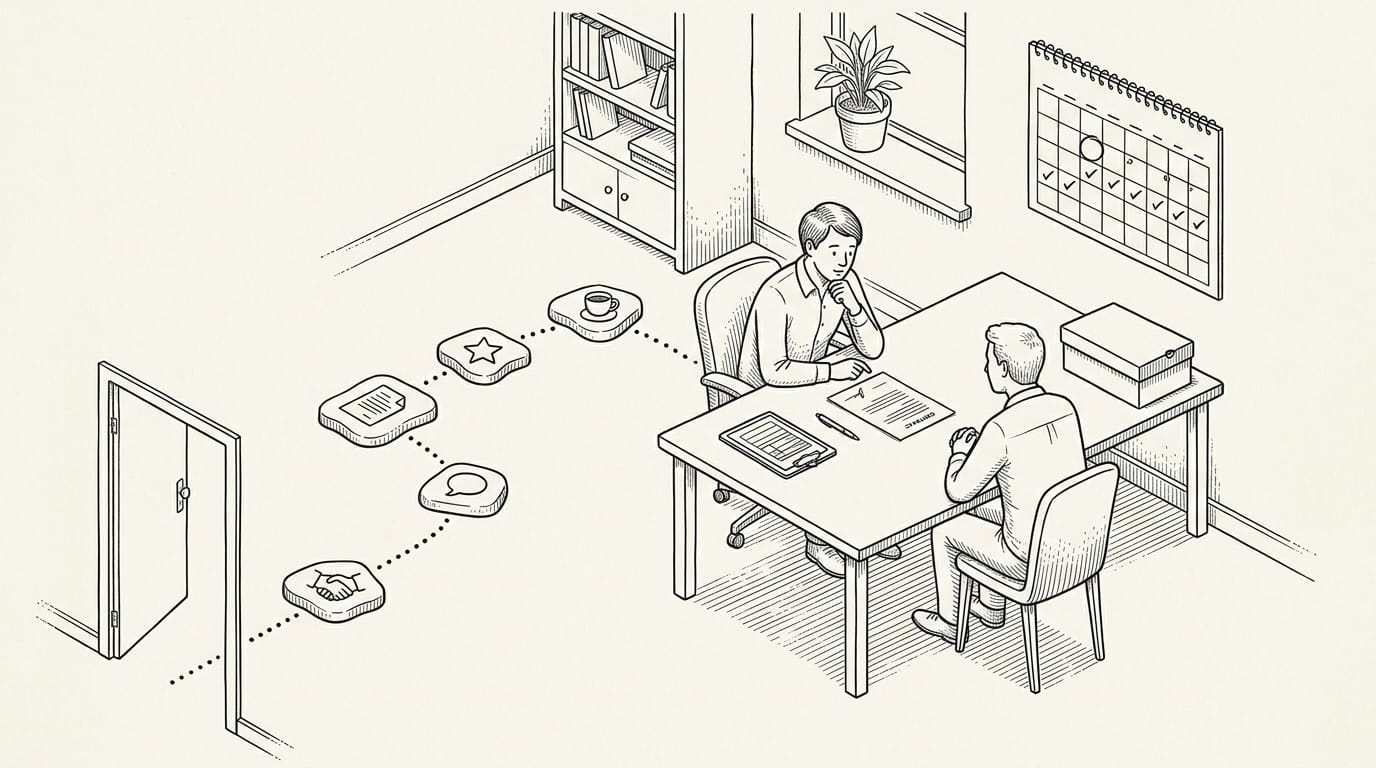
A client usually comes through a referral, then moves through these steps:
- Awareness to onboarding: they find you, reach out, and get set up.
- Contract and formal engagement: agree on scope, price, and timeline in writing.
- Anticipate needs, communicate: flag what’s coming, like a summary before tax season.
- Evaluate performance and feedback: ask for feedback at set points and act on it.
- Stay in touch regularly: a short monthly check-in keeps things warm between projects.
A freelance bookkeeper sends an intake form and a one-page contract, then holds a kickoff call before touching a single receipt. Her clients always know what comes next, so month one runs smoothly.
What keeps customers coming back
Customers move through awareness, consideration, purchase, and retention. Retention is where a side hustle gets steady, and it rests on a few habits:
- Loyalty programs: a small reward, like a free item after five orders, gives people a reason to return.
- Consistent messaging: same prices and tone everywhere, so customers know what to expect.
- Follow-up support: check in after the sale and make help easy to reach.
- Service that exceeds expectations: add one small extra, like a handwritten note, that nobody asked for.
- Clear communication: when something goes wrong, say so fast, explain the fix, and confirm it worked.
A home baker sends a pickup reminder two days ahead, then checks in a week later to ask how the cake went. That follow-up can bring the next birthday order.
Customers come back for reliability rather than novelty. Show up the same way every time.
Turning Customers into Long-term Clients
Buying once is a transaction, but coming back is a relationship, and that shift doesn’t happen on its own. Here’s how to help it along:
Practical ways to make the upgrade
- Stop selling, start consulting. Instead of pitching your service the moment someone gets in touch, ask what’s actually going wrong for them. Take a freelance bookkeeper with three small bakery clients. She stopped sending price sheets and started asking each owner what keeps them up at night. Two of them now ask her for tax planning too. Aim to solve their problem, not sell them a package.
- Higher-touch service tier. Offer a premium level with extras such as a monthly review call or faster replies. Clients who want closer support will pay for it, and everyone else still gets a solid base service.
- Dedicated representative. Give each client one named point of contact who knows their history. If you work solo, that person is you, so keep clear notes on every account and you’ll never start from scratch.
- Team-wide service standards. Once you bring on help, write down how everyone responds, follows up, and hands off work. Clients should get the same experience whether you or your first hire picks up the phone.
- Educational seminars and referrals. Host a short workshop on a problem your clients share, then invite their colleagues. People who learn something useful from you tend to pass your name along, so one good session can bring in several referrals.
- Client-for-life goal. Plan from the start for years of work, not a single project. Count how many clients come back, and treat renewals as your real scorecard.
Make staying the easy choice.
Clients and customers both pay you, but they expect different things. A customer wants a fair price and a smooth transaction. A client wants judgment, consistency, and someone who remembers the details.
Once you know which relationship you’re offering, the rest of your decisions get easier. Name the relationship you want, then build your offer to earn it.
Questions
What is the difference between a guest and a client?
A guest is typically hosted for a single visit, especially in hospitality, and the relationship ends when the visit does. A client has an ongoing professional relationship with a service provider and often receives personalized advice or support.
What is the difference between a client and a customer in banking?
In banking, a customer typically uses everyday products such as checking or savings accounts. A client often receives tailored investment advice from a dedicated wealth advisor, which may involve fiduciary duties to act in the client’s best interest.
What is an example of a client?
A small-business owner who hires a bookkeeper for monthly help reviewing the business’s finances is an example of a client. The relationship is ongoing and the service is tailored to the owner’s needs.
What does "client" mean?
A client is someone who hires a professional for services, advice, or tailored solutions, usually as part of an ongoing relationship. The focus is on the relationship and continued work, rather than a single sale.
Is customer service the same as client relations?
They are related but not the same. Customer service usually provides consistent help with a standardized product or transaction, while client relations focuses on maintaining an ongoing, personalized professional relationship.
Should you say client or customer?
Use “client” when you provide ongoing services tailored to someone’s needs, and “customer” when someone buys a product or standardized service. In hospitality, “guest” is common for someone hosted for a visit. Choose the term that matches the relationship you actually provide.