5-5
Customer Retention Explained: Keep Buyers Coming Back
Customer retention keeps buyers coming back. Measure whether customers stay, then choose loyalty, support, and messaging tactics that fit a tight budget.
- Written by

- Published
- Updated
- Reading time
- 14 min read
- Sources
- 8 cited
Customer retention means keeping existing customers coming back to buy over time, rather than focusing only on finding new buyers. Measure repeat purchases and customer loss, then use useful onboarding, responsive support, relevant messages, and simple rewards to make returning worthwhile and easy. A few consistent, affordable actions can build steadier revenue and give customers a reason to recommend your business.
In this guide
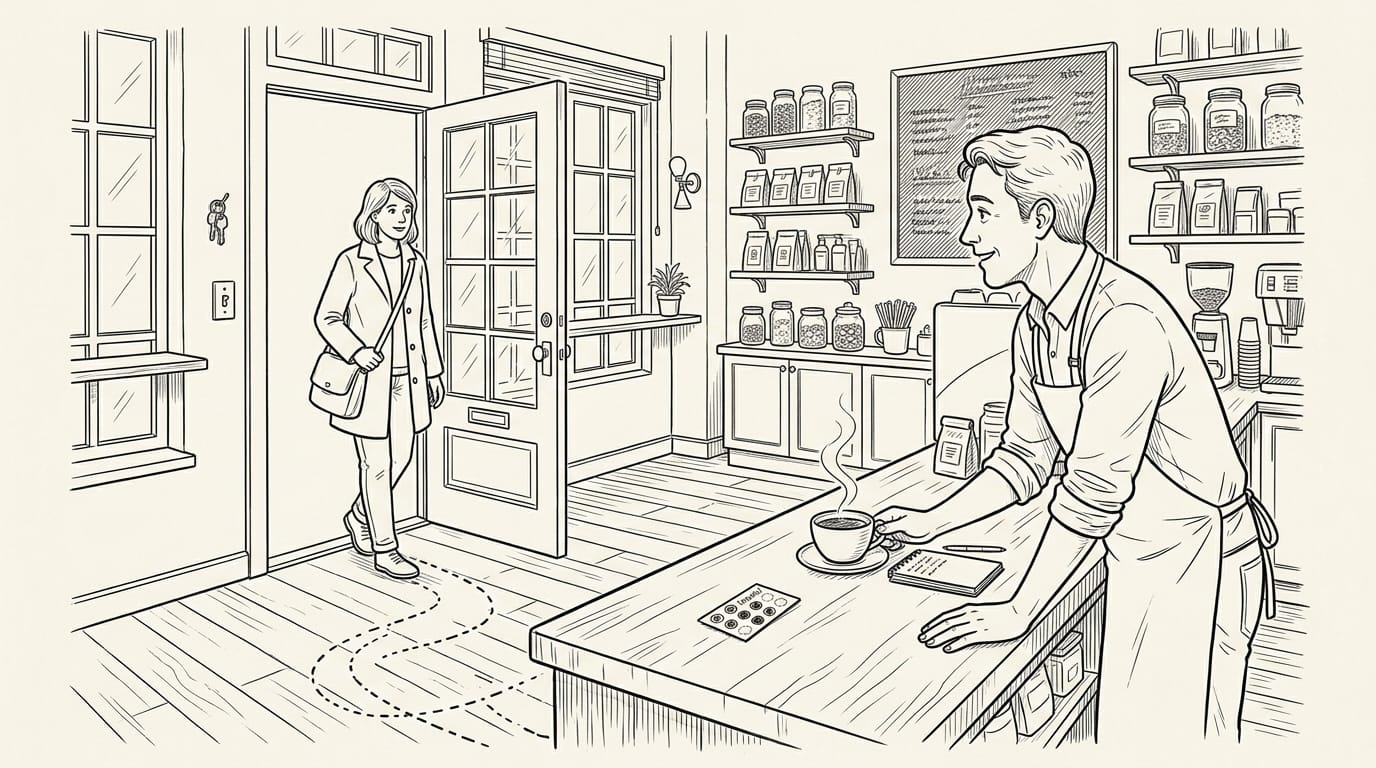
Think about the coffee shop you visit every week. The barista knows your order, and you’d rather skip three new cafés than switch. That loyalty is what customer retention is all about.
Put simply, customer retention is keeping the buyers you already have coming back, instead of spending all your energy finding new ones.
This post covers what retention means, how to measure it, and how to plan the moves that keep customers around. We’ll close with a practical way for solo sellers to pick the few worth doing on a tight budget.
Customer Retention Explained and Why It Pays
Before you spend more on ads, it helps to know what customer retention means and why it pays.
How retention differs from loyalty and churn
Customer retention is keeping customers coming back over time, the opposite of churn, the share who stop buying. Loyalty is a close cousin, but retention measures whether customers return while loyalty explains why.
Retention is a relationship, not a single transaction: a one-time candle buyer is a sale, but a repeat buyer is retained.
Why keeping customers beats finding new ones
Retention is cheaper. Harvard Business Review notes that acquiring a new customer is “anywhere from five to 25 times more expensive” than keeping one, depending on the study and industry.
Ad costs are climbing too: a Forbes article reports that “customer acquisition costs have surged by 60%,” so watch your customer acquisition cost (CAC), what you spend to win each buyer.
Retention doesn’t replace finding new buyers. It protects the ones you already paid to win. The smart move is balancing both.
How retention lifts profit and lifetime value
A widely cited finding from Reichheld and Sasser, a cornerstone of the customer relationship management (CRM) literature, holds that “reducing defections by 5% boosts profits 25% to 85%.” A defection is a customer who leaves.
Retention also raises what each customer is worth:
- Higher lifetime value. Each year a buyer stays adds to their customer lifetime value (LTV), the total they spend with you.
- Predictable revenue and cash flow. Repeat buyers make income easier to forecast. A freelance bookkeeper whose clients renew each January can plan her tax money without guessing.
- Loyal customers spend more. A study on customer loyalty and revenue notes that loyal customers tend to spend more during their stays.
Selling more and earning word of mouth
Your existing customers are your easiest audience. They already trust what you make, so an upgrade is an easier pitch than a cold ad.
Referrals are earned, not bought: loyal buyers recommend you to friends.
Reviews are social proof, the signal that other people already trust you. Consider a side hustler who sells handmade pet treats. A repeat customer’s review saying her dog won’t eat anything else answers a new shopper’s doubt.
A loyal base also gives you competitive differentiation, the edge over rivals. Price is easy to match. Trust isn’t.
How to Measure Whether Customers Stay
Do customers come back? Start with these numbers.
Key numbers and formulas for tracking retention
- Retention rate: the share of starting customers still buying, calculated as (ending minus new customers) divided by starting customers.
- Churn rate: the share lost, or 100 percent minus retention rate.
- Repeat purchase rate: the share of customers who buy again.
- Customer lifetime value (CLV): the total revenue a customer brings over the relationship.
- Purchase frequency and average order value (AOV): how often people buy and what each order is worth.
Track these in a spreadsheet. A candle maker who starts June with 20 customers, wins 5 new ones, and ends with 19 has a 70 percent retention rate.
Cohort retention analysis groups customers by first-purchase month and tracks how many return. Plotted over time, those groups become cohort retention curves.
Measuring how satisfied and loyal customers feel
Satisfaction shows how customers feel, not just whether they bought.
Net Promoter Score (NPS) asks how likely customers are to recommend you, then sorts them:
- Detractors: unhappy customers who may leave.
- Passives: satisfied but not enthusiastic.
- Promoters: loyal fans who send you business.
Ask one question after each interaction: how satisfied were you?
Customer experience (CX) data matters only when it’s tied to revenue. Match each answer to that customer’s next purchase.
What a good retention rate looks like
Depending on the study, Harvard Business Review notes that winning a new customer costs five to 25 times more than keeping one.
A good rate beats your own past numbers.
A study, Measuring Customer Churn and Interconnectedness, notes that firms in utilities, telecom, and groceries tend to have highly persistent customer bases. Benchmarks vary by sector.
Ecommerce and subscription rates differ, so compare each against its own history.
Frameworks for Planning How to Keep Customers
We map how buyers become loyal, then show you how to plan for it.
How retention loops move people toward loyalty
Each retention loop has four parts, which form the four pillars of retention:
- Trigger: the nudge that prompts a return, like a reorder reminder.
- Mechanism: the easy path, like a one-click reorder link.
- Reward: the payoff that makes coming back worth it.
- Reinforcement: the follow-up that keeps the cycle going.
A home baker texts each new buyer a reorder link the Friday after their first loaf. That text is the trigger, and a free bag of flour on the third order is the reward that keeps regulars coming back.
The activation-to-loyalty funnel runs from a first purchase (activation) to routine repeat buying (loyalty). Drop-off often comes early, so reminders matter most there. Reinforcement keeps programs lasting, since one-time rewards fade.
Building a plan around customer feedback
Run a measure, act, grow cycle: measure what buyers say, act on the top complaint, then grow what works. Close the loop fast by telling each customer what changed. Collecting feedback matters less than acting on it.
Compare HubSpot’s model with the IDIC model (Identify, Differentiate, Interact, Customize), then pick a data-led and flexible framework that changes with your results.
What is a customer retention strategy?
A customer retention strategy is your written plan for keeping current buyers. Work through four steps:
- Gather and analyze customer data. Note who bought twice.
- Set budget and return-on-investment (ROI) expectations. Decide your monthly spend and what each repeat sale must return.
- Write a short retention strategy. One page, three to five moves.
- Build a customer-centric culture. Even as a team of one, treat each buyer’s question as today’s priority.
Avoid the usual traps: a plan nobody reads, spending without a return target, and discounts that train buyers to wait. Start small.
Winning New Customers with a Strong Start
You only get one first impression with a new customer. Here’s how to make the early weeks count, then keep them coming back.
Making the first 90 days count
The first 90 days are critical for retention. According to Moxo’s 2026 report on B2B (business-to-business) organizations, nearly half of all client churn happens in that window.
Think of a side hustler who sells meal-planning spreadsheets. A three-minute setup video in the welcome email means the buyer plans their first week of meals that same night.
The goal is to get customers to a win fast. It’s less about closing the sale and more about delivering a result they can see. Focus on three moves:
- Quick early wins: Give customers one visible result in week one.
- Welcome messages and packs: Send a thank-you note with a setup checklist right after purchase.
- Tutorials and self-service help: Record short how-to videos and keep an FAQ page so customers can answer their own questions without emailing you.
Ongoing training that brings customers back
Onboarding shouldn’t end after week one. A second onboarding wave is a follow-up a few weeks in, once they’re ready for the next level. A freelance designer might share a guide to reusing her templates, so clients keep coming back for the next project.
Running a paid workshop? A certificate of completion gives customers a reason to finish and return for the next level. Keep the bar reachable with a short checklist, not a long exam.
Build a small library of short guides or newsletter tips. A bookkeeper who shares a year-end checklist each December gives clients a reason to open her emails long after they’ve signed up.
Start strong. Then keep showing up.
Support, Feedback and Keeping Customers from Leaving
This section covers responding, gathering feedback, and recovering from trouble before customers leave.
Responding fast on the channels customers prefer
Meet customers where they already are: email, messaging apps, or social media. A proactive note about a delay, sent before anyone asks, keeps small problems from becoming complaints. Post a clear response window so customers know when to expect a reply.
Train a helper to issue small refunds without checking first, or, if you work alone, write your own refund rules in advance.
The 10/5/3 rule is a set of three response-time targets. Pick numbers you can keep, and post them where customers can see them. <!— Editor note: the brief gives no figures for the 10/5/3 rule, so none are stated here.
Confirm the exact targets from a verified source before publishing. —>
Gathering feedback and acting on it
Send a short survey right after each interaction, not months later, when the details have faded.
Check reviews and social media weekly, since some complaints surface publicly first. Close the loop by replying and saying what you changed.
A candle maker who hears three reviews about a scent that’s too strong reformulates it and emails those buyers the new version.
A customer advisory panel can be a few loyal buyers who test your ideas.
Turning complaints and warning signs into wins
Treat each complaint as an opportunity, since it shows you exactly what broke. The service recovery paradox describes cases where a customer ends up more satisfied after a failure is resolved.
The paper The service recovery paradox: justifiable theory or smoldering myth? finds this can happen, but only under the appropriate conditions.
Reach out to lapsed customers personally. A bookkeeper who notices a skipped monthly check-in might simply ask what changed.
Watch for early warning signs such as longer gaps between orders, unopened emails, or shorter replies. Catch it early.
How to Increase Brand Loyalty with Rewards
To increase brand loyalty, reward the customers you already have. Make them feel recognized, not just discounted, and make their next purchase simple. Here are the main approaches for tight budgets.
Types of loyalty programs that work
A loyalty program rewards repeat buying, not just big orders. Points are the most familiar version: every purchase adds up to a reward. Tiered status adds levels, so top buyers unlock better perks.
Punch cards and stamps are the low-tech option: fill the card, get the next one free. Exclusive member benefits, like early access, make people feel like insiders.
Personalized rewards take more effort but feel genuine. Consider a candle maker who notices one customer always buys lavender. When she tests a new scent, she sends that buyer a sample first. That small touch makes the customer feel known.
Low-cost perks, freebies and coupons
Most of these cost little or nothing:
- Welcome packs. A small card or sample sets a warm tone.
- Freebies in shipments. A free sample in the next order feels generous.
- Coupons on future purchases. A discount code gives a reason to return.
- Handwritten thank-you notes. A personal line stands out in a box of printed inserts.
- Giveaways for existing customers. A monthly drawing rewards repeat buyers without discounts.
- Low-cost perks for tiny budgets. Free gift wrap or a quick reply costs little but feels thoughtful.
Offering subscriptions and one-click reorders
A subscription model turns occasional buyers into a reliable base. A freelance bookkeeper with monthly retainer clients can plan her week around income she can count on.
A one-click reorder, with payment saved, lets people restock in seconds. For service sellers, faster checkout or booking does the same job.
Keep a one-off option, too: some people aren’t ready to commit. Make the next purchase easy, not obligatory.
Surprising customers with exclusive extras
Exclusive extras deepen attachment, and most don’t need a big budget:
- Dedicated relationship managers. Top accounts get one named contact. As a solo seller, you can be that person.
- Customer portals. Members get a private page for their orders.
- Events or meals. A small tasting brings customers together.
- Partnerships with adjacent brands. Share a customer base without sharing a budget.
- Random acts of kindness. An unexpected upgrade catches people off guard.
Surprise doesn’t have to be expensive. It just has to be genuine.
Personal Messages That Keep Customers Engaged
Personal messages are where retention takes hold or slips away. Here’s how to send the right note without wearing anyone out.
Grouping customers by what they do
Sort customers by how they buy, not just by name. RFM (recency, frequency, monetary value) scores each buyer on how recently they bought, how often, and how much they spend.
Behavior-based segments group people by actions like ‘bought once, never returned.’ Low scores flag at-risk customers, so reach out before they drift.
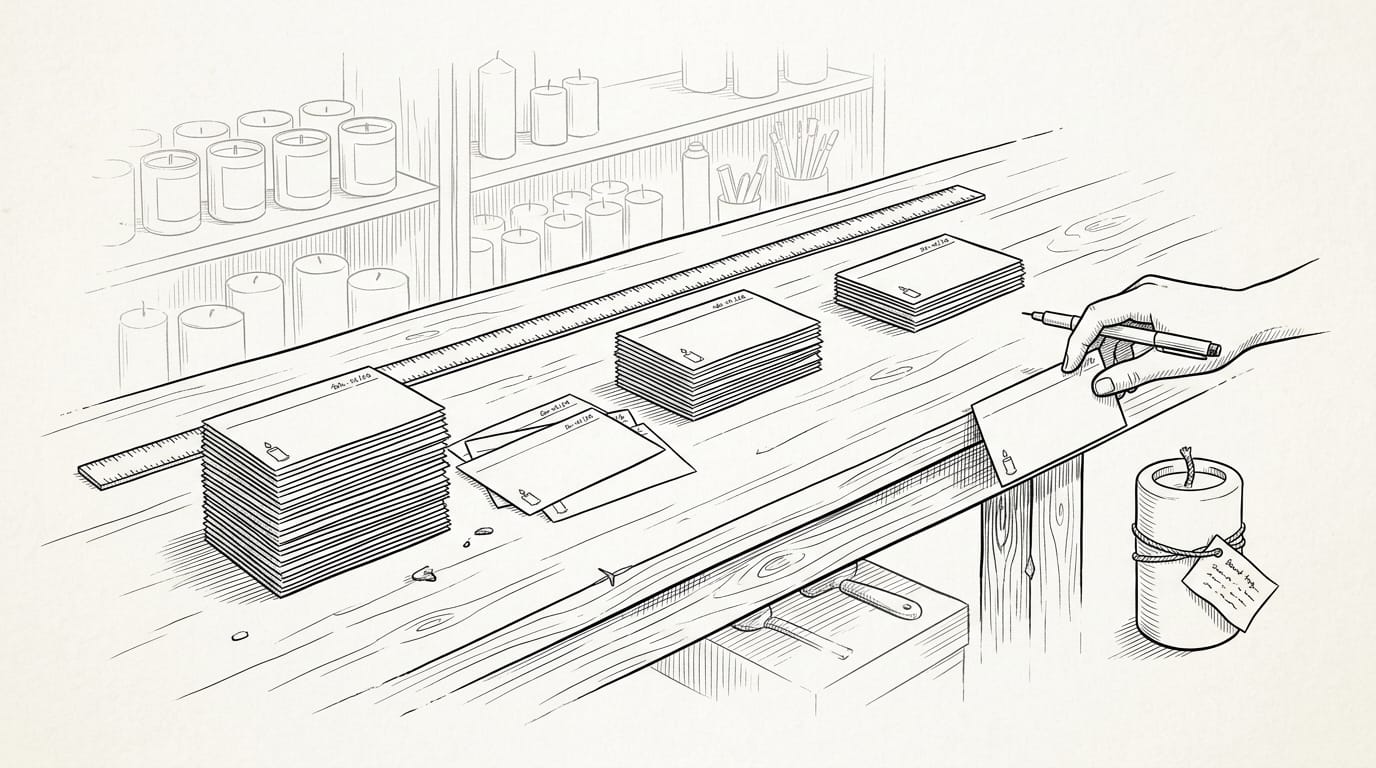
Product recommendations follow the same data: a candle maker’s one-time buyer gets a note about refilling the scent they chose, which gives them a reason to return.
Sending the right emails without overdoing it
A post-purchase sequence is a short run of emails after someone buys: a thank-you, a how-to tip, then a check-in. Win-back campaigns target people who’ve gone quiet, and one helpful note often beats a flood of discounts.
Cart abandonment emails nudge shoppers who left items behind, and one reminder sent soon after catches the ones who simply got distracted. Avoid over-emailing: more messages don’t mean more loyalty. The goal is relevance, not volume. Quieter often wins.
Reaching customers through push, in-app and WhatsApp
Push notifications are phone alerts, in-app messages live inside your app or account area, and WhatsApp is the chat app many customers already use. Use only channels people have agreed to.
Regular touchpoints, like a seasonal tip, keep you in the picture on a rhythm you can sustain.
Personalized greetings are the simplest win: a yoga instructor who sells mats might WhatsApp a student who bought a block last spring: ‘Hi Dana, ready to restock?’ The student reorders without needing a discount.
Turning Happy Customers into Advocates
Happy customers often spread the word if you give them a reason and an easy way to do it.
Rewarding referrals and timing the ask well
Start with referral rewards for customers who send buyers your way, and reward both sides so the deal feels fair.
Take a home baker who sells custom cakes. When a client raves about one, she texts: if a friend orders this month, you both get a discount.
When someone praises your work, that’s the moment for easy sharing: put a share link right in your reply.
Affiliate extensions take referrals further: each advocate gets a unique link and earns a commission on sales.
Good moments to ask include:
- A delivery that arrived in great shape
- A reply saying they love it
- A repeat order
Asking at checkout, before they’ve used anything, gets a shrug. Ask at the peak of their happiness instead.
Building a community around your brand
Private groups and events give customers a place to connect. A yoga instructor starts a members-only group. Students swap routines and answer each other’s questions, freeing up her inbox.
User-generated content, the photos customers post themselves, often beats anything you write about yourself. Ask permission first. A candle maker who reposts customers’ photos gives new buyers proof they can trust.
Anchor the community in your mission. People join for a cause, not just a product, and shared values give them a reason to stay.
Network effects mean a product grows more valuable as more people use it. Competitors can match your prices and copy your logo, but not the people in your group. That’s the part no rival can buy.
Real Examples of Retention Done Well
The moves below aren’t reserved for big companies. Notice how it’s less about landing a sale and more about keeping the buyer you already have.
How big brands keep customers coming back
- Delta SkyMiles: a points program that rewards repeat flights, so each trip adds to a balance travelers want to grow.
- ZoomInfo second onboarding: a follow-up step after the first sign-up, aimed at getting customers to real use.
- Notion community: a shared space where users help one another, giving people a reason to return.
- Sweet Fish check-ins: regular contact after the sale to see how customers are doing.
- Netflix personalization: recommendations tailored to each viewer’s history.
Online shops that turned buyers into regulars
- OWYN rewards: rewards for buying again, so repeat orders pay off.
- Oats Overnight hashtag: a branded hashtag that invites customers to share their own posts, turning buyers into a visible community.
- Frank & Oak affiliates: an affiliate program where outside partners earn a commission for sending customers their way.
- Thrive Causemetics referrals: a referral program where existing customers bring in friends who might buy.
- Mamaearth and Bella Vita results: both are worth studying through one question: did customers come back, and what did they change to make it happen?
Think of a solo candle maker who slips a short note into every order, then follows up to ask how the first candle burned. She adds a refill code, making the second order a repeat purchase she can plan for. That second order is the win.
Retention comes down to treating the customers you have as your most valuable asset. Measure whether they stay, plan your moves on purpose, and give each buyer a good reason to come back.
If you’re working solo, you don’t need every tactic on the list. Pick two or three that fit your hours and budget, run them consistently, and watch what changes.
The people who already trust you are the most reliable growth plan you’ll ever have.
References
- The elasticity of customer value to retention: The duration of a customer relationship — journals.sagepub.com
- Maintenance of Customer Loyalty and Its Impact on Revenue — doi.org (2025)
- Measuring Customer Churn and Interconnectedness — doi.org (2020)
- The service recovery paradox: justifiable theory or smoldering myth? — doi.org (2007)
- Moxo’s 2026 B2B Retention Report Finds 43% of Client Churn Occurs in the First 90 Days — prnewswire.com (2026)
- 4 Reasons Customer Acquisition Costs Keep Rising — forbes.com (2026)
- The Value of Keeping the Right Customers — hbr.org
Questions
What is a customer retention strategy?
A customer retention strategy is a written plan for keeping current buyers coming back. It typically uses customer data to choose a few practical actions, sets a budget and return expectations, and puts customer needs at the center.
What is the 10/5/3 rule in customer service?
The 10/5/3 rule is a customer-service guideline for acknowledging customers at set distances or intervals, commonly described as making eye contact or smiling at 10 feet, greeting them at 5 feet, and offering assistance at 3 feet. The exact interpretation can vary by business, so teams should define targets that fit their service setting.
What is the difference between retention and churn?
Retention measures the customers who continue buying over time, while churn measures the customers who stop buying. Churn is the opposite of retention: a higher retention rate generally means a lower churn rate.
What are the four pillars of retention?
The four pillars of retention are trigger, mechanism, reward, and reinforcement. A trigger prompts a customer to return, the mechanism makes returning easy, the reward makes it worthwhile, and reinforcement encourages the cycle to continue.
How to increase brand loyalty?
Increase brand loyalty by recognizing existing customers, making repeat purchases easy, and giving people worthwhile reasons to return. Useful approaches include personalized rewards, loyalty programs, reliable support, acting on feedback, and relevant follow-up messages.
What do we call keeping customers loyal?
Keeping customers loyal is generally called customer retention. Retention measures whether customers continue to buy, while loyalty describes the reasons they choose to return.
What does improve customer retention mean?
Improving customer retention means increasing the share of existing customers who continue buying over time. It usually involves making the customer experience more valuable and convenient, responding to feedback, and giving customers reasons to return.
Sources
- The Value of Keeping the Right Customers, hbr.org
- 4 Reasons Customer Acquisition Costs Keep Rising, forbes.com,
- The elasticity of customer value to retention: The duration of a customer relationship, journals.sagepub.com
- Maintenance of Customer Loyalty and Its Impact on Revenue, doi.org,
- Measuring Customer Churn and Interconnectedness, doi.org,
- Moxo's 2026 B2B Retention Report Finds 43% of Client Churn Occurs in the First 90 Days, prnewswire.com,
- The service recovery paradox: justifiable theory or smoldering myth?, doi.org,
- Deep learning for recommender systems: A Netflix case study, doi.org,