5-4
What Is Retail Pricing? A Plain-English Guide
What is retail pricing? Set a price that covers your costs and earns a profit, using the markup formula and practical ways to test it before launch.
- Written by

- Published
- Updated
- Reading time
- 9 min read
Retail pricing is the price a business charges the final customer for a product, while wholesale pricing is typically lower and paid by resellers buying in bulk. Set prices by accounting for product costs, labor, fees, and overhead, then choose an approach that fits buyer value, competition, and your business goals. Test prices on a small batch and track profit so each sale supports healthy cash flow instead of merely increasing sales.
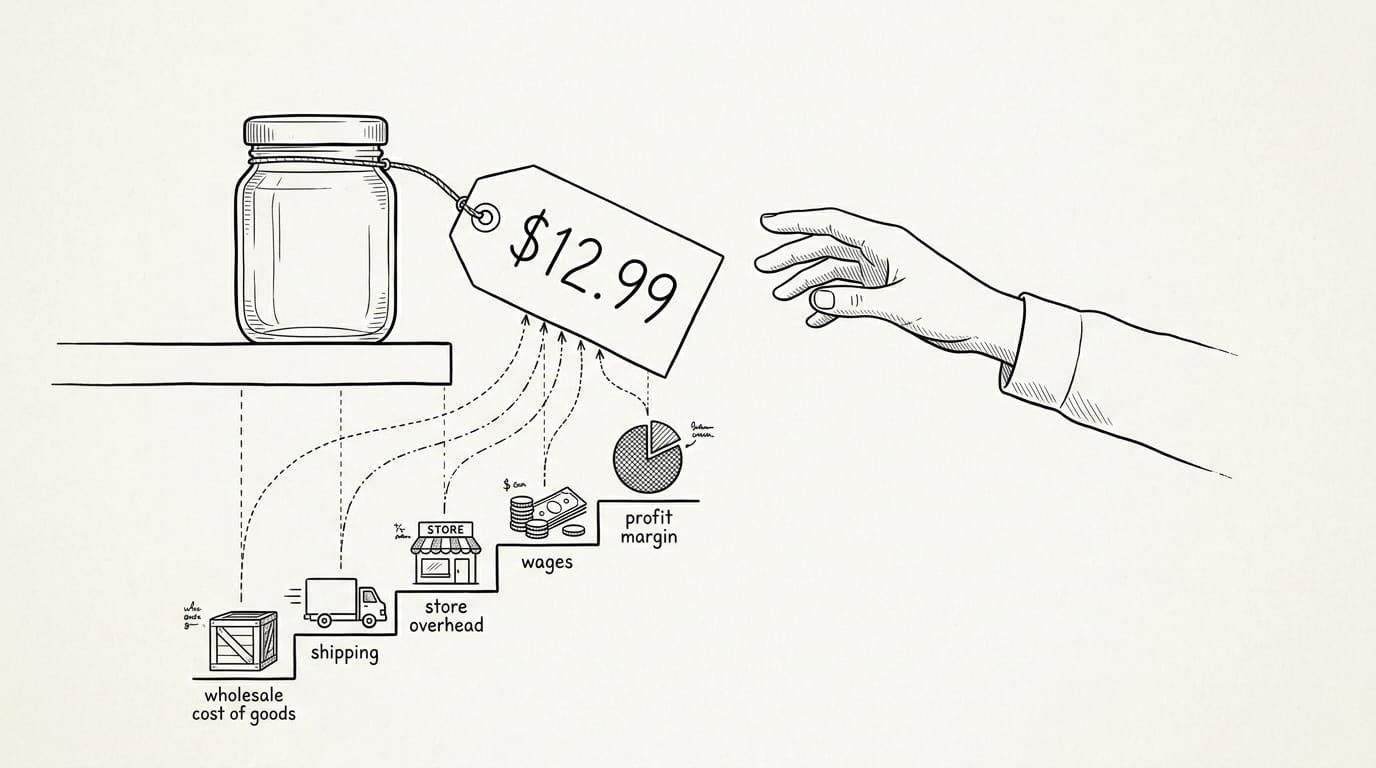
In this guide
Say you’re selling hand-poured candles from your kitchen table. You picked a price because it felt right, and a friend said it sounded fair. Plenty of side-hustlers start exactly that way.
Retail pricing is the price you charge the final customer for a product, and it’s the number that decides whether your hustle pays you or just keeps you busy.
In this post, we’ll cover the difference between retail and wholesale, what MSRP (the manufacturer’s suggested retail price) means, the markup formula, the main pricing strategies, and how to test a price before you launch.
What Retail Pricing Actually Means
Retail pricing is setting the price a customer pays for what you sell. These are the core terms to know before you set yours.
The final price a shopper pays
The retail price is the final price an end consumer pays for a product they’re buying for their own use, not to resell. It’s tied to perceived value, meaning what the buyer thinks the item is worth. Choosing that number is retail pricing.
Your selling price is whatever you charge anyone. If you sell straight to shoppers, it’s the same number as your retail price.
Say you sell cutting boards at weekend craft fairs. Your tag price is about what the buyer values, not what you spent. Shoppers never see your sanding time. They see a board at a price they’ll pay.
What is the opposite of retail price?
The opposite of retail price is the wholesale price, the lower price a reseller pays to buy in bulk and sell on. The product can be the same. What changes is who buys it and why.
- Wholesale sales go to resellers. The buyer will sell the product, not use it.
- Bulk volume buying. Resellers usually purchase in quantity, which lowers the per-unit price.
- Retailers set the final price. Once they own the product, they choose the shelf price.
- Wholesale is lower than retail. That gap is where the reseller’s profit comes from.
The manufacturer’s suggested list price
The manufacturer’s suggested retail price (MSRP) is what a maker recommends a retailer charge. It’s also called the list price or recommended selling price (RSP), and it’s usually printed on the tag or shelf label where the shopper pays.
It’s a suggestion, not a rule. A reseller at a market stall can use the printed MSRP as a reference point, then set her own price.
Separating a retail price from your cost
Your cost of goods sold (COGS) is the direct cost of making or buying each item you sell, like materials and parts, not rent or ads. You may also see cost of sales, which for a product seller usually means the same thing.
Subtract COGS from the retail price and you get gross profit per item.
Say the wood and finish for your cutting boards get more expensive. Your gross profit shrinks, even though the tag never changes. Know that gap before the fair starts.
Why Getting Prices Right Counts
Your price does more than cover a cost. It decides how much cash you keep, how shoppers see your work, and whether they come back.
Keeping profit and cash flow healthy
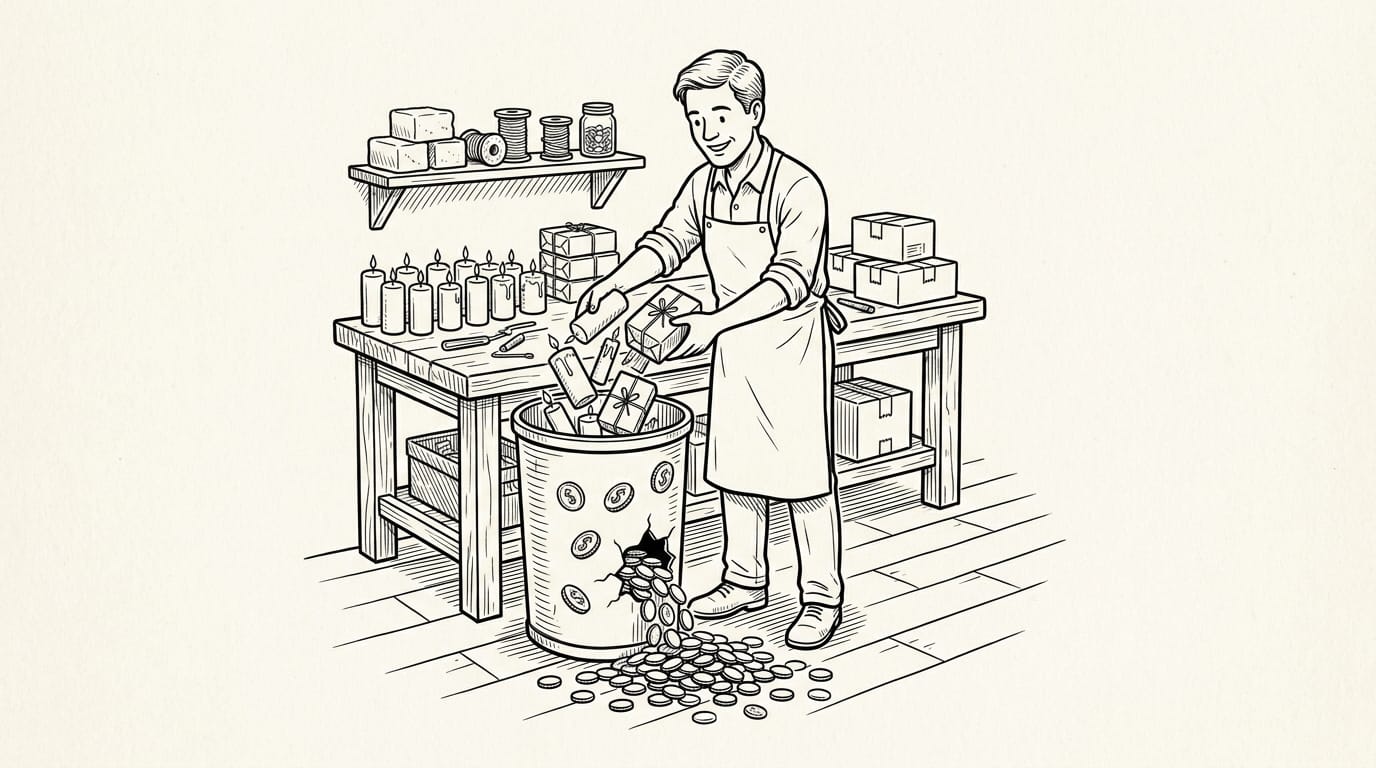
A price that’s too low drains your cash flow, the money you have on hand for supplies, shipping, and the next batch. Your price has to cover every cost of making and delivering a candle, then leave a healthy margin: the share of each sale you keep.
Selling below cost feels like growth. Every extra order just deepens the hole.
Standing out and earning repeat customers
Price is often the first thing shoppers compare, which makes it a way to differentiate from competitors. Compete on price alone and someone can always undercut you.
A price that reflects your materials and care lets you compete on what makes your product yours.
Fair prices bring people back. Take a woodworker who sells cutting boards at a weekend market and holds the same price all season. Regulars keep buying holiday gifts from her, and she spends less time chasing new customers.
Pricing affects company image too. Prices that jump every time sales slow tell customers you’re improvising. Steady prices say you know what you’re doing.
How shoppers see price versus value
Shoppers don’t just see a number. They weigh value, what a product is worth to them, against the price. When value feels higher, buying feels easy.
Branding shapes that perception. Photos, packaging, and how you describe your work tell buyers what to expect before they pay. Your brand is part of your pricing, not separate from it.
Too high loses sales, though. If your price looks out of line with what buyers expect for something similar, they’ll leave before they read your story. The goal is a price that feels earned, not inflated.
Working Out Your Retail Price and Costs
Your retail price has to cover what each item costs you and still leave something over.
Adding a markup to your unit cost
A unit cost is what one item costs you. A markup is what you add on top. In math, a retail price is your unit cost plus your markup. Take a candle maker whose candles cost $10 each. A 50% markup adds $5, so she lists them at $15.
Markup is calculated on cost, while profit margin is calculated on price. That $15 candle has a 50% markup but only about a 33% margin ($5 divided by $15). A profit margin calculator does this math for you.
Here’s the catch: fees and discounts eat into your margin, so build them in before you set the price.
Where your product costs come from
Costs come in three layers:
- Production and acquisition. Materials, or what a supplier charges you.
- Logistics, storage, and labor. Shipping, shelf space, and paid help.
- Overhead and marketing. Software, insurance, and ads.
Your own time counts, too. Three hours a week packing orders, valued at $20 an hour, is $60 a week your prices need to recover.
Tracking COGS and gross profit by product
Cost of goods sold (COGS) is what you paid for the items you actually sold. Many sellers call this cost of sales, and for a product business the two mean the same thing.
Operating expenses are everything else, like rent, software, and marketing. Keep them out of COGS so each product’s numbers stay clean.
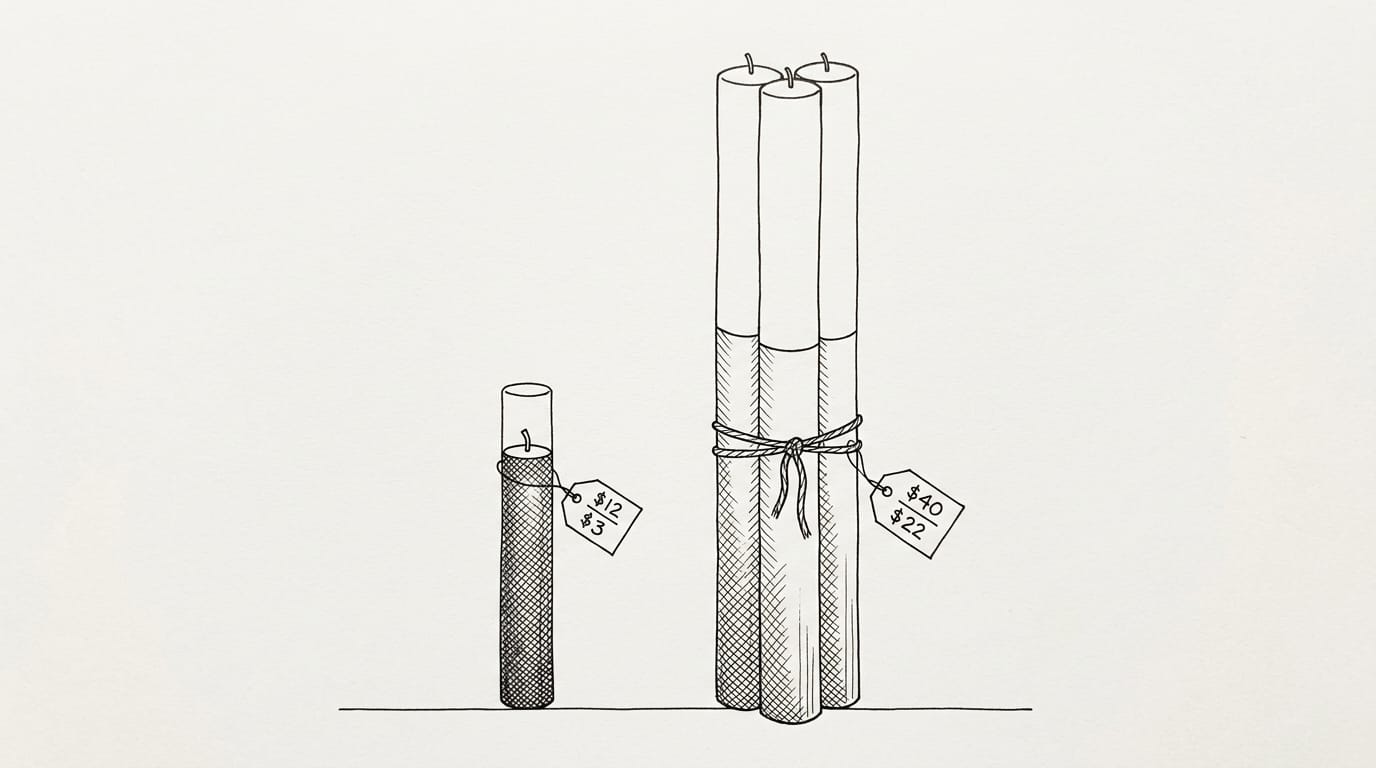
Gross profit is revenue minus COGS, tracked product by product. A $40 candle bundle might earn $22 of gross profit, while a $12 single earns $3. Gross profit shows you which products pay.
Valuing stock at cost or retail prices
Stock can be valued at cost, what you paid, or at retail, what it sells for. Cost is the usual basis for your books.
The retail inventory method uses both: divide stock at cost by stock at retail to get a cost ratio. Say $600 at cost sits against $1,000 at retail: that’s a 60% ratio, so $400 of retail stock is worth $240 at cost.
Shrinkage is inventory lost to theft, damage, or miscounts. The basic method compares your records with a physical count. If records show $1,000 and the count finds $940, that’s $60 of shrinkage.
What Pushes Retail Prices up or Down
Before we pick a number, look at what’s behind it. Some forces sit inside your business. Others sit well outside it.
What your own business controls
Start with labor and marketing. If you spend six hours a week hand-making candles, that time has a cost, even if you never pay yourself. Marketing adds up too, since samples and ads come out of the same margin.
Next up are logistics and storage. Picture a side hustler shipping candles from her spare bedroom. Boxes, padding, and postage can quietly eat more of each sale than she planned for, and a closet full of stock takes up space as well as money.
Last is your supplier or manufacturer choice, which sets your cost of goods. A cheaper wax supplier might let her lower her price, but if the wax burns poorly, the savings won’t last long.
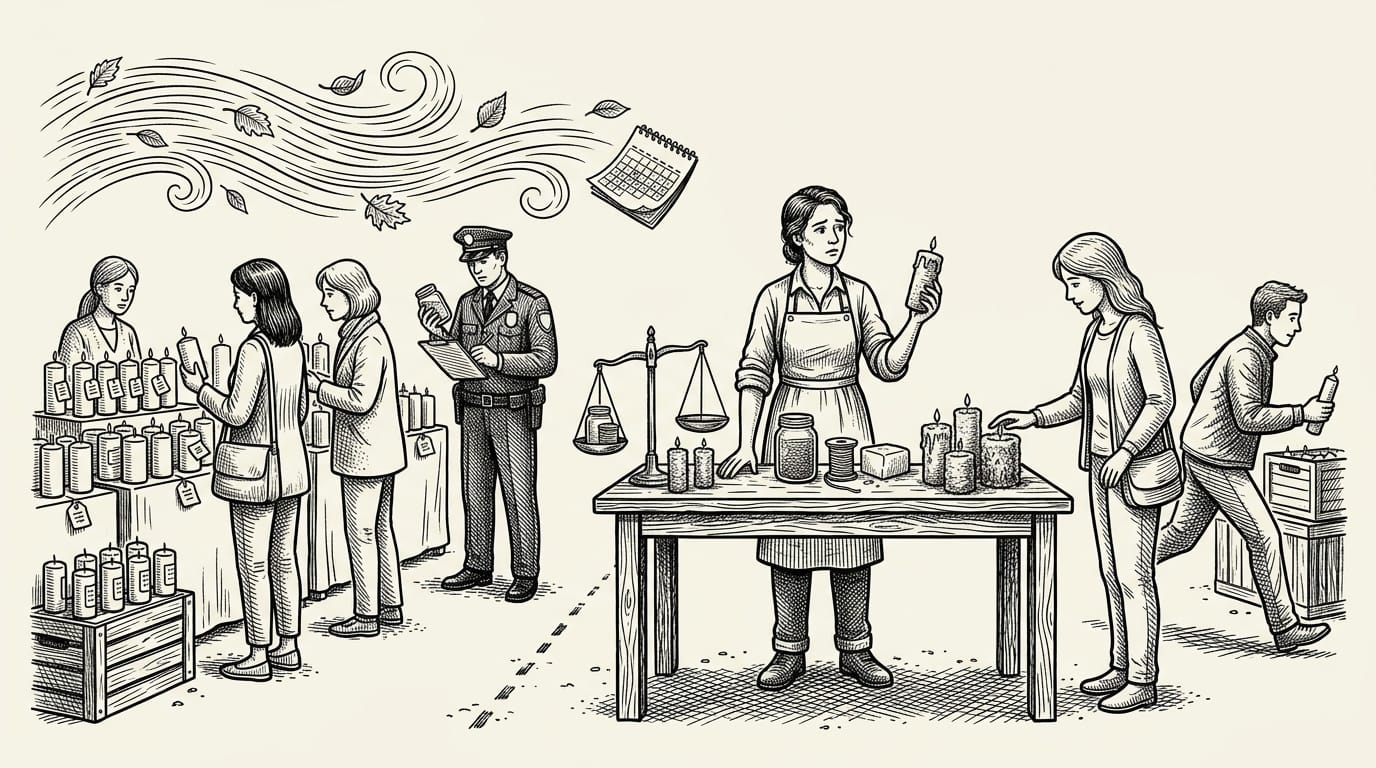
Outside forces that move prices
Other pressures come from the outside world, and you can only plan for them. Market competition is the most visible. If three other sellers list a similar candle for less, buyers will compare.
Government regulations matter too. Licensing, labeling, and safety rules can add cost to a product before a single sale happens. Market trends shift what sells and when, so a product that’s hot this season may cool off by the next.
Finally, consumer behavior and preferences decide what buyers will pay. One shopper might pay more for a candle that feels handmade, while another shops only on price. You control your costs.
You don’t control what buyers feel a product is worth. Plan for that gap anyway.
Ways to Set Your Retail Prices
Every price on a shelf comes from some method, whether you picked it on purpose or not. Here are the main approaches we’ll walk through.
Setting prices from what you pay
- Cost-plus or markup pricing. Add a markup to what an item costs you. An $8 tote with a 50% markup sells for $12.
- Keystone doubling cost. Keystone pricing doubles your cost, so that tote sells for $16. Simple, but only a starting point.
- Break-even pricing. It sets your price so enough sales cover your costs. Divide $60 in monthly fees by the $4 each $12 tote keeps after its cost, and you need 15 sales to break even.
- MSRP pricing. The manufacturer’s suggested retail price (MSRP) is the sticker price a brand recommends. You can price above or below it, but buyers will notice.
Pricing that plays on buyer psychology
Shoppers don’t always buy on math. These tactics work on how a price feels.
- Value-based luxury pricing sets the price by perceived worth, not cost, which suits items with a clear story behind them.
- Psychological $9.99 pricing ends prices in .99 so they read as just under the next dollar.
- Price anchoring shows a higher price first, so your real price looks reasonable beside it.
- Bundle pricing sells items together for less than they’d cost separately.
Pricing against what competitors charge
Competitive pricing sets your price relative to similar products, at, below, or above the going rate. Check those prices often, since they move.
Price matching policies promise to match a lower competitor price, so know the conditions before you make that promise.
Low-quality perception is the risk of pricing too far below the market. Buyers may read cheap where you meant good value.
Launch prices and shifting demand
- Dynamic or real-time pricing changes prices as demand, timing, or stock shifts, which takes steady monitoring.
- Penetration pricing starts low to win customers, then rises.
- Price skimming starts high to catch early buyers, then comes down.
- Discount pricing uses temporary cuts to move stock. Overuse teaches buyers to wait for the sale.
Picking and combining the right strategies
A pricing strategy is your overall plan for setting and adjusting prices to hit your goals, like healthy margin or steady volume. In retail management, it’s the logic behind every tag on the shelf.
- Match strategy to business. Base the choice on your margin, your competition, and the image you want.
- Combine multiple strategies. Layer them: a markup as your floor, a charm ending, and bundles for bigger orders.
- Consult a retail consultant. When the numbers still don’t add up, a consultant can review them with fresh eyes. Weigh the fee against the cost of a bad price.
- Test price on a small batch. Say you sew totes on weekends. Price half a batch at $16 and half at $20, sell them at the same market, and watch. If the $20 bags sell just as fast, you can charge more. If not, you’ve learned that before buying supplies for 200 bags.
Good retail pricing comes down to knowing what each sale actually leaves in your pocket. Keep your costs in view, understand how retail and wholesale prices differ, run the markup math, and choose a strategy that fits the customer you’re after.
Then test the number before it goes public, because a price you’ve checked is one you can trust.
Get the number right, and every sale starts working for you.
Questions
What is pricing strategy in retail management?
A pricing strategy in retail management is the overall plan for setting and adjusting prices to meet goals such as healthy profit margins or steady sales volume. It may account for costs, competitors, customer perceptions, and the store’s desired image.
What is the opposite of retail price?
The opposite of a retail price is generally the wholesale price. It is typically a lower per-unit price paid by a reseller buying products to sell to customers.
What is a retail price in math?
In math, a retail price is the amount charged to the final customer. It can be calculated as unit cost plus markup; for example, a $10 cost with a $5 markup gives a $15 retail price.
What's the difference between selling price and retail price?
A retail price is the price charged to the final customer, while a selling price is any price charged to a buyer. When a business sells directly to shoppers, the selling price and retail price are usually the same; a wholesale selling price is different.