6-5
Cost-Plus Pricing Explained: Formula, Markup & Margin
Cost-plus pricing turns your costs into a starting price. See how to count your hours, add markup, and avoid confusing markup with margin, too.
- Written by

- Published
- Updated
- Reading time
- 14 min read
- Sources
- 3 cited
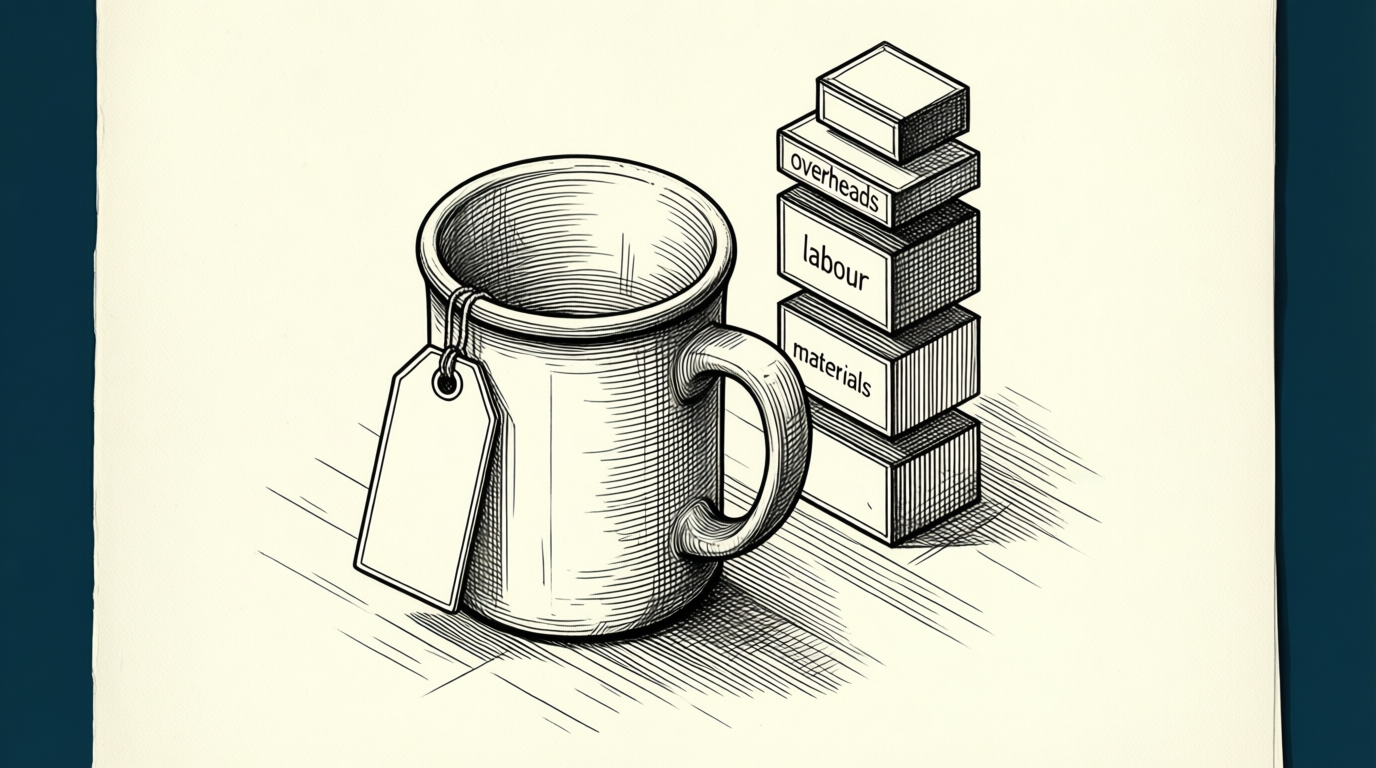
Cost-plus pricing sets a product or service price by adding a markup to the full cost of making or delivering it. Add up materials, labor, overhead, and shipping, include your own time, then choose a markup and check whether the result fits customer demand and competitor prices. It offers a simple, explainable starting point, but accurate costs and regular market checks matter because cost alone cannot show what buyers will pay.
In this guide
Think about baking cookies for a school bake sale. You add up the flour, butter, and eggs, then tack on a little extra so the sale covers your time. That’s the heart of cost-plus pricing.
Cost-plus pricing means totaling what a product costs you to make or deliver, then adding a markup to reach your price. It’s a simple starting point for many side hustlers.
Below, we’ll cover the formula, how markup differs from margin, when the method helps, and how to count your hours and costs so your price actually pays.
What Cost-plus Pricing Means for Your Prices
Before you pick a number, you need to know what it costs you to make and deliver. Cost-plus pricing starts there.
Its definition and other names
Cost-plus pricing sets your price by adding a markup to your cost of production. The formula is simple: cost plus markup equals price. You’ll also see it called cost-based pricing or markup pricing.
It’s the simplest pricing method there is, and the result covers your costs plus a profit.
Setting prices from cost, not demand
With cost-plus, you set prices from cost rather than demand. You work out what each unit costs you to make and set aside how much buyers might pay. Think of a side hustler who makes cutting boards in her garage.
She adds up the lumber, the finish, and her sanding time, then adds her markup.
The formula also ignores competitor pricing, so a cheaper board down the road won’t move her number. Her profit is predetermined: each sale carries the margin she planned, as long as her cost count is accurate. Simple, but not careless.
How buyers check what suppliers charge
This is what people call cost transparency in the supply chain: everyone can see what goes into a price. If you sell to a business, its buyer may run the same math on yours.
Through a should-cost analysis, they estimate what your product ought to cost to make and compare that with your quote. Because a cost-plus price is already built from those costs, it’s easy to check. Say you sell coffee bags to a local cafe.
Keep a clear breakdown of beans, roasting, and packaging ready, and the buyer’s questions get quick answers.
Calculating a Cost-plus Price Step by Step
Cost-plus pricing is only as good as the costs you feed it, so list every one first.
What are the four types of costs?
Your costs fall into four types:
- materials (fabric, resin, packaging)
- labor (the time it takes, including yours)
- overhead (rent, software, insurance)
- shipping (delivery to the customer)
Each is also either fixed (same no matter the volume) or variable (rises with each unit).
The Cost Plus Pricing Strategy guide calls cost-plus a simple formula: Price = Cost + Markup, or cost × (1 + markup) when the markup is a percentage. Don’t skip yourself: pick an hourly labor rate and multiply it by the hours each unit takes.
See the math in real examples
A $25 product with a 40% markup is priced at $35, since 40% of $25 is $10. A weekend jeans maker lists fabric and trims as materials, her sewing hours as labor, and postage as shipping, so she knows each pair’s real cost before she prices it.
An automotive plastic part gets the same treatment: resin, press time, and freight are totaled before any markup. A software as a service (SaaS) company counts hosting and support per user, then adds a markup per seat.
Stacking markups across each cost layer
Markups can also stack, each layer applied to the total so far:
- Material overhead: buying and storing materials.
- Manufacturing overhead: shop costs like power and equipment.
- Admin and selling costs: bookkeeping and marketing.
- Profit markup: the final layer, which you set on purpose.
Small layers add up fast.
Is 30% markup the same as 30% margin?
No. Markup is a percentage of cost, while margin is a percentage of price. On a $100 cost, a 30% markup gives a $130 price and $30 of profit, which is only a 23.1% margin. Same number, different math. A true 30% margin needs roughly a 43% markup.
Gross margin subtracts only the cost of goods sold, while net margin also subtracts other expenses. Markups Across Space and Time defines both, so check which one a benchmark uses.
A study of publicly traded health care companies notes that firms in one industry turn assets into revenue with similar efficiency, so industry averages give your margin context. For retail, a 30 to 50% margin is the target range to aim for.
How other costing methods compare
Cost-plus is one of several approaches:
- Activity-based costing assigns overhead by the activities that drive it, not evenly.
- Target costing starts from the price customers will pay and works backward.
- Clean-sheet costing ignores current costs and builds the product from scratch.
Cost-plus starts from what you spent. Use it to get your numbers straight, then test the result against what buyers will pay.
Why Many Businesses Rely on It
Cost-plus pricing is popular because it’s built on numbers you can see. It tends to earn its place for four reasons:
Quick and easy to work out
The math is simple. You add up what it costs to make or deliver one unit, then add a markup, and that’s your price. It starts with your costs, not what competitors charge, so there’s no market study to finish first.
You don’t need a research team, just a spreadsheet with a few rows.
Easier to explain and defend to customers
When a customer asks why, you have a clear answer: it covers what the product costs you, plus a set markup. That’s easy to repeat and easy to believe. Take a side hustler who sells hand-poured candles for $9.
Her wax, wick, jar, and label come to $6, so the extra $3 is her markup, and she can explain that in one breath. The same formula applies to every buyer, so no one pays more based on a guess. That’s fair, non-discriminatory pricing.
Prices people can follow build brand trust, and showing your logic supports transparency.
Steady returns you can forecast
Here’s what cost-plus gives you to plan around:
- Consistent return. Every sale earns the same markup on its cost, so the return holds steady.
- Costs covered. As long as you’ve counted costs correctly, every sale covers them.
- Easy revenue estimates. If she expects 100 candles next month at $9, that’s $900 in expected revenue.
- Quick cost-based adjustments. When her wax supplier raises prices, she recalculates the cost, reapplies the markup, and the new price follows.

Testing new markets with little data
How do you price something nobody has bought yet? When you’re entering a market you don’t know well, you probably have no sales history and little competitor data.
Cost-plus still gives you a defensible starting price, because it’s built on your own costs. That makes it useful for new markets and for a new retailer with no track record.
It also helps when customer value is hard to assess, such as a service people haven’t tried. Cost is something you can measure. We’d treat that first price as a starting point, then adjust once real buyers show you what they’ll pay.
Where the Method Can Hurt You
Cost-plus is simple, and that’s its blind spot. It knows what you spent, not what customers will pay. Here’s where we see that gap play out.
Missing what customers would really pay
The biggest gap is willingness to pay, the most a customer would hand over. Customers care about value, and a price built only from your costs can sit well below what it’s worth to them.
Trending products make this obvious. A side hustler sells handmade phone stands at a price that covers materials and time. When one goes viral, buyers would pay more, but her formula keeps the old price.
High-value offerings get shortchanged too. A done-for-you service priced by cost alone turns into charging for hours instead of results.
Overlooking rivals and changing markets
Cost-plus also skips competitor research, checking what similar products sell for, so prices can drift from the market. Your costs tell you what you need to charge. The market tells you what you can get.
It also ignores trends and demand, so a surging product and a fading one get the same markup.
Problems tied to shifting costs
Costs don’t hold still, and cost-plus assumes they do:
- Inflation not accounted for. Last quarter’s invoices set today’s price while materials keep climbing.
- Inflated sales volume assumptions. Overhead gets split across the sales you hope for, so each unit looks cheaper than it is.
- Lower costs force lower prices. A cheaper supplier drags your price down even if customers would have paid the same.
- No incentive to cut costs. The markup is a percentage of spending, so every dollar you trim shrinks the markup you collect.
Getting cost numbers right is tricky
Cost-plus is only as good as your cost figure. Start with overhead allocation, splitting shared costs like your phone and software across everything you make. An arbitrary split passes its error into every price.
Mixed product portfolios and flat markups compound this. One markup on a simple starter kit and a complex premium one overprices the first and underprices the second.
Expertise is harder to price. A consultant’s ten-minute answer reflects years of practice, but a time formula only counts the ten.
Your own time is easy to undercount. A freelance designer who skips logging evening revisions looks profitable on paper while working for free. The hours you log rarely match the hours you actually work.
Risks when suppliers and prices shift
Your supplier knows more about their costs than you do. That gap is information asymmetry, where one side of a deal knows more than the other. Prices can rise on reasons you can’t easily check.
A markup set once goes stale. Raw material prices swing, too. Think of a candle maker whose wax costs jump from one order to the next. If she prices off the last invoice, she overcharges when wax is cheap and gets squeezed when it spikes.
Costs move. Your price should too.
Deciding When Cost-plus Makes Sense
Cost-plus fits some businesses and breaks others, so check the fit first.
Industries where it works well
Cost-plus works best where costs are easy to count and stay steady:
- Retail clothing and grocery. Each item has a known purchase cost, so the markup is simple to set.
- Manufacturing with predictable costs. Steady materials and labor give you a reliable base to mark up.
- Low elasticity products. Elasticity measures how much sales drop when prices rise. If demand barely moves, cost-plus won’t cost you buyers.
- Enterprise software-as-a-service (SaaS) baseline pricing. Hosting and support costs per customer set the floor for your starting price.
Products shoppers buy regardless of price
Some products sell steadily whatever the price, because buyers need them. That’s inelastic demand, and cost-plus suits it well.
The real split is core basics versus trending items. A home baker who sells plain sourdough every Saturday can lean on a cost-plus price, since regulars keep buying. Her seasonal pumpkin loaf, though, sells out in two hours.
The cost hasn’t changed, but demand has, so she can charge more for it.
Limited editions need other pricing. Scarcity drives what buyers will pay, so price by the market and treat cost as your floor.
Checking rivals before you mark up
Before you add a markup, check three things:
- Compare competitor margins. Estimate the margin, meaning what’s left after costs, that rivals keep.
- Decide whether to charge more. Price above rivals only if your product is clearly better.
- Avoid churn from high markup. Churn is the rate at which customers leave, and a price that’s too high sends them to cheaper options.
Say you sell leather keychains at $24 while a similar one sells for $18. On paper the markup looks fine, but if yours isn’t clearly better, regulars drift off and your hours go unpaid.
When it’s the wrong choice
Cost-plus anchors your price to what it costs you, not what it’s worth to the buyer. Watch for four cases:
- SaaS and tech value exceeds cost. A tool that saves a business hours a week can be worth far more than it costs to build, so cost-plus leaves money behind.
- Heterogeneous portfolios. Your portfolio is your full product range, and when it’s mixed, with items that differ in cost and volume, splitting shared expenses like rent gets messy.
- Complex manufacturing. Products with many steps have costs that are hard to pin down, so the markup rests on a shaky number.
- Volatile market conditions. When material prices swing, your price goes stale fast.
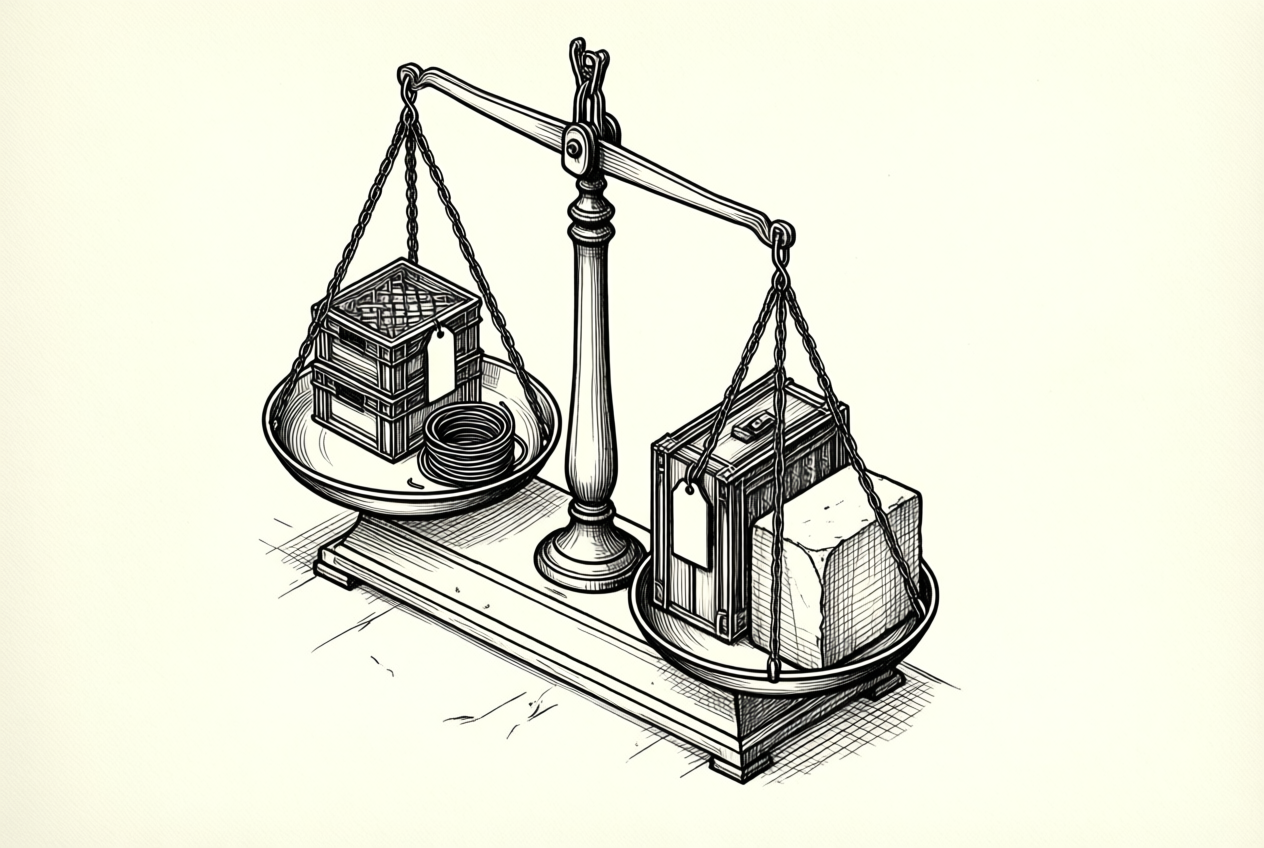
Low prices without a cost-plus formula
Some low-price businesses skip the fixed markup entirely. A price leader sets the low benchmark others follow.
Costco is often cited as a price leader, and IKEA is a familiar example of pricing that doesn’t start with a cost-plus formula.
Cost-plus isn’t required for price leadership. It’s one way to set a price, not the way, and the work of being cheap happens in your costs.
Other Ways to Price Your Products
Cost-plus isn’t your only option. Here’s how the main alternatives compare.
Pricing based on what customers value
Value-based pricing is the opposite of cost-plus. Instead of starting with what you spent, you start with what your buyer thinks the product is worth, called customer perceived value.
It suits unique, high-value products and is common for software as a service (SaaS) and other tech.
Consider a woodworker who sells cutting boards. Engraving a name takes minutes, but a couple buying an anniversary gift values it far more, so she charges extra for the engraved board.
What are four types of pricing strategies?
Most sellers pick from four main types:
- Penetration pricing: a low price to win customers fast, raised once you have a following.
- Keystone pricing: a standard markup on what you paid for the product.
- Competitive pricing: matching or undercutting what rivals charge.
- MSRP (manufacturer’s suggested retail price): the maker’s starting price, which retailers often follow.
Dynamic pricing models are the fifth option here. They move the price as demand or timing shifts, rather than holding it still.
Weighing cost, value, and competitors together
Strong prices weigh three factors together, often called the three C-factors:
- cost
- customers
- competitors
Cost matters in every strategy, because a sale that doesn’t cover your materials and hours won’t pay you back.
Opportunistic pricing, raising prices whenever demand spikes, can look smart. But customers remember a grab, and it can cost you trust.
The 5 C’s of pricing build on those three with two more factors about your business and the wider market. For the full list, check a trusted pricing source before you build on it.
Tips for Putting This Method to Work
Cost-plus pricing is only as good as its inputs. These tips help you set, check, and adjust your markup.
Getting your markup right from the start
Think of a home baker who prices cookies by flour and butter alone, ignoring packaging and oven power. Count both direct costs (materials tied to each item) and indirect costs (overhead like software and insurance).
Your markup is what you add on top of cost. Aim for a level that pays you for your time, not just one that covers your costs. Costs drift too, so review your cost data regularly. Validate it with benchmarks: check what similar products sell for.
Finally, work backward. Divide your fixed monthly costs by the profit you keep per sale to find your break-even point: the number of sales that covers your costs.
A weekend candle seller whose break-even needs more candles than her weekends can produce knows her price isn’t ready.
Tracking how well your pricing performs
- Calculation accuracy. Recheck your formula against real invoices, since a small error repeats on every sale.
- Markup efficiency. Confirm each product earns the markup you planned. Fast sellers at thin markups can still earn less overall.
- Savings realization. Check that every cost you cut actually shows up in your bank account. Savings you never keep are just hopes.
- Price variance analysis. Compare quoted prices with what you actually collect. Picture a designer whose friends-and-family discounts quietly erase her planned markup.
Varying markups and researching the market first
- Different markups by product group. A custom order takes more time than a standard item, so set each group’s markup to match its effort.
- Do market research first. Look at what buyers already pay before you set your markup, not after.
- Refine strategy over time. After a few months of sales, adjust what isn’t working. Small tweaks beat starting over.
Trends and Examples from Real Businesses
Here’s how well-known businesses use markups, and how newer tools are changing the math.
How real brands price with markups
Some brands make their markup part of the pitch. Everlane built its name on transparent pricing, showing shoppers what goes into a product.
Premium denim brands such as True Religion have long used high markups to signal quality, so the price is as much about the brand as the cost. Restaurant wine works the same way: a bottle’s markup has to cover more than the wine itself.
Agency fee models follow a different logic. A marketing agency might bill a monthly retainer, an hourly rate, or a percentage of ad spend. Think of a freelance copywriter who quotes an hourly rate.
If she tracks her real hours and costs, she can see whether that rate covers her costs and the profit she wants, or just sounds reasonable.
New tech changing how markups get set
AI-supported cost analysis tools read your invoices and spreadsheets, sort your costs, and suggest a markup. They speed up the math, but bad inputs still mean bad prices.
Dynamic markup models adjust the markup as demand, season, or stock on hand shifts. They change when you charge more, not whether your costs are covered.
Price indexation ties your prices to an outside measure, like a cost index, so they move with your inputs. It helps when material costs swing, but it’s only as fair as the index you pick.
ESG sustainability markups (ESG stands for environmental, social, and governance) add a premium for sustainable sourcing or fair labor. Count that premium as a real cost in your price, then be ready to say why it’s higher.
Cost-plus pricing gives you a clear starting point: know your costs, add a markup you can defend, and land on a price that covers your time. It’s not the only option, and it can hide problems if you ignore what customers will pay.
The real test is whether the number pays you for the work. Count every hour and cost honestly, check the result against the market, and adjust as you learn. A price that covers your time is the one that keeps your side hustle alive.
References
- Profitability and risk-return comparison across health care industries, evidence from publicly traded companies 2010–2019 — pmc.ncbi.nlm.nih.gov (2022)
- Cost Plus Pricing Strategy — restauracionforestal.catie.ac.cr
- Markups Across Space and Time — doi.org (2018)
Questions
What is cost-plus pricing in business?
Cost-plus pricing sets a product’s price by adding a markup to the cost of making or delivering it. The formula is cost plus markup equals price.
What is the meaning of pricing and costing?
Pricing is deciding how much to charge for a product or service. Costing is calculating the expenses involved in making or delivering it, including materials, labor, overhead, and shipping.
What is the difference between income and cost?
Income is money earned or received, such as revenue from sales. Cost is money spent to make, deliver, or run the business; subtracting costs from income shows whether the business made a profit.
What are the three pricing models?
Three common pricing models are cost-based pricing, value-based pricing, and competition-based pricing. They set prices primarily by costs, customer-perceived value, or competitors’ prices, respectively.
What are four types of pricing strategies?
Four common pricing strategies are penetration pricing, keystone pricing, competitive pricing, and MSRP-based pricing. They involve setting an initially low price to gain customers, applying a standard markup, responding to rival prices, or using a manufacturer’s suggested retail price.
What are the four types of costs?
The four cost types are materials, labor, overhead, and shipping. Each cost may also be fixed, meaning it stays broadly the same regardless of output, or variable, meaning it rises with each unit.
How to do cost-based pricing?
List the costs of making or delivering one unit, including materials, labor, overhead, and shipping. Add a markup to the total: price = cost + markup, or cost × (1 + markup rate) when the markup is a percentage. Check the resulting price against customer demand and competitor prices.
Is 30% markup the same as 30% margin?
No. Markup is calculated as a percentage of cost, while margin is a percentage of the selling price. A 30% markup on a $100 cost produces a $130 price and a 23.1% margin; a 30% margin requires about a 43% markup.
Sources
- Cost Plus Pricing Strategy - restauracionforestal.catie.ac.cr, restauracionforestal.catie.ac.cr
- Profitability and risk-return comparison across health care industries, evidence from publicly traded companies 2010–2019, pmc.ncbi.nlm.nih.gov,
- Markups Across Space and Time, doi.org,