5-3
Customer Acquisition Cost: Formula, Benchmarks and Fixes
Customer acquisition cost shows what each new buyer costs, from market-stall signs to table fees, with a simple way to calculate CAC on a tiny budget.
- Written by

- Published
- Updated
- Reading time
- 12 min read
- Sources
- 6 cited
Customer acquisition cost (CAC) is the total sales and marketing cost of winning a new paying customer, divided by the number of new customers acquired in the same period. Count paid promotion, tools, staff, and your own marketing time, then compare CAC with customer lifetime value and the time it takes gross margin to repay it. Track paid channels separately because blended averages, repeat-customer revenue, and attribution gaps can hide costly acquisition; use the numbers to shift effort toward what works.
In this guide
Picture a weekend farmers market stall. You’ll pay for the table, print a few signs, and give up a Saturday morning to get strangers buying your jam.
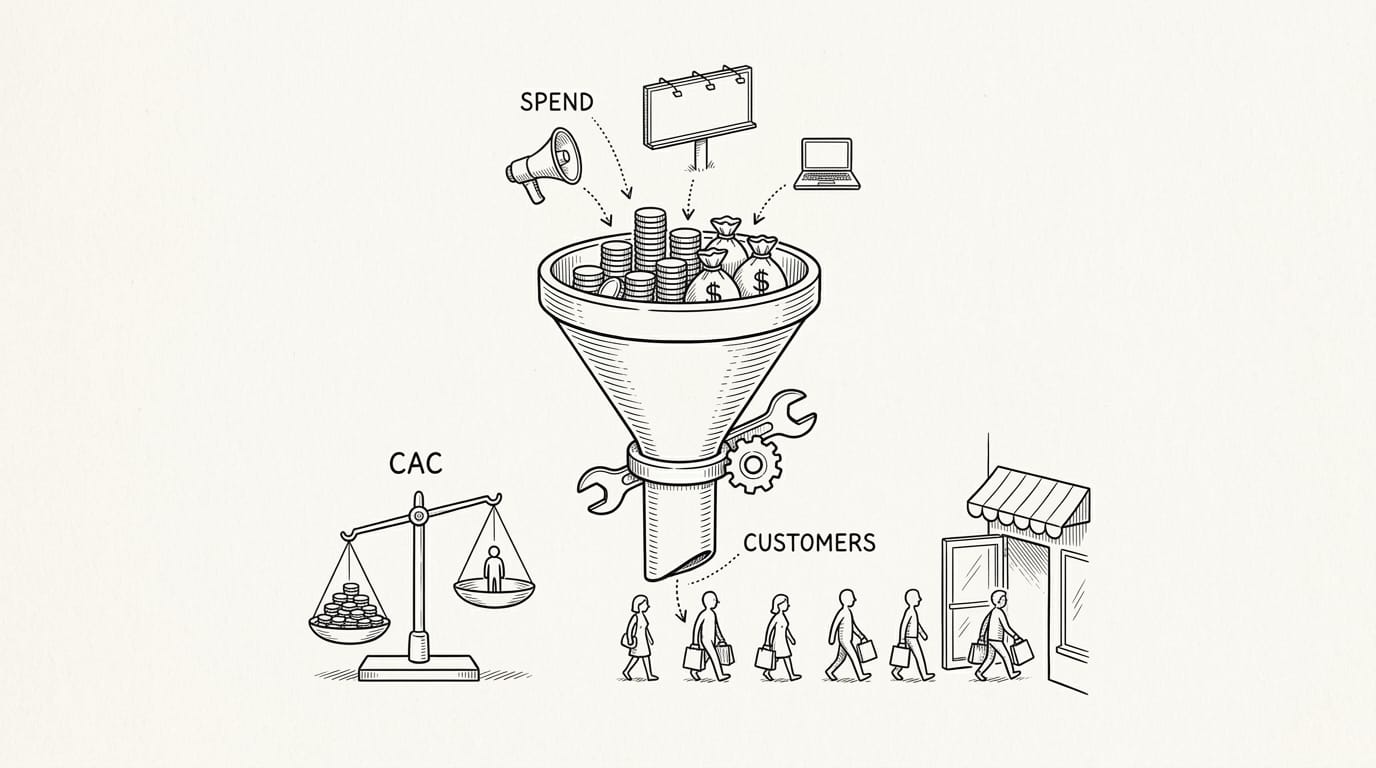
Each new buyer carries a price tag, and customer acquisition cost (CAC) is that number: your marketing and sales spending divided by the new customers you win in the same period.
This guide covers the formula and its variants, what a healthy CAC looks like, how it compares to related metrics, and where it can mislead you. We’ll also show how a solo seller on a tiny budget can calculate it and act on it.
Defining and Calculating Customer Acquisition Cost
Every new customer comes with a price tag. Here’s how we add it up.
What is spent to acquire a new customer?
The money spent to acquire a new customer is called customer acquisition cost (CAC): the sales and marketing cost per new customer. It covers everything you pay to win a first order.
Measure it over a set period, like a quarter, and match spending to the customers won in that window. As a business-level metric, CAC rolls every channel into one figure, so it shows how much a customer costs overall, not what any single ad brought in.
Calculate CAC with simple worked examples
The formula is total spend divided by new customers, both from the same period. Maya sells handmade candles. In one quarter she spends $450 on social ads and $150 on an email tool, and wins 60 new buyers.
Her CAC is $600 divided by 60, or $10 per customer. Helper wages count too.
Skipping ads doesn’t make CAC zero. Suppose Maya skips ads and spends 10 hours a month on blog posts and buy-and-sell groups, bringing in 20 customers. Valued at $20 an hour, those hours cost $200, or $10 per customer.
Which costs count toward your CAC
Sales and marketing both count, since both find and close buyers:
- Sales headcount and OTE. OTE (on-target earnings) is base pay plus commission at full target. Count the full OTE, not just the base.
- SEO, PPC, and social ads. Search engine optimization (SEO), pay-per-click (PPC) search ads, and paid social all count when you pay for them.
- Out-of-home advertising. Billboards, transit ads, and printed posters count when they target buyers.
- Your own hours. Solo sellers often overlook this: 30 hours a quarter of marketing at $20 an hour adds $600, doubling Maya’s CAC to $20.
Leave one out and your CAC looks better than it is. Count them all.
Different ways to measure CAC
New CAC divides paid acquisition spend by the customers that spend brings in. Blended CAC divides all spend by every new customer, including free ones from referrals or organic search.
Blended looks friendlier, but free customers pull the average down and hide what each paid customer costs. Use blended for the big picture, and check new CAC for every paid channel.
Why CAC Matters
Customer acquisition cost (CAC) is what you spend to win one new paying customer. It’s less about spending and more about returns.
How businesses put CAC to work
Here’s what it helps you do:
- Evaluate channel effectiveness. Compare each channel’s cost per customer to see which ones bring buyers in.
- Measure profitability and return on investment (ROI). Compare CAC with what each customer is worth to you.
- Forecast growth investment. Knowing each customer’s cost shows how much cash to set aside before you scale.
- Prioritize retention. CAC helps you judge when a loyalty offer beats another round of ads.
Forces pushing CAC higher
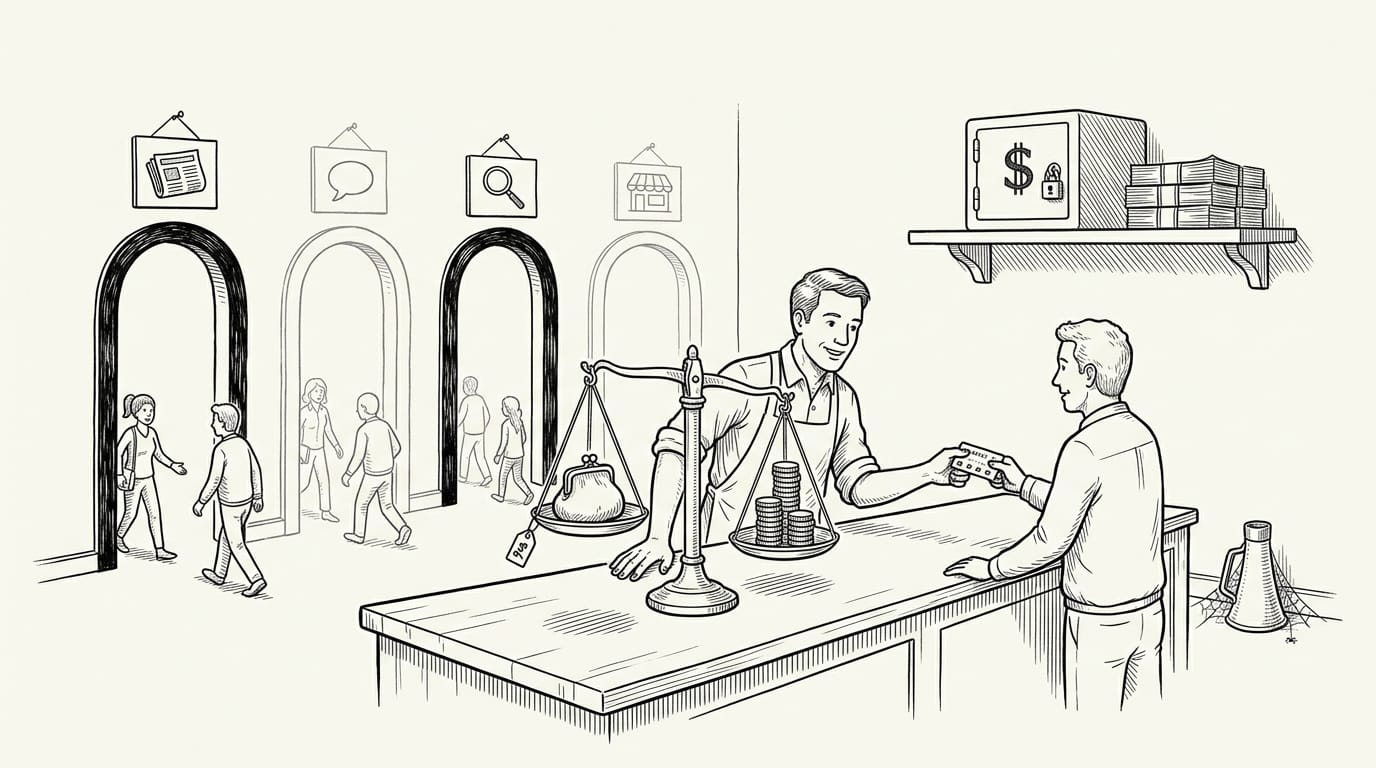
These pressures push CAC up even when your ads don’t change:
- Rising ad costs. More sellers bidding for one audience make each click pricier, even if your ad stays the same.
- Privacy changes limit targeting. A study of offsite tracking data on Meta found the median cost per incremental customer (a buyer your ads truly caused) would rise from $38.16 to $49.93, a 31% increase, at the median loss in effectiveness. A Yahoo Finance report says Google’s new Chrome privacy policy means advertisers target groups, not individuals.
- Ad fatigue. When people see the same ad repeatedly, they tune it out, and each sale costs more.
- Longer buying cycles. When customers take weeks or months to decide, your ad money waits longer to pay back.
Consider a side hustler selling candles from a spare room. Her total ad spend hides a problem: the same small crowd keeps seeing the same ad. Cost per sale by ad shows it early, so she can swap in a fresh ad and see if the cost drops.
Spend without tracking, and you’re guessing.
What Counts as a Good CAC
A customer acquisition cost (CAC) figure alone tells you little. Its value depends on what a customer is worth and how fast they pay it back.
Comparing CAC against customer lifetime value
Your CAC should sit below your customer lifetime value (LTV), the total revenue a customer brings in over their lifetime. Estimate it as average revenue per user (ARPU) times lifetime: LTV = ARPU × lifetime.
For a stricter view, add gross margin, the share of each sale left after direct costs: LTV = ARPU × gross margin × lifetime.
A commonly cited benchmark is a 3:1 ratio. A 2002 study by Barwise and Strong says firms should target an LTV to CAC ratio of 3:1 or higher, so each customer returns three times what it cost to win them.
- Company A’s customers return well over three times their acquisition cost.
- Company B’s customers barely cover theirs.
- Company C’s customers never repay what it spent to win them.
The question isn’t whether you can afford a customer, but how much they’re worth.
Benchmarks depend on your industry and stage
Benchmarks vary by industry and business model, and early-stage companies usually pay more per customer. Compare each channel’s CAC to your own LTV, not someone else’s number.
Your first sales also set a ceiling: the gross margin from one first purchase is roughly the most you can spend to win that customer.
How long CAC takes to pay back
Your CAC payback period is how many months a customer’s gross margin takes to recover what you spent to win them. Divide CAC by that monthly gross margin, not raw revenue, which overstates what you keep.
A paper on CAC payback optimization notes that many software-as-a-service (SaaS) benchmarks treat recovering CAC within 12 months as healthy, calculated on monthly gross margin. So aim for under 12 months.
Take a home baker who wins a custom-cake customer through a local ad. If repeat orders cover the ad cost well inside 12 months, the ad pays for itself. If they never return, it doesn’t, however many people it reached.
How CAC Compares to Related Metrics
Several numbers are easy to mix up with customer acquisition cost (CAC), so we’ll sort them out.
How CAC differs from CPA
Cost per action (CPA) counts what you pay for an action, like a lead or an email signup. CAC counts what you pay for a customer. CPA is campaign-level, so it shows how one ad performed, while CAC covers your whole business.
Think of Netflix counting free-trial sign-ups. Each is CPA, but only the subscriber who keeps paying counts toward CAC. Facebook ads work the same way: a cost per lead is the price of a name on a list, not of a buyer.
Turning CPA into an implied CAC
Divide CPA by your conversion rate, the share of leads who buy, to get an implied CAC. If a lead costs $2 and one in ten buys, $2 divided by 0.10 gives you $20.
Compare like with like. Only set implied CACs side by side if they come from the same offer and time window.
Align with business goals. Take a home baker selling a $15 monthly box: a $20 CAC is hard to justify, but it’s a bargain if subscribers stay for months.
Why ROAS can hide weak acquisition
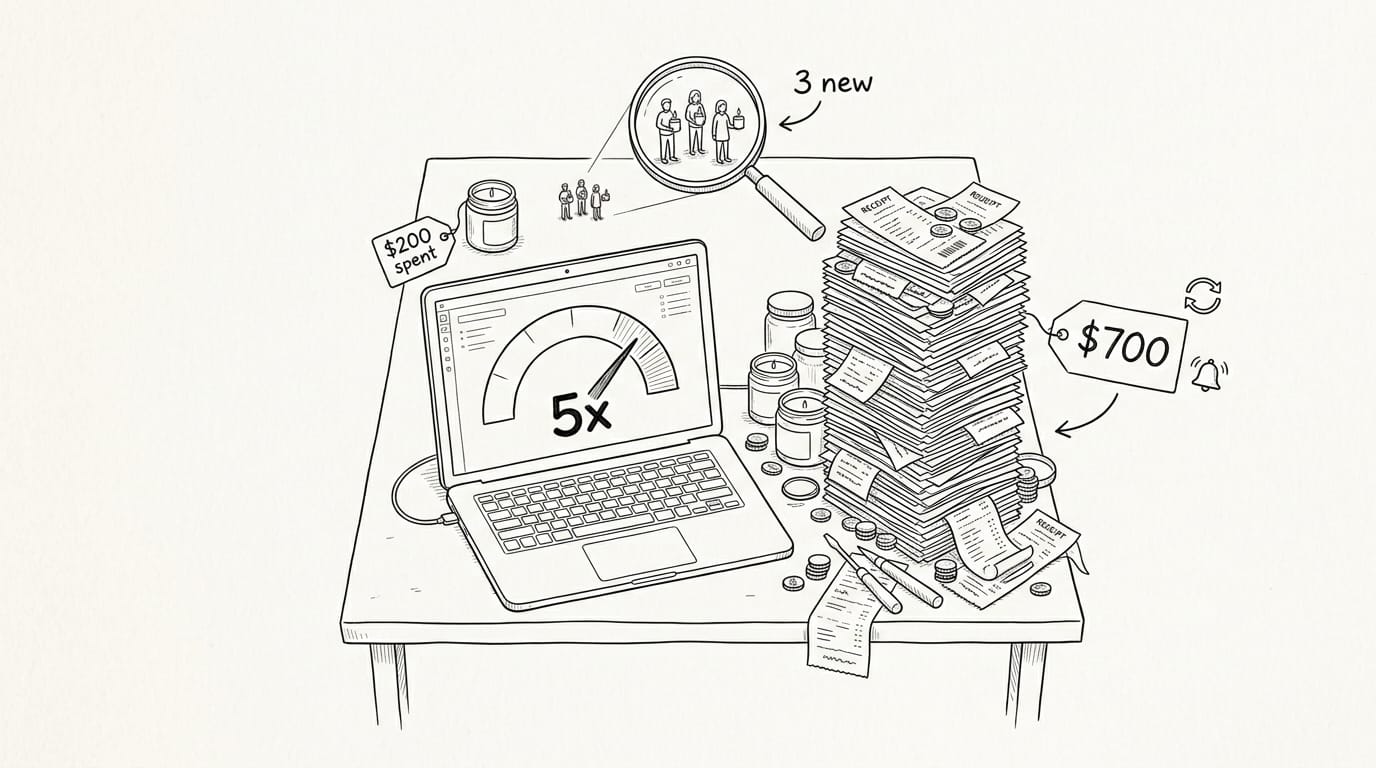
Return on ad spend (ROAS) divides the sales your ads are credited with by what you spent. Those credited sales include repeat buyers who clicked a reminder ad.
High ROAS can hide low acquisition. Say a candle seller spends $200 and gets $1,000 in credited sales, a strong-looking 5x. If $700 came from repeat buyers, the other $300 came from three new customers, or roughly $67 in ads per new customer.
The 5x is accurate. It just measures revenue, not new customers.
Ways to Bring CAC Down
Once you know your customer acquisition cost (CAC), the goal is to lower it without cutting what works. Here’s where we’ll look.
Put budget behind your best channels
Compare what each source costs against the customers it brings in:
- Track cost per channel. Find the real CAC for each platform, not just the blended average.
- Focus budget on best performers. Shift dollars from costly channels toward the ones bringing buyers cheapest.
- Replicate winning campaigns. Reuse the audience and offer of a winner, changing one element at a time.
A side hustler selling handmade soap finds one platform’s buyers cost a fraction of another’s. Shifting her ad money there lowers her CAC without raising total spend. It shows you which channels bring buyers, not just how many clicks.
Using lookalike and exclusion audiences well
A lookalike audience is a group an ad platform builds from people resembling your customers, starting from a seed list of existing buyers.
Seed it with your most valuable customers, ranked by spend (customer-value segmentation), and check the seed size and match rate, the share of names the platform can match to a profile.
Exclusion lists and negative segments keep past buyers and non-responders out of your ads. Frequency caps limit how often one person sees an ad, since extra views past a point just annoy people.
A dog-collar seller excludes past buyers from her prospecting ads, so her spend reaches people who haven’t bought yet.
Turn more visitors into buyers
Start by finding customer journey drop-off, where visitors quit on the way to checkout. Fixing those leaks beats buying more traffic to them.
Then run an A/B test (comparing two page versions to see which converts better) and change one thing at a time. Add abandoned cart reminders, automated emails to shoppers who left items behind.
Simplify product pages with one clear price and one obvious button. Cut the clutter.
Personalizing emails and product recommendations
A Marketing Science study on email personalization notes that personalized emails and product recommendations are common ways businesses tailor customer acquisition efforts to individual customers.
McKinsey has pointed to a 50% CAC reduction from personalization, a target to test rather than a promise.
A side hustler selling candles drops the price on her bestseller and emails only viewers who didn’t buy. Those warm leads already know the product, so they cost less to win.
Boston Consulting Group’s research identifies personalization leaders as a distinct group. Only 10% of companies are leaders, and they’re positioned to capture an outsized share of $2 trillion in value over the next three years.
Keep customers and reach people cheaply
- Loyalty and win-back campaigns. Repeat buyers don’t need an ad to find you, and win-back emails can reach lapsed ones.
- Cross-sell and upsell. Offer a related product (cross-sell) or a pricier version (upsell) to people already buying.
- SEO and organic content. Search engine optimization (SEO) brings people in through search results, not paid clicks.
- Word-of-mouth referrals. Ask happy customers to pass you along.
- More touch-points with prospects. Each helpful follow-up is another chance to close a sale.
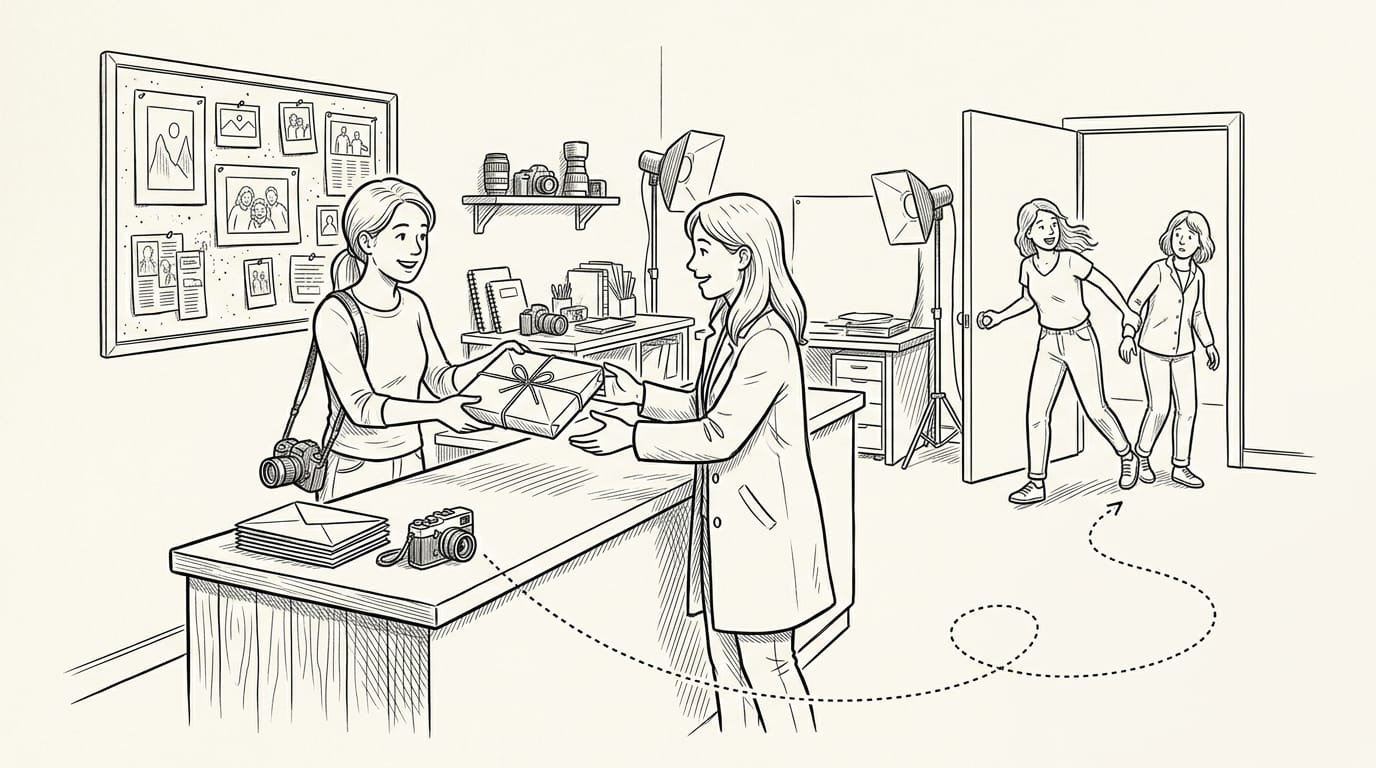
A freelance photographer adds a print package to every finished shoot. Her past clients are her cheapest sales. It’s keeping people as much as finding them.
Offer complementary services that show added value
- Offer complementary services. Pair your product with a related service buyers want anyway, such as setup help.
- Showcase added value. Put the extras up front on product pages and in emails.
A side hustler selling a bookkeeping template adds a short setup call. Buyers see it as extra value, which makes the price easier to justify. Let the extras do the selling.
Where CAC Falls Short and Misleads
Customer acquisition cost (CAC) can mislead you when read alone. Here’s where it breaks down.
Which business models CAC suits best
CAC suits software as a service (SaaS) businesses best, where subscribers pay on a predictable schedule. It’s weaker for variable-value retail, where one buyer spends $15 and another $300. Averages hide a lot.
A hot sauce side hustler can’t tell whether the hustle pays when future revenue per customer is still unclear.
Crediting channels is harder than it looks
Search engine optimization (SEO) pays off slowly, since a blog post can take months to rank. Pay-per-click (PPC) ads and social media ads pay off fast, but you pay for every visit. Out-of-home (OOH) ads, like billboards, are hard to measure.
Tactics work together, yet your spreadsheet may credit just one channel. Paid-only CAC counts ad spend; fully loaded CAC adds your time and tools.
How repeat buyers change the picture
CAC ignores what happens after the first sale, and prices vary wildly. A $9 bottle and a $400 custom order need very different payback math. That’s where retention comes in: keeping the customers you have, not winning new ones.
Is 90% customer retention good? It depends on how often people buy. Keeping nine of ten customers each period means a monthly subscriber sticks around about ten months. Whether that’s enough depends on your margin.
For a product bought once a year, the same number says far less.
Is a 20% returning customer rate good? It depends on your first sale. Say your $9 bottle earns $6 profit but costs $20 in ads to win the buyer. With one in five buyers returning, that $14 gap needs much bigger repeat orders or a cheaper way to win buyers.
Real Brands and Tools in Action
Real brands have tested their targeting and emails in public. Here’s what they tried, and what today’s platforms can do for a solo seller.
How real brands tested targeting and emails
Lookalike audiences are groups of people who resemble your existing customers. O2 Slovakia ran lookalike tests built on that resemblance.
hmv fed autosegments, audience groups built automatically, into Performance Max (PMAX), Google’s automated campaign type. BrewDog tested personalized emails, tailored to each reader rather than one blast to the whole list.
Picture a side hustler selling hand-poured candles from her spare room. She uploads her past buyers, asks the ad platform to find similar people, and sends a welcome email that mentions the scent each customer bought.
If that lookalike group brings in sales at a lower cost per customer, she’s found a cheaper channel.
The lesson is less about spending more and more about aiming better. The method stays the same. Only the budget shrinks.
What today’s platforms can do
Today’s platforms cover four jobs:
- AI segmentation. Software sorts your contacts into groups by behavior, so you’re not building every list by hand.
- Real-time triggered outreach. A message goes out the moment someone leaves a cart behind, not at your next scheduled send.
- Multichannel personalization. The same offer adjusts across email, social, and text, so each channel says something relevant.
- Full-journey measurement. Tracking follows a buyer from first click to repeat purchase, showing which channel earned the sale.
Each one is a lever on your acquisition cost. Use the tools, then check the numbers yourself.
Customer acquisition cost boils down to one question: what did it cost you to win that buyer? Compare that number against what a customer is worth to you, and watch for pitfalls like a low number hiding a weak channel.
The real payoff comes from acting on it. Drop the channel that eats your budget without bringing in buyers, double down on what works, and test one change at a time. A notebook or a simple spreadsheet is all you’ll need.
Every sale costs you something. The only real choice is whether you know the price.
References
- Financial Projections and Valuation Optimization for Pre-Seed Startups: A Strategic Framework — doi.org (2025)
- CAC Payback Period Optimization Through Automated Cohort Analysis — doi.org (2025)
- Estimating the Value of Offsite Tracking Data to Advertisers: Evidence from Meta — doi.org (2024)
- Personalization in Email Marketing: The Role of Noninformative Advertising Content: Marketing Science: Vol 37, No 2 — dl.acm.org (2018)
- Consumer Experience Shifts with AI Across Industries — bcg.com
- Google’s new privacy policy for Chrome won’t stop targeted ads — finance.yahoo.com
Questions
What is the definition of CAC in marketing?
Customer acquisition cost (CAC) is the sales and marketing spending required to win one new paying customer. Calculate it by dividing total sales and marketing costs by the number of new customers acquired in the same period.
What is the money spent to acquire a new customer called?
It is called customer acquisition cost (CAC), or the sales and marketing cost per new customer.
What is the difference between cost per acquisition (CAC) and customer acquisition cost (CPA)?
CAC measures the cost of acquiring a paying customer, while CPA usually measures the cost of getting a specific action, such as a lead or signup. CPA is often campaign-level; CAC includes the costs associated with winning customers across the business.
What is an example of acquisition cost?
An example is spending money on social media ads to win new buyers. Other acquisition costs include sales wages, marketing tools, advertising, and the value of time spent creating promotional content.
Is 90% customer retention good?
It can be good, but it depends on the business’s buying cycle, margins, and how retention is measured. Keeping 90% of customers each period means a monthly subscriber lasts about ten months, while the same rate means less for a product bought only once a year.
Is a 20% returning customer rate good?
A 20% returning customer rate may or may not be good; it depends on how profitable repeat purchases are. If acquiring a customer costs more than the profit from the first purchase, one in five returning may not close the gap unless repeat orders are larger or acquisition costs fall.
Sources
- Financial Projections and Valuation Optimization for Pre-Seed Startups: A Strategic Framework, doi.org,
- CAC Payback Period Optimization Through Automated Cohort Analysis, doi.org,
- Personalization in Email Marketing: The Role of Noninformative Advertising Content: Marketing Science: Vol 37, No 2, dl.acm.org,
- Consumer Experience Shifts with AI Across Industries | BCG, bcg.com
- Estimating the Value of Offsite Tracking Data to Advertisers: Evidence from Meta, doi.org,
- Google's new privacy policy for Chrome won't stop targeted ads, finance.yahoo.com