8-4
Business Owner's Policy (BOP): What It Covers and Costs
Business owner's policy BOP coverage can help after a customer slips or a delivery van breaks your window. See what it covers, excludes, and costs.
- Written by

- Published
- Updated
- Reading time
- 13 min read
- Sources
- 2 cited
A business owner's policy (BOP) is a commercial insurance package that combines liability coverage for claims by others with property protection for a small business’s building, equipment, and inventory. It can also replace income after certain covered losses, but it typically excludes risks such as professional mistakes, employee injuries, business vehicles, floods, and earthquakes. Compare limits, deductibles, exclusions, and add-ons to fit your business, then review the policy as your operations grow.
In this guide
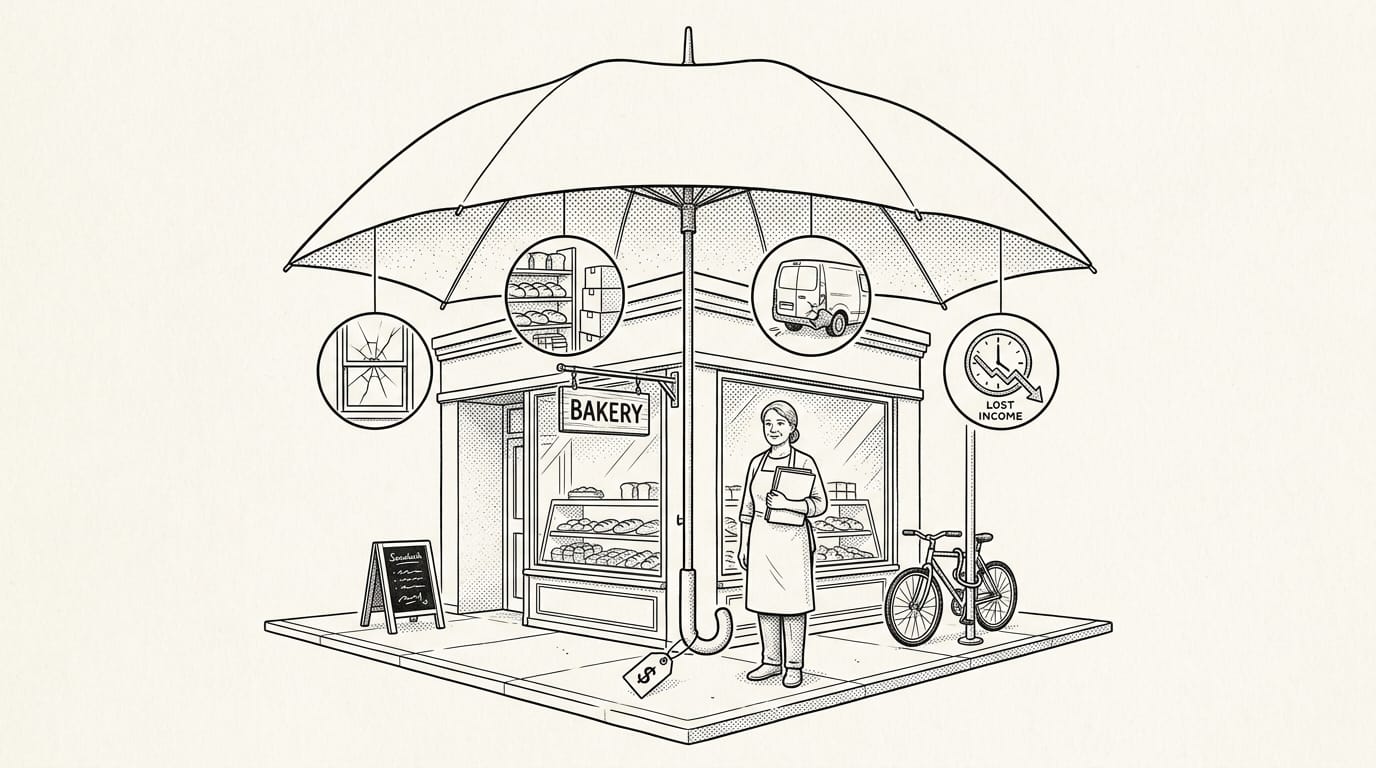
Say you run a small bakery out of a rented storefront. One morning a customer slips on a wet floor, and a delivery van clips the front window.
A business owner’s policy (BOP) is a package designed for exactly these kinds of surprises, bundling the core coverages most small businesses need into a single policy.
In this post, we’ll cover what a BOP includes and excludes, who qualifies, what it costs, and how to keep your policy the right size as you grow. We’ll also flag the gaps it leaves open.
What a Business Owner’s Policy Really Is
If you run a small business, you’ve probably seen a business owner’s policy (BOP) on a quote. It bundles the basics into one contract.
One bundled package for small businesses
A BOP is a bundled commercial insurance package: property coverage and liability coverage come together in one policy instead of being bought separately. Insurers design these packages for small businesses, so you can tailor them to your type of work.
Saving money and time with one policy
The U.S. Chamber of Commerce explains that packaging these coverages can save you about 10% to 15% compared with buying the same policies separately.
Picture a freelance photographer who rents a studio room and used to track two policies with two renewal dates. With a BOP, she gets one bill, one renewal date, and one agent to call. Less to track.
A BOP also gives you broad coverage in one document, so there’s one contract to read. Comparison shopping can save you more, so get a few quotes and compare what each one includes, not just what it costs.
Practical reasons owners carry one
Many owners carry one for reasons beyond price:
- Leases and contracts. Landlords and clients often require proof of insurance before they sign.
- Certificate of insurance. This short document shows you’re covered. It’s proof of coverage, not the coverage itself.
- Landlord additional insured requests. Your landlord may ask to be named an additional insured, which covers them for claims tied to the space you rent.
- Credibility with big customers. Picture a candle maker pitching a gift shop chain. When the buyer asks for proof of coverage, she can send a certificate that same day.
What a BOP Covers at Its Core
A business owner’s policy (BOP) bundles several coverages into one contract.
Covering injury and damage to others
This half protects what you owe others, not what you own. A third party is anyone outside your business.
- Third-party bodily injury. Medical costs and settlements if an outsider gets hurt.
- Third-party property damage. Repairs when your business damages someone else’s property.
- Personal and advertising injury. Claims like defamation, invasion of privacy, or copyright problems in your ads.
- Legal defense costs. Lawyers to defend you against covered claims.
- Product-related claims. Injury or damage from something you made or sold.
Take a home-based candle maker who sells at weekend markets. A shopper trips over a tent weight, and the liability side can help with the medical bill. Legal bills add up fast.
Protecting your building, equipment and inventory
- Buildings owned or leased. The structure you occupy, whether you own it or rent it.
- Equipment, inventory, furniture. The tools and stock you use or sell, plus your desks and chairs.
- Theft, fire, vandalism, weather. The everyday threats it’s built to cover.
- Property of others in custody. A customer’s item you’re holding for repair or storage.
- Accounts receivable and records. Money clients owe you and the records needed to collect it.
Replacing lost income and keeping bills paid
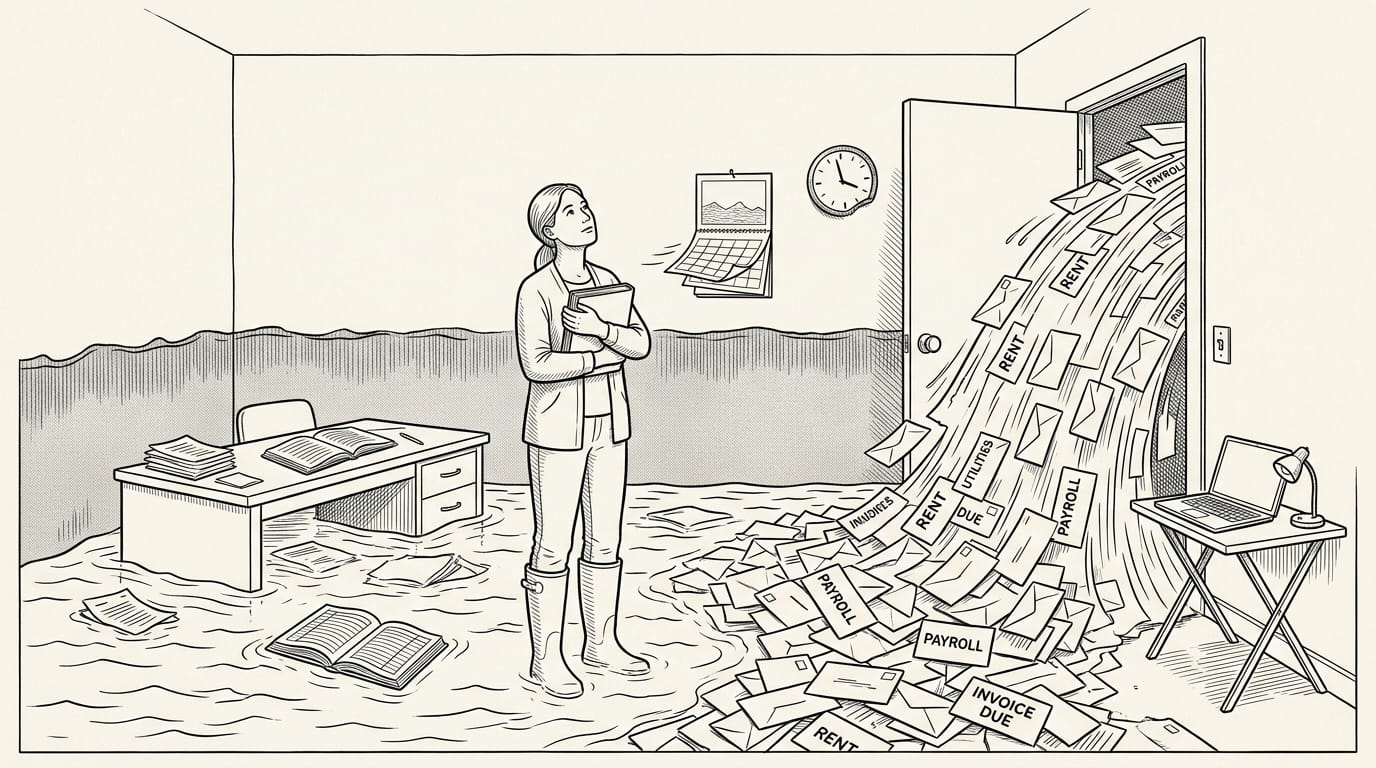
When a covered loss shuts you down, the bills keep coming. Picture a freelance bookkeeper whose rented office floods. Her rent doesn’t stop while repairs drag on. This part covers that gap:
- Replaces lost income. Makes up income lost while a covered loss halts operations.
- Covers payroll and ongoing bills. Helps keep payroll and rent paid during the shutdown.
- Extra expense at temporary location. Costs of operating from a temporary workspace.
- Triggered by covered loss. Benefits start only after a covered event, not because sales slowed.
Extra protections built into standard forms
- Employee dishonesty. Losses from theft by your own staff.
- Theft of money and securities. Stolen cash, checks, or other securities.
- Forgery and alteration. Losses from forged signatures or altered checks.
- Equipment breakdown. Sudden mechanical or electrical failure, like a cooler that quits overnight.
- Contractual liability. Responsibility you take on in a contract, like covering a client’s losses.
- Debris removal and pollution cleanup. Hauling away debris after a covered loss, plus some cleanup costs.
Does My LLC Need Business Insurance?
Short answer: it depends on what you do and what you stand to lose. A limited liability company (LLC) separates your personal assets from business debts, but it doesn’t come with insurance.
It’s a legal shield, not a coverage plan, which is why many owners look at a business owner’s policy (BOP) next.
Size limits for qualifying businesses
BOPs are built for small businesses, so they come with limits. Carriers typically cap your employee count and annual sales or revenue, and they also look at floor area and building height.
Limits vary by carrier, so the same business may qualify with one insurer and not another. Ask before you assume.
Industries that fit a BOP well
Here’s where a BOP tends to fit well:
- Retail, restaurants, and salons: storefronts with customers walking in and stock on the shelves.
- Professional offices: consultants and designers who meet clients on site.
- Contractors and wholesalers: especially those handling smaller jobs and holding inventory.
- Low-to-moderate risk businesses: operations where day-to-day hazards are modest.
Signs you need a BOP
You probably need one if any of these describe you:
- You own or lease a physical location. Your space and everything in it is exposed to damage and loss.
- You could be sued. Customers and visitors can make claims if they’re hurt on your property or by your work.
- You hold inventory or assets. Stock, equipment, and tools are worth protecting.
- You need general liability. A client or landlord may ask for proof of it, and it covers injury or damage claims from others.
Working from home adds a wrinkle. Think of a side hustler who sells candles from her spare room, with wax and finished stock on the shelves.
Her homeowners policy was written to protect a house, so it may not cover that stock or a customer who trips on her front steps. A BOP is designed to address both, so she isn’t piecing together two policies to cover one business.
When a BOP is the wrong choice
It’s the wrong fit if you:
- Run higher-risk manufacturing. Those hazards need coverage built for them.
- Take on large projects. Big jobs can bring exposures a BOP isn’t sized for.
- Operate a fleet. Business vehicles need commercial auto coverage, which a BOP doesn’t replace.
- Only need proof of liability. A standalone general liability policy may be a simpler fit.
Bundled isn’t always better. Fit is what matters.
Optional Add-ons You Can Attach
A standard business owner’s policy (BOP) covers common risks, but your business may face others. The goal is fit rather than more, so let’s add only what your side hustle needs.
Extra liability coverage for special risks
Common liability add-ons include:
- Cyber liability: covers data breach costs and related claims.
- Professional liability (E&O): short for errors and omissions, it covers claims that your work was faulty.
- Liquor liability: covers injuries tied to alcohol you serve.
- Umbrella policy: adds liability limits above your other policies.
- Operations/product liability: covers harm from your daily work or the products you sell.
Picture a freelance web designer whose bug exposes client data. Cyber and E&O coverage can help cover the cleanup and claims. Gaps are expensive.
Coverage for vehicles and mobile gear
Vehicles and tools need coverage too:
- Commercial auto: covers vehicles you use for business, which personal auto policies usually don’t.
- Hired and non-owned auto: covers rented or borrowed vehicles and employees’ cars used for business.
- Inland marine: protects gear that moves between job sites.
- Tools and equipment coverage: protects tools you own, often a sizable investment.
Think of a mobile dog groomer who drives her van to clients’ homes. Commercial auto covers the van, while inland marine can protect the gear she hauls.
Staff, crime and other extra coverage
Consider these add-ons:
- Workers’ compensation: covers medical bills and lost wages for injured employees. Rules vary by state, so check yours once you hire.
- Commercial crime insurance: covers losses from employee theft, fraud, or forgery.
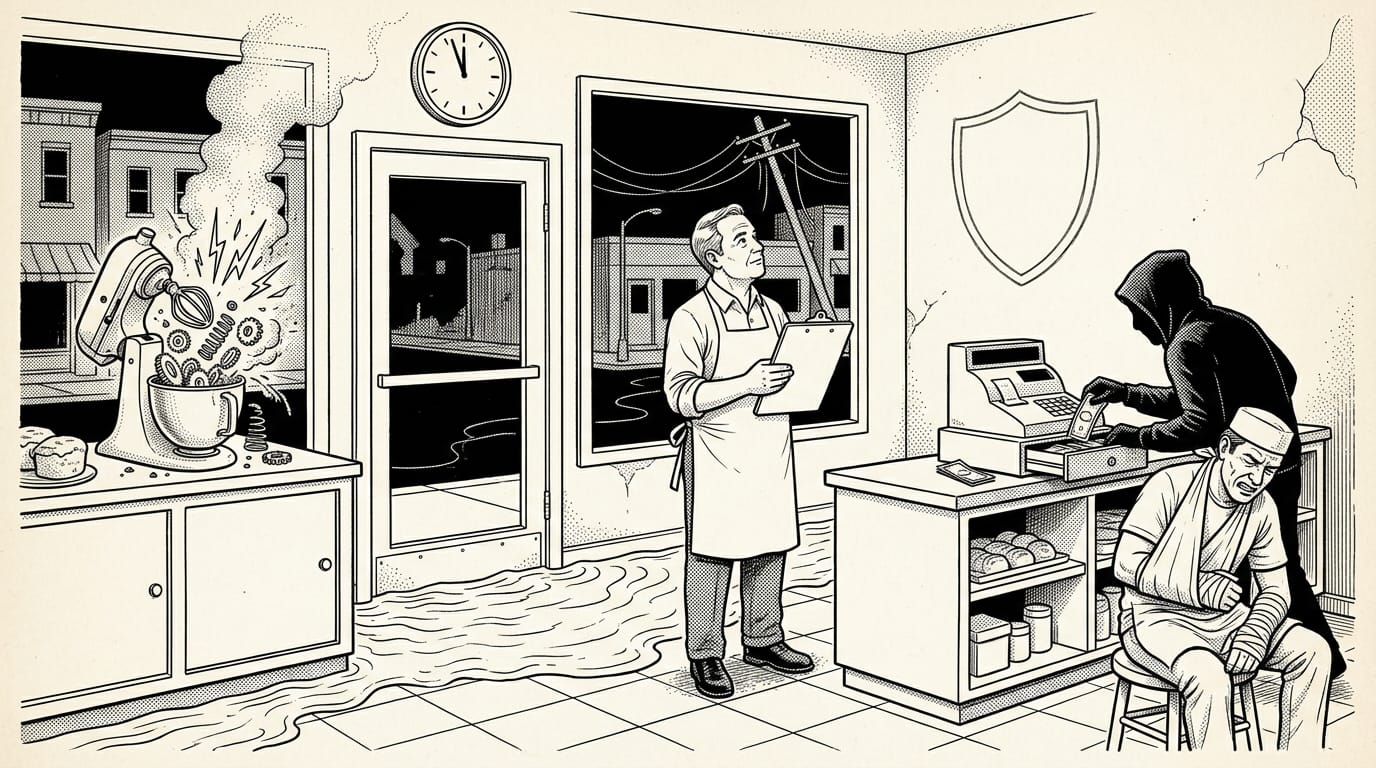
- Equipment breakdown coverage: pays to repair or replace machinery that fails suddenly.
- Flood endorsement: adds back flood damage, which standard BOPs typically exclude.
- Utility services income coverage: helps replace income lost when an off-site power or water outage stops you.
These are the risks owners forget until they hit. Don’t wait.
Tailoring coverage to your industry
Endorsements are amendments that tailor the policy to your industry.
Take a sports bar that serves beer on busy game nights. An endorsement can tie its liquor coverage to how the bar actually runs.
A small hot-sauce maker who ships to other states needs product liability that matches where her product goes. If a buyer claims a bottle caused harm, that coverage responds.
An agent who knows your industry can recommend add-ons that fit. Your policy should match your business, not a template.
Gaps a BOP Leaves Open
A business owner’s policy (BOP) bundles the basics into one package. Here’s where it stops, so you can close those gaps before a claim finds them.
Professional errors and discrimination claims
A BOP generally has no professional negligence coverage, which means no protection when your advice or work costs a client money. It covers the property you own, not the advice you give. Picture an accountant who miscalculates a client’s tax estimate.
That’s a claim the BOP typically won’t answer, and so is a contractor being sued because finished work doesn’t match the contract. That’s where a separate errors and omissions (E&O) policy comes in.
Discrimination lawsuits are excluded too, so a claim that you treated an applicant or worker unfairly needs coverage elsewhere.
What’s excluded for staff and vehicles
The BOP also leaves out four areas:
- Workers’ compensation. Injuries to employees on the job need a separate policy.
- Commercial auto. Business vehicles aren’t covered.
- Health or disability. Your own medical bills and lost income aren’t covered.
- Criminal acts. Losses from crimes are excluded, so read that language closely if you handle client money.
Take a side hustler who packs online orders from her spare room and hires a part-time helper. If that helper hurts a back lifting boxes, or she’s in a fender bender on the post office run, the BOP won’t pay.
She absorbs both costs unless she’s added the right policies.
Floods and earthquakes are often excluded
Flood damage is usually excluded. So is earthquake damage. A single flood can wipe out your inventory, and a BOP may leave you to absorb that loss alone.
Endorsements, which are add-ons that change what a policy covers, may extend coverage for these risks. Ask your agent about them rather than assuming you’re protected.
How all risk and named perils differ
Most BOPs are written on an all-risk basis, so a loss is covered unless the policy specifically excludes it. A named-peril policy flips that: it covers only the causes on its list, not everything else.
Exclusions are where the surprises live, so read that section before you buy.
Then fill each gap with another policy: E&O for professional mistakes, workers’ compensation for staff, commercial auto for vehicles, and a flood or earthquake endorsement where your risk is real.
Pricing a BOP and Getting Quotes
Your business owner’s policy (BOP) premium isn’t on a price list. It’s built from your details, so let’s look at what moves the number.
What drives your BOP price
Several factors set your price:
- Industry and business size. A home bakery and a roofing crew face different risks, and bigger operations have more to insure.
- Claims history. Insurers check whether you’ve filed claims before, and a clean record generally helps.
- Coverage amount needed. More protection means a higher premium.
There’s no single price for a BOP. Your premium comes from your details, not a standard rate, so two people in the same trade can get different quotes. Budget for it before you quit your job, not after.
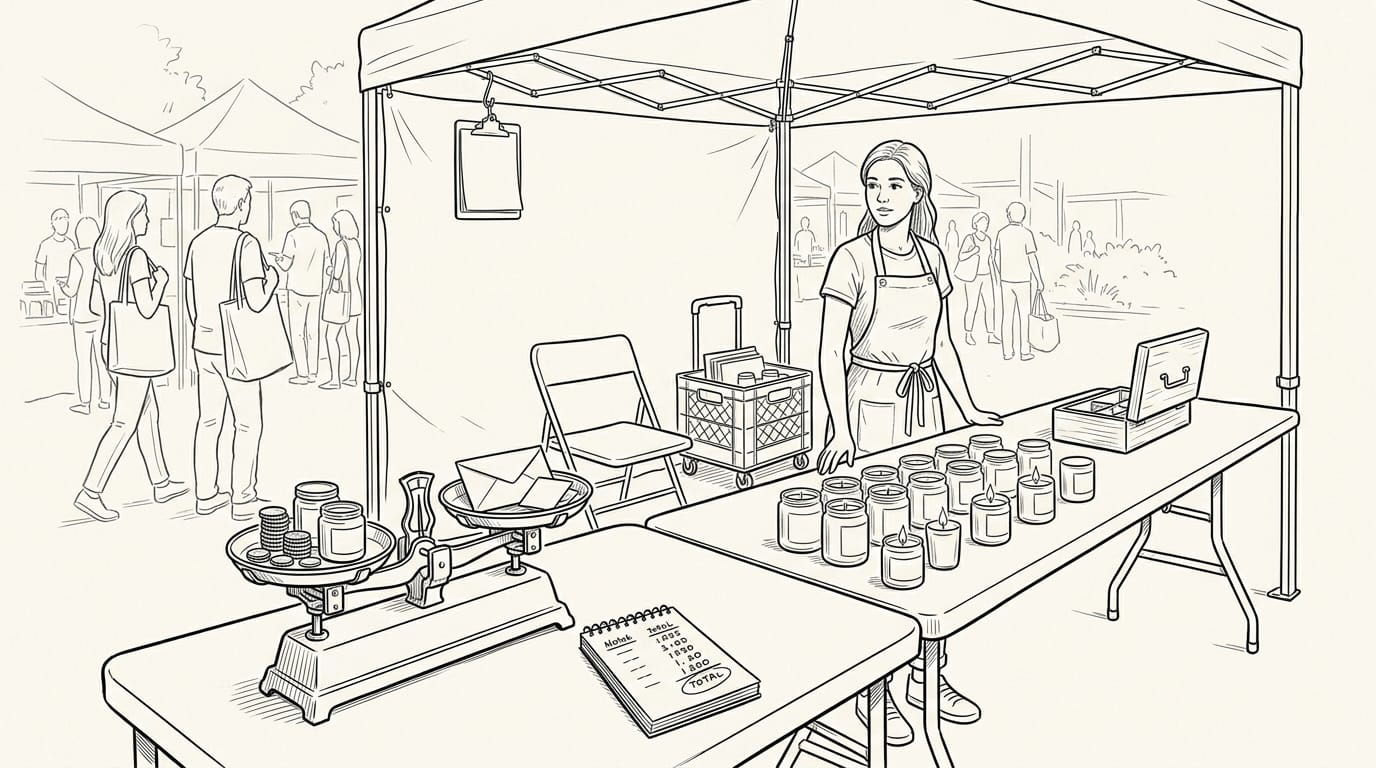
Think of a side hustler selling candles at weekend markets. Her premium depends on her stock, her equipment, and her claims history. Once she has that number, she can see whether the candles still cover the rent.
Getting quotes from a licensed agent
Start with free online quotes, then speak with a licensed agent, who assesses the specific risks in your business. Compare multiple carriers too, since each weighs risk differently and the cheapest quote isn’t always the best fit.
When you compare, check three terms:
- The limit is the most the insurer pays for a covered claim.
- The deductible is what you pay out of pocket first.
- Replacement cost valuation means the policy pays to replace damaged property with new items, without subtracting depreciation.
A higher deductible can lower your premium, but only choose it if you could cover that amount.
Revisit your policy as the business grows. A new hire or bigger inventory can change what you need, so review coverage with your agent yearly. Don’t let it fall behind.
Is a BOP the Same as General Liability?
No. Business insurance is the broad umbrella, and general liability is just one type under it. Here’s how a standalone policy compares with a bundled one.
How the two policies stack up
General liability (GL) is a standalone policy with a narrower job. It handles third-party claims, such as a customer who gets hurt on your premises or a client whose property gets damaged.
A business owner’s policy (BOP) is a bundle. It includes GL and adds property protection for your building, equipment, and stock.
Think of a home baker who sells cakes from a shared commercial kitchen and keeps her stand mixer and packaging supplies in a rented corner.
A GL policy would respond if a customer slipped on her floor, but it wouldn’t replace the mixer after a fire. A BOP covers both.
The trade-off is cost. A BOP costs more than a standalone GL policy, but it covers more, so the real question is whether the property protection is worth the difference for your setup.
Some venues, landlords, and clients ask for proof of GL coverage before they’ll sign a contract or hand over a space. A BOP includes GL, so you can usually show that coverage, but confirm exactly what they need before you buy.
Because a BOP already includes GL, you don’t need a separate GL policy on top of it. Buying both can mean paying twice for the same liability coverage. Don’t double up.
How Insurers Price BOPs and Micro BOPs
Two businesses with the same sales can pay very different premiums for a business owner’s policy (BOP). Here’s what drives the price, and how a micro-BOP differs.
What insurers look at when rating
Insurers price risk, so they start with the place and the building. Territory, meaning local crime and weather exposure, feeds into the rate. Building construction matters, since materials affect how a structure handles fire and storms.
Fire protection systems, like sprinklers and alarms, can lower the risk an insurer sees. Risk sets the price.
Next, occupancy is what happens inside the space, not just where it sits. A bakery with commercial ovens carries different risk than a bookkeeper’s home office.
Your deductible, the amount you pay before coverage kicks in, also shapes the premium: a higher deductible generally means a lower premium.
Last, check the form. ISO forms, standardized wording from the Insurance Services Office (ISO), make policies easier to compare. Proprietary forms are written by a single insurer, so their wording can differ.
Micro BOP for very small businesses
A micro-BOP is a smaller version for very small operations. According to ISO’s microbusiness definition, a microbusiness generally has up to four employees, including the owner, and annual sales that don’t exceed $500,000.
Its property coverage is named-perils, so it pays only for the causes the policy names, such as fire or windstorm. It may not exclude professional services, which matters if you sell advice, so confirm that in the form. Check the ineligible business list.
Some operations won’t qualify no matter how small they are.
Take a freelance photographer who books weddings from a spare room and hires one part-time assistant. She checks the limits first. Inside them, a micro-BOP may keep her premium within reach.
A BOP can be a sensible starting point for many small businesses, but only when you know what it covers, what it leaves out, and where your operation carries risk it doesn’t touch.
Revisit the policy as you grow. New employees, a bigger inventory, a second location, or a new service can all change what you need, so a yearly check keeps your coverage matched to the business you actually run.
Your policy should grow with your business, not lag behind it.
References
- ISO Micro-BOP Coverage Form Overview — loyalhato.com (2026)
- What Is a Business Owner’s Policy (BOP), and Do You Need One? — uschamber.com (2026)
Questions
What is business owners policy insurance?
A business owner's policy (BOP) is a bundled commercial insurance policy designed for small businesses. It combines general liability coverage for certain claims by others with property coverage for business buildings, equipment, and inventory; it may also include business income coverage after a covered loss.
What is not covered under a BOP policy?
A BOP generally does not cover workers’ compensation, commercial vehicles, health or disability costs, professional errors and omissions, or discrimination claims. Flood and earthquake damage are often excluded, and criminal acts are generally not covered. Coverage varies by policy, so check its exclusions and consider separate policies or endorsements for gaps.
Is business insurance the same as general liability?
No. Business insurance is a broad category, while general liability is one type of business insurance that covers certain third-party injury, property damage, and related claims. A BOP includes general liability and adds business property coverage, while a standalone general liability policy does not protect your business property.
Does my LLC need business insurance?
An LLC is a legal structure, not an insurance policy, so it does not automatically protect your business from covered losses or claims. Whether you need insurance depends on your work, assets, location, and contractual requirements; a BOP may suit a small business with property and liability risks, while some risks require separate coverage.
Sources
- What Is a Business Owner's Policy (BOP), and Do You Need One?, uschamber.com,
- ISO Micro-BOP Coverage Form Overview, loyalhato.com,