4-3
Social Media Marketing Explained: Platforms, Content, ROI
Social media marketing turns useful posts into customer relationships. Choose platforms, plan content, track results, and save time with AI tools.
- Written by

- Published
- Updated
- Reading time
- 16 min read
- Sources
- 5 cited
Social media marketing uses platforms such as Instagram, TikTok, LinkedIn, and Facebook to promote a business, build recognition, and connect with customers. It works best when you choose platforms your audience uses, share useful content consistently, respond to people, and measure results against clear goals such as clicks, leads, or sales. In practice, focused activity on one or two platforms can be more effective than posting everywhere, while tracking helps you spend time and money on what works.

In this guide
Think of the community bulletin board outside your local café. Most flyers get a passing glance, but the one you remember is the one you need later. Social media works the same way, only the board is open to far more people at once.
That’s the heart of social media marketing: using platforms like Instagram, TikTok, and LinkedIn to share useful content, build relationships, and turn those into sales.
Here, we’ll cover strategy, platforms, content, ads, and measurement, plus how to do it all on limited time and budget.
Defining Social Media Marketing and Its Value
Social media marketing means using social platforms to promote a business, build its name, and stay in touch with customers.
What brands use social platforms to do
Brands use social platforms to:
- promote what they sell,
- build recognition, and
- drive traffic to their sites.
It’s also part of digital marketing, the umbrella term for marketing through online channels. The goal is to connect with audiences, not just broadcast at them.
Consider a candle maker who posts a short video of each pour, answers comments, and links to her shop. Over time, her shop gets visitors who already know her name.
How many people use social media
Billions of people use social media, according to DataReportal’s global statistics. Analysis from the team at Manochi counted 5.81 billion social media “user identities” at the start of October 2026.
Business adoption is widespread, including among the Fortune 500. A Wright State University analysis of their Twitter communications finds they use social media as part of their business activity.
For a side hustler, the question isn’t whether the audience is there but how to reach it.
How the daily work actually runs
The routine has four parts:
- Create and share content. Post on a schedule your audience can rely on.
- Engage followers. Reply to comments and messages.
- Mix paid ads with organic posts. Organic posts are unpaid, while paid ads boost the ones that work.
- Track results over time. A few months of numbers reveal patterns that one week can’t.
Back to our candle maker: she boosts her best video with a small ad and checks her numbers every Friday. After a few months, she knows which posts bring in buyers. Posting without tracking is just guessing.
Main ways social media strengthens brands
Social media strengthens a brand by listening as much as speaking. Direct, two-way conversation builds connection with customers, and every reply makes a buyer feel known.
Interaction also fuels electronic word of mouth (eWOM), the online version of recommendations passed between friends. When a happy customer shares your post, that endorsement reaches people you’d never reach alone.
Each comment and click also adds to your customer data. Real-time measurement shows how a post lands while you can still act on it. Feedback arrives fast.
Build Your Social Media Marketing Strategy
Before you post, decide what social media should do for your business, starting with goals, audience, and where you stand today.
Set goals that match business aims
Tie every goal to your business objectives. Followers mean people are noticing you. Sales mean they’re paying, and only sales cover the rent. Most goals fall into four types:
- Awareness. People learn you exist.
- Leads. People ask for a quote or join your list.
- Sales. People buy, ideally through a trackable link.
- Community. People come back and recommend you.
For example, a side hustler selling candles might aim for ten wedding inquiries this month. That beats a few hundred followers who never click.
Get to know your audience
Start with demographics, like age, location, and income, plus interests.
Listen for audience language. If buyers say ‘cozy,’ use ‘cozy’ in your posts. Your research tools are free:
- comments
- direct messages
- reviews
- platform analytics
Finally, practice customer segmentation: splitting buyers into groups with different needs. A sourdough baker might speak to busy parents in one group and office workers buying gifts in another.
Checking rivals and your current efforts
Start by analyzing competitors: pick three to five, then note:
- how often they post
- which posts draw real comments
- where they’re missing something
Then audit your last three months of posts. Sort them into what drew replies, what led to orders, and what took hours without bringing anyone in.
A freelance photographer found that only her client galleries brought in bookings, so she spent her hours on those instead.
Simple planning steps to follow
Work through these in order:
- Set one goal for the next few months.
- Pick one or two audience segments to speak to first.
- Map your posts on a calendar, starting with a Hootsuite action plan.
- Review monthly and ask whether each post moved that goal.
Start small. Pick one platform, post a few times a week, and add another only when that rhythm feels easy. Tie every step to the bottom line: the aim is profit rather than posting. If it can’t help your income, cut it.
Picking the Right Platforms for You
No platform is best for everyone. Your customers, your goals, and your time decide the right mix.
What each big platform does well
- Instagram suits visual brands, where photos and short clips do the selling.
- LinkedIn is the go-to for business-to-business (B2B) marketing.
- TikTok runs on short-form video, so quick, personal clips get noticed.
- YouTube is where people go for tutorials and how-to content.
- Reddit suits niche communities that expect real answers, not ads.
- Facebook reaches broad and local audiences.

How to decide where to show up
Go where customers are. Start with your buyers, not the apps. If they’re young, social media is a real channel for reaching Gen Z, the label marketers use for younger consumers.
Pew Research Center found that even as teens express mixed feelings about social media’s impact, these sites remain a key part of their lives, with some using them “almost constantly.”
Goals over competitor choices. Pick based on your goals, not on what rivals happen to be doing.
Start with one or two. Choose one platform, learn how it works, then add a second once the first feels routine. Consistency beats coverage.
Depends on business type. A bakery and a consulting firm won’t need the same platforms.
Examples for restaurants, doctors and local shops
- Restaurants on Instagram: A family-run taqueria posts its daily specials each morning, and regulars check the feed before they pick where to eat.
- Doctors on Facebook: Share office updates and seasonal health tips, and keep the tone helpful and general.
- Local shops and reviews: Yelp and Google reviews show up when neighbors search for a shop like yours. Reply to them, good and bad.
Creating and Planning Your Content
Good social media comes down to what you post, how much of it should sell, and when you publish. We’ll cover each, plus how to keep the work manageable around a day job.
The main kinds of content to post
Mix these types so followers get to know you, not just your product:
- Educational posts teach something your audience can use.
- Behind-the-scenes content shows how the work gets done, which builds trust.
- Testimonials and user-generated content (UGC) come from customers and show that real buyers are happy.
- Interactive polls and Q&As invite replies, so followers join the conversation.
- Thought leadership shares your take on a problem in your field.
- Promotional posts announce an offer directly, like a new product or a sale.
A home baker might share a customer’s birthday cake photo, with permission, which often wins the next order.
How to balance promotion and value
Too many sales pitches and people tune out. The 80/20 rule gives you a simple target.
An Oklahoma State University fact sheet on small-business social media applies it to content: 80% of your time goes to informing, educating and entertaining, and 20% to selling or promoting your brand.
The 50/30/20 rule splits your mix into three shares. The 50 and 30 add up to 80, leaving 20 for promotion.
Keep pitches short and rare. Followers should feel you’re helping them, not hunting them. A freelance photographer who shares a lighting tip before each booking ad gets people listening when she finally mentions openings.
Keep a steady posting schedule
A content calendar maps out what you’ll post and when, so you’re not scrambling for ideas at the last minute. Pick a realistic posting cadence: a frequency you can keep for months, not a burst you’ll drop after three weeks. Consistency beats volume.
Post when your audience is active, which your platform’s analytics can show.
Scheduling tools like Buffer or Later queue posts ahead of time, so a busy week doesn’t leave your account silent. Cap your weekly hours, then batch posts: write and schedule a week’s content in one sitting. Batch it, and the rest of the week gets easier.
Formats from quick posts to long articles
Short posts, videos, and memes are quick to make and easy to share, so they suit everyday engagement. Longer blogs and articles take more time but leave room to explain something in depth.
Use both. A woodworker might post a short clip of a cut, then link to a longer guide on choosing wood that links back to her website. Short posts start the conversation, and longer pieces finish it.
Content people share and recommend
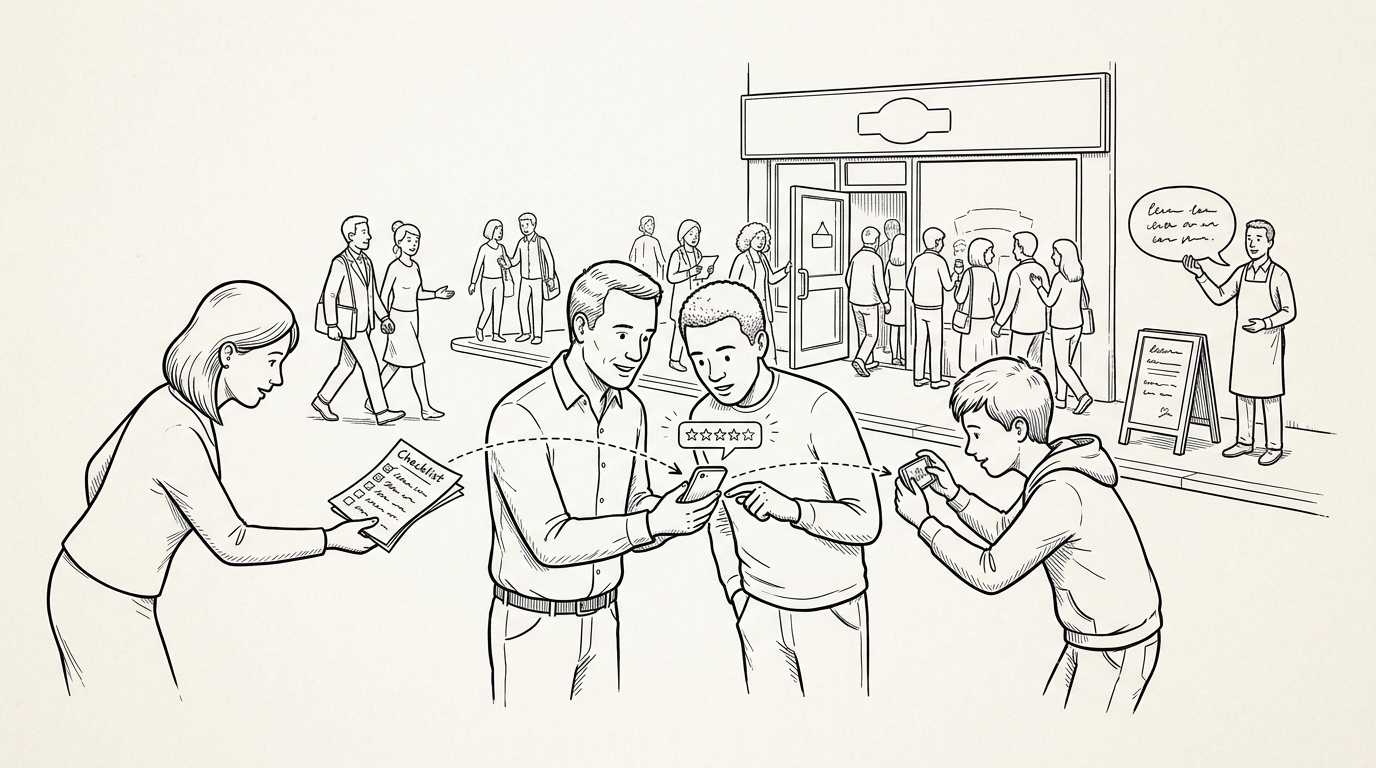
Some posts travel on their own. Sticky content is material people save or return to, like a checklist. Viral marketing spreads because people pass it along, but it’s unpredictable, so treat it as a bonus.
Customer reviews count as earned media: exposure you get because others talk about you, not because you paid for it. Ask happy buyers to leave one, then share the best ones.
Online recommendations from other people are electronic word of mouth (eWOM). A stranger’s post praising a shop often lands harder than your own pitch.
Engaging Followers, Influencers and Ads
Posting is only the start. Here’s how to turn followers into a community, when ads pay off, and how to test them cheaply.
Talk with followers and build trust
Social media works best as a two-way conversation, not a billboard. Reply to comments and messages quickly, since first replies set the tone.
For example, a side hustler selling handmade candles answers every question within hours. Her regulars start recommending her, and that’s trust you can’t buy.
Build community by thanking customers by name. Aim for depth over reach: a small group that talks back beats a crowd that never does.
Paid ads versus organic reach and testing
Organic reach is what your posts earn for free. Paid ads reach people who don’t follow you yet. Use each for a different job:
- Ads reach beyond followers. They find new people.
- Organic posts for followers. They keep your current audience engaged.
- Cost-per-click campaigns charge only when someone clicks.
- Audience-targeted advertising narrows who sees your ad by location and interests.
- Test ads with a tiny budget. Compare two offers before spending real money.
For example, a freelance bookkeeper splits a small daily budget between two offers. The one with more sign-ups wins the bigger budget. Test small, then scale.
Working with influencers and new tactics
Influencer marketing partners you with creators whose audience already trusts them. Fit matters more than follower count.
Interactive chatbots answer routine questions, like prices, at any hour. That frees you for conversations that need a human touch.
Personalized experiences tailor each message to what someone has already done. It’s less about more messages and more about the right one.
Social commerce, selling inside the app itself, shortens the path from scroll to purchase.
Tracking How Well Your Efforts Perform
Likes feel good, but they don’t pay the bills, so pick the numbers that matter.
The numbers that matter most
- Reach and impressions: unique people who see your posts, and total views.
- Engagement rate: the share of viewers who like, comment, or share.
- Click-through rate: the share of viewers who click your link.
- Conversions: people who actually buy, book, or sign up.
- Follower growth: how fast your audience grows.
- Share of voice: how often you’re mentioned versus competitors.
- Response rate and time: how often and how fast you reply.
Pick metrics that match your goals
A candle maker who sells from her spare room wants orders, so she tracks conversions instead of follower count. Within weeks, she drops the posts that send no buyers.
Set specific targets. “Grow my audience” can’t be checked, but “a set number of link clicks each week” can. Measure conversation depth by counting real back-and-forth, not just double-taps. Make more of what works and less of what only looks busy.
Run a 30-day posting experiment: one format, one schedule, then compare results.
Measuring return and what customers are worth
Social equity is the value of the audience you’ve built over time. Followers on a platform you don’t control are rented, so move them to an email list you own. Your list stays yours.
Direct and indirect value: direct value is a sale you can trace to a post. Indirect value covers referrals and public answers that save support time.
Return on investment (ROI): it compares earnings with spending, but credit is hard to assign. A buyer might see a post Monday and buy Saturday. Ask customers how they found you.
The Upsides and Downsides to Weigh
Social media marketing can pay off, but it asks for time and attention in return.
How it helps your business grow
- Brand awareness and recognition. Regular posts keep your name in front of people.
- Cost-effective versus traditional ads. A study comparing social media interaction data with traditional advertising finds that social media’s value lies in “dynamic interaction and cost-effectiveness.”
- Targeted audience reach. You can aim posts at specific groups, not at everyone.
- Drives website traffic. Posts can link straight to your shop or booking page.
- Real-time customer feedback. Comments and reactions show what people think as it happens.
- Customer loyalty and retention. Replies and updates keep existing customers coming back.
Where the work gets hard or risky
- Time-consuming to maintain. Posting well takes real hours every week. Consistency wins, but it costs time.
- Changing platform algorithms. Feed rules shift without warning, so reach can drop.
- Public complaints and reputation risk. Anyone can see a complaint, so how you reply matters.
- Hard to prove return on investment (ROI). Likes don’t pay bills, so measure sales against spending, not just likes.
- Platform-specific expertise needed. Each platform rewards different formats, so what works on one may flop on another.
- Digital access gaps. Some customers aren’t on the platform you choose, so they never see your posts.
Answering questions and learning from buyers
- Answer common questions publicly. One reply to a shipping question helps everyone wondering the same thing.
- Collect demographic data. Platform insights show who actually engages with you.
- Gauge product interest. Polls and comments reveal what people want before you make it.
Think of a side hustler selling candles who posts two scent options and lets followers vote. The votes show which scent to make first, before she buys any wax.

Using AI and Tools to Save Time
Your hours are the scarcest thing in a side hustle, so let tools carry the repetitive work. Here’s where artificial intelligence (AI) helps most.
How AI can speed up your work
AI gets you to a first draft faster, but it’s no replacement for your judgment. Use it for:
- Brainstorming. Describe your product and customer, then ask for post ideas. Keep the ones that fit your voice.
- Repurposing. Turn one blog post or customer email into several short posts.
- Video scripts. Draft a rough outline for a product video, then rewrite it in your own words.
- Content calendars. Share your goals and posting days, and get a month of topics sketched out by week. Check the dates against your real schedule.
- Platform adaptation. Take one caption and ask for versions suited to each platform’s tone and length.
Consider a freelance photographer who turns each client shoot into a carousel post, a video script, and a newsletter blurb. She reshapes one set of notes into all three instead of starting from scratch each time.
AI drafts, but you decide what goes out.
Scheduling, AI and research tools to try
- Scheduling tools. Batch a week of posts into one sitting, then let them publish while you’re at your day job. You stay consistent without daily logins.
- AI social tools. Many can draft captions, suggest hashtags, and reword a post for a different audience. Treat that output as a draft to edit.
- Audience research tools. These show what people search for and which posts earn engagement, so your topics come from real demand instead of guesswork.
Mistakes That Hurt Your Social Results
Most social media stalls don’t come from bad luck. They come from a few habits that feel productive but quietly eat your time, so here’s what to watch for and what to do instead.
Common traps brands keep falling into
Watch for these six:
- Posting without goals. If you can’t name what a post should do (get a reply, a click, a sale), you’re just filling space. Pick one goal for the month and let every post serve it.
- Volume without value. Posting every day doesn’t help if none of it answers what your customers are asking. Take a side hustler who sells handmade candles and posts daily photos of wax pools but never mentions scent, burn time, or gift ideas. She gets plenty of activity and few orders. The question is what you post, not how often.
- Over-promotional content. When every post says ‘buy now,’ people tune out. Mix in tips, behind-the-scenes shots, and answers to common questions so your sales posts feel like help instead of noise.
- Ignoring audience responses. Comments and direct messages are free market research. A freelancer who keeps getting asked about turnaround time but never addresses it in a post is leaving easy content on the table.
- Spreading across too many platforms. Being on five networks sounds smart until you’re stretched thin on all of them. Pick the one or two where your customers already spend time, and do those well. Depth beats breadth.
- Relying only on social media. Platforms change their rules and their reach without warning. Give your customers another way to find you, like an email list or a simple website, so one algorithm change can’t wipe out your pipeline.
What Social Media Marketers Do and Learn
Social media marketing has more moving parts than most people expect. Here’s what the role covers and what it takes to do it well.
Everyday duties on the job
The work falls into four areas:
- Long-term strategy. Someone decides who the content is for, what it should achieve, and how it supports the business. Strategy is about why you post, not just what you post.
- Posting schedule management. A content calendar maps out what goes live and when, so posts don’t depend on what you think of that morning.
- Creating graphics and videos. Marketers design images and short videos, or brief someone who does, then adjust each one for each platform.
- Moderating comments and messages. A quick, friendly reply can turn a question into a customer.
Take a side hustler who sells handmade candles on weekends. She batches a month of posts into one Sunday afternoon and answers buyer questions each weeknight. Her account stays active without taking over her evenings.
Skills to build and where to learn
You can build these on your own or through structured training:
- Strategy and planning. Learn to set a goal, pick an audience, and map out posts that move people toward it.
- Listening and engagement. Watch what people say about your brand and competitors, then reply in ways that start real conversations.
- Advertising and analytics. Learn how paid ads are set up and how to read the results. Analytics shows what happened, so you can decide what to try next.
- Courses and degree programs. Short online courses teach specific tools quickly, while a degree in marketing or communications builds a wider foundation. Choose based on the time and money you have.
Practice beats collecting certificates.
Social media marketing comes down to showing up consistently, offering real value, and watching what happens next.
A clear strategy keeps you on course, the right platforms meet your people where they already are, and steady measurement shows what’s worth repeating.
You don’t need a big team or a big budget to make this work. A few focused posts each week, one clear goal, and a habit of checking your numbers can carry you further than you’d expect. The brand people remember is the one that kept showing up.
References
- Should tweets differ for B2B and B2C? An analysis of Fortune 500 companies’ Twitter communications - Wright State University — research.wright.edu (2026)
- Social Media Marketing for Small Businesses: Best Practices — extension.okstate.edu (2025)
- Comparison of the Value of Social Media Interaction Data and Traditional Advertising Exposure - from the Perspective of the Cooperation Effect of Guangdong Southern Tigers Sponsors — doi.org (2025)
- Teens, Social Media and AI Chatbots 2025 — pewresearch.org (2025)
- Global Social Media Statistics — DataReportal — datareportal.com
Questions
What is the 50/30/20 rule for social media?
The 50/30/20 rule is a way to balance social media content: 50% should be helpful or entertaining, 30% should share or curate relevant content from others, and 20% should promote your business. Use it as a flexible guideline, not a strict formula, and prioritize what your audience responds to.
What is gen Z in marketing?
Gen Z in marketing refers to the generation born roughly between 1997 and 2012, though exact year ranges vary. Marketers use the term to describe younger consumers and tailor content, platforms, and messaging to their interests and habits.
What are the 7 types of digital marketing?
Seven common types of digital marketing are search engine optimization (SEO), content marketing, social media marketing, email marketing, pay-per-click advertising, affiliate marketing, and mobile marketing. These approaches can overlap, and businesses often combine several to reach their goals.
How can I become a social media marketer?
Build skills in strategy, content planning and creation, audience engagement, advertising, and analytics. Practice by managing an account or creating sample campaigns, learn through online courses or a marketing or communications degree, and use your results to demonstrate what you can do.
How do I promote my business through social media?
Set a clear goal, identify your audience, and focus on one or two platforms where your customers are active. Share useful and engaging content alongside occasional promotions, reply to comments and messages, and use a content calendar to post consistently. Track clicks, inquiries, and sales so you can repeat what works.
How often should you post on social media?
Post at a pace you can maintain consistently. For a small business, starting with a few posts a week on one platform is reasonable; use platform analytics to learn when your audience is active and adjust based on results.
What does social media marketing do?
Social media marketing uses social platforms to promote a business, build brand recognition, connect with customers, and drive traffic, leads, or sales. It combines creating content, engaging with followers, running organic posts or paid ads, and measuring results.
What social media is good for business?
The best social media platform for a business depends on its audience, goals, and content. Instagram suits visual brands, LinkedIn is useful for B2B marketing, TikTok for short-form video, YouTube for tutorials, Facebook for broad and local audiences, and Reddit for niche communities. Start where your customers already spend time.
Sources
- Global Social Media Statistics — DataReportal – Global Digital Insights, datareportal.com
- Should tweets differ for B2B and B2C? An analysis of Fortune 500 companies' Twitter communications - Wright State University - Research, research.wright.edu,
- Comparison of the Value of Social Media Interaction Data and Traditional Advertising Exposure - from the Perspective of the Cooperation Effect of Guangdong, doi.org,
- Social Media Marketing for Small Businesses: Best Practices | Oklahoma State University, extension.okstate.edu,
- Teens, Social Media and AI Chatbots 2025 | Pew Research Center, pewresearch.org,